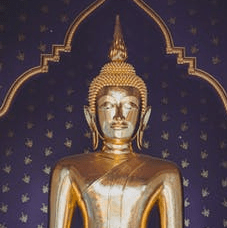

Dependent Origination (Buddhist Conditionality)

Originally Written: November 30th 2017

You are born in ignorance, you don’t know or understand reality (objective understanding), how to react to experience (reciprocity), or how to conduct yourself in a way that minimizes suffering and maximizes happiness (morality). You don’t have knowledge of form, of language, nor of how to conduct yourself in the world. You don’t know right and wrong, and you cannot differentiate or hierarchically organize values. The biological system has values, but these values are merely of genetic inheritance, and as conscious awareness of oneself hasn’t yet developed, and external influence has yet to form cultural and traditional values, we have only primitive values which drive us.

 You are taught things, in infant-hood, that form as habits in response to the chaotic environment you have yet to form into order. These volitional formations arise only out of the initial state of ignorance. These become conditional responses in the form of action both physically and mentally. Pavlovian and traditional conditioning take place, and you begin to form neural pathways linking phenomena, still, subconsciously. You become responsive to the phenomena of action and response, of reward and punishment, in the form of pleasure and pain, yet are unable to distinguish the causal chain, acting only on conditioned instinct.

Next arises, dependent on these formations, consciousness, or as is better understood – awareness. Based on the habit forming structure inherent in the human neural makeup, you are provided the six senses, thus you have six forms of consciousness; eye consciousness, ear consciousness, nose consciousness, mouth/tongue consciousness, body consciousness, and mind consciousness, through which you are able to be aware of all experience available to you. All experience is experienced through these six consciousnesses. So when you see your mother you become conditioned through the habit formation of association of her with a certain role, whether it be protection, or nourishment, stemming from the basic drives provided by the genetic makeup at birth.

Next arises namarupa (name and form, immaterial and material) dependent on this consciousness. So you have awareness/consciousness, you’re aware of seeing your mother, due to habituated response to experience, due to ignorance, now you not only are “conscious” of the experience, but are able to recognize her form (material property), and attach her name (immaterial property), onto the phenomenon of “mother”. This identifying and linking between material and immaterial, and conceptualization of both a physical form and a mental phenomenon, arises only after consciousness arisen. The key element in how your experience becomes experienced and conceptualized, is in the arising of contact, dependent on namarupa. If there was no material or immaterial side of reality, you would never be able to make contact with anything, and your experience would never be, you wouldn’t be able to identify a material form, nor produce an immaterial (mental) connotation in relation to the phenomenon. So your eye sees the photons of light reflected off your mother, the enter the retina, the two are combined through “physical” contact, and eye consciousness arises in awareness of the fact, and the meeting of the three, including consciousness, is the contact that is necessary for an experience of vision. Without the previously established identification process you wouldn’t know what it is your aware of, conceptually. From this mental formation attached to the individual of mother, you are able to identify her form, and “name her”, perhaps not using language, yet, but in conception of the association between the form and the result of interaction. The experience of eye consciousness is used in recognizing the form of the person which you have unconsciously been informed of as important to your survival for many reasons (the preservation and reproduction of the genome by getting the individual’s survival machine further into life). This contact is recognizable upon inspection of any experience you have ever experience. Even in thought, your mind consciousness must make contact with the object of thought, the conceptualization in the words or picture of the thought, in order to presently be aware of what it is passing through your mind.

From contact comes a feeling, the type of feeling is dependent on the stimuli you make contact with and its relation to you in your experience. There’s three types of feelings that arise out of this contact, pleasant, non pleasant, or neither pleasant or non pleasant, but no matter what you make contact with, one of the three arises as a result. From pleasant feeling comes craving to have, running towards, or wanting or willing or desiring to be in possession of this object of pleasant feeling. From unpleasant feeling also comes craving, but in rejection or separation from the object, in aversion as a positive form of willing, or desire or willing to not have this object in your experience, in rejection, or pushing away. So from both pleasant and unpleasant comes this craving, or desiring, which is where suffering enters your life. In neither pleasant nor unpleasant experiences of contact the object simply doesn’t have a meaningful effect upon consciousness and its actions, and does not continue to produce the craving and attachment inherent in the other two forms of feeling. Whether the object of desire is wholesome or not, the not achieving the acquisition of object of desire always produces suffering, or unsatisfactoriness, or discontent, the amount of which is characterized as located on a spectrum dependent on the individual and upon his training in mental management. Thus, in our link of dependent origination, suffering first shows itself as the result of feeling, through craving. Your mother walks into the room, she is in the visible field that becomes known through eye consciousness in the link between light bouncing off her, and your eye receiving the transmission, the recognition of her identity becomes known to you through the conceptualization of “mother”, and the form presented. From this contact, this association, and conditioned response, comes a feeling dependent on your current relationship and state of being, this feeling being either pleasant, non-pleasant, or neither. In the case of a pleasant feeling arising in response to the identification, you crave her to stay in the room, if she is walking out, you desire her to return and not to go. If the feeling produced in response to her identification is negative in nature, then you wish for her to leave, and not to stay. If there is no feeling produced, you are indifferent to her existence within that present moment, whether she stays or goes has no meaning and is of no significance to you (perhaps your attention is more readily engaged in another phenomenon). Thus is the nature of desire in response to feeling and the object of contact in conscious experience which gives off a feeling.

Continual desire based on continually feeling pleasant or unpleasant works until the craving becomes attached to the object, and thus arises attachment, which is dependent on this craving, and includes an even greater amount of suffering and delusion. At this stage you hold the physical/mental phenomenon so tightly that any change to it causes you suffering. When it is close, experientially, you want it to stay close, when it is far, you want it to become close, in regards to an object of consciousness that produces a non-pleasant emotional response, when it is close you wish it to be far away, when it is far away, you wish it to remain far away. This goes for all phenomena, not just objects, but feelings, ideas, thoughts, experiences, states of mind, and abstract pursuits such as fame, admiration, or wealth. In the case of something you like, any change, alteration, or distancing causes you immense suffering as you see it as permanent, unchanging, and something you wish to be close to you all the time. The opposite happens when you’re attached to the absence of something, if you dislike something so much that any appearance or closeness of it becomes a problem, due to the continual desire for rejection or aversion to this object of attention, you become attached to the experience of that thing not being in your experience. This can be emotion, poverty, state of social class, any phenomena, because everything meaningful whether positive or negative within our experience conceptually or physically you can make contact with, a feeling arises, you either experience it positively or negatively, producing the effect of liking or disliking it, and therefore anything can become this object of attachment if the desire is fostered long and strongly enough.

The desire which presides over all content of experience, and the attachment thus developed in relation to objects of desire, is the basic conditions from which the state of “becoming” rests upon. This is the becoming or changing into something different than before, as regards to your mental state and mode of being, or character and personality and lifestyle of the individual. While we are always changing, and always in a process of becoming, this stage is differentiated as informing how we come to be based on the conditionality of prior causes. You can become attached to any phenomena through continual craving which is the condition for the becoming of someone new, whose own identity changes and starts to include the identity of the object of attachment as being part of its own. Remember that this example of a person is just a practical example, but the idea here ranges to any form of experience possible, whether it be that of a simple object, a stimulation, an ideology, or state of mind. The person starts becoming inseparable from the concept of the attachment, becoming someone that believes their very Being includes the association with the object of attachment, and in a sense, for all intents and purposes, it does. This is why the drug addict, and his family, sees him become a new person after addiction has set in, and he begins becoming altered as a totality of his character begins identifying with the substance, as it is simultaneously modified by the substance. Yet, unconsciously, a similar pattern emerges in response to any attachment which develops, in that the attachment becomes internalized and part of the character which manifests itself in the content of our experience. This attachment comes from desire, which arises based on the feeling produced by conscious contact with an “object of experience” which we can distinguish as a concept and having a material form, the distinguishing arises from a mental formation which, ultimately, arises from ignorance, since we have no choice in the matter. The arising of each state is necessarily conditioned by the prior, and develops in this way. If the prior conditions are not present, the arising of the next link in dependent origination does not manifest.

After becoming comes birth, this is the birth of a new, mind made entity based entirely on the object which gives a pleasant feeling, initially was craven, then clung to, then, dependent on the becoming, a new “Being” is born. The individual’s very psychological idea of “self” not only is strong and pervading, but it includes as a key component the object of attachment as being part of who he/she is, as it defines his very existence. As always, the last chain in human dependent origination arises, the final step for all who give birth to a new creation, its eventual diminution, fading away, destruction; sickness, aging, death. Death is the end to all who are born, and nonexistence is the fate for all that exists, whether it be an idea, a pursuit, a formation, if it arises, it is inevitable it will pass away, at least in its current conception, it will not last, it will be altered, modified, change, what once was, will no longer be. It does not happen to that which never existed, to that never created, or born, thus it is dependent on this birth, this creation, this manifestation of existence. The conditioned Being that is born out of ignorance, became an entity that is defined by his attachments, is necessarily located in a transient existence, in which he will inevitably change, the ultimate impermanence of any state of Being, even one born in this way, necessarily declines into destruction, as all conditioned phenomena do. The “death”, in this case, merely refers to the ultimate destruction of the mind made association and identity with whatever the individual has become attached to, eventually, the mindset will change, the identity will fall away, and a new being will be born, a new state of mind instantiated, a new version of the “self” conceptualized, based on further desire, attachment, becoming, and birth. In this way the twelve chains of dependent origination produce the suffering of our existence, as we build up narratives, egotistical structures that become powerful enough to define us. Eventually, as everything impermanent does, they die out, only to be replaced by the new desires, and thus suffering, both in the acquisition, and the destruction. So suffering begins with initial ignorance, yet only becomes manifest and more of a problem at the craving level, and gets worse from there. Delusion, negative emotions, and unvirtuous behavior due to the object of desire also grow in manifestation at the same level from craving to death.

These are the 12 steps of dependent origination, and were originally formulated in Buddhist canonical literature, the oldest of which available to us currently, the Pali Cannon. The causality and conditionality for all arising phenomena can be put into this framework, but originally it is formulated in the dependent arising of suffering, which was the Buddha’s true aim in delivering us from. In its primitive form, this twelve-fold linkage of causal conditionality, was in reference to the past life, in ignorance and habit forming, in current life, from consciousness to becoming, and the result, in future life, in birth and death. Here I used the structure not in the traditional sense, but as the entire process can be applied to psychological phenomena within this very life, and not only in reference to suffering itself, but into the various forms of experience which come into being, as seen from this structure. Other content and metaphysical speculations were disregarded as not important, and it is the knowledge of the process and the method of its escapement in regards to suffering that truly drove him to uncover the dharma and thus his teachings which he shared with the world. These 12 steps outline the conditionality of suffering to arise, and how it can manifest itself in our lives. The removal of desire and thus craving and attachment, through a process of developing ourselves along the Noble Eightfold Path, was his solution, and part of Right View, is being aware of the conditionality of suffering and how it develops, as detailed above. For a more philosophical and scientific approach as to the existence of hard determinism, and its universality, see the essay “The Causal Tethers Which Bind Us“. While I make the association between the development of a psychological makeup, these twelve links can be used as a metaphorical tool to apply the totality of our lives.


Safeguarding Against Nihilism in the Absence of Religion

Originally Written: November 20th 2017

When something is no longer useful, it ceases being used. When something becomes known as being more useful, it necessarily will replace the outdated version for those who contain that knowledge. The trickle-down effect of stolen intellectual property extends into the realm of ideas, and the beneficiality and believability of belief structures becomes itself reinvigorated by more novel conceptualizations which pose a higher probability of being truthful, beneficial, or useful. Unfortunately, people still continue to adhere to ancient dogma, in spite of modern evidence to the contrary, as the value of believing in supernatural, and outdated claims – as far as psychological wellbeing is concerned – is perceived as more beneficial than the alternative by its adherents. In these cases, the belief is supported by the utility, and the internal logic within the religious system, as in between its beliefs, outweighs the potential shift which would require multiple belief changes to create a worldview free of dissonance, based not on the perceived usefulness but on the practical truthfulness.

This applies to social constructions as well as technology. Language, a human social constructions, constantly changes as old words become dated and no longer useful, and new ones becomes more useful. Ancient religions die out because they no longer are believable and lose the utility they once had (Greek mythology). A large number of former adherents to the world’s supernatural based belief structures, from the modern religions, aren’t merely becoming pagans, or converting to other religious systems, but are actively losing the belief in the things they once had, due to the overwhelming evidence which overturns the central tenants of such religious, and the ability for people to believe in a religious worldview, despite its usefulness, is becoming more and more difficult to do as scientific rationale is becoming more widespread. The integration of rational, logical, and experimentally verified knowledge naturally creates a problem for religions, as their truth-claims do not align with the modern understanding of verifiable phenomena, nor do they contain the required proof and logical cohesion between truth claims to which we have evidence to the contrary for.

It is the socially constructed beliefs, opinions, philosophies, religions, and ideas that are not grounded in evidence based claims that are more susceptible to being changed, disregarded, or replaced by more accurate ideologies once the social constructions lose its value in usefulness, through it no longer being believable by the advent of scientific knowledge, which, with the loss of belief, (often against our will) also necessarily makes it not useful. Scientific materialism in the modern age is one of the driving causes to all metaphysical beliefs founded on supernatural claims to come under scrutiny as more rational explanations are swaying the minds of the people and thus losing their beneficial use in society, for which they were originally created.

Nietzsche is often associated with being a nihilist, but his position is much sincerer, he warns us against the potentiality of slipping into nihilism as supernatural belief structures begin to crumble under modern knowledge. Many Nietzscheans misinterpret his writings by their unwarranted pride in “killing God”, in their lack of nuanced version of will to power, in the over stimulation of the ego at the exception of the higher parts of the psyche. They disregard others, undermine the beliefs of others, and unwisely handle the opinions and beliefs of others. This gives Nietzsche, and his genius, a bad reputation, through his unvirtuous adherents who are merely misinterpreting the notions which he sought to warn us against. The death of God isn’t championed by Nietzsche, he doesn’t think it is a good thing, he thinks the implications will be a lot more complicated than we initially intuited, and we need to fortify ourselves against the potential evil that would fill the void where ancient belief once stood. This evil, in the absence of traditional religious values, reared its head most prominently in Soviet Russia, in Communist China, and Communist Cambodia. As the people disregarded the traditional values that developed over thousands of years and provided a moral basis and cohesive structure for which to turn, they turned their heads to Nationalism, and were swayed by propaganda in the form of ideological possession by men who capitalized on the weakness which ensued the Death of God. This ideological takeover of the masses is a problem which we still are dealing with, as people still promote the Marxist ideal utopia, which, founded on seemingly good intentions, we have already seen the results of it imposed in experimental capacity and concluded in the mass genocide of millions of people.

The fortification of a value and moral system grounded upon secular beliefs, in Objective morality based upon wellbeing and Suffering, rather than commandment and ancient texts interpreting the will of God, will be our saving grace. Rational moral improvement, based on a foundation that is experientially verifiable, and philosophically coherent, enables people to have rational grounds from which to practice good-will, to avoid ideological possession, and to safeguard our societies against those who wish to capitalize on the psychological weakness which follows from a progressively nihilistic worldview.

With the absence of an objective purpose, from which we have derived meaning from for thousands of years, our societies simply do not know how to psychologically cope. Existentialists have undertaken this task, in their attempts to rectify human psychological wellbeing with the instantiation of a new purpose, but their influence has fallen mostly on deaf ears. The value of philosophy in the modern age is itself underappreciated and mostly unutilized, as pharmacological solutions to psychological suffering places a band aid on our open wounds. “God is dead, and we have killed him. How shall we comfort ourselves, the murderers of all murderers? What was holiest and mightiest of all that the world has yet owned has bled to death under our knives: who will wipe this blood off us?” To me the question isn’t of who, as I believe it is our own responsibility to wipe the blood of ourselves, the question is how? How do we clean up our lives, trash the clothes now covered in blood, and forge new ones out of the scraps that remain? We ought to pursue evermore diligently this question now that what is most at stake is the quality of our experience devoid of a “higher power”, which is quite overwhelming to most, and I argue, we do this through secular meaning and purpose.

We must accept the truth of absurdism, that we find ourselves seeking meaning in an altogether meaningless world, and are overwhelmed by the absurd contradiction that arises in that recognition. We accept the truth of the matter, yet choose to rebel against the meaninglessness of existence through the creative pursuit of individual values. The development of a resilient, brave, altogether virtuous character, the seeking of truth despite the costs, the uncovering of a value system not based on dogma, but based on individual interests and importance. There are sources of meaning from which we can uncover that drive us regardless of our beliefs, and we truly have better reason than “God” in which to pursue morality, such as wellbeing and reduction of suffering, and we truly have available to us a more meaningful system, not based on dogmatic truth claims that are spoken as infallible supernatural wish-fulfillments, such as heaven, but rather meaning grounded on the value and importance of content within this life. While this is easier said than done, as noted by Nietzsche, and as fleshed out by the horrors of the twentieth century, it still remains a potentiality. While many people slip into nihilistic despair, and lack a purpose and thus additional psychological suffering arises in the minds of the once devout minds, the people lose hope and virtue sees a decline.

Where I see the actuality of weakness, of virtue being disregarded, of psychological suffering increasing while physical and technological growth ensues, I also see the hope for us to look inwardly, find meaning and continue living and improving ethically. While the blood has surely stained us and the shame and confusion of performing such a heinous act surely takes its toll, the responsibility we have to ourselves to rectify the situation, the responsibility we have towards the improvement of our own experience, is placed on our shoulders. We must become Atlas, and Atlas must never shrug! As Nietzsche said, “Better no god, better to produce destiny on one’s own account, better to be a fool, better to be God oneself!” While many believe that the continuance of their evidence lacking and science disproving beliefs give them comfort and security in which their absence would fail to supply, they may be right, but for him who is courageous and brave he can find the strength to carry through valiantly a life based on rationality, on meaning which comes from his own wellbeing, and the wellbeing of others he cares about. Albert Camus gives us the ultimate rationale which we must adopt to face this Brave New World in which Huxley warned us and is coming to fruition, “The struggle towards the heights is enough to fill a man’s heart. One must imagine Sisyphus happy.” It is that pursual of meaning in a meaningless situation which we must rectify through acceptance of the conditionality and determinacy of the truth of our predicament, and through the struggle towards the heights, find the psychological wellbeing that we naturally thirst for.

Four Jhanas of Buddhism

Originally Written: November 19th 2017

There are certain states of mind that are exclusively experienced through the use of meditation, each one building upon the last, manifesting themselves out of the previous state of consciousness. These unique states of mind, of course, are relevant to any experience, but the four with which I am granting differentiation and specific classification, are those that are found through Samatha concentrating meditation, and are known by Buddhists as the four jhanas. They are meditative states, and have certain attributes in their experiencing, and certain requirements or preconditions to their arising. It is important to strictly pursue the Samatha meditation with the right intentions, of improving concentration, in focusing upon the present moment, and expanding the mind through practice. Any intention whilst practicing to achieve these states of jhana will hinder your development in their arising, we must practice without the intention to change our current mode of being, if we are suffering, we shouldn’t enter meditation to alleviate it, we should practice with diligence towards the intention of becoming closer to the truth, in becoming more moral, in developing wisdom and compassion, rather than for the egotistical benefit of desiring to achieve some sensual or internal pleasure. These things should naturally follow from the good intentioned practice.

These meditative states are able to be entered through Samatha Meditation, in which the practitioner is focused upon a single object, such as the breath. By one pointed concentration directed towards the experiencing of the object of concentration, we enter into Samatha meditation. As Our mind wanders to different content, naturally, we bring the gaze of awareness back to the object, and if we have gained enough concentration, and effectively cultivated a state of mind which is free of attachment, has been liberated from the ego, and finds pleasure in seclusion from sensual pleasures, then we are moving along the path towards the manifestation of the first jhana, or state of mind cultivated by Samatha meditation. If there has been sufficient cultivation of a wholesome mind, marked in ways listed before, that desires and puts forth effort in abandoning Ill will, delusion, craving and clinging, then with single pointed concentration into the present moment upon the object of meditation, you enter the first jhana. This is marked by a great pleasure of being secluded and in not desiring sensual pleasures. It is a contentment with the present moment experience of consciousness, devoid of external influence as a source of happiness, and a foundation of inner peace based on the inner disposition. This mode of Being is cultivated by prior experience in traveling the Eightfold path and the resultant of concentration within the framework of abandonment of previously mentioned defilements and unwholesome qualities. This pleasure within comes from knowing that you are cultivating wholesomeness, becoming a better person while practicing, so it is working toward enlightenment, or in other words we experience joy, through the practice of cultivating the highest possible form of ourselves. This combines the joy of personal spiritual growth and understanding, with the happiness from virtuous activity, which comes from knowing that the practice will increase wholesome interactions stemming from your own Being with to those you come in contact with (family, friends, coworkers, society, and sentient beings in general). The first jhanas is characterized by removal of five hindrances (Ill will, doubt, laziness, restlessness and greed or sensual pleasure) and experience of five jhanas factors (happiness, one pointedness of mind (concentration), applied thought, sustained thought, rapture). While this is the beginning of jhana development, there still is maintained discursive thought, and while meditating upon the object of attention, we shouldn’t seek to “empty our minds” or remove this thought, we should only be concerned with concentrating upon the present moment and the object which we are focusing upon. We shouldn’t be averse to any thoughts that arise within this state that bring us away from the object, we should only recognize them, and bring attention back to the object of concentration.

The second jhana is characterized by the removal of two factors cultivated in the first, that of sustained thought and applied thought, and is marked by further unification of concentration and gain a pleasurable sensation through the increase in sustained concentration, which is a modified version of positive emotion from the first jhana. You no longer are applying conceptualizations to the content of experience, but are rather experiencing the object of concentration, to a greater degree of sustainability than previously experienced. You can experience the first jhana as pleasure in the thoughts of wholesomeness, and the second in pleasure born of the sustained concentration of the experience without thought, the moment without thinking. This doesn’t mean we should actively pursue the removal of thought, it only means, with enough emersion into the present moment, and enough cultivation of concentration, the thoughts that describe phenomena and the thoughts which move to different phenomena, merely fade away, and the feeling of pleasure is conditioned by the concentration itself, not in the pleasure of being secluded.

The third jhana is characterized by equanimity, also without thought or conceptualization, with an ever increasing concentration and emergence into the phenomenon which is the object of awareness, but with an understanding and acceptance of the body as it is, acceptance and appreciation of the life happening within, which doesn’t include a thought stream but maintains a strict awareness within the present moment. The joy comes from this equanimity and contentedness within the present moment, no matter on the situation or experiences surrounding your life. It is the effective detachment from the content of experience, and the peace that arises from this detachment, is born of acceptance of the present moment regardless of its content. This equanimity is the crucial part of the third jhana, and constitutes the middle path, neither excessive self torture, nor in sensual pleasures, but restraint in not going to either extreme, and the contentment and happiness found in that mode of Being located between the two. Neither desiring or running towards fame, wealth, or immortality, nor being repulsive or running from the states of unpopularity, poverty, or death, is equanimity. Neither pleasure in being a wholesome state of consciousness, or non-pleasure in being in an unwholesome state of consciousness, whether experiencing a positive emotion such as love, or a negative emotion such as anger, the equanimity marked by emergence in the third jhana fosters a state of mind that is not perturbed by any content arising in the mind.

In the fourth jhana the ability to be equanimous in the state of pleasure or pain, is replaced by pure mindfulness and equanimity, in which there is no longer an experience at all arising of either pleasure nor pain. While equanimity and contentedness began to develop in the third, in the fourth the pleasure is replaced by a calm, clean, purified consciousness that is ultimately equanimous, without thought, without the emotion of positive joy or negative dissatisfaction. So the pleasurable sensation which was concurrent throughout the first three leaves us, the thought which was present in the first is no longer there, the full emergence into the present with undivided attention, not being broken by any distracting phenomena is attained in the fourth. The first jhana destroys the five hindrances, and begins concentration, and happiness from thinking of the mind in this state. The second removes the thought attached to the concentration, and focuses on the concentration itself. The third is an increase in happiness and concentration, and the beginning of developing equanimous feeling. In the fourth the happiness is replaced by a pure emergence in the awareness in the present moment while concentration and equanimity becomes a constant.

It is said that from the fourth jhana stems psychic powers, to this, I can offer no experiential evidence, nor logical reasoning to its existence. What is known, is that there are different states of Being that are able to be cultivated through sufficient concentration, and their delineation is possible to be characterized by these four classifications. In practice, the transition from each state of mind, in each person, I would assume, is most likely a very hard thing to pin down, especially in the present moment. But in a retrospective analysis as to what was experiencing in Samatha meditation, if sufficiently analyzed and meditation effectively practiced, we can conceptualize the experience as containing the above states, that is, if they were attained. It must be remarked that our experience is changing in degrees, and a strong “line that is crossed” in reference to the successive jhana states is never experienced, we merely move from state to state in degrees, along a spectrum of experience, each state doesn’t appear in its entirety in a concrete step. Experience flows, and we can mark of the jhana by the retrospective analysis of experience as it flowed, and make the distinctions listed above. All in all, the jhanas are not to be experienced for the pleasure and states that they can provide us while experiencing them, but our intention should always be to merely practice concentration, with an aim to character development, and inner expansion. Any unwholesome intentions will not only bar us from experiencing the jhanas, but will also contaminate any attempt of mental training or cultivating of character traits.

Three Marks of Existence and Character Development Using Buddhism

Originally Written: November 15th 2017

In the traditional Theravadan Buddhist tradition, it is commonly told that every moment can potentially be a moment for practice, for training. This practice is fostered by a mindfulness into the content of conscious experience, and, as every moment we hold the potential for being conscious of the content that arises, we can continually push our attention towards that content, and in doing so gain insights and cultivate a character of a certain nature, that follows from the practice. The essential characteristics that are developed in pursuing a mindful awareness of the conscious content within the present moment, are those of equanimity, and of understanding the nature of consciousness. If we better understand the mind, and the experience with which we are emerged in every moment, and its essential characteristics, we are better able to deal with that experience, for we recognize from which it arises, how it fades away, and understand the method of dealing with it which produces the most wholesome response to novel situations. This necessarily is included under wisdom, as we gain in experience in recognizing and differentiating phenomena that arises in consciousness, we gain the experiential knowledge of how best to respond to situations, and the set of all situations, and the path towards a mind that is calm, content, and free of desire (mostly), marked by equanimity, virtuosity in conduct, and thus providing a better experience of life for ourselves, and for those in our expanding circle of influence.

The Buddha pointed out key contributors to this nature of our conscious awareness, for which we are urged to discover ourselves. These key points are namely of threefold nature, and are categorized as the three marks of existence, from which we can extrapolate coinciding foundational truths which describe the nature of all sentient systems. The three marks which permeate the substratum for our psychological experience, are those of suffering or unsatisfactory nature, impermanence, and non-self.

This unsatisfactory nature is necessarily underlying all experience, as we constantly desire for things to be different, we desire something more than what we are, whether it be material or external gain such as career success, relationship optimization, health, youth, fame, or the desire for immaterial, or internal change, whether it be a better mode of being, a better experience of the present moment, if we are sad we desire to be happy, if we experience an unpleasant sensation we crave a pleasant one, if we are happy, and things apparently are going good, we desire for them to continue doing so. This desire, and lack of the object of desire, necessarily is conditioned by the unsatisfactoriness we contain in the present moment. If we were content, we wouldn’t desire, if we wouldn’t desire we wouldn’t suffer. Now on a practical note, the urge we contain to desire is necessary for survival, and is altogether inescapable. But the content of what is desired, and the ranging degree of wholesome or unwholesome desires which drive us, can be altered through training and practice, and more importantly, our response to the arising of all desires is what we can work to optimize. We must learn to distinguish which things are worthy of pursuing, which things aren’t, what is beneficial and useful to us and others, and what is merely the product societal or cultural influence that could be detrimental to our wellbeing. While our desires are spontaneously produced by the neural network that drives our nervous system in ways in which it believes are optimal for the organism, many times these urges are contradictory to our consciously conceived values, and in such cases, we must direct our gaze towards the things that are consciously considered as meaningful to us, and react to unwholesome desires, states of mind, and in general, those things which do not promote the wellbeing of us and of the sentient beings in our expanding circle of influence. While we cannot escape desire, we can recognize its place in creating the suffering which marks our existence. In its recognition, we can work to optimize the desire system, to make our desires range of interest less, and point in directions which we wisely intuit as being more meaningful to us. It is in the practice of present moment awareness that we can recognize our desires arising, the content and object they wish to pursue, and in being aware of the desire, discriminate whether or not it would be in our best interest to pursue such content. In remaining equanimous, and not spontaneously reacting to the content that arises, we can better direct our lives and our mental state to a place which we potentially contain, that marked by wellbeing, virtue, or whatever value you have uncovered as being important to you.

The insight of impermanence is recognized through the Buddhist practice as pervading all conditioned phenomena. It doesn’t take much looking to realize that all phenomena are conditioned, or determined on prior causes, that due to certain conditions, every phenomena arises, and if those conditions were not present, then that phenomena wouldn’t ever manifest itself. That being said, all phenomena in the present moment, necessarily is the cause or condition for further phenomena. Nothing stays the same, no matter how much the illusion of permanence appears to us to be real. The flux of existence, and of our mental content, is easily recognized if we pay sufficient attention to the content of our experience. The next moment holds new content, and the previous moment’s content slips way. Anything that appears to be, is merely arising now, and fading away now. Nothing ever lasts. As time moves, our consciousness moves, and the content within it, changes. The recognition of this fundamental mark of existence has implications that are vast, a few of which I’ll name here. For one, once we recognize that all phenomena are impermanent, we simultaneously realize that not only is no mode of being, or state of consciousness, is worth attempting to hold on to, but that it is impossible to hold on to. As in mental formations, so too in material. Modern physics clearly demonstrates this to us, that matter is always undergoing constant transformation, and as we necessarily are that matter, which appears to us as being that experience of Being which is consciousness, “we” too are constantly undergoing change. If we see that experience is transient by its inherent nature, in the same way that the natural world is, we not only can recognize there is no inherent difference between the two, that they are one in the same, but we can extrapolate this insight into practical matters in how our lives are conducted. When we enter into a negative, unwholesome, or undesired state of mind that we are naturally averse to, we must not complain, be averse to it, or falsely believe it will last forever. It is not permanent, it will change, and the conditions for its change are available to us dependent on the amount of experience we have in dealing with the causal nature that conditions experience. If we are in a positive state of mind, we too need to accept with pure equanimity that it too will not last, so when it fades, and it will, we will not be disheartened by the change in the mode of being, and the experience that it produces. If we are able to see all states of mind, all emotions, all thoughts, experiences in this manner, through the lens of impermanence, we better are able to remain equanimous, and undisturbed in peace of mind regardless of the content of our experience. This doesn’t mean we don’t care, or don’t experience emotions, or don’t have a full experience of life, to the contrary, not only are we better able to experience life (through greater ability to be mindful) but we are better able to deal with both the ups and down of temporal life, we are better able to navigate the psychological landscape, as we can recognize its transient nature, and respond in better ways which produce more wholesome, beneficial, and useful experiences, through greater penetration into the insight of what is causing change, and the effect of such content.

The third mark of existence is that of non-self, which can be tied causally and into the same world view, as the previous two. The three naturally exist within the same world, and like the other two, the truth of non-self supports their existence, as well as is available to us to experientially realize ourselves. The non-self doctrine is a bit tricky to intuit without sufficient practice in mindfulness, as we all act under the presupposition that we are “this being” which we use language to distinguish as ourselves, and which we point out others, all as being individuals. Our language and intuitions in this regard are useful in a conventional and practical sense, but they do ultimately hinder us in understanding the nature of our own mind. When Buddha taught non-self, it directly contradicted the Hindu notion of Self, and what he meant by it isn’t that there aren’t people, it isn’t a doctrine of non-personhood. There are beings, with which we mentally categorize as individuals, and that doesn’t change. What he points to is the feeling that there is a concrete, unchanging, controller of our own conscious experience. The intuition that “we” or “I’m” the driving force of my own experience, that “I” as an entity, command the next content of consciousness into existence, is the illusion which the Buddha rightly points out is an illusion, to which we all can realize. I hope this language is intuitable for the content it represents! As pointed out before, the content of experience is merely arising in consciousness, “we”, or, who we think we are – a self – is not directing the next content of experience to arise, nor are we directing the next thought to arise, or the next words which come out of our mouth, or the next actions we undertake. These things merely are happening. This doesn’t mean that as an organism we don’t have choices, and it doesn’t mean that the experience of consciousness doesn’t exist, it just means that there is no center to this Being commanding it. The Buddha points out that what we really are is the aggregation of five principle classificatory groups, which can be used to further distinguish who we actually are. When I say we, or you, or I, it isn’t meant in this ultimate, fundamental sense, but in a practical sense in which language as we know it differentiates people.  The five aggregates are those of perception, name and form, feeling, mental formations, and consciousness. All experience is differentiated into these categories by the Buddha, and none of them, by themselves, constitues who we are. In other words, “we” are not our thoughts, nor our perceptions, nor the concepts and identifications we give to objects, nor are we the habits our survival organism acquires, nor are we the awareness that is able to witness the content of experience, and it seems to make sense that people don’t necessarily identify with any of these phenomena. Any search into a single factor of defining “who we are” will result in us deciding that, “no I am not that”, on all accounts, and a generalization of the Self residing within all experience, or the source form which all experience originates, also points to a lack of control and permanence, as we don’t choose the content “supposedly” stemming from this “Self”, leading us to believe that we too, “are not that”. As we don’t choose the content to arise, and there is a multitude of content and type of content arising into consciousness, we cannot pin the self down to any one of them, nor to the totality of them. There is nothing concrete, that is permanent, carrying over from moment to moment, as we initially intuited before introspection. What we are, is our experience, made up of the aggregations of very different content, and it is constantly changing, meaning we are constantly changing, and therefore, there is no permanent self carried over from moment to moment. There is no controller, there is no Being – which we think we are – directing the show, there merely is the show, and it is marked by these three fundamental truths, that experience is driven by desire and the unsatisfactory nature which underlies all content, that the content is impermanent and constantly subject to change, and that it arises from subsystems, it arises in the present moment, and is not directed to arise.

That being said, our thoughts can and frequently do proceed actions, and the conscious recognition of wholesome values does influence our actions, this makes us able to make choices and decisions, and to form better or worse responses to novel situations in which we find ourselves in. The non-self doctrine doesn’t bar us from making choices, it just helps us notice that on an ultimate level, these choices are not made by ourselves, that they are conditioned and thus determined by prior causes. This recognition and insight allows us to better pursue the things we value, as we better come to understand the preconditions for the arising of phenomena that we desire to arise, and with more experience, and greater knowledge, we become better able to navigate life.

Ego Management

Originally Written: November 13th 2017

The ego is a conceptualization of ourselves that takes place in the form of a story, and is manifest in many aspects of our existence. We continually are articulating this story of who we are, to ourselves, and this development can possibly create not only dissonance between what we perceive to be who we are, who we actually are, and what others perceive us as being. The danger lies in clinging to this self narrative to strongly, or in a characterization of ourselves. In either case, we are bound to be disappointed, and this is the source of much of our anger and frustration. In the case where another makes a statement that contradicts our ego, we feel attacked, as the narrative of which we attribute to ourselves is not being recognized by others. This being-with-others, or mode of being which we inhabit in the presence of others, becomes modified by adverse reactions to this kind of criticism, as who we are goes under scrutiny. Could it be that we are not who we think we are? Could it be that the other person is ignorant of our true nature? How dare they give a contrary explanation to the being which I am? These are the necessary effects of an ego attack, and often times the individual will go on the defensive, attempting to instantiate in the mind of others the same narrative of which they created for themselves. How do we navigate these waters? What is the correct relationship we should have towards that part of our psyche which is the ego? Is it removable? Or just manageable?

It necessarily goes to say that a well-integrated psyche will contain a healthy ego. What constitutes a healthy ego is a narrative which goes hand in hand with the truth, to a greater degree than otherwise. There is no way we can possibly symbolize using words the exact experience of our lives, as that, literally, would take more than a lifetime. But it is possible, to a greater or lesser extent, that the narrative can be representative in a way which doesn’t contain any falsehood. This is a necessary step to a healthy ego. Secondly, we ought to understand how our narrative of self-hood is modified by the reaction we have to others inputs that seemingly attempt to undermine our own understanding of ourselves. These criticisms, in a healthy psyche, should be looked at as something we can learn from, not that we accept them as infallible, but accept the truth that the persona which we give off is interpreted in a certain way. Whether that is positive or negative, we must distinguish, and how we navigate that, and the importance we place on other’s opinions, is something we must individually decide based on the value the source has to us. I think the optimal way of dealing with such ego attacks, marked by a manifestation of emotional anger or irritability in response to someone else’s depiction of us, is to not be initially reacted upon. The spontaneous reaction and defense of our narrative, should not be our initial response to such claims, as that would impose a rectifying narrative, or unwarranted emotional repercussions, that could be avoided by a disciplined and patient temperament. Rather, an introspective look as to why and how such an interpretation could be made of us, as well as a look into how our actions could have portrayed such an image, as well as a comparison between who we actually are in relation to the claims made, all should be considered in order to make a measured honest response. We should always go into conversations with the intent of being able to learn something from the other person, in the case of ego claims, if what the person intuits isn’t actually representative of our nature, then we can learn at least that someone else interprets our character in a certain light, and discover why that is so. If it is contrary to our true intentions, in the interpretation of our actions, then we must seek to better clarify ourselves so the person isn’t guided by misinterpretation into who we are. This isn’t merely an egotistical defense, but rather an attempt to enlighten the other on something they understood as contrary to our motives, or simply to enlighten them on the context or rationale which they didn’t previous have present-at-hand. In other cases, the contrary opinion may actually tell something about ourselves we weren’t able to see, as we only have our own perspective to work from, it may serve as uncovering something which is altogether hidden up to this point from our own perspective.

Additionally, it is entirely possible that we may have misinterpreted the others conceptualization of ourselves wrong. While it seems obvious that either our narrative, or theirs, is either in alignment, or is wrong, it is additionally possible that the other person might not be misunderstanding our motives, but we may be misinterpreting the perceived ego attack as being contrary to our own narrative, when, if we ask for further clarification, it could be in alignment, we just misinterpreted their judgment upon us. The key, in general, in managing the ego, is to accept the narrative which we apply to ourselves as it truly is, as being fallible. It merely is our own conception of ourselves, from our own point of view, based on memories that often are faulty, based on self propagated stories which become farther away from us as time passes, and the stories become modified by each iteration of self editing which we necessarily compose.

The ability to grow, and to respond wisely to attacks upon our ego, is a mark of a well-integrated psyche. To remain equanimous, and not respond out of the manifested anger that arises out of a malevolent, or otherwise informative comment about the nature of our being, should be paramount. Responding out of anger, or defensiveness, in seeing our ego as permanent, as fixed by ourselves an infallible, we bar the doors to greater understanding of ourselves, and inhibit the truth from arising to the surface. Thus we should look at these moments of emotional turmoil in response to attacks upon our ego as opportunities to grow, to overcome, and if the claims are unsubstantiated, as a chance to respond with virtue and tranquility and to better the understanding of the other person. To allow the ego to be fed, in claims witch bolster it to heights undeserved, is another factor on the opposite side of the spectrum which we should guard against. As in the cases in which others undermine our character, we should guard ourselves against both our own fallibility as well as our own unwarranted acceptance of such statements, we should likewise not seek pleasure in the overstatement of our character, or the puffing up of content which is not in correct relation to the actuality of our being. While it feels good to be over appreciated, and we feel tempted to agree to content received in such a manner, this too can create a false narrative of ourselves, and this is something we should guard against, that is, if we value the truth more than pleasure. If pleasure is the motive, and vice is rampant in our lives, then we would seek to deceive and impose a greater image of ourselves onto the minds of others for their admiration, yet, if the goal is to be virtuous and truthful, as it ought to be, an accurate representation ought to be desired both in our own self-view, and in the view of others.

There are many relationships we have in which a correct view of ourselves is desired in the other person, and to them, we owe it to give them the truth, for what is love if what is loved is not truly who we are? Why would an honest man want recognition as being someone he’s not? We should strive to be given our fair due, and to allow others to view ourselves as we truly are. Effort put forth in understanding ourselves, by input from the outside world, and through introspection, is thus invaluable in correctly and healthily integrating the ego into the totality of our psyche. If we wish to grow in knowledge, and avoid deception, it starts in an honest depiction of ourselves, at least one not founded on lies, and expands from there. The ego can be troubling, it can cause us to experience unpleasant emotion, and in reaction to such emotion, we can act in ways which we may later regret. The correct integration of it, and response to its manifested emotion, better serves us to navigate our lives. If we can better handle the emotion as well as the spontaneous reaction, we can have a better relationship with those who are important to us, to the outside world in general, and more importantly, to ourselves.

Faith, Belief, and Their Application to Buddhist Teachings

Originally Written: November 8th 2017

Faith is defined in many different ways, but the most prominent definition is of complete trust or confidence. In terminology that is less religious, it would be a belief, or something that you intuit or come to the conclusion of – being true, a belief that is held as certain, or of extremely high probability. Faith is a risk we take, which I should, before continuing, state that I am completely against, at least in terms of absolute certainty. For reference to this topic – see essay “Benefits of Fallibilism”. In Buddhism, as well as monotheistic religions, there is a high value on faith, but I think that word is highly misleading. If we take the naïve definition that faith is merely the belief in the face of a lack of evidence, we really aren’t differentiating the term faith from belief, and, if this definition does hold to be descriptive of the term, it merely is stating something which, in practicality, doesn’t exist. In other words, you cannot believe in something without some rationale, without some form of experiential knowledge. In order to place absolute confidence or trust in something or someone, or God, or a higher power, you must necessarily pass through a succession of belief probability enhancements. We do not come to absolute trust or certainty without passing through stages of evidential proof in reference to the belief, which, must be rational. This doesn’t mean that the thing we place certainty in, in the end, is actually true, more so, it appears to be something we can be certain of. The mere appearance of having undeniable infallibility does not mean in actuality that it is so, whether that be in reference to an idea, scientific evidence, supernatural entity, or any other truth claim we can make. While I argue that it is more beneficial, in terms of alignment with the truth, and for openness to personal knowledge growth, to remain always fallible in our truth claims, there is a potential benefit to placing faith and confidence in others, which, we can temper by not adhering to absolute certainty, yet still reap the benefits of an evidential and rational approach to faith, which, we do so, despite the many claims against faith as it being “based on a lack of evidence”, which is merely a non-starter. Trust based on the absence of evidence, in something, necessarily means the conceptualization of “something”, which, whether we like it or not, requires the subject to have an ideal version of what that something is, and a reason why it is more likely to be true than its antithesis. Whether its emotional based, habituated teaching, or culturally defined, the mere conceptualization requires some sort of value judgment, and this is evidence as to why we believe something to be so, or why we believe something is worthy of placing our trust or confidence in.

 The more data we acquire in respect to a certain teacher, training, or concept, the more likely we are able to discriminate the long term effects of adherence to such teachings through the instrumental use of faith. Seeing character traits embodied by the adherents of certain principles, enables us to see what the results of believing in a similar manner may promote in ourselves. If there are character traits, or abilities, or skills, that are exemplified by the teacher, that are of a nature of being something we wish to acquire for ourselves, or improve in ourselves, then the data acquired in reference to the teacher or adherents in containing these traits can inform us as to if we would like to pursue similar pathways of training or adherence so we too can attain similar results. This goes for beliefs, values, skills, in addition to character traits. In general, the more information and content the teaching has that is in line with our current value structures, the better informed we are to desire to pursue a similar pathway towards our own personal attainment of such characteristics. If we can intuit that adherence to such teachings would be beneficial to us than the placement of confidence in the practice, which would be faith, or confidence in the teachings ability to result in similar effects, would be warrant-able in relation to the content of the evidence we have to its manifestation in said desired traits.

There is a use for this, and in the Buddhist tradition, faith is important. Placing faith in a certain teacher, or teaching, or practice, is essentially saying at least one the following: “I will believe that this is true, that this is good, that adherence to this would be beneficial and useful to me, that confidence and trust placed upon the teaching, or teacher, will result in an improvement in the quality of my experience, my wellbeing, and reduction of suffering.” For a beginning practitioner of Buddhism, who wishes to experience what the religion has to offer, based on some idealistic view of the resultant of practice, or on some intuition that its teachings are an effective way of navigating life, or solely for the experience of what it would mean to be a practicing Buddhists, it would be beneficial to place a limited confidence or trust in the dharma, or teachings of the Buddha. Just like any other thing we place confidence in, or wish to embody (for whatever purpose, whether academic, experiential, or even egotistical), I argue, we should first vigorously examine the landscape of potential teachers, religions, and content, which we wish to embody, before making the choice, as confidence or emergence into a framework will alter experience, in one way or another, and we need to make sure that the domain is something we have a valid rational explanation for attempting to experience, before we continue down the rabbit hole. We should never be certain of somethings beneficiality, but as we grow in knowledge through any specific training, we should constantly reexamine the path we are on, not only to recalibrate our lives with new information, but to decide if continued belief in such practices are truly what we value, or are the most optimal in reference to our current range of perspectives. For someone who has directly intuited the more optimal representation in novel truth claims, in reference to previously held truth claims, it no longer is faith which carries the belief, but it is experiential knowledge, but for him who hasn’t yet intuited these things, it takes an active pursuit of the truth to attempt to indulge in novel teachings form different perspectives, which doesn’t require faith, but could potentially be, in order to experience (whether in practicality or in the form of knowledge) a more optimal method of navigating life or of defining an aspect of reality.

We will continue with the Buddhist practice as an example, as it is something I believe to be beneficial and useful for most people to engage in, at least at some point in their lives. At first someone may just believe that it is true, based on a rational belief, or thought, in its coherence to the reality one has already experienced, but after practicing mindfulness, and exploring the claims in firsthand experience, you can come to experientially realize the truth or effectiveness in revealing aspects of our nature to ourselves. In this way you can move from simply believing something is probably true, to a degree, to knowing that you have experienced it and know it is true, in the practical result of its carrying out. For example, moral shame and moral dread being the foundation for morality. Once we have recognized that we experience the horrible feeling of shame after an unwholesome thought, or spoken word, or action, this feeling can lead us to wish to not make the mistake again. In future situations, where the inclination may naturally present itself to repeat the offence that manifested moral shame in the past, we now feel a moral dread towards its repetition, and henceforth are convinced by the memory of negative emotion produced prior, to not repeat the action. Thus a sense of moral shame and moral dread can lead us to moral improvement, and we can experientially understand the purpose and perspective given by the Buddha’s teaching. Whether or not we think it is the most optimal way of representing such phenomena, depends on our knowledge up to the point of the realization, but that we can experientially understand it as a way, to better or less optimal degrees, is clearly present to us. This ability to experientially realize the usefulness in conceptualizing moral prerogatives in this way, moves from a mere rational conclusion, to one that takes the form of a certain type of practical truth, in that, in practicality, it has presented itself as truly being in reference to phenomena which we experience.

In a similar way, the four noble truths, we’re taught, are all within us. At first we may contain the logically coherent belief, or reason applied to information which we don’t have absolute faith in (certainty, or complete trust), yet, based on a rational contemplation, as it appears conceptually to be in line with an abstract view of the content of our experience, we can see the utility and accurate alignment with our prior experience. This belief or rationally held coherent explanation for psychological suffering, its root, and its cessation, and path to its cessation, appears as useful knowledge, but it isn’t until we experientially recognize it as manifesting itself in our lives, that we come to the true knowledge of its coinciding as a framework which truly applies to our lives, and we come to a place where we can practically employ it in a useful manner. The more data we have in support of such conceptualizations of psychological suffering, the more we realize the application of Buddhist principles in the reduction of suffering, the stronger the belief becomes. That being said, and it may be contrary to the fundamentalist Buddhist traditions teachings, absolute certainty, or complete faith, in my view, should be avoided at all costs. Even the experiential knowledge of the true practicality in certain knowledge, doesn’t make it infallible, it simply points to it being an accurate way of conceptualizing and acting in the world from one point of view, it doesn’t move it into the domain of the best possible way of Being, or mode of Being, which we should conceptualize as a goal worth striving for but ultimately never attainable. I believe this way of thinking about practical, experiential, and objective truths, is ultimate the most beneficial way to not close ourselves off to the possibility of better answers, or modes of being, which we may eventually uncover.

A liberating experience is one in which you have direct insight into the truth of reality, we can become liberated from ignorance, in certain domains, through the faith in certain teachings, transferred into either experiential knowledge, or disregarded as contrary to the subjective experiential evidence we contain in our conceptualizations of reality. What we must safeguard is attempting to spin a teaching to be in alignment with a perspective of reality, as we can do so with almost any teaching. In this way the intellect can be both our friend and our enemy, as we are able to rationalize views to coincide with the image of reality we may have. The greater the intellect someone possesses, the greater rational, and logical proofs one is able to make for the existence of a perspective to align with reality, therefore, we should be very careful as to the content of our language in representing knowledge of reality, as almost any description can be, whether metaphorically of scientifically, interpreted to align with reality through the use of language. We must do our best to safeguard our conceptualizations of reality from confirmation bias, and seek to discover what actually aligns with reality, rather than what we can bend and view from a skewed place to align with it.

In the western world most people have a scientific grasp on what the Buddha meant by dependent origination, or the law of sufficient reason as acclaimed by Schopenhauer, basically that everything has a reason, that everything is the way it is now due to past causes. In the modern age most people understand this naturally, as we have indoctrinated the youth with knowledge of science, physics and so forth. But what most people don’t connect is that this law doesn’t only apply to phenomena outside of ourselves, but as Buddha said, all conditioned phenomena, i.e. everything. This includes ourselves, our psyche, our thoughts, speech and actions. For a long time, I was a proponent of free will as the cornerstone of my philosophy, but occasionally I would experience cognitive dissonance when trying to make sense of a reality that includes both free will and dependent origination. Free will is intimately tied up with a sense of ego, or self, on a way that we have pride of our accomplishments, and disparage others for their shortcomings. We feel good about the things we do, because we believe that who we are, as a permanent controlling self, did them. So stripping away the self, this ego, this pride, is extremely hard, and appears to go against our subjective experience of life. This is where the dissonance sets in. You understand outside of yourself, objectively, that all the world came from prior causes, yet subjectively, you believe your consciousness and “decisions” do not follow the same law. This believing in a false self, that is somehow in control, yet understanding that everything is due to prior causes, is a contradiction and causes confusion. Now most humans live believing they have freewill, and are happy doing so. But for someone seeking the truth, it matters not how the truth will affect you emotionally, or what modification to your subjective experience may take place as a resultant of the truth, or what pride you have in your ego. What matters is the truth itself, and moving closer to it. Liberation comes when you understand that this self, this ego, this pride, does not exist, that it is merely a manifestation of a narrative which may prove useful or beneficial evolutionarily, or even societally in the capitalist world we live in, but as far as being conducive to wellbeing, and the reduction of suffering, I argue, that it is not the optimal path. What you are liberated from, is a false view, or ignorance, and what you are liberated by, is a higher resolution image of reality as it actually is. It doesn’t mean that you now have hold of the most accurate conceptualization of reality, but rather, you have removed one false view of reality, in this way, we can become liberated, or free from, ignorance, in steps, as we move towards more and more accurate depictions of reality through knowledge.

The Buddhist practice of mindfulness is useful in revealing certain aspects of our experience that would otherwise go unrecognized. In consciously directing our awareness towards the content of consciousness itself, within the present moment, we care realize the truth claims which the Buddha made in reference to non-self, impermanent nature, and the ever pervading unsatisfactoriness inherent in our Being. If you think you are in control or that reality is fully deterministic, only one of which is true, the belief you have is only due to prior causes. It wasn’t until I experienced directly the arising and fading away of mental phenomena, with causes outside of my conscious control, that I began to see free will as a mind fabricated illusion, which, we can see, developed for good purposes. The view of the self as permanent and subsisting through time as a source from which experience comes from, isn’t the best way to view our experience, once we realize the constant change of experience manifesting itself into conscious awareness, prior to conscious decision for it too. Even the conscious thought of attempting to direct the next thought, merely arises itself from a subconscious place. This content of consciousness which we can become aware of, commonly called “mindfulness practice”, presents us with content that is arising and fading away, constantly changing, and is not itself directed by “us” as an agent. These descriptions of experience which we realize, are exactly what the Buddha proclaimed as being fundamental within our experience, thus, if we were to place confidence in the Buddha, or have “faith” in him, before attempting to be mindful, we would be lucky in regard to these teachings, that the claims actually aligned with our experience.

If one happens to place faith in a certain teaching, the risk lies in the actual utility of the teaching as being in alignment with reality as it is. We can clearly miss the mark, and do so quite reliably, anytime we place faith or confidence in anything outside ourselves, we make that risk. But in the case that the risk proves to be beneficial, and the confidence well placed, it’s possible for the strong belief of confidence or trust can move to actual experiential realization, internal understanding, and thus to knowledge. I argue faith in certain Buddhist teachings can offer this pathway, as I have experientially realized the truthfulness involved in the beneficial and usefulness in seeing things from the Buddhist point of view, at least in regards to dependent origination, non-self, determinism, and morality. But could I recommend to someone to place confidence or trust in a certain system? Not necessarily in a system, or a religion, or in anything supernatural, but in the case where I believe I may have some beneficial knowledge that could aide someone, I would definitely be able to confidently vouch for the content of my own personal convictions, but it would only be in the case where I authentically believe it would provide a truly beneficial and useful advantage over the individual’s current conceptualization or wellbeing. This is generally why I don’t criticize advocates and apologists of the Christian faith. Many people view them as obnoxious in their attempts to alter someone’s life, belief system, and values, through active campaigning of their ideals. While I disagree with the truth claims they make in regard to supernatural phenomena, such as heaven and hell or “God” in the strictly Christian sense, I can tell their intentions are pure in attempting to lead and aide others towards a place they truly have faith in and believe would be beneficial for the other person. While I’m no proponent of Buddhist supernatural claims, I do, often, believe it could be beneficial for many people, at certain points in their lives, to at least take some time in exploring the ideas, as they could be useful to the individual.  Is this even faith at this point? Not necessarily. The point is, that placing faith in anything, can yield better or worse results than in other things. The opportunity cost is ultimately too high to place complete or absolute faith in anything, and the loss which we could experience in embodying a mode of certainty, in respect to any truth claim, is ultimately less optimal than maintaining a fallibilist point of view. If we have some reason and logic and work to apply conscious direction towards the content of which faith can be placed, then we can, potentially, grow through faith in that certain domain, as long as we, at all costs, do not move the definition of faith to complete certainty, and merely regard it in an optimistic sense of trust and confidence, and maintain a realistic world view of the potentiality for it not to turn out the way we hoped.