Russian prisoners who survived the Gulag Archipelago, Jewish prisoners in German prison camps as depicted in Man’s Search for Meaning, African slaves, prisoners of war throughout history, all have been able to valiantly find meaning in the worst atrocities committed to human beings – all without medication, or vice, to alleviate their suffering. How can we justify crutches, moral vices, or medication for less traumatic, less suffering inducing stressors, when those before us have endured tenfold and been able to survive, find meaning, and live happy, despite their much greater suffering, misfortune, and injustice?
If none of these people were afforded an escape, or an alleviation, and they had to find meaning, find a way to psychologically remain strong and continue living, why do we, who find ourselves in much more fortunate circumstances, deserve the ability to escape? How can we justify the escape from the misfortune of life when the rest of the world suffers, and has suffered, to a much greater extent? Everyone goes through horrible mental states, not everyone has the same experiences, and obviously some people’s justifications and circumstances imply a more profound suffering than many, yet given the horrendous crimes against humanity which we’ve valiantly overcome, individually, and societally, how can many of us still not see the potential as proven by our forefathers of the human ability to overcome the most horrendous difficulties, and in so recognizing not be utterly convinced of our own inert potential to do the same in our own lives?
If those in the worst situations imaginable, such as those who underwent the atrocities of the twentieth century, were offered medication to alleviate their suffering they surely would have taken it. If they were offered an escape, a pleasure, a pastime, a way out of their situation, they surely wouldn’t hesitate in accepting it. Yet the possibility of such things doesn’t make it optimal. The virtue of forbearance and courage in not reducing the experience through artificial means implies a greater potential gain in the overcoming of challenges. The task of running one-hundred miles barefoot is more impressive than he who runs one-hundred miles in shoes. He who undergoes the pain of existence through the strength of his character and will develops a stronger character than he who alleviates his suffering. There is a line, discernible with wisdom, of the place in which we should take medicine, at the place in which we should shirk responsibility and discipline for the optimization of wellbeing, a point where continued endurance would not provide a character benefit, but rather be harmful. That line is separate for every individual, yet we must not, in anticipatory anxiety, relieve ourselves of self responsibility and independence too soon, we must push to that line, rather than alleviate ourselves of the burden through fear of failure while we still contain the potential of going farther and thus overcoming more. This takes wisdom, and it is a necessary caveat to the voluntary “cross bearing” and suffering inherent in facing the demons of existence. Temperance through fire, forging through pressure, character creation, virtue establishment, these are things which any individual, in effectively integrating his psyche, should wish to promote. It is in those challenges that present themselves to us, in those moments of mental weakness, anxiety, anger, and sadness, that we are tested the most, and to which, in relation to, we have the greatest potential for improvement. The only determining factor is how we deal with these moments, these period, how we choose to cope with existence itself in its ups and downs. That which we do in this world has an effect on our character, on the totality of our Being. The way we navigate life now, influences our further navigation of life. The more inclined and susceptible we are to vice in the moment, the more we indulge in it, the more likely we are to in the future. We must not set ourselves up for continued suffering, nor continued weakness, we must only act strongly, in that which is most virtuous, in order to increase in virtue, and increase the probability of responding to difficulty with strength and virtue in the future.
Character development is more important than hedonistic pleasure. That truth, virtue, and personal growth, in the ability to overcome life’s challenges independent of substance or external aide, is more valuable than ignorance, bliss, and crutches upon sensual and psychological pleasure. Derivation of pleasure from virtue and from truth is greater than the pleasure gained from ignorance and sensory stimulation. I’m arguing the pleasure of truth, and virtue, outweighs any potential pleasure of ignorance and sensory pleasure, while drugs surely register higher dopamine, I argue, that a life in abstinence and of pursuing virtuous conduct outweighs one to the contrary, but of course, the issue becomes more complex as we balance the two, and it becomes a question under which domains is ignorance better than knowledge, under which domains should we pursue virtuous conduct or prolonged gain over immediate pleasure, etc.
It’s just hard, and by hard I mean impossible, in practical life, to prove one course of action is better than another, given our lack of foresight of all the variables and the unquantifiable nature of wellbeing, especially in relation to long possible future time branches in different action causal chains. These things are easy to philosophically reason but hard to apply in convincing others of their actual implementing. While the pursuance of meaning and the voluntary undertaking of difficulty in the pursuit of what one values, in personal growth, is accepted by all on a theoretical level as being “good” and praiseworthy”, to see it implemented in the lives of people who haven’t experientially realized the actual benefit in carrying out such activities, the change in lifestyle towards one in this direction is almost impossible to instantiate from the outside. It merely is an individual choice, a path to be undertaken by the willing participant, who opts for it himself. While we can gain inspiration, and the thought may come from outside, the undertaking of voluntary change, the adoption of responsibility and the pursuit of what one considers consciously as meaningful, is something that must be pursued from the individual of his own volition. All we can do, as contemplatives, as philosophers or psychologists, is point out the potentiality of such a path existing, and offer logical and rational explanations to its benefit, then, the individual must do more than believe in said justifications, he must test them in his own life. If they are optimal, and provide the meaning which he seeks, he will inevitably fall under the sway of such meaning seeking and carrying out. If he doesn’t find the optimal experiential evidence, he will revert to nihilism, or a less optimal pathway through life.
Here I wish to give a conclusive account of my view on abortion. Due to the complexity of the topic a full extrapolation of the reasoning behind my views will not be carried out, but rather a comprehensive look into where I stand in reference to the multifaceted topic. The facets I wish to delineate are those of the political standpoint, the moral standpoint, and the personal standpoint. As a caveat, there are innumerable cases which do not fit the norm, many of which I surely will not mention, and many more with which I am ignorant of existing, as well as their implications. To these we do seek to delegate some explanation, and the handling of such outlier cases must still be covered under the law in the political realm, and under wisdom in the ethical as well as personal realms.
Political Perspective
For the political exposition, we must clearly state what the role of the government is, and how it correlates to the issue of unborn child death (here any stage of development after conception and before formal birth/life outside of mother’s womb or an artificial embryonic life support system, will be denoted as “unborn child”). The government’s chief role is to provide the people for which it governs with the ability to live safely and with the ability to express themselves in a manner which does not physically harm other members of the nation. The people have a say in additional roles of the government, in supporting the people in their pursuit of wellbeing, enabling equality of opportunity, and the ability to have unfettered speech and creative ability so long as it does not physically harm other members. Private property, the social contract, taxes, are all beneficial and, potentially necessary, for the cohesion required for such a system to work optimally, but in reference to the issue at hand, we will be directly responding to the government’s role in protecting its citizens from physical harm. In the face of abortion, here we are discussing the voluntary ending of potential, future, human, experience.
Where there would be no life for an organism not existing after birth, as in the cases where its medically concluded that the child will die before being “born” due to complications or other unfortunate maturation processes, there is neither moral nor legal implications towards the parent’s decision of how to handle the unborn child. The obvious point of contention is in the unborn child’s foreseeable potential to suffer and experience wellbeing, or to be conscious of his/her experience. While this surely is an issue to be extrapolated upon in the moral sphere, the law must hold firm to its role in protecting its citizens, namely, the autonomous individuals which make it up. While the government holds this promise to its citizens, and thus bears the responsibility of providing this system to the members within its nation, I hold that the unborn child does not become a part of the nation until its birth. Only at this point, when it is living outside of the womb, outside of life support, are the government’s laws and regulations applied. If an unborn twin strangles its brother with the umbilical cord, surely the government would not charge it with murder. While people may feel an ethical obligation towards the preservation of future life, say in an 8-month old fetus, I in most cases likewise hold that the parents ought to allow the pregnancy to be carried to term. But the problem with government intervention is the slippery slope which stems from government intervention towards an individual’s autonomy, and their ability to alter, change, or create with their own bodies, without “harming” another individual – we cannot extend our moral intuitions into a domain that doesn’t hold precedent over such matters, or we are guilty of categorization error. While the terminating of a fetus may or may not cause conscious suffering to the unborn child, and thus holds moral implications, the government here has no say in dictating the actions of a mother to the contents within her own body. It is staunchly out of their constitutional realm of power, and is clearly a sign of government overreach into the personal sphere.
I view the unborn child at this point (not yet born) to be the product of the creative act of its parents, the right to which the government must offer the parents full support towards the possibility of opportunity, being as they are members of the contract that binds them to the laws and regulations of the nation. While a child does not choose the country to which it is born, the parent’s do, and hold responsibility over the life of the child as they raise her within the limits of the law, from birth till 18, the child isn’t necessarily selecting the laws which govern her, yet regardless, for issues regarding the safety and cohesion of the nation, must follow the laws overseeing her life, as “given” to the child by her parents (until she has the opportunity to move to a country or residence with whom the laws of the nation suit her will – or not – and face the consequences). The problem is in reference to a death sentence law towards a being which is not under the purview of the law, nor has reached the age of maturity in order to choose the country whose laws she wishes to be a part of. While a child between the ages of 0-18 also doesn’t hold this ability to move into a nation with the laws that she chooses to loom over her head, the parents hold the responsibility of the laws which do apply to the child within this development period. Being that the unborn child is the production of two people, operating outside of the realm of government influence, the unborn child doesn’t become subsumed under his parent’s national laws before birth, she succumbs only to the desire of her creators, who hold the power over her existence, or non-existence, up until birth. Thus there should be no legislative decisions regarding the unborn child, nor towards the parents and their action towards the baby.
I believe this argument holds good for the genetic alteration of a zygote to influence its development as well, through the usage of technologies such as CRISPR to edit the genetic sequencing towards more desirable traits and attributes (resistance to tumor growth, aka cancer, or hierarchical reasoning abilities, aka intellect, etc.). As genetic editing capabilities have surpassed the point where it is possible to alter the genetic source code of a zygote and thus the individual stemming from it, a country has no right to interfere in this creative product, just as they have no domain over the creation of the child, or not, as decided upon by the mother who houses the child. The obvious contention here is between economic viability and further separation of classes as the upper echelons of a society in terms of wealth have the recourses to afford this endeavor, and given the current landscape, such separation of the upper class is deemed “bad”, but regardless of our philosophical position on the topic of class and wealth distribution – this modification also is outside of the governments purview.
The argument will be posed that the unborn child is life, and therefore must be protected by the government whose role it is to protect its people’s lives. Additionally, the argument will be posed that since the fetus can experience pain and suffering, and thus physical harm, it is under the government’s authority as to its responsibility to provide the same equality of opportunity to live in the nation free of harm as rewarded other citizens of the state. The obvious difficulty here lies in what defines “life”, and I am stating that it isn’t life simply stated, as there are many forms of life which are within a country’s borders that don’t follow laws, but rather a type of life, human life, marked by autonomy, separation from its creators, containing conscious sentience (or once has but has lost autonomy), which, as far as I’m concerned, begins, in its true potentiality after birth. As the skin cells on our noses are surely “living”, they surely do not constitute a being with whom we cannot murder, in addition, the creation of a zygote between the gametes of a father and a mother surely are “living” in the technical sense, but not in the form of a citizen-agent with whom the government’s laws should be required to protect. We do not regard the individual gametes within an individual as individuals themselves with constitutional rights, and therefore charge people with murder anytime their expenditure doesn’t reach consummation, likewise, we cannot solely state the possibility of life which exists in potential form in any fetus or collection of cells within the human body, or at any other point within the unborn child’s development, ought to be under the purview of the government. While gametes contain the potential for life, and are, in themselves, living, we do not offer them protection under the law, and for good reason.
While the comparison to a consummated fetus is a stretch, the difference being substantial, the basic premise still stands. What we consider true potential for autonomy ought not be regarded until the moment of birth, and this, to me, is an opinion which I hold as the standard for justification legislatively. As far as it is it is part of the mother and father, yet residing and growing in the mother, we must consider it as part of the mother, as her other cells, organs, tissues, limbs, surely all are. While the possibility of life surely exists at the point of conception, just as the possibility of life exists in any healthy adult (in their gametes and genetic material), this doesn’t entail government oversight and restriction on the decisions of the individual. There surely is a lack of “selfhood” or experientially intuited autonomy in any form of being prior to being born, the creation is still being created, whether it contains conscious sentience or not. Conscious sentience here is important to the morality and time of abortion, but in the sphere of politics, it holds no sway over law. Here we enter into the moral dilemma.
Moral Perspective
In considering abortion from a moral perspective, all legislative and governmental purview are suspended, and bracketed, as surely existing but currently not applying. The moral question necessarily must be founded upon the wellbeing and suffering of life. Without life, there is no pain and suffering, there is no wellbeing, and there definitely isn’t consciousness of better or worse experiences. Without experience of some form which can undergo some form of better or worse states, there is not a moral question, as actions regarding them do not produce a better or worse subjective experience – pleasure nor pain, wellbeing nor suffering, growth nor decay. Where there are moral questions there are also right and wrong answers, per moral realism, which takes into account the wellbeing and suffering of the individual, and other life forms into their causal connectivity, in the present moment and across time. In this scenario, the potentiality for future experience, much like the potentiality of a murdered adult, is taken into account, in its connectedness and effect on the wellbeing of other sentient beings.
In the case of a mother’s life being at stake in the birth of the child, the mother and father are not morally culpable for the abortion of the unborn child, due to the guarantee of current life ending. The causal implications of someone with emotional ties and relationships is much greater than the amount of potential suffering caused to the unborn child in his abortion – in most cases. There are obvious outliers here, such as in the effect of malevolent psychopaths and the sort – the potential suffering is more directly intuited to be greater in their continued living than in our intuition of the potential their child may have in affecting greater or worse wellbeing / suffering in the world after they exist. Absent of all details and intricate factors of real pragmatic life, and the moral implications that are specific to the causal connectivity of a person’s existence and their continued existence, this is, in the abstract, a moral neutral position (to be determined by the actuality of the situation), to me, where the mother sacrificing herself for the baby, and the mother aborting the baby, stand on equal grounds – all other things considered.
Where a mother may lose her life if she continues with the childbirth, there does exist a moral realist answer to the implications of either choice. But given our lack of omniscience, we must claim that the decision, by the mother, and if she so chooses the fathers opinion to be of value than his plays into the decision as well – is on morally neutral grounds, it is neither good nor bad – the effect of such action will dictate its pragmatic utility, and the ability to see the opportunity cost would only lead our intuitions to a better or worse assessment in extreme cases. Current life or potential future life here are morally equal in the abstract realm, due to our inability to foresee the possible repercussions of the continued life of either “person”. In extreme cases the moral situation becomes clearer, such as in the authentic philanthropist or the psychopathic authoritarian tyrant. If we were to see the causal connectivity between the extended life of the mother or the potential life of the child, and weigh the improvement of wellbeing and reduction of suffering for themselves and other sentient beings across time, if we could accurately calculate this data, then a morally positive “right” answer could be attained. Seeing that we don’t have this, I posit the neutrality of the situation. The same guidelines hold for a fetus formed through parental abuse, drug induced intercourse, rape, or some other form of unwanted insemination. The results of the potentiality of life and its affects upon the mother and the ability for her to end the life of the unborn child, or not, and suffer henceforth (the child too may suffer such a conception story), are also unknown (as is the circle of influence stemming from either life’s potentiality), but a certain distinction is made here, between the continued life of two organisms.
While all beings will surely suffer in life, I reject full-heartedly the notion of anti-natalism, while acknowledging its philosophical position, I hold that the potentiality for healthy, conscious, human life, is something to be pursued and not something from which to shirk from in its institution to a world of suffering. I think the situations which call for a mother to abort, or not, and their continued life, are under individual moral standards, applying in degrees of “rightness” or “wrongness” in reference to each individual case. This is surely an opinionated standpoint, and while it may be vague in its abstract form, it is decisive in its individual manifestation – which represents the implicit complexity of every situation. As in the previous case, if all factors were calculable, we would have a correct moral answer to every situation, regardless of extremity – seeing as we do not, there is no simple general moral standpoint from which to view and judge any given situation. Therefore, we put the matter of abortion upon a moral spectrum, based upon the wisdom of the one perceiving, judging, or attempting to make such a decision. Better or worse case scenarios and their respective moral heights are to be regarded on an individual level, with an aim to the improvement of wellbeing. That being said, the wisdom to weigh the potential life and one’s own life, or when viewing another two lives, to weigh the morality of the decision made, is surely dependent upon the viewer’s ability to cognitively assess the situation, but where the potential for life is concerned, the judgmental scale always tips morally towards the advancement of life, regardless of the different situations which led to the conception of the baby.
While different scenarios fall upon a spectrum, the choice to abort a healthy unborn child, abstractly an in a “standard” situation (between two dedicated lovers, separated parents, or only the mother or father’s decision or choice to have a baby or raise a child once learned the mother is pregnant) falls entirely upon the “bad” end of the spectrum, to different degrees, depending on differing factors. In other words, I believe it to be morally good, right, or correct to preserve the life of a child, to differing degrees, depending on the circumstances and factors at play in the individual scenario. Likewise, I consider it morally wrong, bad, incorrect, to abort the life of an unborn child, also, to differing degrees based on the details of each distinctive situation. While I think it is morally “bad” to take plan B and thus end the potentiality for life, it is surely a moral “wrong” that can be forgiven, much like I hold that dietary veganism is morally superior to a carnivore diet, I hold the continued abstaining from veganism to be a moral “wrong” which warrants minute criticism, and thus minute judgment, or very small influence on the moral evaluation of another person or yourself. On the other end, the birthing of a baby born with severe cognitive issues, whose birth either kills the mother, or whose life leads to incalculable suffering, would still tell a morally “good” story in regards to the action of giving birth of life, and the sacrifice therein, yet I would not call it a wise choice, and apart from the action itself, must be considered abhorrent.
Virtue ethics now makes its essential contribution into our evaluation. The act itself of attempting to preserve life, without prior knowledge of harm to either party, and is founded upon virtuous intentions towards the proper upbringing of a child, warrants an act that is morally “right” or “good”. Yet, from a consequentialist perspective, we must calculate based on the repercussions of such an action. To me, the wise choice, given any situation, including that of abortion, is the prudent ability to decipher from which perspective to attempt to tackle the situation, from which standpoint to navigate. Do we attempt to act from the character we deem as virtuous, and if that values the continuance of life in the successive generation, act to fulfill what we value? Do we look towards a cost benefit analysis of future moral implications to ourselves, our circle of influence, and the potential world the child may engage with – and make a pragmatic assessment and assertion of optimality based on this rational factor analysis? Judgment of either method of interpretation is to take place under the meta-ethical framework of moral realism as dictated above. In this way the eye of wisdom is called upon in distinguishing the correct response to moral questions, and must be exercised with care, and separated from the actual inherent virtue of the act.
The totality of future suffering and wellbeing must be considered across the spectrum of sentience in order to calculate whether decisions should be made or not. Whether the act itself is good or bad holds little importance here in comparison to what the wise decision may be. To abort a potentiality unhealthy child, or one which is generally unwanted, accidental, due to malevolence, or other extreme factors, should be legally up to the parents, but if the parents are of age to deliver a healthy baby, with our current systems in place to take care of them I believe it to be “morally wrong” to take the potential life, or not become responsible for our actions through the proper revelation of our values in bringing up the child to maturity. I view it as our sacred duty and responsibility to pass down the knowledge we have acquired in successfully navigating life to the proceeding generation, as our forefathers have done for us – at least in the situations where it is the wisest choice to be made.
I still reserve the right for parents to abort the child in the germinal, embryonic, or fetal developmental phases as they see fit, for any reason. I can’t justify it morally upon the “right” or “virtuous” spectrum based within the virtue ethicist framework of the act itself, stripped away from circumstances. In the context of circumstantial factors, the moral playing field becomes considerably muddied, without sufficient foresight in predicting the future outcome, we must rely on experience, scientific data as it relates to the individual factors, and overall wisdom in discerning the optimality of carrying to term or abortion. The wisdom spectrum supersedes the practicality of an action, in all cases, and an honest interpretation of the factors at hand enables the philosopher to clearly view whether the “act” of abortion truly passes the wellbeing / suffering test, whether it is intuited as being pragmatically true as beneficial and useful in the decision to abort or not. That being said, any moral act does lie in degrees depending on circumstance along the spectrum of moral answers, from the most optimal and beneficial, to the most abhorrent.
Personal Perspective
Personally I will never choose to abort a healthy child, insofar as I have a say in the matter, and in the situation where the mother places the burden of choice upon me, at least at this point in my life. An unhealthy child, or one under other circumstances than what would be, in short, “optimal” as regards its potential conscious experience (sickness or other mental deficiencies), surely would call for an exercise in wisdom and communication with the mother in the choice. But, currently, along as the child and his mother are healthy, whether I’m in the requisite financial situation towards raising the child personally or not, I will opt towards the preservation, creation, and continuance of life, whether it be under my care or not, with, of course, the mother’s approval. While this is a personal stance, I would never seek to extend it to any other individual’s circumstances, nor seek to impose my standards which I apply strictly to the scenario of “my current life” in a legislative manner.
Here I’m going to rephrase this truth claim as, “arising mental phenomena isn’t an accurate representation of reality”. Here’s why.
We here will be working from an idealist point of view, which itself can be factual if its conceptualization is properly articulated, and in doing so it asks of us to delimit certain caveats in order to fully express the intricacies of mental phenomena and their relation to the truth. We can only trust the content of our experience to the degree to which it is a representation of the truth, it always lies in relation to the truth. What the mind creates includes the totality of our experience, and is presupposed in the perception of scientific data, including its intention towards discovery, the application towards revelation, our intuiting the results, and the conclusionary remarks which stem from the scientific deduction of said results. The entire process is presupposing an understanding of the Being which we are, and of our perception system in its modification. The mental comprehension that is embodied through automatic intuition into the nature of phenomena is itself mediated by our perceptive system, it is not the actual experience of the content as it is in actuality. The only mental content which can be trusted as to accurately representing an aspect of reality, is mental content that concedes a framework of its manifestation in the conceptualization, or intuited pre-conceptual thought, which, I believe, isn’t explicit in a non-conceptual intuition or mental experience. The ability to conceptualize a framework which relates the infallibility of conclusive claims as to content as it is perceived, must contain some form of linguistic representation in order to make explicit that a framework is being operated within in the truth-claim of its content. For example, the mental phenomena which arises in conscious experience which has the content of non-exclusionary claims, such as the experiencing of the visual field, and intuits seeing an object as it is “in itself” doesn’t take into account the limiting ability of our visionary capacity to see the other characteristics which make up the object in itself, or the being which it is, the experience towards which the object is embedded within. In the making explicit of the caveats which course through such an experience, phenomenologically, we can create mental content that can be trusted to a higher degree than our initial intuitions. The recognition of the phenomena, explicitly, such as, “the experience of the gaze of conscious awareness towards the visual content as it is perceived by the being which I am, made an object appear to exist in a manner which oriented my being towards a certain making sense of the object in my intuition of what it is”. In this manner we recognize the experience from the perspective which it is embedded within, recognize the absence of the thing in itself, and properly frame mental content that is, itself, conceptual in nature, but a more accurate and trustworthy description of the mental phenomenon that occurred.
In our experience everything is presented into conscious awareness through the filter of the mind, tempered by an inherent value structure, and developed through internal representations of perceived content. It all is a representation of the actual phenomena in itself, not as it is perceived by our perceptive faculties, but as the faculties are modified in perceiving. The very presentation towards our embodied ability to receive sensory stimuli is modified in its uptaking as our organisms data set by a structure of evaluation in the perceive abilities. Secondly, the content which is perceived, which enters into the perceptual grasp of our embodied system, is itself modified by our value structure. This means, the content which is intuited as meaningful, is meaningful intuited after its uptaking into our orientation which is dependent on prior experience, genetic modification, our environment, learned instinctual response, and in turn we are naturally oriented towards a certain mode of being in relation to the digested datum which was perceived. Thirdly, the manner which we embody in relation to the perception and integration of our Being in relation to the perceived content, furthermore rarely makes its presence known to the gaze of conscious, and is filtered by the value system which we have developed (either covered, uncovered, consciously directed towards its development, or not) that “decides” if the content actually makes its way into conscious awareness. Fourthly, the content thus appearing, is itself filtered by the embodied system which is the totality of our Being, from a lower resolution image, by the very mode of being which is present in the acquisition of mental content in the moment of being consciously aware of it. One way or another, what we are seeing in our conscious gaze, that which arising in mental experience, that which is presented subjectively to us in our momentary awareness of the content in consciousness, has been modified multiple times, and the very system which lies at the basis of its modification, is itself limited in its scope and accuracy. Our biological organs which produce the initial inheritance of perceiving content is itself limited by necessity of evolved selection, and thus itself, in the first place, is not accurate, in totality, towards the actuality of the world as it is itself. What we react to is merely the trained response to the world as it is perceived, the world as we find it, as we are able to find it, in relation to ourselves, which are part of it. We act accordingly.
While this explains the process by which content is instantiated into the realm of consciousness, which our gaze can become aware of in its shifting from content to content, it also leads to the necessary formulation of created representations of embodied action and speech. IF the very content which we experience itself is only a fragment, or a piece, or a perspective, of the world as it truly is, how much more so is the representation of our being actualized in our speech and actions? We ought not trust the conceptualizations, the speech we utter, and if so, how much even more so ought we lack conviction towards the accuracy of representations of Being produced in the perception of interpersonal reactions? If the content of our own experience is heavily mediated before coming into conscious awareness, and the conceptualization, thoughts, ideas, speech, and actions, which henceforth are actualized, are themselves mediated by the structure of our Being which is wholly outside of our control, and wholly outside of what is most optimal, or what is most in-itself- the actuality of our being, how ought we to ever believe another person? We must solely conclude that we do the best we can, to the degree that we can, in understanding ourselves, in representing ourselves, in understanding reality, in representing reality, and conclude that the perception of others and our extrapolations of it as we perceive and analyze it, are the best intuitions we have to work with in relation to uncovering the actual truth. While these representations, often in the form of thoughts, intuitions, and conceptual descriptions, are fallible in their accuracy and are presupposing knowledge of our Being which, absent a clear phenomenological analysis, are wholly covered by what our conscious has been ingrained to relay to our conscious gaze, we can make use of that which is presented, and we can strive, to the degree we are able (based on experience, intellect, time, and competency), to move closer to an accurate representation of the truth, and an accurate representation of ourselves through authentic actions. While they always remain a degree removed from what is optimal, that which is produced by our understanding is the most optimal we have available to us in the given moment, the system of the totality of our Being which produces the content in the present moment, is necessarily the only thing we have, and it is, the best we currently have. The training, discipline, improvement, and optimization of perceptual systems, value structure uncovering and optimization which course through our experience, and the conscious directed skill and its actualization in concrete action and movement, speech, thought, etc. (Phenomenological Analysis of Conscious Direction, Value System Instantiation) all can be modified, the very being which we are, and its capabilities, can be modified. This modification can take place towards the goals and aims which we wish to actualize, for which we contain the potential of actualizing.
On the other hand, the accuracy of the internal representation which we experience in the moment, varies in degree to being more or less an accurate model of reality. The more knowledge and experience tempered by wisdom and insight, the more accurate representations we can “create”, or “arise as thoughts”, and the closer it is to the “truth” of the thing in itself, or the content of the idea as it actually is. We must merge both intellectualism and empiricism to a transcendental unity towards which the explaining of its characteristics are an entwinement of both systems of thought.
The arising mental formation stating “the content appearing in the mind, isn’t an accurate representation of reality” is itself a logically correct statement, and can be trusted. Mathematical and formal logical proofs, while arising in the mental gaze, themselves are infallible in being true, and can be trusted, for all intents and purposes (at least from our place in the universe where logic appears to be on solid ground – we cannot extrapolate to the totality of space and time, but merely can conclude in our corner of the universe it appears to be valid). But recognition of the temperance of our experience by the underlying cortical processing system is an insight which holds us to be fallible in our notions and ideas, which is truly beneficial for psychological growth and wellbeing, in moving us closer to the “truth” as well as – in Buddhist terminology – aiding us in removing delusion and keeping us in line with the dharmic universal truth of impermanence of phenomena.
Here we wish to delineate the emergence of conscious direction in its initiating role of preceding action, for the purpose of automatic unconscious habit formations which reinforce the internal disposition towards further development. We start with the initial disposition of the individual, in whatever mode of being he has so acquired as constituting his present moment. Regardless of what the content of his consciousness may be, and regardless of his current psychological makeup, it is possible that a thought arises which leads to a bodily action, or to further thoughts, towards the emergence of emotion, or to a shift in his mode of being. This we define as conscious direction – that conscious forethought that appears to be causally related to our subsequent orientation in the world. This conscious direction appears as intuition, conscious will, a thought in which its intentionality is movement.
The movement which is intentioned by conscious direction is towards any aspect of the totality of our consciously experienced content. Sensory inputs of the visual, tactile, or auditory faculties can be directed to proceed the conscious direction, in such a manner that the proceeding perception is in alignment with the content of conscious direction. The thought may arise in conscious experience of “I will to feel the tactile sensation of my right foot”, this may come in the subjective experience of the conceptual linguistic form of thinking using language, as described, or may be a natural inclination within conscious experience, the mere thought that is pre-conceptual. We know it to be conscious direction by the will to movement, the movement is within the gaze of consciousness. The experiential subjective gaze moves from conscious awareness of the conscious directive, towards the apperception of the tactile sensation in the right foot, the integration of the awareness as conditioned by the perceptible faculty which factors out content of stimuli through the structure of our embodied being, becomes represented in the consciously experienced sensation. In this manner we experience the accomplishment of the conscious direction in its actualization.
In addition to mere consciously directed sensory awareness, and the movement which can manifest in our gaze from mere awareness of present mental content, towards the awareness of mental content which is manifesting in relation to a consciously directive command, there are other movements which can be directed by the conscious will. Like the movement of the gaze of conscious awareness, which, in order to be apprehended mindfully, necessarily requires the implementation of mindfulness during the successive moments proceeding the conscious formulation or realization of the directive, we also can direct movement in any other area that is able to be perceived consciously. This movement that proceeds conscious direction, and the content of the conscious direction, both are necessarily apprehended individually by conscious awareness. Without being consciously aware of the conscious direction, we necessarily are not performing conscious direction, the latter requires the former, yet the former does not require the latter, in order to be manifested in conscious experience or actualized in its application.
While there is a multitude of consciously perceived phenomena which can precede the emergence of further action occurring, here we are only interested in that content which can be acquired by an individual. Meaning – an emotion, or a perception, a memory, can all arise in consciousness in a fashion which directs his mode of being to shift, or which act as causal agents towards the production of additional events in the individual’s life. We are not here interested in external stimulus, only internal stimulus. External stimulus is here wholly out of our “control” in the sense that we cannot direct it within the present moment. What we can direct is the action which proceeds an event occurring which then acts as a stimulus which changes our mode of being or conscious experience. We must here strictly separate that which is internally produced, the act proceeding conscious “will” to instantiate the noema, from the external stimulus, or that which is perceived in embodied form and intuited bodily. We are interested in the experience of that intentioned content produced within the realm of our conscious awareness that subsequently produces action.
The content of conscious direction thus can be anything which we are able to be consciously aware of. Here, conscious awareness is defined as the subjective experience of the content of the present moment, what we are able to experience. While we are always experiencing the present, often the presents relationship to us – us being defined as that transient conscious awareness itself – is that of an unknown known, or something with which we have inherent knowledge of but in the present is unknown, or out of our gaze. Only when the gaze of consciousness is reflexively directed upon itself, when we become aware of our awareness and the content herein of the present moment, does the term I here am calling conscious awareness spring into play. Once we can become aware of our awareness, the ability to recognize conscious content in its relation to being a causal agent in the production of an effectively “produced” content becomes available to us. The use of the word free will here must be eradicated from thought if it so appears to be in relation to the description I am describing. The production of conscious awareness, and of conscious direction, is wholly the product itself of determinate conditions leading to its arising, the ability to do so, like any other mental phenomena, can be improved in its ability to manifest through habitualization, expressed experientially by repeated manifestation into conscious awareness.
As phenomenologically discovered, the intentionality of all consciousness must be recalled. All content of our experience is directed towards something, and the mode of being which we here are referencing as conscious direction is actually the noematic correlate to the underlying noetic content of intentionality. The conscious direction which interests us therefore isn’t the unconscious intentionality behind all human action, it is only the appearing content in experience which occurs before the next moment, it is the conscious causal link to the effect in the moment. While deterministic rules apply to the emergence of conscious direction, this conscious direction is unalterable by the many factors of existence, and being that it is the experience which precedes the next moment, and is all “we” truly have as experiential proof of our ability to choose and alter the world, it would be optimal for us to forge this directional capability to be in line with our values, goals, beliefs, in a way which is psychologically and physically beneficial for us in the next moment, reiterated over time, for us and those we care about. This realm of influence and intention behind the potential theorizing of a beneficial mode of being from which conscious direction can pervade, can be expanded to include as many factors as one wishes. One can look to optimize and alter the content of this conscious direction towards an intention of single-minded consent, toward a singular goal, towards personal psychological wellbeing, towards family relational growth, in effect, anything which stems from the will as worthy of pursuing.
Here a coherent system of values is optimal, so as to not enable our potential for conscious direction in the course of something we value to by hijacked by unconscious and immediate spontaneous pursuits which escape our mindfulness. By entering into a reactionary mode of being which is no longer mindful of the content of consciousness, we let loose the reigns of the psyche to operate in a natural, unmediated, subconsciously directed way. This isn’t negative or positive, as the state of our psyche and the totality of the being which we are, can, prior to the moment described, already be fine-tuned to our values, to a greater or lesser degree. The more time and effort and conscious formulation of rational goals, and habitualizing oneself to the pursuit of such goals, are some of the factors which will enable the spontaneous act of the will in an unmindful state to continue the pursual absent of conscious direction and the mindfulness which is aware of it. The contrary case is what we need to be wary of, in the not fine-tuned, unintegrated, un philosophically formulated valueless mind, the individual is prey to the whims of the will, rather than an orienting north star, and if they have meaningful pursuits which they would rather pursue, the necessary work in the realm of conscious habitualization and conceptualization, and practice, will temper the ability to pursue them.
Wellbeing requires pursuit of what’s meaningful. Pursuit of what’s meaningful requires a value structure. A rational value structure requires philosophical work. Philosophical work requires philosophical knowledge, rational capacity, intellect, effort, time, and experience. The experience of the individual, and his conscious recollection of it, limits the range of content which is available to be philosophically analyzed, thus limited the range of philosophical datum the individual has to work with in the optimization of the value structure (Value Structure Instantiation). Additional knowledge, both logical and experiential, will naturally expand the range of content from which the individual has to work with. The discovery of what is meaningful to one, thus must be uncovered, or created. Uncovered in the sense of an unknown known, as something which provides meaning to the individual’s life but goes unconsciously conceptualized in its relation to the individual, thus is inherent in his being but lacking applied mindfulness to it. Created in the sense of the application of conscious direction towards some pursuit, which creates the conscious conceptualization and attachment of the word “meaning” to that content. We naturally will find that anything our will is directed to has meaning to us, as we are always putting objects, rather physical or mental (idea, thought, experience), in relation to ourselves, and conceptualizing them in ways which makes sense to us. Thus every content of experience has a value and a meaning to us before we become conscious of it containing that meaning.
The very perceptional structure of our embodied being is fine tuned to a value system which has developed over the course of the development of the human genome, and has been modified since birth. This perceptible system necessarily runs in the present moment in its pre-conscious, pre-sentient, pre-directed, form which mediates the content perceived through a type of value structure, the content of which, and the characteristics of which, can be modified and altered by experience, including that which proceeds conscious direction. This perceptible system, I n its current state, is that which limits the range of conscious experience as it is directed to receiving a proceeding mental content in conscious experience, or in the actualization of embodied movement, including physical action, mode of being change, mental content change, and any movement which we are consciously able to be mindful of, or direct our being to be in accordance with. While the very content of conscious experience is mediated by this system, the intuitions, ideas, thoughts, or linguistic commands which arise in conscious awareness under the guise of conscious direction, are themselves the product the same embodied totality of our Being which gives rise to the instantiation not only of the mood, personality, mode of being, which courses through our conscious experience, but also is the manifestation of the content within the framework as well.
We are always acting with intention, out of desire, and the intentional object always holds a place of representation once it is conceptualized in the mental stream of conscious thought. The revelation, uncovering, or discovery of those contents, activity, systems, concepts, which hold the most meaning in relation to each other, in their total relation to us, is what we should seek to describe for our formulation of a value structure. The necessary interconnection between values, their place of priority, the discarding of lesser and the superseding of greater values must be carried out on an individual level, not only would it be useful to find what currently represents one’s values (based on time spent in pursual), but it is necessary for the optimization of conscious direction, our conscious experience, and thus our wellbeing, that we formulate what we would like for our value structure to be. What is an “ideal” value structure we wish to body.
With this “ideal” in mind we can further seek to optimize our time in proportion to this value structure. Thus the famous Jocko Willink maxim; discipline equals freedom. By disciplining our time and effort into those things which we most value, we are effectively exercising the freedom of the will to “choose” what its content is. A well-structured life which reflects the consciously formulated value system is far from being constraining, on the contrary, it constrains the pursuit of values which one doesn’t value, while providing the framework for a life which accurately reflects one’s values, providing the optimal structure which can be recalibrated with experience and further philosophical work towards improvement of the value system. By disciplining oneself to follow the consciously formulated values, we create the possibility of deeper pursual of what is meaningful to us.
With the value structure as our guiding star, conscious direction can be applied toward the content which is in alignment with what is meaningful to us. How are we to be confident in our pursual of such ventures? It is based on the work with which we have put in towards the description of values. If at any point we question our confidence in the path we are following, in the experience directed towards values, if it ever occurs to us that the path isn’t optimal, all we have to work with is the experiential knowledge and the philosophical application towards our conceptualization of values, and their relationship to each other in formulating a meaningful life. If this occurs, more work is to be done.
Here I wish to make some remarks on the correct interpretation and usage of psychological classification methodologies, as the general application of them seems widely misused in their accepted revelations. The main examples which I have in mind to use for the purpose of interpretation are those of psychological personality tests, such as; the Meyers Briggs; the Big 5 personality tests as used by modern psychology; the archetypal constructions as proposed by Jung; the tripartite separate of personality as divided to their corresponding physical disposition as proposed by William Sheldon; and in general the medical diagnoses of someone’s “mental illness” or abnormal psychic state. While these I specifically have in mind, any classification system that seeks to delineate areas of emotional or experiential phenomena, or even modes of being, are all under scrutiny to be used in their respective proper formats, and here criticism and explanation of the method we should use to interpret them is discussed.
What frequently occurs after an individual receives a classification of their character is that they become identified with it and develop a belief structure that is modified and in alignment with said classification, at the exclusion of other diagnoses, and at the exclusion of being identified as lying upon a mutable spectrum in every regard of character trait. The individual receives, discovers, or intuits themselves as fitting into different categories, and through the identification, both consciously and unconsciously, doubles down on the path prescribed. The unconscious search for content in alignment with the description given to them promotes confirmation bias in the individual, strengthening the resolve upon a limiting description of their character. This methodology is reinforced by the intellectual belief that the defining of such a diagnosis is directly relatable and descriptive of their character. Due to the belief in such a self-grouping, the individual spreads the meme of the classification, in thought and speech, further reinforcing their belief and modifying their behavior in alignment with the diagnosis. People tend to not want to contradict themselves, and to remain consistent in their interactions with others, and through the statement of their description to other people, they seek to confirm their words through the manifestation of their actions, further solidifying the modified belief structure. I believe this to be a perversion of the data presented, and altogether promotes an suboptimal mode of self-description, that is, if the goal is towards not only a comprehensive understanding of one’s self, the “truth”, but additionally towards the individuals personal character growth, or “Ultimate Wisdom” (as described in previous content).
This acceptance of a diagnosis and further memetic reinforcement necessarily implies the transition from the always beneficial fallibilistic mode of being towards that “mode of Certainty” which is characterized by dogmatism and stagnation. Obviously this is an impediment we wish to remove, while on the other hand, we must accurately understand the usefulness of such classifications, and the way to interpret the findings in a way which we can use to foster a proper psychological development.
The mode of being fallible, and of the fact of irreducibility of our character to simplistic terms, is of paramount importance for the individual to integrate the totality of their psyche. While there is beauty and wit in the simple, the human psyche is merely too vast to be cut down by Occam’s Razor in a way which does justice to the variability and extensive complexity which makes it up. While words themselves cannot ever do infallible justice toward an accurate representation of the actuality of the psychological whole, they can more or less be used to conceptualize the reality in a way which is beneficial. The dogmatic adherence to a single diagnosis, mode of being, or applied psychological classification, must be henceforth disregarded.
To start from the fundamentals, the range of human experience, of human psychological makeup , and its displayed character traits, lies upon a spectrum of potentiality for every individual. Every individual lies upon a spectrum of anxiety manifestation, strength of will, sociability, intellect, virtue, extraversion, introversion, agreeableness, as well as in the proportion of the psyche which is dominated or affected by archetypal structures in the unconscious (to greater or less degree). Every metric which is regarded as being all-encompassing towards an individual’s character, as described by psychologists, is inherent in every individual to a varying degree. While this is more or less intellectually grasped when pointed out, it is rarely expounded as being universally valid, and is only referenced when it suits the individual to so do. Those who are towards the “extreme ends” of a certain psychological trait, in relation to the totality of individuals, are slapped with a diagnosis which is generally accepted, and in reference to areas of which little or no description is given, the actual trait goes unrealized and if consciously considered is disregarded as not applicable to the individual’s psychic makeup. A patient who is categorized as being low in trait openness may seek to respond to such a description through overcorrecting or by doubling down in the self-identification, but may simultaneously unconsciously ignore other areas of their character which may have a greater bearing on their psychological wellbeing, such as disagreeableness or self-conceit. We must be on guard against isolating the psyche to a unitary description lest we fail to optimize the totality.
Upon every area of human analysis, we lie upon a spectrum, in every regard. This complexity of intertwined variability across every psychological classification, and our potential for change within it, and our response to the current state we find ourselves in, is paramount to the optimization of the individuals wellbeing. The application of wisdom derived from experiential as well as acquired knowledge are the mitigating factors towards the management and optimization of one’s psychological state in response to the manifestation of underlying psychological traits. How well one receives the results, and under what individual belief structure and interpretation method one uses to analyze the results, will determine the individual’s response. This is obviously a more complex topic, but the gist of it can be deduced from what follows.
The usage of psychological classifications should be interpreted in the manner of disclosing information solely in relation to the framework one is analyzing, as being applicable only within that structure and not without or in an all-encompassing nature towards the totality of ones Being. For example, the classic introverted and extroverted distinction made by Jung seeks to delimit individuals into two clearly opposing groups. The problem is, every individual lies upon a spectrum of their past, current, and future relation to the description of the two terms, and can bounce between them as well as inhabit both on a regular basis. The classification of oneself as being an extrovert doesn’t mean one doesn’t have any inclination towards introversion, it merely means that the description of the word extrovert, as decided by the conductors of the psychological examination, and as the individual responds to what he believes to be an accurate representation of himself in the questionnaire, is what the test produces to be a good explanation in light of its collected datum, in relation to the average test participant. In addition, we must take into account that the system used to discern psychological traits are based on samples, so, we must take the information it gives in its correct context. If we are confronted with the result of being high in trait extroversion, it is referring to the fact that we are more extroverted than the average person who was included in the sample. Everyone has a degree of extroversion, and to state that we are “high in trait extroversion” necessarily entails that what we believe to be true responses about ourselves (answered in the questionnaire) points to the fact that we have higher than the average person’s trait extroversion, as it is defined by the psychological system, in relation to the sample size of people tested for the trait, based on the questions and their answers.
The necessary correlation of this to the truth of the matter is tempered in relation to the individuals understanding of the description, as well as his understanding of himself, which we know is unconsciously modified by inherent biases and preconceived notions, stemming from socio-cultural, environmental, and genetic pre determinations. The accurate analysis of oneself is an impossibly tricky thing to differentiate from what one would like to be an accurate description of themselves. This is the first logical issue one gets into in psychological examination and classification. Secondly, the subject is limited by the spectrums associated by the two terms, and in their overarching applications and general descriptions. The truth is we all could be extroverts in certain situations in life, introverts in others, dependent upon the situation we find ourselves in. We must recognize that the classification is only to be used in the sense of, for example: “I currently am operating under Jung’s conceptualization of introversion in his division between introversion and extroversion right now, because I believe my current situation is describable by his description of the term” (maybe you are abstractly thinking in the absence of social interaction, and enjoying it, and don’t want the company of others). Because you find yourself frequently in such a situation, doesn’t mean that the classification can be blanketed across your character, or that it is exhaustive in defining you, it strictly means exactly what it means – meaning – within the moment you see a likeliness to your own character in the description of whatever the questionnaire is asking (holds across all self-narratives), and the result is more or less pointing to high or low in the trait in relation to the average person tested. This holds true for any classification one may become interested in or be diagnosed by, whether it be a personality test or other divisions of the psyche into conceptual groups.
An honest examination of every descriptive conceptualization can be applied to any individual at some point in his life, or at least be recognized as a potentiality for him who is analyzing, if he is to be sincere and work towards the connection. One can spin any description to fit one’s conduct, and can see any human conceptualization in a way that is in alignment with one’s character, if one has the intellectual relational reasoning necessary to do so. Even if one can’t clearly see every personality description as being contained in their character, and claims boldly that this description truly represents them and these don’t, I believe upon further investigation he will discover that certain descriptions within the framework are merely more or less applicable to his character in the manifestations of his thought, speech and actions (which truly represent what we believe), and that this “more or less” implies that they all are descriptive of human nature which he himself contains, just certain ones become manifest to his conscious awareness more than others. Statistical probability and percentage of conscious occurrence play a role in the acceptance of descriptions, as that which more consciously enters into awareness becomes a more viable description than the altogether more accurate claim of ignorance.
This is the use of such classifications, the phenomenological examination of conceptualizations which are used as representations describing different modes of ones being, and using such concepts to denote specific changes and attributes of one’s mode of being. The optimal use is to not generalize a specific description as being applicable across all moments of time, but using them to comprehend and describe his present state as it so appears to him, within the framework of whatever system he is using. The description is only applicable within the system he is using to analyze his psyche. If one seeks to couple multiple systems, one creates a metasystem and that becomes the arena within which he is playing.
Groupings done by William Sheldon pose a serious problem to a truthful understanding of one’s physical state and its connection to stated “correlative” personality. His differentiation of three body types, endomorph, ectomorph, and mesomorph must be used under the interpretative framework I have described above, or the data would be misconstrued. There are no strict restrictions which define these terms in their actuality, but if we are to analyze ourselves using his method, it is possible for us to state that one description fits us currently more than the others, while simultaneously holding the view that it is a classification which isn’t stable and clear cut, it is merely a conceptual defining of our current state as being in alignment with one classification more so than another, in comparison to others, as he defines it, within that system. It doesn’t point to a truly scientific description in a way that is meaningful in an objective sense, it is merely useful in the game played within the rules he describes, not truthful other than in idealized form. The same holds for his corresponding psychological compositions which he says is in alignment with different body types. His description, in a nutshell, is between the skinny, large, and muscular, body types and their corresponding traits of cerebrotonia (predominance of intellectual over social and physical factors), viscerotonia (predominance of social), somatotonia (predominance of physical). The naturally skinny person is defined as being more intrinsically introverted and inclined towards intellectual dominance, abstract reasoning, social distancing and isolation, and have a high interest in privacy. The naturally larger person being defined by being desirous of sensual pleasures, love of people and sociability, enjoyment of family life, craving for affection and need of people when in trouble. The naturally muscular person is defined as having a more aggressive nature and desire for power over others, indifference towards pain, high desire for youth and a need for activity. Of course his descriptions are more exhaustive, but generally we can see how the underlying traits which may lead to the development of each body shape or of each personality traits, themselves, can be causally related to its correlate term. In other words, an underlying desire for power may make an individual to become more likely to become muscular, the underlying desire for sensual pleasure may lead the individual to eat more and become larger, in relation to others who lack the similar desire, the underlying desire for intellectual comprehension of the world may predispose the individual to be more likely than others to neglect of physicality and thus skinniness. Also, vice versa in conversant cases. Thus we can see the causal connection in underlying traits of the classifications, but in all cases every single correlation can be applied to any individual regardless of their current body shape or of their most domineering mental pattern. We cannot tell whether the correlation between interest and body type will manifest itself in an individual, here it is implied as merely a probable effect, but in all reality, it is entirely possible for such interests to produce the opposite corresponding manifestations in actions than he described. The desire for power can produce introversion, and all other combinations are possible. The ability to change or to be defined by any of these drives / physical appearances is necessarily contained in every individual, albeit to differing degrees and likelihood of present manifestation. While these descriptions one may automatically intuit as applying to them, in their desire to mentally connect the two descriptions to their own disposition, it is absolutely a hindrance, and impediment, and an illusion or trick of the mind to exclude oneself from the ulterior psychological descriptions and personalities. It is useful to see how the groove created by a psychological state can be a beneficial pathway towards the higher probability of development of a body type, and the exploration of the causal effectiveness in psychological states and their relation to the ability to manifest actions in accordance with those states is surely something interesting, but as far as denoting the essential characteristics of our psyche, every one of these different modes of being lies within every one of us as potentialities. The degree to which the groove produces the correlated action is merely predicated upon intuitional and potentially statistical variance, it is not universally valid or immutable, it is actually quite limiting and can be easily memetically reiterated as a thought pattern which melds the psyche to its description. This is the error we must be on guard against proliferating, we must be careful which content we choose to believe, spread, and act in accordance with, lest unconscious deceptive forces become prevalent.
In the same way we should view the psyche as a whole. It isn’t beneficial to be defined by one description within one form of classification, when we can bracket our personality and psychic makeup in a million different ways. It is beneficial to see the causal relation between modes of being and their effects upon our lives, and what is more probable to produce certain content, so that we can direct our beings into the grooves which we consciously believe would be beneficial to us. In receiving information about our psychological makeup, as compared to the average person, we can utilize the information to better understand ourselves, but we must be framing the results and our place in relation to them in the proper brackets. Certain occupations, relationships, ways of spending time, and interests, can be gleamed through the results of psychological testing, proving applicable to many areas of our lives, but the necessary caveats must be conceded. What presupposes any test, and the data from which it draws, is the belief of a general understanding of ourselves in the first place. Thus, through understanding ourselves, in accurately representing ourselves when being tested, we learn how our psychological makeup compares to others, thus enabling us to better understand our self in relation to the society from which the data is taken. This context, and the accuracy of our representation, will determine the accuracy of the results. So in a way, how we understand ourselves, in the first place, is the crucial factor towards how we understand the results, and thus how we understand ourselves. This seems paradoxical, and potential deceptive, but, if we are to authentically represent ourselves, the results can be utilized in the aforementioned ways.
We want to get the clearest view of ourselves, and to do so we must remain in a state of fallibility and openness to variability in our self-narrating, as the trickle-down effect is vast and its implications will affect our wellbeing and further development. If we are to make a simple approximation of classifications than we should maintain the defining of ourselves as a complex system of overlapping and intertwined modes of being and character traits, without further specification, which would only muddy the clear waters from which we ought to remain content in. Others can deduce what they will in their judgment of us in our speech and actions, and we may choose the narration for which to follow, but we must maintain a diligent striving for such descriptions to be in accordance with the objective truth. We must be honest towards our potentialities, and we must be wise in the discerning of beneficial modes of being in which to inhabit, as they truly define our conscious experience of life and thus our wellbeing.
On a side note – there’s room for extrapolation into overlying modes of being in reference to merging layers of classifications and how they manifest cooperatively. For example, an extroverted or introverted Hero archetype dominating the psyche, or a high in trait openness individual with a dominating trickster archetype. There’s much room for psychological extrapolation upon the emergence of novel classifications between each other and between older groupings. This would be beneficial to the whole psychological community in denoting how to navigate or aide a patient that can be characterized in these ways, as well as individually if you find yourself manifesting actions which are in line with a specific formulation, and also in describing the optimal integration of the psyche from these very different starting points which we may find ourselves in. While certain actions, patterns, habits, predispose us to certain modes of being, and certain classifications, certain combinations within different systems of analysis, in conjuncture with each other, if carried out authentically, can provide novel insights into the phenomenology of our Beings. Are these tests more accurate than psychotherapy? From introspective analysis? From a phenomenological analysis of our own Being? From the description of our personality from a close friend or loved one? The answer doesn’t necessary matter. But all this content, all these pathways of inquiry, can provide a more holistic view of ourselves, and what we need to work on to become who we wish to be, in relation to who we are, and also, to provide into formation to be utilized in the pursuit of best navigating our experience on the road to that highest ideal potentiality which we are striving for.
In order to utilize exposure therapy for psychological growth, it is necessary to first establish the psychological preconditions for such an endeavor. The conscious awareness of a present fear is a necessary first condition. In retrospective analysis of a trigger which springs into effect a period or momentary heightened emotional sensitivity, we can recognize the content of that which our psyche has unintegrated. This content can be of something which is purely mental, such as a memory, thought, emotion, perception, or it can be of a sensual, external stimulus. In regards to the content which illicit the extreme emotional response, it is crucial to use judgment that improves with practical wisdom in how to psychologically condition the mind towards an appropriate response.
Our value system proves to be entwined with the decisions we make in regards to the furthering of our psychological wellbeing. If we find the content to be producing a negative, fearful, “unable to deal with” or “aversive” type of conditioned response, further exposure, and in all honesty, direct apprehension and knowledge of such content, will condition our minds to be accustomed to it. It is frequently observed that that which strikes the most fear into a man’s heart is that which he doesn’t understand, the unknown, or the misunderstood. It is through understanding, through knowing, and seeing himself overcome it, that he conditions his automatic system to no longer have the same extreme response to the stimuli. Once you have come to know what you’re afraid of, and “stood up to it” in deliberate confrontation, whether it be physical or mental, in looking where you least want to look, and going where you least want to go, psychological resilience to the stressors and in turn total psychological integration ensues.
As to contents which produce an extremely positive, hopeful, or altogether unmitigated source of pleasure, such as in addictive substances, or habitual tendencies striving after pleasure, which afterward produce a craving, a longing, or a discontent psychological state in the absence of such content, an opposite reaction to exposure therapy would be optimal to the psychological development of the individual. This doesn’t mean abstinence in regards to pleasure, but rather the ability to be content in its absence, the self-independence that is necessary for personal growth, through the knowledge and conditioned response of being content with nothing. This doesn’t mean we shouldn’t strive for things, or that we shouldn’t desire or wish for things to be otherwise. It does require a great deal of wisdom and experiential understanding to distinguish which type of content would fall into this category, but psychologically lacking wellbeing after the absence of an emotional stimulating content could be an early indicator. In such cases a measured and consciously deliberate restraining of indulgence is necessary to come into the most beneficial relationship between yourself and that content. Once little separation is made, a less biased analysis of the content which produced such a reaction can be made, as the dopamine reward system becomes less inclined towards its pursual. The disciplining of the heart, mind, and body, towards the end of ultimate psychological integration in regards to both ends of the spectrum, is necessary for individual growth in competency and overall “Wisdom”. Being in the correct relationship to the things which overstimulated the psyche in producing an emotional reaction allows us to ground our decisions and how we spend our time, and what we avoid, based on a clear, rational – tempered through experience – mode of being.



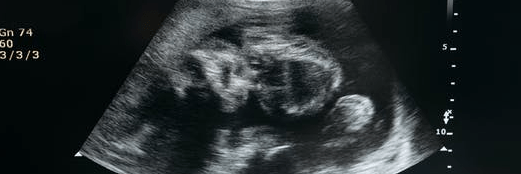
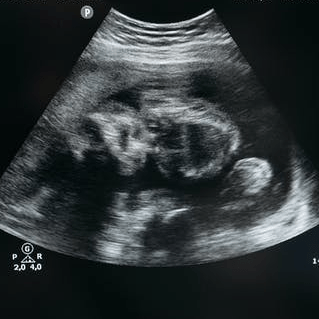







 Seek Truth