
Faith, Belief, and Their Application to Buddhist Teachings

Originally Written: November 8th 2017

Faith is defined in many different ways, but the most prominent definition is of complete trust or confidence. In terminology that is less religious, it would be a belief, or something that you intuit or come to the conclusion of – being true, a belief that is held as certain, or of extremely high probability. Faith is a risk we take, which I should, before continuing, state that I am completely against, at least in terms of absolute certainty. For reference to this topic – see essay “Benefits of Fallibilism”. In Buddhism, as well as monotheistic religions, there is a high value on faith, but I think that word is highly misleading. If we take the naïve definition that faith is merely the belief in the face of a lack of evidence, we really aren’t differentiating the term faith from belief, and, if this definition does hold to be descriptive of the term, it merely is stating something which, in practicality, doesn’t exist. In other words, you cannot believe in something without some rationale, without some form of experiential knowledge. In order to place absolute confidence or trust in something or someone, or God, or a higher power, you must necessarily pass through a succession of belief probability enhancements. We do not come to absolute trust or certainty without passing through stages of evidential proof in reference to the belief, which, must be rational. This doesn’t mean that the thing we place certainty in, in the end, is actually true, more so, it appears to be something we can be certain of. The mere appearance of having undeniable infallibility does not mean in actuality that it is so, whether that be in reference to an idea, scientific evidence, supernatural entity, or any other truth claim we can make. While I argue that it is more beneficial, in terms of alignment with the truth, and for openness to personal knowledge growth, to remain always fallible in our truth claims, there is a potential benefit to placing faith and confidence in others, which, we can temper by not adhering to absolute certainty, yet still reap the benefits of an evidential and rational approach to faith, which, we do so, despite the many claims against faith as it being “based on a lack of evidence”, which is merely a non-starter. Trust based on the absence of evidence, in something, necessarily means the conceptualization of “something”, which, whether we like it or not, requires the subject to have an ideal version of what that something is, and a reason why it is more likely to be true than its antithesis. Whether its emotional based, habituated teaching, or culturally defined, the mere conceptualization requires some sort of value judgment, and this is evidence as to why we believe something to be so, or why we believe something is worthy of placing our trust or confidence in.

 The more data we acquire in respect to a certain teacher, training, or concept, the more likely we are able to discriminate the long term effects of adherence to such teachings through the instrumental use of faith. Seeing character traits embodied by the adherents of certain principles, enables us to see what the results of believing in a similar manner may promote in ourselves. If there are character traits, or abilities, or skills, that are exemplified by the teacher, that are of a nature of being something we wish to acquire for ourselves, or improve in ourselves, then the data acquired in reference to the teacher or adherents in containing these traits can inform us as to if we would like to pursue similar pathways of training or adherence so we too can attain similar results. This goes for beliefs, values, skills, in addition to character traits. In general, the more information and content the teaching has that is in line with our current value structures, the better informed we are to desire to pursue a similar pathway towards our own personal attainment of such characteristics. If we can intuit that adherence to such teachings would be beneficial to us than the placement of confidence in the practice, which would be faith, or confidence in the teachings ability to result in similar effects, would be warrant-able in relation to the content of the evidence we have to its manifestation in said desired traits.

There is a use for this, and in the Buddhist tradition, faith is important. Placing faith in a certain teacher, or teaching, or practice, is essentially saying at least one the following: “I will believe that this is true, that this is good, that adherence to this would be beneficial and useful to me, that confidence and trust placed upon the teaching, or teacher, will result in an improvement in the quality of my experience, my wellbeing, and reduction of suffering.” For a beginning practitioner of Buddhism, who wishes to experience what the religion has to offer, based on some idealistic view of the resultant of practice, or on some intuition that its teachings are an effective way of navigating life, or solely for the experience of what it would mean to be a practicing Buddhists, it would be beneficial to place a limited confidence or trust in the dharma, or teachings of the Buddha. Just like any other thing we place confidence in, or wish to embody (for whatever purpose, whether academic, experiential, or even egotistical), I argue, we should first vigorously examine the landscape of potential teachers, religions, and content, which we wish to embody, before making the choice, as confidence or emergence into a framework will alter experience, in one way or another, and we need to make sure that the domain is something we have a valid rational explanation for attempting to experience, before we continue down the rabbit hole. We should never be certain of somethings beneficiality, but as we grow in knowledge through any specific training, we should constantly reexamine the path we are on, not only to recalibrate our lives with new information, but to decide if continued belief in such practices are truly what we value, or are the most optimal in reference to our current range of perspectives. For someone who has directly intuited the more optimal representation in novel truth claims, in reference to previously held truth claims, it no longer is faith which carries the belief, but it is experiential knowledge, but for him who hasn’t yet intuited these things, it takes an active pursuit of the truth to attempt to indulge in novel teachings form different perspectives, which doesn’t require faith, but could potentially be, in order to experience (whether in practicality or in the form of knowledge) a more optimal method of navigating life or of defining an aspect of reality.

We will continue with the Buddhist practice as an example, as it is something I believe to be beneficial and useful for most people to engage in, at least at some point in their lives. At first someone may just believe that it is true, based on a rational belief, or thought, in its coherence to the reality one has already experienced, but after practicing mindfulness, and exploring the claims in firsthand experience, you can come to experientially realize the truth or effectiveness in revealing aspects of our nature to ourselves. In this way you can move from simply believing something is probably true, to a degree, to knowing that you have experienced it and know it is true, in the practical result of its carrying out. For example, moral shame and moral dread being the foundation for morality. Once we have recognized that we experience the horrible feeling of shame after an unwholesome thought, or spoken word, or action, this feeling can lead us to wish to not make the mistake again. In future situations, where the inclination may naturally present itself to repeat the offence that manifested moral shame in the past, we now feel a moral dread towards its repetition, and henceforth are convinced by the memory of negative emotion produced prior, to not repeat the action. Thus a sense of moral shame and moral dread can lead us to moral improvement, and we can experientially understand the purpose and perspective given by the Buddha’s teaching. Whether or not we think it is the most optimal way of representing such phenomena, depends on our knowledge up to the point of the realization, but that we can experientially understand it as a way, to better or less optimal degrees, is clearly present to us. This ability to experientially realize the usefulness in conceptualizing moral prerogatives in this way, moves from a mere rational conclusion, to one that takes the form of a certain type of practical truth, in that, in practicality, it has presented itself as truly being in reference to phenomena which we experience.

In a similar way, the four noble truths, we’re taught, are all within us. At first we may contain the logically coherent belief, or reason applied to information which we don’t have absolute faith in (certainty, or complete trust), yet, based on a rational contemplation, as it appears conceptually to be in line with an abstract view of the content of our experience, we can see the utility and accurate alignment with our prior experience. This belief or rationally held coherent explanation for psychological suffering, its root, and its cessation, and path to its cessation, appears as useful knowledge, but it isn’t until we experientially recognize it as manifesting itself in our lives, that we come to the true knowledge of its coinciding as a framework which truly applies to our lives, and we come to a place where we can practically employ it in a useful manner. The more data we have in support of such conceptualizations of psychological suffering, the more we realize the application of Buddhist principles in the reduction of suffering, the stronger the belief becomes. That being said, and it may be contrary to the fundamentalist Buddhist traditions teachings, absolute certainty, or complete faith, in my view, should be avoided at all costs. Even the experiential knowledge of the true practicality in certain knowledge, doesn’t make it infallible, it simply points to it being an accurate way of conceptualizing and acting in the world from one point of view, it doesn’t move it into the domain of the best possible way of Being, or mode of Being, which we should conceptualize as a goal worth striving for but ultimately never attainable. I believe this way of thinking about practical, experiential, and objective truths, is ultimate the most beneficial way to not close ourselves off to the possibility of better answers, or modes of being, which we may eventually uncover.

A liberating experience is one in which you have direct insight into the truth of reality, we can become liberated from ignorance, in certain domains, through the faith in certain teachings, transferred into either experiential knowledge, or disregarded as contrary to the subjective experiential evidence we contain in our conceptualizations of reality. What we must safeguard is attempting to spin a teaching to be in alignment with a perspective of reality, as we can do so with almost any teaching. In this way the intellect can be both our friend and our enemy, as we are able to rationalize views to coincide with the image of reality we may have. The greater the intellect someone possesses, the greater rational, and logical proofs one is able to make for the existence of a perspective to align with reality, therefore, we should be very careful as to the content of our language in representing knowledge of reality, as almost any description can be, whether metaphorically of scientifically, interpreted to align with reality through the use of language. We must do our best to safeguard our conceptualizations of reality from confirmation bias, and seek to discover what actually aligns with reality, rather than what we can bend and view from a skewed place to align with it.

In the western world most people have a scientific grasp on what the Buddha meant by dependent origination, or the law of sufficient reason as acclaimed by Schopenhauer, basically that everything has a reason, that everything is the way it is now due to past causes. In the modern age most people understand this naturally, as we have indoctrinated the youth with knowledge of science, physics and so forth. But what most people don’t connect is that this law doesn’t only apply to phenomena outside of ourselves, but as Buddha said, all conditioned phenomena, i.e. everything. This includes ourselves, our psyche, our thoughts, speech and actions. For a long time, I was a proponent of free will as the cornerstone of my philosophy, but occasionally I would experience cognitive dissonance when trying to make sense of a reality that includes both free will and dependent origination. Free will is intimately tied up with a sense of ego, or self, on a way that we have pride of our accomplishments, and disparage others for their shortcomings. We feel good about the things we do, because we believe that who we are, as a permanent controlling self, did them. So stripping away the self, this ego, this pride, is extremely hard, and appears to go against our subjective experience of life. This is where the dissonance sets in. You understand outside of yourself, objectively, that all the world came from prior causes, yet subjectively, you believe your consciousness and “decisions” do not follow the same law. This believing in a false self, that is somehow in control, yet understanding that everything is due to prior causes, is a contradiction and causes confusion. Now most humans live believing they have freewill, and are happy doing so. But for someone seeking the truth, it matters not how the truth will affect you emotionally, or what modification to your subjective experience may take place as a resultant of the truth, or what pride you have in your ego. What matters is the truth itself, and moving closer to it. Liberation comes when you understand that this self, this ego, this pride, does not exist, that it is merely a manifestation of a narrative which may prove useful or beneficial evolutionarily, or even societally in the capitalist world we live in, but as far as being conducive to wellbeing, and the reduction of suffering, I argue, that it is not the optimal path. What you are liberated from, is a false view, or ignorance, and what you are liberated by, is a higher resolution image of reality as it actually is. It doesn’t mean that you now have hold of the most accurate conceptualization of reality, but rather, you have removed one false view of reality, in this way, we can become liberated, or free from, ignorance, in steps, as we move towards more and more accurate depictions of reality through knowledge.

The Buddhist practice of mindfulness is useful in revealing certain aspects of our experience that would otherwise go unrecognized. In consciously directing our awareness towards the content of consciousness itself, within the present moment, we care realize the truth claims which the Buddha made in reference to non-self, impermanent nature, and the ever pervading unsatisfactoriness inherent in our Being. If you think you are in control or that reality is fully deterministic, only one of which is true, the belief you have is only due to prior causes. It wasn’t until I experienced directly the arising and fading away of mental phenomena, with causes outside of my conscious control, that I began to see free will as a mind fabricated illusion, which, we can see, developed for good purposes. The view of the self as permanent and subsisting through time as a source from which experience comes from, isn’t the best way to view our experience, once we realize the constant change of experience manifesting itself into conscious awareness, prior to conscious decision for it too. Even the conscious thought of attempting to direct the next thought, merely arises itself from a subconscious place. This content of consciousness which we can become aware of, commonly called “mindfulness practice”, presents us with content that is arising and fading away, constantly changing, and is not itself directed by “us” as an agent. These descriptions of experience which we realize, are exactly what the Buddha proclaimed as being fundamental within our experience, thus, if we were to place confidence in the Buddha, or have “faith” in him, before attempting to be mindful, we would be lucky in regard to these teachings, that the claims actually aligned with our experience.

If one happens to place faith in a certain teaching, the risk lies in the actual utility of the teaching as being in alignment with reality as it is. We can clearly miss the mark, and do so quite reliably, anytime we place faith or confidence in anything outside ourselves, we make that risk. But in the case that the risk proves to be beneficial, and the confidence well placed, it’s possible for the strong belief of confidence or trust can move to actual experiential realization, internal understanding, and thus to knowledge. I argue faith in certain Buddhist teachings can offer this pathway, as I have experientially realized the truthfulness involved in the beneficial and usefulness in seeing things from the Buddhist point of view, at least in regards to dependent origination, non-self, determinism, and morality. But could I recommend to someone to place confidence or trust in a certain system? Not necessarily in a system, or a religion, or in anything supernatural, but in the case where I believe I may have some beneficial knowledge that could aide someone, I would definitely be able to confidently vouch for the content of my own personal convictions, but it would only be in the case where I authentically believe it would provide a truly beneficial and useful advantage over the individual’s current conceptualization or wellbeing. This is generally why I don’t criticize advocates and apologists of the Christian faith. Many people view them as obnoxious in their attempts to alter someone’s life, belief system, and values, through active campaigning of their ideals. While I disagree with the truth claims they make in regard to supernatural phenomena, such as heaven and hell or “God” in the strictly Christian sense, I can tell their intentions are pure in attempting to lead and aide others towards a place they truly have faith in and believe would be beneficial for the other person. While I’m no proponent of Buddhist supernatural claims, I do, often, believe it could be beneficial for many people, at certain points in their lives, to at least take some time in exploring the ideas, as they could be useful to the individual.  Is this even faith at this point? Not necessarily. The point is, that placing faith in anything, can yield better or worse results than in other things. The opportunity cost is ultimately too high to place complete or absolute faith in anything, and the loss which we could experience in embodying a mode of certainty, in respect to any truth claim, is ultimately less optimal than maintaining a fallibilist point of view. If we have some reason and logic and work to apply conscious direction towards the content of which faith can be placed, then we can, potentially, grow through faith in that certain domain, as long as we, at all costs, do not move the definition of faith to complete certainty, and merely regard it in an optimistic sense of trust and confidence, and maintain a realistic world view of the potentiality for it not to turn out the way we hoped.

Benefit of Self-Analysis of Belief Structures

Originally Written: Oct 23 2017

Our biases or culturally and epoch based opinions we consider normal, may not have always been normal. Look at what you think is normal, as being strange, and see things from a different perspective. Do you have sufficient evidence and rationally coherent beliefs? Are your beliefs compatible with each other? Where do contradictions lie, and how can you justify yourself? There is a dependent origination for everything, a cause to every effect, things exist based on prior causes, and your conscious state is interwoven into the web of causality. If you can be a cause, you can influence the future, be the cause that produces the future which you wish to manifest. Others may show you reasons and truths, but consciously justifying it is your job, and your actions, and in general, your Being, create a ripple effect of causality, which can potentially modify the world in a useful and beneficial way, or the contrary, optimizing this modification towards wellbeing and truth is our individual responsibility. In making sure we manifest the values which we have developed as being important, there are better and worse ways to do so, and we should diligently strive to uncover what these ways are, and through experience, learn what does and doesn’t fall in line with our beliefs.

Look at why you do anything, where you learned it, even with language and thoughts, it all comes from somewhere, this is where practice in mindfulness helps you realize what is automated or cultivated and what you control. You can control what influences affect you, thus you consciously control the causes that will produce an effect from you in the future. This is the importance in discerning the right influences which enter into our experiences, teachers, friends, even something subtle such as music can affect you, so choose your influences to reflect your beliefs or they may lead you to be someone you don’t want to be. The danger is in allowing content contrary to our values to affect us, and in its re-occurrence, rubbing off on our character and beliefs and becoming habituated. Once contrary values become instantiated in our Being, and they become normalized, you won’t realize where you went wrong, or that you went wrong at all.

Ignorance in Respect to the Universe Outside of Our Visual Field

Originally Written: October 22nd 2017

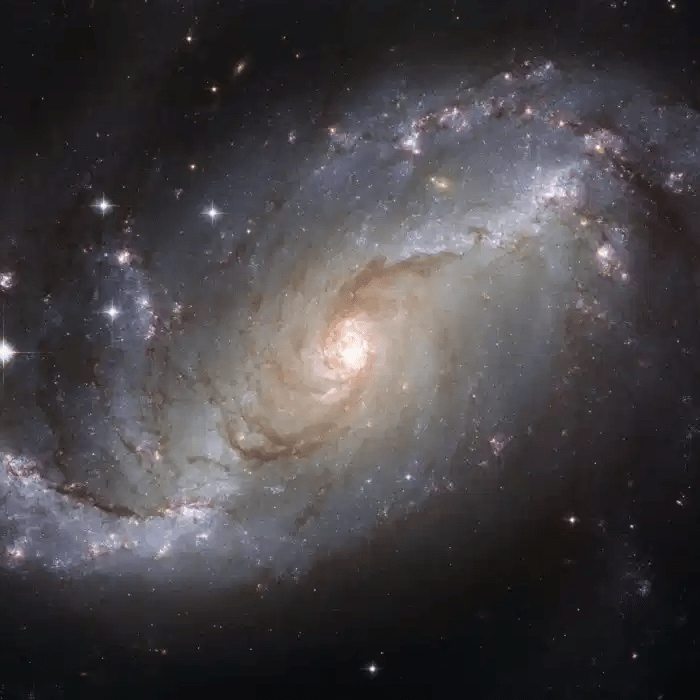
We cannot see the entire universe. Only what is within the visible horizon. We see galaxies far away, moving away from us, a red shift in the visible light, indicating they are moving farther away. So if we see a Galaxy 4.5 billion light years away, we really see it was 4.5 billion years ago because that’s where it was when it emitted the light we’re seeing, meaning we were closer to it 4.5 billion light years ago, but since that time the universe expanded, making it much farther away than what we currently see. Meaning, the light it is currently giving off, in our present, potentially could never reach us, depending on the rate of expansion, as we’re moving too far away as the universe expands. This is scientifically proven, that we only can see as far as light could travel to us. So anything outside this range, we will never be able to see. What if our part of the universe is expanding, but there are other parts of the universe so far away that they didn’t start from the same big bang that we think to be the whole universe, and that the big bang theory only applies to our portion (our visible universe) of the universe.

We intuit the Big Bang Theory based on the expansion of the visible universe, and conclude, based on the red shift of light, that it all originated in one point in space. But, the necessary limitation to this theory, is we make the assumption that the entire universe, even that outside of our visual field, also originated from this point. It is entirely possible, that our corner of the universe, that is visible and able to be mathematically deduced to the theory of the Big Bang, is not the entire universe. It is possible, that there are areas so far outside our range, that if we could gather data on, could point to a different origination, or possibly to eternity.

We can’t record data on parts of the universe that we can’t possibly come in contact with. What if these unrecorded parts of the universe point to a different beginning than the Big Bang, which only accounts to our visible universe based on the data we have of. We would never be able to approve or disprove this theory, because there never could possibly be evidence of galaxies that are so far away, our expanding portion of the universe makes them expand away from us faster than the speed of light, it only could be proven if a Galaxy previously not within our visible portion, that couldn’t previous be seen, was now seen moving into our visible universe from some unknown outside space. Could it be possible that there are parts of the universe that were, are, and will be, never visible to us? Even at our intuited Big Bang, they were so far away that even light couldn’t travel far enough to reach us, and after the Big Bang, they just got farther away?

Intro to Fallibilism

Originally Written: September 26th 2017

Divine supernatural elements, even when derived using a logical and rational scientific method, are still theories, and you shouldn’t believe them to be infallibly true, because they aren’t. Our human desire to grasp the origin of this world, or the universe, prompted many metaphysical religious beliefs in order to answer something inherently unknown. This is the same thing science does in justifying the big bang or string theory, etc. Don’t believe in these theories, nor suppose they are not true, without sufficient evidence and rational non-contradictory proofs, and even then, I argue, we must maintain that they are veiled of their true nature through the biological filter in which we intuit them. We ought to withhold judgments upon things we do not know to be true, and admit deficiency in accuracy when making claims. It is completely honest, objectively, to state that you believe something to be true, and it is completely dishonest, to state that it is absolutely true.

I may passionately believe certain things are right or wrong, good or bad, or in this sense, true or false, yet I also believe that they are not the limit of what I could potentially know, in other words, the beliefs are held due to my subjective experience, but the belief in something more accurate yet unknown as a possibility is still simultaneously held as a constant. This is the groundwork fallibilism, of a state of mind which is open to experience, never finding a permanent answer, only a workable temporary one. Our state of being, whether we like it or not, is constantly in a process of becoming updated, refined, or changed, as new evidence and novel experiences provide insight into a better conceptualization in alignment with reality. The mode of being fallible, consciously, opens us up to this process, and does not hinder it from working in beneficial and useful ways, but on the contrary, encourages it. The personality trait openness defines the mode of Being which is characterized be an inability to maintain rigid, formal, concrete, idealistic views of the world, and rather seeks to uncover novel articulations, and novel experiences. In refraining from a concrete framework, and attempting to navigate one’s state of being away from absolute certainty, we become open to novel, sometimes abstract, sometimes difficult to accept, articulations and beliefs that would otherwise be repudiated from their conception.

The Miraculous Nature of Our Current Condition

Originally Written: August 31st 2017

The universe is mostly empty space, as far as material things (not atomically or energy wise), it is filled with stars and galaxies made up of certain elements we have discovered. To be a human, on this planet, a rational conscious animal, on a giant rock, and currently living in the present, is such an improbably situation to find oneself in, especially in today’s day and age in comparison to any previous epoch. In a universe filled with inorganic non conscious materials, here I am, aware of a piece of it, among other humans like me. It’s absurd the miraculous nature of life, even existing in the universe, not to mention human life, able to consciously observe itself existing. We are all existing here, surviving, as such a small part of the entire universe. This gives me a sense of wonder and makes me think, why be agitated and filled with unwholesome desire, greed, lust hate, or ill will? It’s a miracle to be alive, why spend it unhappily, causing others to experience suffering? For what? To fulfill a desire ingrained into us by evolution, while ignoring our capabilities to rise above these sensual desires, these petty wants? Evolution has equipped us with the ability to not act in response to every stimulus, but to choose what we do, and don’t. The implications on our experience are clear, we can have better or worse experiences, and can influence other’s experience, so, if we care at all about suffering and wellbeing, which we do (admittedly or not), we ought to work away from the former and towards the later.

There is an extremely small amount of time I have to be aware of this universe, to experience it, to understand it. I will try to spend my time in the present moment, where everything truly exists outside the bounds of illusion and ignorance. I will attempt to not get lost in the evolutionary animal nature that fights against me, in a man-made illusion, living for the sake of money, reputation, or fame. I would prefer to experience this life to the greatest extent that I can, in the best way possible, and help others to do the same, over constantly running after an unguaranteed happiness through fame, power, riches or momentary sensual pleasures, that ultimately will be lost. You can spend a lifetime seeking these things, and either never achieve them, or achieve them and realize that inner peace and reality existed in the present moment the whole time.

Life is precious, and amazing, and we have it, for a short amount of time, and it goes quickly. Live this life fully, the right way, or be filled with regrets and miss the only chance you will ever have to experience something real. A sense of wonder, gratefulness, amazement, in this life, human life in general, in this universe, and this present moment. Love is the greatest feeling on Earth, and our ability to experience it, and to manifest it in our actions, justifies any suffering we may undergo. Understanding the truth, and the reality which we find ourselves thrown into, enables this astonishing perspective of how beautiful everything in existence is. Over the period of recorded human history, many have put in the effort towards the great task of understanding, and conceptualizing reality, in finding the truth. This includes philosophers, religious contemplatives, scientists, in short; thinkers. They have come up with explanations, perspectives, views, proofs, and ideas, of which someone who hasn’t put in the great effort and critical thinking could ever come up with. I devote my life to following in this tradition, to being a seeker, to seek the truth. These writings are part of what I found.

Sunyata (Emptiness)

Originally Written: March 2017

Feelings, consciousness, matter, thought, in short, Being, and Reality, are all empty. They are all impermanent and do not exist independently. They all depend on something else, they have a cause, and therefore the thing itself is always in constant change. Being in constant change, doesn’t make it not real, or not existing, but makes it empty of a permanent nature. Our current linguistics make this hard to recognize, as we classify things and perceive them as being stable and permanent, they “are” the name we give them, while this is appropriate conventionally, in an ultimate sense it is actually the antithesis to the truth.

                   This “emptiness” is devoid of any label you can put on it, since a word doesn’t accurately describe as it is in the moment, it’s an illusion we use to refer to it. All material things you put a name to, such as a chair, don’t describe it as it is in itself, just as a mental connotation, a conceptualization that forms as a way to represent the item and distinguish identities for practical purposes. When viewed down to a microscopic level, the chair itself is more empty than having an actual solid molecular existence. This is true, but just an example, that the reality we are viewing using words isn’t one that accurately describes it conclusively, only to a degree of the preciseness and articulation of our speech. Based on any phenomenons subjection to continual change, the object, as a permanent entity, doesn’t “Ultimately exist” in a concrete manner, in reference we are more accurately depicting its true nature through the connotation of emptiness, or not as we think it is. What we think something is, is necessarily contained in a perceived image, or conceptualized thought formation, and is based on the filtration of our neural and conceptual system in its formulation, it is merely a representation, in a way that is practical to our usage, of defining or envisioning the phenomenon. Its existence within this moment is dependent on the infinite number of factors that are at play within the universe at any given time, the “object” is conditioned in this way, always, every “object” is only in its current state due to other conditions being present. It is not something itself, it is codependent. This goes for all phenomena, not only is anything material that exists empty of an inherent nature, impermanent, subject to change, dependent on conditions, but the mental phenomena we experience in consciousness contains the same characteristics. This is the nature of sunyata, or emptiness. Emptiness sums up all these factors in reference to any phenomena we can point out, in a manner depicting the “ultimate truth” rather than “conventional truth”.

                   Understanding emptiness empowers us to not be attached, or cling, or hold as important, things in the material realm, or people, or anything that is taken in through the senses, due to it all being impermanent, subject to change, and having a cause and cessation. Such as, if I’m feeling angry now, and I think “I am angry” both the “I” and the “angry” are constantly changing, empty of anything concrete, thus convincing yourself of such a conception as being concrete, you will hold on to the negative emotion and draw it out for a longer length of time than you would if you were to see it as it is, merely a mental formation that is subject to change, empty of any permanent nature. As soon as you attach a concrete identity to a phenomenon, and fail to see it as impermanent and empty, you become entangled in the illusion that it is something with a concrete nature. The correct way to view this would be acknowledging that the emotion is taking place, and be the viewer of the emotion on your body, recognizing it as something impermanent that will change, and something that has a cause, and an end or cessation.

                   In this context the ego is a mental formulation of a way to describe who we are, such as a story of our past or the person we think we are. The true “self”, or the space in which our consciousness is revealed to us (contains all our experience) is not explainable, it is the one who can view the ego. Understanding emptiness allows us to pull away from our ego, to not need to project power over others or to “show off”. The ego is that which seeks to define who we are using a narrative that we ourselves view as appealing, or descriptive, in a manner that limits the scope of its true nature, and is driven by the desire to be respected or admired by others. The “true self”, or the conceptualization of the Being that encapsulated the totality of our experience, is not explainable, “we” as in, not a permanent being, but in a conventional sense, are just the viewer of the content of consciousness as it arises in the world. None of these things composing of our false self are permanent, they all change, and one day will die, or cease to be. Therefore, the false self and the true self are two different things. This false self has never truly existed, and never will, that is, in actuality, its existence is that of an illusion we create, it is in our belief that this false self matches up to reality that we err. The “true self” in this context, is merely the recognition that what we are is devoid of a permanent, unchanging nature, it is merely the recognition of emptiness as being the defining characteristic of the core of any state of Being which encapsulates “our” experience. It can never just be, it is impermanent and changing. The true conceptualization of ourselves, in this manner, needs to negate this ego, this false self, as being empty, as being without any true essence, and not worth holding onto, similar to an emotion. It is something we can watch, and it is something that our we can choose not to act upon, like anger. Removing the false self whenever it emerges, or attempts to manifest itself in instantiating thought, speech, or action, is part of the process of realization the fundamental characteristics of who we truly are. The removal, albeit, never permanent removal but merely temporary, or something which is subsumed by Correct View in its removal, necessitates the emergence of not only a higher state of understanding ourselves, but opens a doorway to a better experience of wellbeing.

               The state of being characterized by insight into the empty nature of all phenomena, is coupled with the realization of non-self, and, once it is in reference to this “mode of Being” that many mystics attempted as defining as encompassing paradise, or heaven, or Nirvana, as an internal state of mind, that we all have, lying beneath the illusion of the ego. According to this view, we all are “enlightened”, or we all have the potentiality for peace within, that can be instantiated through Correct View in regards to the fundamental attributes of existence. This peace lies beneath the delusional view that our biological system has good reason for creating, for practical purposes, as a natural means to understand the world. Seeing not only the conventional sense of reality, but the ultimate nature in its fundamental characteristics, as relayed by concepts such as sunyata, or emptiness, allows you to see two sides to the same coin in reference to the reality which we face every day. The practical application of language towards our everyday life, is useful for navigating in the world, and the ultimate truth available through direct insight, is useful to our internal understanding of the actual nature of reality which produces this conventional reality.

Correct Speech

Originally Written: February 2017

Be wise and discerning in sharing yourself, understand the audience, and their perspective. Many things people won’t be able to understand, or they will judge you negatively based on what you tell them due to ignorance of the nature of the situation, and that’s alright, and not a terrible thing, people have different perspectives and understandings, and predicting the effect of our speech is important in discerning what we should say. All speech that is withholding, often denoted as a “white lie” is not exactly dishonest, but can at times be appropriate. White lies become immoral when the information withheld would be beneficial and useful to the observer, more so than detrimental, the discerning of such effects is clearly quite a task to carry out, but, with experience and greater understanding of people’s psychology, we can better predict the resultant effects of speech. Every situation, every person, every moment, contains within it the possibility of good and bad, and what we say, or reveal, contains the same possibility. Intention and desired outcome is important, the reason why we say something is something that truly should matter to us, and we should look to understand why we want to say certain things to certain people, and in this way we can better understand our own nature.

 Correct speech is based upon honesty, but also usefulness and beneficiality, some things said, although they may be factual, are not the best way of teaching or helping another. At times it is easy to assume that it is always a good thing to tell the truth and if something really happened or if we truly are thinking about something in the moment, then there is no crime done in sharing it with someone. This isn’t as obviously useful and beneficial as it may initially seem, and often times, this line of thinking does not lead to an optimal outcome. There is a way to remain honest, and display an idea, without involving the ego, without causing suffering. There are many times when a certain form of honesty can be unvirtuous, in those words which are truthful yet hold bad intentions, or intentions solely focused on painting our own image, or those utterances stemming from an unintegrated part of the psyche, such as the persona. This doesn’t mean that the flip side isn’t true. There isn’t anything wrong with helping someone else get to know us, and our intentions can still be pure in doing this, if we are mindful of it and deem it wise to do so. This is more beneficial than just letting the ego run wild in building a picture of ourselves to impress the other person, such as in persona dominance, but genuinely sharing information that is pertinent to the other person getting to know us, because they have told us they wish to do so. In many cases there are two sides to one coin, and we should look to integrate both sides into one overarching view, in all subject matters of importance.

In practical usage, we must be careful with our speech, to the degree we do so, the better our experience. In Buddhist doctrine, Correct Speech is characterized by a number of factors that, in each individual distinction, we can see the benefit of, but in the totality, may be “perfectionist” or stressful to uphold. The idea here isn’t to stress ourselves out, but rather, strive to perfection, and see how we can better use our speech towards beneficial and useful means. In Buddhism correct speech is characterized by the complete abstinence of any speech that is not beneficial and useful, not conducive to aiding the other person, or yourself, in alleviating suffering and providing wellbeing. Speech must be unequivocally true, and based on intentions towards the wellbeing of others. Speech that is untrue, unbeneficial, promoting unwholesome actions such as violence, stemming from ignorance, “Wrong View” or not in alignment with the dharma, “Wrong Intentions” or ill-will, speech stemming from negative emotion, such as anger, speech characterized as gossip and even idle chatter, are all considered “Wrong Speech”. Speech that is of other people, who are not around, in a way that criticizes their character, such as in gossip, is prohibited in Buddhist Correct Speech. While in our lives the criticism of another person can serve to aid the person we’re in conversation with by providing them useful knowledge, the gossiping that is here listed, is of a nature that is merely out of hate or ill-will for the person we are gossiping about. This type of speech creates division between people, rather than union, we should aim at bringing people closer together in harmony, rather than creating separation. Any speech that springs from bad intentions, that merely looks to paint ourselves in a deceptively “good” light, through the admonition of another, is considered wrong speech. But the Buddha expands to even more restrictive ends in his conceptualization of Correct Speech. Talk that is for entertaining purposes, talk of popular people, of events, of “village talk” or “idle talk” such as about politics, or inconsequential speech that doesn’t serve the purpose of alleviating suffering, or providing the truth about a better way to live, truth that is merely neutral in content and neither useful nor detrimental, is also admonished in the Buddhist conception. Any speech that is of a harsh tone, or stemming from anger, frustration, or negative emotion, rather than from a calm, peaceful, loving mind, is also to be stifled with mindfulness, and he states we should work to make our speech come from a place of love, while maintaining a soft, non-aggressive tone. In my opinion, this aspect of Buddhist Correct Speech is not optimal, always, as a general rule, it is practical, but there are situations in which I believe a harsher tone is necessary to convey the message, in times when the optimal solution or teaching must be characterized by some tough love, where our tone may be more aggressive. As long as the intentions are pure, the content is true, and the message is beneficial and useful, I believe the speech can be presented in a less than harmonious way. We ought not always embody trait agreeableness, there are times when being disagreeable is in our best interest.

Being mindful of the content of the present moment, in paying attention to what manifests itself as a precursor to our action in communicating using language, we can identify speech that is of any of the above admonished speech, and seek to consciously promote that speech which is wholesome. Mindfulness of the thought precursor behind speech may be hindering in “over thinking”, yet, until our character is sufficiently grown so that it’s spontaneous manifestations are in accordance with our value structure, we must promote the beneficial habit forming practice of being mindful of what we say. Until the source of speech is purified, we ought not respond spontaneously in conversation, that is, if we wish to cultivate the character trait of being able to produce Correct Speech. Mindfulness in regard to our current state of being, including our emotional state, can also inform us as to the source from which our speech is coming from. Any state of being that is characterized by negative emotion, and not one of good-will towards the conversant, ought to be mindfully avoided at the first sight of its recognition, in this way, we can use the Buddhist practice of paying attention to the present moment, to modify the speech which we produce, through being aware of our current state and its implied inclinations.

We should seek to be more careful and articulate in our speech, to be wise in everything we do or say. We may sometimes feel like we want to share something, for our own gain, and a lot of times this is okay, but also, a lot of times this is not the way to fix a problem, or to accept what has happened to us when the content is specifically producing negative emotions within us. Many times another person cannot solve these problems for us, we must seek to conquer our own demons before unleashing them upon the world. They are ours, and our responsibility, only with someone truly ready, truly a seeker, with little dust on their eyes, can we reveal the whole truth to. We must be wise in who, how, and when.

As far as following universal maxims, or dogmatic rules from which to follow in the use of Correct Speech, I think such rule following is quite dangerous, as novel situations need be handled with tailored responses, and often universal maxims fail to take into account extreme cases where they are less than optimal. When the stakes are highest, and the effect of true speech in terms of violence, or profound suffering results, we must be conscious of employing ulterior methods than the general values we have listed above in producing speech. Lying, deceiving, speech from ill-will, while generally are in fact beneficial, are not all inclusive to every situation we may find ourselves in, and in extremely rare cases, their implementation may be optimal towards the saving of life, or the preservation of life. If you still think along the lines of “I’m going to tell the truth, regardless of its content, it’s virtue,” then you are thinking to shallowly. There is so much more nuance to truth telling, sometimes the truly best thing to say is not the exact objective truth, but rather metaphorical truth, or the lesson learned from it. There are truths to useful way to operate in the world, and this itself can aide others in the navigation of their lives, we shouldn’t limit truth to purely objective and scientific truth, but expand it to the knowledge which would aide in progressing another person toward their goals, or in opening them up to the potentiality of a different perspective, or way to be in the world. While this may seem opinionated, if we look from the objective standpoint of better or worse solutions to alleviate suffering and provide lasting wellbeing, or better or worse ways of being to improve one’s journey towards a desired end, we can categorize, morally, the beneficial and useful nature of some content of knowledge in proportion to another, the revelation of this, would be metaphoric truth, or truth which can be used for practical purposes, insofar as it is an objectively better way of navigation towards a desired outcome. As in all else before, discerning when and how to reveal metaphorical truth is a task of prudence, and experiential knowledge of effects of certain concepts and ideas can better serve us as data points to use as reference to know the proper speech given a situation.

Events and experiences need to be filtered through the language of the audience, in order to have a meaningful connection. The language we use should be tempered by the person we are in conversation with, we wouldn’t explain a concept the same way to an academic colleague as we would our child, although the same “truth” may be present in each, the way we go about articulating the idea, the terminology and form of rhetoric we use in conveying it, must be appropriate so that the knowledge conveyed is in terms understandable to the audience. Be yourself, but be wise, and don’t follow a simple maxim. We should constantly be updating our articulation of concepts, and ideas, so as to better be able to represent them symbolically in the speech we use to convey them, as well as, obviously, to sharpen up our conceptualizations into a more useful format. The way we do this with our speech, it has been argued, creates the thoughts which fill our experience, so a more precise and articulate way of conceptualizing, for ourselves, produces a greater ability to categorize and judge reality as we experience it, modifying our experience and shaping the way we see the world. As we become more articulate, and better able to clearly conceptualize reality, the clearer we can make distinctions, and the better teachers we come, effecting our speech positively. Look deeper, think harder, doing and saying the right thing isn’t easy, because its implications can be long lasting and significant. Its effect can change more than we can calculate, and anything that comes from us we must take responsibility for. This doesn’t mean over analyze every word, but in general, we must work to ever improve our speech, if we wish to live our best potential lives, and to aide others in their journey. It’s not always in telling someone the answer that teaches them, but sometimes the question, or the journey, is more valuable.

Utilization of the Will

Originally Written: June 1st 2015

The will of the individual is always the same unchanging desire throughout life, but how you achieve what you will, and what you are willing, can always be changed and redirected. For example, my will yearns after the feeling of happiness, or freedom from pain, and also wants to acquire the most accurate view of truth about the world, my will is directed at knowledge and wisdom to make the best decisions in every situation, it seeks physical pleasure, and mental stimulation. I think everyone shares this basic nature, but how it affects our lives, and how we act on it, and in which manner or towards which aim or within which activity, is all something that is differentiated.

This will, will never change, we won’t ever be free from desire, from want, it drives us every moment of the day. We can take steps and work to change what it is we do with it, what it is directed at, and we should try to do this consciously in a way that aligns with our values. We should work to expand our mind, and focus our attention on the things that truly matter to us, instead of being carried away by biological and culturally ingrained urges. We should work to understand our subconscious, and the physical system which includes our brain, which produces our conscious awareness, but at the same time, we should use our ability to reason and contemplate in affecting how we act.

Here we can realize that the bottom up system, our physical nature, produces our conscious thought, but also there exists the top down system, where this consciousness in turn will affect the action of the system. We must understand both, and utilize the ability to reason. We must integrate both aspects into our understanding of who we are, as they both are significant and working in every moment. We will eventually get to the deterministic nature of every phenomenon we experience, but what is important here is that what we think, will also determine what kind of experiences we are having, and the proper wisdom and influences and knowledge will be useful in understanding and implementing the conscious system which we potentially have in our grasps within every moment of our lives.

Theory of Differentiated 4th Dimension

Originally Written: October 16th 2015

For any given extension of space relative to any other extension of Space, there are four dimensions intuitable at play, and possibly more, according to different theories in theoretical physics. Everything, including a human, occupies a specific position within the three space dimensions (x,y,z coordinated); as in people can’t be standing in the same spot, only one set of particles (strings, wave function manifestations) can occupy a given x,y,z coordinate location relative to a given time. What if we all occupy different time dimensions as well, just like we all occupy different space dimensions? What if what my “present” is, is a unique dimension only I am contained in? It seems as if there is evidence for this, and a logical coherence with the laws of physics as thus far understood, and it is potentially more than just a hypothetical state of affairs. Why do we all assume we are in the same position within the time dimension?

If we are the only ones occupying our current position in the spatial dimensions, why do people commonly assume we all are in the same time dimension as well? It makes more sense for us to have a unique time dimension.  My “present” might contain the past or future for a different individual consciousness. If time is relative in the sense that for the individual, or bubble of space, (this theory isn’t applicable to only people or consciousnesses, but to any set amount of matter, or space, or particle, etc.) the time flows slower or faster depending on mass and speed of the bubble in movement, and every person, every piece of matter, is moving at different speeds, and affected by different masses (these are extremely small differences for humans but over time, and over larger distances, compounded and differentiated). We must not forget that the entire span our lives these speeds and masses vary according to the individual, or set of space which we are contemplating, thus compounding, speeding, slowing, in effect also the 2nd law of thermodynamics applies here, we are all increasing entropy within our own space, at different rates (of time and energy use), increasing randomness and entropy of the entire system, but differentiated depending on the space in question.

We end up with our current experience of the present moment, which is compounded by the entire “past” that is relative to us, what the universe compounded up till our birth, and what we and our “space” compounded up to the present moment, making a very unique situation for us, different from any other “space”, “individual” or “consciousness”. Isn’t it right to say that we all are occupying a different time? Whether it is a small or large difference isn’t the necessary point here. Over billions of years, the particles / molecules / atoms / strings, etc., all move and are affected in a unique way, namely by mass and speed as Einstein postulated, and is detailed by the space time physics we have on hand, thus eventually constituting our (individual) current “present moment” as experienced phenomenologically as my “now”.  Being our awareness of our consciousness, wouldn’t we all be located in a different now? To make this more clearly stated, my now, my present moment, what I am aware of in this current moment, isn’t the same present moment for any other consciousness experiencing their respective presents. This is setting aside the obvious lag between what sensory / mental data enters consciousness producing our conception of the “present”. Set aside that it takes light a few nanoseconds to reach our eyes, then a few milliseconds to be processed to the brain and presented to our consciousness – the exact speed of this process is itself unique to the individual (another point in favor of the theory, that itself stands alone in proving different time dimensions for each consciousness)– entailing that our now is really a view and experience of the past. Set all this aside.

What we are currently experiencing as the present, all factors including, cannot contain another consciousness experiencing the same present. As a thought experiment, imagine an identical twin, who lived the exact same life as you, a clone. In your present moment, you imagine that the processing of the brain of the clone is exactly the same speed, he has been acted upon by all the same physics throughout his life, and is currently conscious of the exact same present moment. Now imagine any other consciousness or piece of matter in the universe. They have not been acted upon by the same factors, they do not share the same physical system giving rise to consciousness, their brain is not the same, their speed, or amount moved, both as an individual and even on a minute microscopic level, (the amount of vibration or agitation in energy constituting each string / particle / combination of, expounding from the microscopic to the macroscopic) does not exactly match ours. Thus, everyone, and everything is in a different time dimension.

What is my now is my now alone, what my consciousness is currently experiencing as the present moment is not the same present moment for any other consciousness. This is assuming that we are not in a solipsistic universe, which would be a whole other unfalsifiable claim which I’m not assuming for logical probability reasons, in this theory there truly is other consciousnesses (I believe to be true), there are other people experiencing what it is like to be who they are in the present moment, the only thing is, their present moment is either in the past or in the future relative to ours, and vice versa. Thus we are alone in our present. It is possible that this more than just unfalsifiable, as we don’t have reason to believe that the usual common sense view is more likely, due to the scientific basis upon the fundamental physics of space time and its fluctuation based on mass and speed. If we didn’t have this evidence, then the theory would merely be unfalsifiable, a possibility, but the findings of Einstein provide a mathematical basis for the claim, more than just a philosophical justification.

Aristotelian Virtue Ethics

Originally Written: August 19th 2015

Aristotle set out in his Nicomachean Ethics to define the optimal means and the ends of human life. In doing this he posited a fourfold system of categorization in regards to the “causes”, which can be applied to understand any object, or phenomena. The first is the material cause, or what the object is made of, i.e. the matter that composes a phenomenon. The second is the efficient cause, or what conditions the phenomena to arises or what predeterminations cause the phenomena to come into being. The third is the formal cause, or the identity of the phenomena, what distinguishes it, what are its characteristics, what makes it recognizable, its form or shape as it exists in the current state which is under scrutiny. The fourth cause, and the most important for the task which Aristotle lays out in this book on ethics, is the final cause, or for what purpose the object exists for, what is the reason for its existence, towards what end is it used, or ought to be used.

If we take the phenomena as being Dasien, or a human being, we can apply this structure in order to determine that fourth cause, the one with practical implications, and for with which we can clarify meaning and a path in pursuit of that meaning, implying morality and a philosophy as a way of life. The material cause of a human is his flesh and bones, his cellular structure, his musculature, in short, those components which are the material components of an organism. The efficient cause is the parental gametes, the reproductive cells of his biological parents – of course the genealogy can be traced back further, but as the descriptive element of the initially preceding cause which formed the human, we point to the reproductive cells which constituted his initial formulation.  The formal cause is the shape or form of the human in which he is perceived, his bilateral, symmetrical appearance, the four limbs, the appearance of a human that we can recognize visually.

The fourth cause, the reason for which humans live, is less scientific and appears to be more subjectively determined. Many people claim to live for the sake of purposes which are far ranging, and many admit to not being able to determine what their “purpose” actually is. We can pose this question, and answer it from many different perspectives. From a biological standpoint, the cause of a human is to be the survival machine which propagates his genetic material into the future through surviving long enough to reproduce successfully in a way which preserves parts of his genome. From a religious standpoint, people can determine their purpose through sacred texts, spiritual insights, the worship and alignment with a higher power(s), and living in pursuance of the religiously formulated ideals. From an existentialist point of view, people’s purpose is to “create” or “discover” a consciously formulated meaning. Nihilists incorrectly assume that there “is no meaning, neither to be discovered or created”, that it merely doesn’t exist. While people may state various forms of meaning for which they are pursuing, the fact remains that people’s actions truly reveal their beliefs. Aristotle pointed to common pursuits which dominate humans lives, such as wealth, fame, and sensual pleasure. All in all, we can see an underlying factor to which all human life is striving for, Aristotle called it Eudemonia, which is commonly translated as “happiness”, but more accurately is akin to “wellbeing” or “human flourishing”. He claimed that for all the other factors for which people strive after, they do so for the sake of this flourishing. While his definition of happiness is quite different from our commonly intuited meaning that the word implies, I conceptualize the ends for which we strive as being the reduction of suffering, or unsatisfactoriness, and the increase in wellbeing, i.e. to have a more pleasant subjective experience.  All our aims and strivings in life are born from this unsatisfactory nature, as the Buddhist first Noble Truth states: “Life is unsatisfactoriness”. The biological imperative of desire and unsatisfactory nature to be a constant, drives us to pursue things towards their alleviation, for biologically beneficial reasons, so this isn’t necessarily a “bad” thing, it is actually a somewhat useful thing, in its essential foundation, yet it can be hijacked towards leading people to not so optimal activities and pursuits as the domain of knowledge and action, and the things that influence us, expands to include activities and mind altering substances, which are not conducive to the wellbeing, or happiness, which we all inherently seek. It here must be noted that Aristotle’s conceptualization of Eudemonia wasn’t short sighted, he didn’t merely mean the happiness or flourishing of instant gratification, or momentary peace, such as is afforded to us through Epicureanism in pursuit of temporary friendships or sensual pleasure, but rather that lasting and enduring resultant of activity which isn’t focused on the present, but afforded into the future, a life-long lasting flourishing and growth that we can take pride in, the resultant of volitional activity.  

The common drives of egotistical advancement, in areas such as wealth or fame, are pursued with an underlying desire for achieving happiness, so they are merely means to an end. The same can be said for philosophical systems such as existentialism, absurdism, religious or secular ideological structures. Thus, we have our end towards which humans are striving, that thing which is not pursued for the sake of another thing, but is the end for which all other pursuits are pursued for; happiness, flourishing, wellbeing, reduction of suffering. Now that we have a concrete end to human life, Aristotle poses what is the optimal path towards attaining a life that is in accordance with it. He claims that such a path must be self-sufficient, or relying on ourselves, as pursuits that are wholly out of our control, or in which we lay at the mercy of the external world; other people, material, or sensual inputs, are transient and unreliable, and altogether out of our control. This excludes from our search towards an optimal means to attaining happiness things such as reputation, wealth and sensual pleasure, for which most people commonly act under the guise as a means to the discovered end of Eudemonia, as they are liable to change due to external factors, and are not sufficiently pursued on an individual level in a way that is conclusively final in being the end and a mean simultaneously, and as being an exact derivative of our own creation. While these aims are pursued as a method to happiness, they are not pursued for their own sake, which is what Aristotle was explicitly looking for, that which can be pursued which in itself is desirable for the sake of itself.

Aristotle proposed that the concept of being virtuous, and in virtue itself, was the means and the ends towards which we will most optimally achieve Eudemonia. He developed the justification, and expounded the concept of virtue as being that means which is also an end in itself, which we ought to pursue as it is the optimal means of achieving Eudemonia, and in so claiming, the birth of the philosophical system of Morality known as Virtue Ethics is born. Aristotle claimed that we must not merely contemplate what it means to be virtuous, which we must surely due so that we can manifest it, but we must voluntarily embody the virtues in action, it must be an active exercise of voluntary manifestation of the virtues, not merely an understanding or rumination as to their content. As to what the virtues are, what they are constituted by, how we ought to display them, Aristotle had much to say, what it mostly boils down to, in my conceptualization, is the pursuit of manifesting the character traits that one has deemed to be “virtuous”, and from this action, one necessarily produces the most reliable form of Eudemonia, one that is depended not on any external source, but rather on the internal will and volition.

In my opinion, prudence, or wisdom, which is considered a virtue, is the all-encompassing source from which we determine what virtue takes precedence, as well as is used in determining when and how we should pursue Virtue Ethics itself. As to what this consists of, I mention in my essay “Wisdom Ethics”, in which I propose that the enterprise of Virtue Ethics necessarily falls under a broader categorization focused on the different utilities of selecting different moral frames of mind, and it is allocated as a sub category to a meta system of ethical consideration. Aristotle posits that virtue ethics is a type of morality that doesn’t weigh the outcome of moral actions, but rather focuses on the character traits which underlie the manifestation of action. He claimed, that through being a courageous, just, temperate, and wise person, and through the manifestation of these virtues and their development as character traits, one could naturally produce results which are of a morally “good” nature, and provide the moral agent with a life most readily consisting of a state of Eudemonia. The extent to which we are able to develop conceptual and experiential knowledge as to the virtues, determines the degree to which we can manifest them. The morally good he claimed stems from the manifestation of these virtues, in their implementation within the present moment, and he noted its potential application to any situation in life. Virtue Ethics provides a self-sufficient cause of happiness, and the degree to which our character and our actions are in alignment with the defined virtue determines the moral judgment of the person or action. He doesn’t consider the weight of the outcome of actions as that which is more pertinent, but rather, the action itself and its alignment with virtue takes precedence.

In defining the individual virtues Aristotle uses a method of the “Golden Mean”, in which the virtue is found in between two extremities, which is comparable to the Buddhist doctrine of the “Middle Path”. In between sensual overindulgence, and self mortification, we find discipline, we find the middle, optimal path. In Aristotle’s outlining, we find examples such as courage laying in between rashness and cowardice, generosity as the mean between stinginess and extravagance, and honesty in between secrecy and talkativeness. We can see how experiential knowledge, in the form of wisdom, plays a role in determining whether we hit the mark or not, as the virtues each respectively lie upon a spectrum in any given category, and the correct embodiment of the virtues in between the extremities, in an optimal manner, is determined by our ability to recognize it as such, which takes experience, introspection, and intelligent contemplation to determine. It is difficult to recognize when being honest is optimal, when we should rather be compassionate, how much should be revealed, when and to whom. This is where the general structure of Wisdom Ethics comes into play.

All in all, Aristotle’s system of determining being virtuous as the optimal mode of morality in which we should embody as a means to the end of happiness, is an interesting philosophical ideal, and is extremely useful in developing character traits which we should hope to embody. Is it the end all to morality, is it the best system to embody? I would say, as far as I can see, no, that other schools of ethics such as utilitarianism, and in general contemplating the effects of actions in contrast to solely the action themselves, is useful and important in a proper morality, as described in the essay “Utilitarianism, Virtue Ethics, and Wisdom Ethics”. It is beneficial and useful to the individual to attempt to develop virtuous attributes through the voluntary use of them, but, it takes wisdom to know when this system is favorable to others, and when other systems may be more beneficial, both to the individual and his expanding circle of influence.