In reference to a type of philosophical system that argues for solipsism but at the same time dualism, there hasn’t been any substantial work towards such a claim or argument, we haven’t seen any philosophers who argue even for the existence of solipsism itself, other than pointing out its unfalsifiability, which is never a good argument for anything. It’s entirely possible to make such a claim even though there’s no reason to believe in solipsism when the alternative makes more sense, in other words, there is no good reason to believe in solipsism other than its unfalsifiability.
Where solipsism posits the notion of there not existing independent consciousnesses outside of the consciousness which is aware of its own existence while simultaneously contains the belief in the idea of solipsism, a philosophical dualistic argues for this consciousness to be of immaterial origin, to be of a different “substance” than the material world. It is possible to hold the belief that I am living in a solipsistic universe, and that what I believe to be “me”, my awareness, or whatever description of consciousness I choose to adhere to, is located within this framework, yet made of a substance, or has an essence, that is different than the matter that makes up the material world. This itself is logical from its own perspective, but like many things that make sense within its own purview, it could be at odds with concrete reality. The fact that this consciousness is integrally related to the material realm is something that modern man cannot deny, as related neural damage and its affects to consciousness has been long proven in neuroscience, and the relation between certain contents of consciousness and our brains structure has been mapped, broadly speaking. But whether the essence of this materially caused consciousness is itself a material or non-material substance, doesn’t truly matter to me. Any experience shows that being conscious has a feeling that points us to the belief that it isn’t a material thing, it is something different, but this is merely perspectival. I believe this conscious essence is part of the phenomenal world just as much as any other phenomena, but from the subjective experience it feels as if it is separate. Whether this counts as philosophical dualism or not is not important to me, the truth is, and this picture of a materially arisen subjective experience of “myself” which is unique to humans, enabling emotions, hierarchical reasoning, and mental time travel (as Joseph LeDoux described as our ability to put ourselves in hypothetical future situations), all arising from a concrete material structure, is to me a borne out scientific fact.
In the spirit of still entertaining the question, we can take as a hypothetical a solipstic universe yet viewed from an Advaita Vedanta nondualist approach, rather than a philosophically dualist approach. This entails that our consciousness is the only one in existence (solipsism), yet posits that the content of this consciousness – labeled object – and the consciousness which it is aware of – labeled subject – are one and the same in their essence. Our “self” in this context has blurred the lines between the subject and object, the arising of a phenomenon in consciousness becomes who we are, as it is our experience, it is more than what we see, but what we are experiencing, and this, in this line of reasoning, is me. Thus other people, being objects to our subject, become us, or we become them, as parts of the whole totality, that merely is. Thus the material realm and the non-material realm, are able to be “seen” yet “excepted” cognitively as being one and the same.
When entering into a non-dual frame of mind, we no longer make the conscious recognition as subject and object, neither appears in awareness, all that (if done right) appears in awareness is the experience of the present, yet not conceptualized as I am seeing, I see a car, rather, just the experience of “seeing” is what makes up the consciousnesses momentary awareness (this of course is impermanent and constantly changing, just like all other phenomena). This approach is merely a mode of our being, a mode of non-duality, which has, in effect, tricked the brain into separating the distinction between object and subject, and fused the conceptual understanding, as well as experiential understanding, into conceptualizing both aspects of the world as one and the same.
Most of us don’t adhere to solipsism, yet we can easily recognize its infallibility, and we also, generally, don’t spend much time in a non-dual mode of being unless we are a dedicated yogi. While this is generally our state of affairs, we can see the benefit and apparent truthfulness behind the conceptualization of ourselves as part of a whole, as part of a totality of phenomena manifesting themselves within the universe. We, as people, and experience, as consciousness, is an aspect of the universe itself manifesting itself, and in our tiny book of this universe, we are the universe becoming aware of itself. At the same time, we intuit our experience as appearing radically different from the material realm, yet directly caused by it, and arising from it. This contradiction naturally needs rectifying, and it is done so by the realization that what we intuit isn’t necessarily the case in reality, no matter how much we would like it to be. The material world necessarily is the world we find ourselves in, it is what we are perceptibly entwined with, it just doesn’t appear that way, from our perspective. This is, in effect, objective non-dualism, yet simultaneously recognizing infallibility of solipsism as well as the subjective notion of philosophical dualism.
On a correlated note is a theory I have been expounding, off and on, for years now. It appears to be unfalsifiable in the same way solipsism is – that of “Differential 4th dimension”. If we take the proposition that all beings lie in different 3 dimensional space within the present, what happens when we carry the conclusion to the 4th dimension? Meaning, it would be unfalsifiable to suppose that all conscious beings could lie in a different time dimension, as our x, y, and z dimensions differ, why is it we assume our T dimension is the same? As to what is my present, right now, given a deterministic universe, where the only true arrow of time is represented by the equation of entropy, it is, in effect, a different time dimension than what any other consciousness is located within. My present could be your past or your future, but we can never truly know which moment in time someone else’s consciousness is currently located in, when looked at from our subjective perspective. This theory is solipsistic in reference to the present, but it admits the existence of other consciousnesses, but staying true to the absurdity of the world we currently find ourselves in. This world where we are unable to grasp the content of other people’s consciousness (apart from inference in reference to our own), nor the existence of other consciousnesses in other beings, apart from appearances. But due to the similarities displayed in the outward projections of our own consciousness, and that of other beings, we can conclude, due to the unlikelihood of the antithesis, that other beings appear to have consciousness in the present, yet we remain uncertain as to whether our present moment is the same location, in time, as their present moment.
On the subject of disclosing a simplistic conceptualization of our basic alignments, we should not do so out of ignorance, inexperience or lack of analysis, but only once we have worked hard to develop the structure that underlies them. What’s the issue with disclosing a simplistic view of one’s beliefs? If it is an accurate representation of one’s inner states, and one has spent ample time in considering the reasoning behind why they believe the idea to be valid, at least in reference to consciously held inner belief, then it would be useful in the transmission of one’s nature to others.
In conversations we often find ourselves frustrated by people pointing to information which they lack an in-depth knowledge of, or making truth claims upon subjects with which they have minimal knowledge, especially when we ourselves happen to hold a greater degree of expertise and competency in the conversed domains. As we recognize this in the manifestations of other’s beliefs in conversations, we must safeguard against falling into similar areas in our own conceptualizations and in the content with which we too make truth-claims on. While we may do this unconsciously over trivial matters, we must seek to train our minds to better articulate a truthful representation of our knowledge. If we have little experience in a subject, but still have an opinion on a matter, we can disclose both in a way to articulate that we believe something to be so but with minimal confidence due to inexperience. When questioned, the person spouting off erroneous beliefs betrays his true nature, sort of like mask wearing, emitting a representation of himself that is less than descriptive.
Once we have put in the work to develop a hierarchy of values, and a system of philosophical understanding that is coherent and through and through non-contradictory (logical), then I see no harm in reporting the spark note version of such claims. If this is done with the intention to properly represent oneself, or to inform the other, rather than espouse an egoic defense or further antagonism, or make a truth claim where it is quite uncertain, then the lack of complexity is something we can forgo in the short term. If the other party is further interested in the simplistic claim (we should never generalize), then expansion on the subject into its complexity would be warranted.
The frequency of directed introspection, the more we learn in regards to better being able to articulate our own Being, the more we live, and experience, the more insightful we become into the nature of the content of our consciousness. That being said, consistent pursuit of philosophical understanding is often hindered by its repetitive nature, if it is consistent and never “left alone” for a substantial period of time. What happens is the same schema and content will be consistently recirculated, that of whichever path we are looking to explore. Breaks from this pursuit, interest in different fields, attempting to acquire different knowledge in different subject, experiencing different content within our day to day lives, actually proves to provide us with new insight into the same issues we were pursuing once we return our attention to them. Aside from learning in this fashion, the mere escaping from the loop of relatable memes and schema that make up our conceptual understanding, allows for our brains to develop new representations once we return to the subject, opening up the playing field for new insight.
But on the other hand, the more we can expand upon the intricacies of our thought the more we open ourselves up to accurate comprehension by the receiver, as well as to a more thorough representation of our ideas, for the benefit of our own cognitive abilities (through more elaborate conceptualization, profundity), as well as for the benefit in clarity of the subject matter.
When it comes to politics we ought not be so inclined to automatically choosing sides or adhering to dogmatic ideologies, as every issue holds contradictory yet mutually justifiable pathways to “solutions” in their intricate complexity. It is this complexity that allows complicated issues to rise to the forefront of political agendas, complexity in terms of the nature of the issues that face a country, of the different problems which arise in relation to the constituents of a nation, and the differing opinions in how to manage them. We ought to look at all political disagreements individually, and the optimal negotiation between opposing viewpoints is always to be found through using a Hegelian dialectical method. By this process we take a perspective, solution, or idea the conservative right has, with a corresponding yet contradictory view the liberal left has. Optical political solutions lie in something that transcends both of them in a new strategy, yet includes a consideration of both under its umbrella, and this is the job of our political system to actualize – as our country is almost completely divided in half. The American government relies on the temperament of the individuals that make up both parties, and forward progress relies on the preservation of values of the majority subgroups (liberal/conservative). Government is working optimally when both sides are mutually empowered to cohesively form a country that works in the best manner we can conceive of for the majority of people. We ought not cater to one side, or one aspect of the nation, but to find an optimal pathway forward that is pragmatically beneficial and “expressive” of the ideas of the majority of people. In an optimal world, everyone would be happy, and our glasses aren’t so rosy as to not see the naivety in the actuality of this idea, but nonetheless, optimal solutions are to be found in the balance and negotiation between ideological proclivities, that gets to the core of both generally dividable temperamental and belief structures in terms of people’s political inclinations.
Once we find a transcendent idea that is tempered by stability and “conservatism”, and simultaneous by change and “liberalism”, eventually you will find another corresponding yet contradictory truth that propagates the best of both worlds opposed to that idea. The forward progress of a Hegelian dialectical movement never reaches a maximum expression, but always can improve itself. We transcend both conceptions in a greater – and vaster – conception, articulation, or expression in concrete law form of something which is agreeable to the values of the people from which the law, regulation, or decision ultimately rests on for approval (at least in its democratic instantiation). This is how we advance consciously to find ever more effective and truthful resolutions to problems, and also the way consciousness can improve itself given more information without slipping into the dissonance caused by two contradicting beliefs.
There are obvious ways in which both the left and the right go to extremes, and there are good reasons why they both stretch in these ways. We need both sides, the right to maintain the state when it is in a modality that is pragmatically beneficial to the people and the country as a whole, used to maintain stability when and where the country needs to remain stable, and the left to implement change, innovation, improvement, when and where it is found to be beneficial. We need the order and the chaos, in equal balance to both temper each other, check each other, and work together for the benefit of a nation with individuals containing significant differences.
What we see recently is that both sides aren’t acknowledging the benefit of the other side, what they are doing is alienating themselves, and causing polarization not only between the two groups, but between people in their daily lives that associate with either political party. This disagreeable nature based solely on political leaning, widespread distrust, and the attribution of malice is permeating beyond the governing class into the majority of people’s daily lives. Widespread division is affecting the culture of the nation – diving us based on abstract ideals, most of which is ill informed and rooted in closed mindedness. Individuals are alienating themselves from other individuals on the microscopic level as the macroscopic political groups diverge more and more – which is being sped up and given a platform to do so by our ever increasing social media presence and technological advancement.
Due to personal conditioning to label ourselves on either side of the divide, the temperamental differences that so incline people to opposing viewpoints in the political sphere, and our biological inclination to side with those who share similar values, it is easy for us to intuit others as being the enemy given that they are “dangerous” to our way of life, or how we believe the world “should” be. Politics necessarily has the greatest impact on the most amount of people’s lives, and given these points, and the changes politics has the potential of affecting in our daily lives, these matters necessarily produce emotional and experiential division when another’s beliefs on the matter is in opposition to ours. The added complexity of a perceived moral or conscience driven proclamation of the benefit of our side, only makes the emotional tie to a group identity more powerful. The idea of a herd mentality, or of belonging to a “group” modifies the members that adhere to the identity – no matter what the identity might be. These identification categories have the tendency to divide rather than unite, towards which strong leadership can alleviate. Effective leadership can point to explaining what to one temperament may be hard to see as justifiable in the other sides perspective, and in showing people the benefit of social cohesion despite contrarian viewpoints. Strong leaders can lead people of different backgrounds and inclinations to not despise each other for their differences, but see their intentions as not based on malevolence, or on a desire to destroy another’s way as life, but as being one in the same as ours – to have a better country that is more conducive to our individual/familial/societal benefit – which everyone, despite their political leanings – shares.
As far as individual political issues, we need our greatest minds to act out of a spirit of cooperation, with an intention of goodwill for the countries people, as well as the world’s people, in reference to a time span not only in the present, but across time, not only for the individual, but his family and ever increasing group membership (to the macroscopic world). This is why Aristotle referred to politics as the height of morality and philosophy, as it is a specific domain that has the deepest and most pervasive influence into the lives of the most amount of people. This immense responsibility and complexity is why Plato advocated a philosopher king, what I think we need is a philosophical council which tempers a philosopher head of state, but we’re a far stretch from socially getting on board with such an idea.
We ought not attribute “malice” or “populace slavery” by the government or ruling groups of power, nor do I believe we ought to give headspace to any other conspiracy that paints a similar picture, whether they are true or not is out of most of our ability to concretely conclude upon. The ideas propagated by the media and the worlds governing bodies come from a much more naturally explainable place, yet are increasingly complex due to the number of individuals involved (everyone). The issues we face are much more complex than to be attributed to off the cuff conspiracy theories, regardless of the failure of the media to push unbiased accounts of the political news. It all boils down to individuals attempting to spread their individual interpretations, based on their inherent biases and perspectives. When this happens in a manner we perceive as unbeneficial to us or the country or the species in general – it often is due to a lack of expertise or articulation in politicians, or a mistake in deducing the proper manner of navigating the political landscape. That being said, we cannot escape the all too human effects of selfishness, power, and personal benefit that corrupt politicians and simultaneously corrupt the system – and this fact of human nature gives us reason to criticize seemingly irrational decisions by our countries leaders – which is the role of the people to properly discern. This doesn’t mean blanket criticism and complete distrust of anyone in power, nor does it mean that our institutions can’t or don’t self-correct for a majority of these occurrences.
The products of our political parties and media influence can be found in the trickle-down effect leading to our country’s individuals holding false beliefs, contrarian viewpoints, distrust towards one another and much of the time producing viewpoints that are misinformed. We ought to punish those systems and individuals that are exposed of perpetrating misinformation and hold accountable those that don’t give a transparent viewpoint of the workings of the government to the people – insofar as that revelation isn’t damaging to the country. This doesn’t only refer to the governmental institution, but also the educational and religious institutions. This is a matter of degrees, and difficult to discern, but a line of false representation and misinformation still exists nonetheless – and we ought to hold responsible those who don’t properly inform us in a manner that is revealed to not be “well-intentioned”, as in when the opportunity cost of doing so is greater than not.
The effect from on high is only accepted if it is given popular credence by a sufficiently large segment of the population – such effects would never be held in high esteem nor influence others if they weren’t themselves held as valuable to a substantial subset of people. Our politicians are naturally an expression of the spirit of the age, and are affected from the bottom up in their statements, laws enacted, and decisions made, just as much as those decisions made are simultaneously influential on those that they are in reference to, or towards those that pay attention to them.
What is often seen is a criticism of a president or highly stationed politician, or an institution in its totality, as being the cause of the aversive thought, value, decision, or state of society, and we tend to see the people that are in the corresponding political party as “victims” of the mind virus that comes from the top down. The perspective here that is in an opposing vein, yet holds true, is that it isn’t merely the citizen that can enact a sort of “idol” worship in their perspective of the politician, but the politician too enacts an “idol” worship in the necessity of catering to the populace or their constituents in the things they say and do – and we have ourselves to “blame” or hold accountable for that perception and influence the politicians take of/from us that gets expressed in their political activities. In order to get ahead the politician must be agreeable to a large portion of society otherwise their endeavors (albeit selfish intentioned or malevolent, or otherwise) would not be able to succeed. There is a necessary relation between the citizens and their politicians, and in this democratic age, especially in America, despite flaws in the election process, and the corruption that allows manipulative individuals to “get ahead” in their political aspirations, there remains a distinct necessity for the politician to cater to the desires and values of the people – or else their progress will be significantly hindered.
Where we find it easy to blame a politician, a political party, or their constituents for believing in that party’s values and conclusions in important issues – we find it more difficult to accept that those on high are only able to propagate such ideas in their adhering to something which resonates with a substantial portion of the population. The blame, the responsibility, the power, that influences aversive ideas, laws, or public statements of politicians that gets them elected, or decides a law, stems from the values of the people that continue to allow the politician to operate, that vote for him, that publicly and socially defend him and agree with his ideas. But it isn’t necessarily the people agreeing with the politician’s view, as the relationship has been shown to be cybernetic, it is the politicians ability to articulate ideas in a way a that is itself agreeable to these people in their own belief and value systems. There’s a necessary rhetoric to the avocation of any idea, and that rhetoric can and will be morally judged for better or worse. In the end, we’re all to blame for the production of such politicians and the manner they act. We’re all to blame for believing them, or believing in them, we’re all responsible and our own human nature is the culprit for being part of the social system which creates the individual in power. If a politician’s ideas weren’t agreeable to a threshold limit of the population they wouldn’t develop to be the person they are and would be selected against– either by their peers, their constituents, or their enemies, especially in the age of strict polarization.
Politicians must cater to their party’s beliefs or be selected against, whether that entails explicit honesty, specific ideas, a certain temperament, or rhetoric that is convincing. The responsibility still lies in our acceptance and propagation of the desirability that attracts us to one side of a political disagreement, an ideology, a politician, or a political party. This accounts for manipulation and corruption, false promises and expectation. Regardless of these phenomena the official or his party has to at least appear to be propagating what the masses believe to judge as “good”, as what they perceive as “bad” won’t be supported, and the politician or political party, or ruling legislative process wouldn’t reach actualization (and if it did, and was sufficiently disagreeable, there would be substantial kickback and even revolution).
It is only from this perspective that we are able to enact meaningful change at the root of the “problems” or “aversive” content apparent to us in politics. It isn’t merely poor leadership and selfish inclinations of politicians that constitute the root of the problems, it is the adherence to certain values in a large part of the country that grows the politicians from their bed of values – and if we want to change the upper most manifestation stemming from this belief garden, we must necessarily focus on the socially and culturally accepted values from which they stem. The problems and the solutions, the values and the judgments, all are to be attributed to ourselves, we the people, and thus it is the societal spirit of the age, the zeitgeist, where we ought to direct our praise and blame, our attempts to cause political change – not merely the superficial layer that is expressed in the party’s leadership. We must point the finger towards ourselves, the effect we have on people in our lives, and in general, our own influence upon the political and social spectrum – as the manner we individuals conduct ourselves dictates the bedrock from which the political milieu is comprised of.
Many people simply attribute to the “other side” or people that hold different beliefs, malice or ill-will in their expression of what they believe to be “good” or “right” as it threatens our system of beliefs. It is wise to apply Hanlon’s razor in these circumstances – rather than inferring harmful motives or judgment – and chalk it up to ignorance. Ignorance is something we all should seek to rid ourselves of in our comparison of our beliefs and their aligning to reality, in aligning what we think would be beneficial to what truly would be, especially on issues of such vital importance, and it often is the culprit for many decisions we infer are due to a lust for power, “evil”, or inconsiderate actions. Correcting for it within ourselves entails recognition of the unknown, such as a contrary viewpoints justification, and actively seeking more information on why it is appealing, why a large number of people believe it to be an optimal solution, and seeking to view not only the best evidence and arguments against our position, but the most supporting evidence for a contrarian position. Often times others merely don’t see our point of view, and we are just as apt to not see theirs in situations which are marked by anger or frustration by sheer natural disagreeableness. On a basic level, politics is such a huge system being affected by all the people in a nation, and simultaneously serving all the people in a nation – we therefore must take it upon ourselves to attempt to be trustworthy, respectable, and diligent in defining and actualizing values that we deem to be of crucial importance – as the bottom up factors not merely matter but are the most readily available areas we have the ability to affect meaningfully change.
One problem that exists in politics is the number of people qualified for leadership, and the societies recognition of personal responsibility of the problems we are so quick to criticize. This appears to be an issue in both the quantity of people that have the potential for competent leadership, and those that actually do take on the personal responsibility of enacting change in themselves before criticizing the system. We have systems in place that are supposed to filter out exceptional leaders across all governing fields in order to select the most competent in different areas, so those people can work together to cause a top down system that is most beneficial to the people. This bottom up advancement, top down control, should work, theoretically, yet it is not optimal in its promotion of the bottom up individuals, producing less than optimal command in the top down implementation. Frankly, this system can be improved, popularity and ego surely play a role, but nothing should overshadow competency in this filtration – something that is lacking in our search for diversity, our value of emotional rhetoric, popularity, or agreeableness to our group’s judgment.
Fortunately, regardless of the flaws, the average citizen in any developed western country lives a relatively good life, or at least its government has created a space in which the possibility to do so is open (to greater or lesser degrees of course, depending on the person’s situation and even more so on their perspective). I generally think despite the worlds political troubles, despite the average citizen’s polarization, ignorance, and aversion to contributing real beneficial change to themselves that extends to our government, that our system is doing okay. I really think things are going, that is, relatively good, compared to any point in human history, and just the fact that people are realizing the flaws of the system points to the fact that were on the right track as a group to greater improvement.
The challenge is the training, and the training is the challenge. In any area we wish to improve, we must push ourselves past what we are comfortable with in the taking on of something difficult, this trains us to better handle the situation or area of expertise or attribute in our next encounter with it / implementation of it. Reversely, when something challenging occurs, we rely on our past training to overcome it.
We must first endeavor to find what it is we wish to become, what traits we wish to embody, what skills we want to improve, what virtues we wish to display. We must establish a value system (Value System Instantiation). While this is inherent in us all, it is useful to our progression in any individual value (meaningful phenomena), to philosophically examine our current value structure, find the truth of what ours currently is (or at least a conceptualization of part of it) and work to philosophically expound aims in order to providing values which we can justify and prioritize.
Philosophy is crucial to our psychological wellbeing, and having a framework of values that we can explicitly expound, makes it easier to pursue them consciously, and look for ways to direct our being towards their attainment. Without this type of consciously directed approach to pursuing values, we will continue down a haphazard unconscious approach of unknowingly improving in whatever areas might present themselves to us, or pursuing the value structure currently purported in our given culture / DNA.
If it is philosophy and martial arts, we must consciously direct ourselves to read / write / think philosophy, we must direct our body to improve strength and endurance and technique in gyms. For virtues such as compassion and courage and stability, or to be able to be okay in tough situations, for the benefit of others, we must push ourselves to embody these virtues, especially when they are hardest to display. In this way the challenges become the training, and the benefit from manifesting such traits becomes habitualized, improved, and internalized (unconsciously assimilated), through their execution.
For example, a crisis in life, the loss of a loved one. If we wish to be strong, and we wish to be calm and compassionate for other family members, we can practice this during the crisis, by embodying it. This is optimized through past acceptance of difficult situations, past overcoming of deep emotional loss, philosophical understanding of the possibility of such crisis happening (preparedness). Thus if we had trained for the loss, and when it happens, we embody the virtues we have previously accepted as being most beneficial in the situation, we are able to consciously direct ourselves towards their manifestation, as well as unconsciously draw upon our past, in terms of experience, psychological training, past habitualization, so that the perceived difficult situation becomes something we can actively overcome. Not overcome as in time passes and we get through the loss, but overcome in the most virtuous way possible, with strength and compassion, without allowing ourselves to slip into turmoil or unwholesome behavior, but on the contrary, we can show fortitude and reverence for the loved ones, console others who are suffering at a deeper level than us (who aren’t as prepared or don’t have the same experience / ability to overcome). By doing this not only are we doing good, by reducing the suffering of others, but we find our own suffering reduced within the present moment, and are actively setting ourselves up for future improvement through training the virtues we wish to embody. The challenge in the moment itself becomes experience, becomes a positive habit, itself becomes a part of us, and a good part, in that it is training us for next time, it will reinforce what we have previously decided was optimal, and allows for further growth, strength of character, and conscious wellbeing in future situations that arise.
The deeds we do which portray ourselves in a positive light, the things we do that we’re proud of, can oftentimes be diminished in their expression, as far as morality is concerned. While a deed is good in itself whether or not it is expressed, our intentions become unclear and degraded by our sharing of them with others. Maybe we just did the activity to impress others, maybe we did it so we would look good, maybe we did it for fame or fortune, but when a good deed (in our own eyes, regardless of our conception of good) goes unreported, it proves to ourselves that our intentions were pure, that we did what was virtuous, solely for the belief in that it is the right thing to do. In not engaging in virtue signaling we prove, not to others, but to ourselves, that we did something difficult only to challenge ourselves, that we were kind and helped someone else without them knowing because we’re compassionate, not because we want them to believe we’re compassionate. This isn’t to say that there aren’t good reasons for sharing virtue. We might want to disclose our true character to someone to allow them to better know who we are. We might want to make our friends and family proud, or offer inspiration. In advising or teaching we may want to give a concrete example from our own experience to shed light upon how abstract thought is bore out in daily life. The carrying forth of a virtue ethicist approach is part of the picture of Stoicism, and we find that the focus on reputation, fame, longevity, and youthfulness, are not the aims and intentions of Stoics, they are merely preferred indifferents, things which always come second to the primary aim of doing what is most virtuous.
Noticing which things are in our control, not in our control, or partially in our control is referred to as the trichotomy of control. Most of the time the relation between control / not control is referred to as the dichotomy of control but in seeing the relationship more clearly, we can better understand some things in their partial relation to our ability to influence them, and partially as being independent of our actions. In things in which we may wish to be different (happens a lot in our experience) we should look to as if they are able to be influenced by us or not. In effect, this is much more complex than it sounds. But as a base, our actions and speech is under our control. Others actions and speech is out of our control (in the present). World events and other natural phenomena are out of our control. The past is out of our control. The present is out of our control. What we can partially control would be the desired results of our actions. When we do something with the intent that something we want to happen should happen, if we succeed, there were indeed other variables, and it was partially in our control, and partially not. Of course on a technical level everything is determined (not necessarily supported by Stoics universally but there’s a debate about it), also on a technical level, there is always a possibility that we may affect something which originally strikes us as being out of our control. The future is all we have, and our actions in the present are how we can contribute to it. The Stoics use this idea in a basic sense, without really going into specific details on how we can possibly affect everything in the universe (in the future), at least in a minute way, by our present actions / speech. But the core concept is an important one, and it helps us to recognize that many of the things that plague us, should not, as there is nothing we can do about it.
Any cynical examination could display the flaw in this argument, maybe this is how the Cynics as a school posed a large opposition to the Stoics after their emergence. But on a practical note, for example, say your grandpa is dying, on a basic note, we suffer, but should we? Psychologically it might be beneficial to suffer to allow ourselves to grieve and be better able to navigate life later, there’s nuance to every situation of course, but to give an example of the “Stoic way”, a Stoic would see it as it is. Our grandpa is sick, he’s incurable, he will die soon. There is nothing we can do. We cannot save him. This is the fate we all inevitably must face, it is what is promised in any life, that it ends, always, in death, thus the Stoic reflection on “momento mori” or remember death. We should therefore not be angry, nor suffer, for the situation is out of our hands. Upon close examination I understand there is things we can do, which we must do, to remain virtuous, but most of the time we are ignorant of these, and this ignorance constitutes our present state. Marcus Aurelius would say, Grandpa is dying, period. We can be upset about it, and accomplish nothing, or we can accept it, and continue being virtuous regardless. Nothing more. No need to be angry, to be grief stricken, this would be unnecessary. We must accept it’s out of our control, there is nothing in our power to change it.
This leads me to the next core concept, Stoic contentment. Regardless of the situation, we must bare it bravely, courageously, with content. No matter where we find ourselves, in jail, physical pain, tortured, as slaves, at work, with an angry friend, being ridiculed, we must remain content. Why add an extra burden of psychological suffering when we have the power of thought to direct our mental state and be content with the situation (we do have the ability to consciously direct positivity even within the philosophical framework of the absence of freewill). After all, many of these things are out of our control, at least when we find them in the present (the only time that matters for us presently). So why add extra suffering on top of unpleasant situations? Bear them the best you can, wisely, obviously, but not with extra psychological suffering. Smile in the face of absurdity, in the face of a challenge, in the face of misfortune. Why not? Why not be content with misfortune? Obviously we work towards its overcoming, but we can find peace through accepting what has happened and contentment within the moment regardless of the externals. As far as virtue goes, this would actually be positive towards the restriction of spreading the suffering to others, to loved ones, through their witnessing of your externalized toil. It does us, and those we come into contact with, a great benefit if we are not in a state of self-imposed discontent. Of course if we make a mistake or find ourselves in a bad situation, we must not be proud of our shortcomings, or be unwise in naively smiling at the situation, but we must be stoic as to being content with the fact of the matter that it’s our fault, and strive to find a way to rectify it or not make the situation occur again in the future. This isn’t looking at the world through rose glasses, but understanding that the power of our thought is strong enough to allow us peace within the most unbearable situations, making our lives better.
Much of our current emotional psyche is dependent upon our interpretation and reaction to what is happening, thus we must strive to better understand, and better respond, to things that come our way. The stoics had an eye to living a good life, a happy life, and they also placed a large importance upon the content of our thought and our reaction to external events as they contributed to our individual wellbeing, and carried over to our virtue in being a good citizen, family member, friend, neighbor, etc.
The Stoics, in recognizing what they had control over (please don’t think of freewill or I’ve failed you all), in finding the power of thought, in being content with misfortune, also supported the idea of being content with little. In not searching after wealth or fame, but rather after good character, being a good person, having a good life. The stoic found these goals to be paramount, not pleasure or lavish living. If the effects of virtuousness happened to produce wealth, great, if not, great, what matters is the action and its effect on people, rather than its monetary gain. There was no state of life which cannot achieve this, even if we find ourselves extremely wealthy, or a position of power, the stoics found that these stations did not grant happiness, but that our thoughts, actions, and how we treat others is where the gold is to be found. Marcus Aurelius was an emperor, and Seneca an advisor to Nero, and both advocated living a simple lifestyle despite great power and fortune. They advocated not living lavishly, but according to need, and not seeking after gratifying base pleasures. Through living out their philosophy, in rejecting sensual pleasures and overindulgence, they achieved contentment through their virtue. On the other hand, Epictetus was a slave, and despite his situation, became a Stoic philosopher who landed upon the same findings of Marcus and Seneca, that even as a slave he could be content and through being virtuous in the ways he could. He found that he didn’t have to suffer as a slave, but could bear the misfortune honorably and still be able to provide services for others. It doesn’t matter the content of our lives, but our perspective on it, and how we react to that content.v
The true adherents to a specific philosophical school or philosopher, are few and far between in reference to any single domain. Specialists always have a greater degree of competency and understanding in regards to their specific field, yet, they have a less ability to draw distinctions between and compare with other schools or distinct philosophers. If we are to endeavor in philosophic exploration, shouldn’t we be ever seeking after truth from all corners? It seems close minded and ignorant to select a few good authors and dedicate study to them alone, if those few philosophers happen to be among the first you encounter. Not to mention, in order to find authors whose work you would like to pursue, you must read and research a large variety in order to better inform a more specific study towards what you are interested in, or what resonates more with your individual value structure. In reconciling generality and specificity in regards to philosophical study and research, as well as into what tradition or domain an original thinker should contribute to producing individual content in, we ought to have a broad knowledge of the history of philosophy and its most influential individual schools. What I recommend is a broad survey of the landscape, before deciding to pursue further investigation in a given direction, both with philosophy, and with life.
How can we find which topic it would be optimal to become an expert in without surveying the landscape? Same goes for different fields of study, whether it be biology, cosmology, philosophy, and their specific sub-fields, same goes for any pursuit in life, or any purpose or skill set, we can’t know what hierarchy to enter into until we have gained at least some knowledge of the available hierarchies. I don’t think we should just arbitrary pick something in life and pursue it, or pursue what has been presented to us parentally or societally, but rather, attempt to experience the biggest slice of life, within our means, and with the experience and wisdom gained, have a good idea of which road to then pursue.
As well as in the domain of practical pursuits, so too in the realm of ideas. Multiple points of view allows us to take something from each of them, or form our own opinion based upon what we value to be most truthful within all the point of views, of course you can’t contain contradictory perspectives upon a single subject in the form of belief, you can subsume multiple ones with an overarching idea, or correctly categorize them in order to order them for further reference to be used in identification. The more we explore and see the world from different perspectives the better informed we are to create a synthesis or a conceptualization that enables them all to exist, or to refute and approve different ones, or to altogether transcend all of them to a view that is closer to the truth, maybe in a Hegelian dialectical fashion.
Broad exploration is one route, specific intensive study “niche” work is also another route. Both are needed to perpetuate new ideas and new innovations. We need someone with a broad knowledge to be able to connect and articulate the different pieces into a coherent structure, and find similarities and ways of transcending individual ideas. But, also, we need someone with a pointed interest in a specific aspect of a field to be able to push that field to newer, deeper, more expansive heights. The tool to reconcile which road to cross, is to pursue both. We must continue to explore along the periphery of our knowledge into the unknown, but we must also be updating our value structure as to which aspects within our realm of experience we want to delve deeper into. In this way we can use our time, in proportion to our values, both to pursue the things which we have found to be important to us, as well as not stagnate within one area of expertise, and expand into other areas.
The investigation of unrelated knowledge in ulterior fields can provide useful knowledge towards unexpected discoveries in a different domain that often isn’t obvious in preconceived evaluation. Often times juxtaposed fields can provide insight into each other in novel ways that concentration down a singular domain would be blind to. For example, we think of evolutionary biology and philosophy to be two very different studies, but we can use the knowledge we gain from the scientific study of evolutionary biology to inform predictions about how our Being is related to other lifeforms, and to offer a parallel explanation to why we may choose to perform a certain action, which, we can include within a philosophical framework. Conversely, we can use a phenomenological method to makes conclusions on what it means to be conscious, and explore why and how these findings might have come to be through the study of prior species brain developments. We can use philosophy to find questions that can be answered in biology, as well as find biological answers to questions we didn’t know existed yet in philosophy. This is just an example of how different scientific and philosophical endeavors, into different school of thought, or areas of expertise, can be cross-used in the informing of others, in order to stumble across undiscovered territories, or ideas we wouldn’t have access to if we were narrowly focused on one area of expertise.
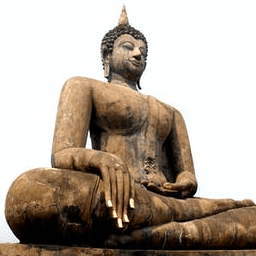
It appears as if the Buddhist population, at least that identify is so, is dwindling in proportion to the total population, and I fear the valuable lessons inherent in the religion too are fading away. I believe this is due to the strict adherence to traditional supernatural claims, instead of leniency on the part of these truth-claims and an improved exemplification of the practice and subjectively intuitable aspects of personal growth. Why not allow the religion to evolve in a way that is beneficial while mutually acceptable in modern society? Why throw out the baby with the bathwater? We ought to parse out the valuable from the unverifiable, and in so doing so, show the true message, and the true benefit, to the Buddha’s teaching, namely, those contents which reduce suffering, increase morality, and better align our being with reality. The traditional practices of mindfulness and meditation, and the expounding of immortal truths such as impermanence, suffering, and the removal of suffering and the path and causes all can be noticed within one’s own experience, and thus retain their usefulness and their replication as memetic units of transmission. The parts of the tradition that are no longer useful, or simply stated, not able to be realized within our experience (supernatural metaphysical claims) must be set aside. I think if we set aside certain doctrines, while promoting truthful and useful doctrines, then they will be successful at replication, based solely on their firm foundation and the fact that as fact seeking individuals, and as selfish machines, their beneficially and ability to withstand scrutiny and be directly realized will propagate them. The truth always can prevail in this way, and so can what is important in Buddhism.
The Buddhist religion as it was originally conceived of by the followers, we can be sure of, is not the form in which it is found in any modern society today. Thus constantly attempting to recreate an outdated system with a mind that has modern knowledge is not the path forward. We must share and expound the manners in which the Buddha’s teachings are applicable, useful, and significant in our lives today, and explain scientifically or at the very least phenomenologically, the truthfulness of certain claims that both share the meaning and explanation that Buddha gave, as well as align with our current scientific understanding. I concede that this is cherry picking, but this is not a bad thing, in fact in all times in all units of transmission (Gene’s/memes) the ones that survive, the knowledge that prevails, is that which naturally separates the wheat from the chaff, an endeavor which we, as modern humans, must seek to do if we are interested in promoting the further exposure of the truths within the Buddha’s teachings. I know this is both cherry picking and blasphemy, but the intention is to help spread the knowledge and practices leading to valuable insights that will enable a larger percentage of humans to ultimately understand suffering, reduce it, and improve their lives and comprehension of reality through the teachings. Noble goals must be pursued through noble means, and I believe in this case it is through the utilization of good judgment and properly propagated useful information which is in accordance with the spirit of the Buddha’s teaching, rather than archaic adherence to superficial religious overtones, that will most contribute to an increase in wellbeing in those who learn, preserving the religion and its beneficiality here on Earth. The philosophy is what we need, and what must be carried on, so we must accept if the religion dies as long as its philosophy lives.
I am not claiming that anyone knows all, as I am staunchly in opposition to the mode of being-certain, that no one ever has or will know all. But what we have as society progresses is knowledge and wisdom that can potentially progress, expound, and become more accurate as we uncover unknowns, become more articulate in our explanations, and science and phenomenological evidence, both material and experiential, help us to climb higher than our predecessors. All Buddhists are familiar with the sutra in which the Buddha urges us to test his teachings, and all teaches, within our own experience. It is just this that Buddhists have been doing for centuries. Everything important that Buddha has proclaimed is found within what we are able to experience, and see for ourselves. The impermanence of all conditioned phenomenon, the ability to be aware of consciousness in the present moment, the lack of self and inherent emptiness within all experience and material. The morality and path to a better way of living, the precepts, moral shame, guilt, the advocating of sila and its expounding by the Buddha is all extremely reliable in its practicality and beneficiality to sentient being, and we would be wise to spread the message of these two sides (the truths and morals). Now, what we cannot and have not experienced, what philosophical and phenomenological exploration has not uncovered, to anyone, ever, are the aspects of the religion which we must criticize and move past a literal interpretation, at the most we must use a metaphorical explanation for them, and recognize their resonance with us through archetypal psychological significations. I understand this can be insulting to someone’s beliefs, but from a higher resolution image of it, it can be considered under right view, and may be helpful in the propagating of the knowledge and wisdom within the religion which we agree would be useful to spread and rather than diminish in modern society. Aspects such as declarations of what happens after death, reincarnation, realms of supernatural beings, heavens and hell’s, minor deities, even enlightened beings and the possibility of becoming one, these truly are useful in their pursuing and may provide psychological benefit, but this is not the core of the Buddha’s teaching. The core is, in one aspect, to view the suffering, view the transitoriness, view what is unsettling, and work to overcome it. It is not false beliefs and their pursuing, whether pursuing would be beneficial or not. We must come closer to the real message, and discard the added superfluous unexperiencial aspects. I hope you can see that the intention here is to fix a detrimental problem, which is the contradictory nature of traditional superstitious beliefs and their contradiction to our current understanding. We ought to focus more on the intention to cultivate right view, and in spreading the truth to enable more sentient beings to see the dharma within themselves, and act in accordance with it (the truth, both metaphysically and morally).
We often times will speak with certainty towards opinions and conclusions we have come to, we make truth claims about reality based on our subjective interpretation of the perceptibly acquired data in decisive statements formed and justified by the rational faculty of the mind. We are confident in our ability to recall certain content that we have come to understand as it appeared to us within the gaze of consciousness, yet, this very gaze, and the data in which it consists, is mediated by a biological system of perceptibility, which has been formed and modified according to not only our immediate environment and biological imperatives, but by the totality of experience and genetic influencers which direct specific significant content to be presented in a certain way. We may be justified in the practicality in acting upon this manifest content in its utility to us, as that is necessarily the method in which its significance and our response is modified by, yet, in accurately representing the truth of the phenomena which we purport to be certain of, we make an error due to the underlying biases and mediation process in which the content of our conscious articulations is modified in accordance with. We ought to be confident in our perceptions, insofar as they are useful to us, yet in strictly making truth claims about the objective world, in a philosophical sense, and even the objective truth of content that is subjectively appearing, we ought to withhold absolute certainty upon our interpretation or judgement, and maintain a fallibilistic point of view in regards to the facticity of the appearance of content on which we are “certain” to have internalized.
When we receive information through our sensory experience, and retrospectively analyze the content phenomenologically, we have a certainty as to what passed through consciousness, yet in all cases lack a certainty as to the alignment between the contents appearance and what it truly is, i.e. we can become aware of reading, hearing, feeling, smelling, tasting, seeing, thinking (experiencing) something, and we intuit a certainty in regards to our ability to state that our experience of consciousness in regards to such content felt a certain way (we interpret it as being something), yet appearances are fleeting, phenomena can be deceiving, and our brains often fall short of correctly comprehending something. There are lies and there are tricks which nature can impose on the conscious subject enabling them to experience something in a way which comprehends the phenomenon so as to be at odds with factical reality. We only truly know our experience of consciousness, and its contents therein, as to their alignment with reality we remain ignorant, as the point of reference which is our conscious gaze is nothing but a mediator between the actual content and our subjective experience of it. We only can experience, learn, know, what consciousness presents to awareness, and what enters awareness within the moment. We can never truly see outside of the confines of the mediator. This isn’t to say we can’t pass rational judgments upon the state of reality, it is merely a recognition that all content is perceived through a system which itself only internalizes, and presents a limited scope of perspective.
We are aware of our propensity to be deceived in perception through examples in Gestalt Theory, optical illusions, the color spectrum, the sound spectrum, our own ability to falsely represent ourselves, all make clear the limitations and potential fallibility our perceptive system contains. We can make predictions, and logical models of how we believe reality to be, in short, we can believe, we can state with certainty what we believe to be true, or what we have rationally concluded is true, or what we have as evidence to explain phenomena, but this is only stated using language, words, which always are symbolic representations of content which is itself higher resolution than the content of which thoughts, concepts, and the mind, can express or internalize. Thus we are certain of our experience, and hold beliefs that are logical, perhaps based on evidence, perhaps actually in alignment with which we mentally conceive “reality” to be, but the most we can truly state is this, that we are limited and that the state of our experience is not one which is capable of absolute certainty in a formal sense, in an ultimate sense
In the best case our certainty upon truth claims is that which language is best able to communicate using our logical, rational, and experientially intuited faculties, yet always are mediated and never are an experience of the content within itself. The thing which helps us test our certainty upon which language is able to describe phenomena, is science, which enables language to interpret data beyond our sensual capacities, and confirm or deny that our mode of describing phenomena, and the definition of said language, is in accordance with that presented by the acquired data. But for any of this, including the interpretation, we rely on memory, we rely on the brains ability to make sense of content, we rely on our certainty upon our comprehension of our experience, which is the only thing we can truly be certain of. To say more, to claim more, we must do so with an air of fallibility which must always be present to us in our current state, being ourselves a mediating organism between the actual and our experience or awareness of consciousness’s representation of it.
Practical truth, or that which is practically useful to us, still shows itself to exist in its application in the actions we make. Wisdom remains important, and we are wise to base this upon our judgments upon reality, regardless of how we came upon them, the best option we’re aware of is still the best option for us. The problem we have is in philosophical abstract representations of reality, or our ability to understand what it is that truly exists. To understand being itself. We can describe it, using symbolic representation, whether its mathematical, philosophical, scientific, evidence based, experience based, these can be filtered using reason and logic and found to be non-contradictory and in alignment with what “knowledge” (see – “Truth Claims and their Corollaries”) is previously acquired. This is what we can do, but any step we make with certainty past this point is a step into waters which we literally cannot take, and this must be accepted as a consequence of the human condition, as a condition of life itself, perhaps just as a condition. Why can’t we claim that 2+2=4 or that the earth is spherical and not flat? We can claim it, and it is true, conventionally. Yet what we are doing is thinking, or reading, or speaking, using symbols – generally understood, and yes, in alignment with reality (as we see it) yet it is at a resolution that is not all inclusive as to the intricacies of reality itself. It is true from a perspective, yet it is in infinite ways untrue as to the content which it fails to describe in relation to said claims, which make up the reality in which the claims are being made, and thus the picture is always lacking a universal all-encompassing explanation, and this is okay, but it is something we must come to terms with, if we are to be honest about the condition which we inhabit, and our truth claims in relation to it.
Being, space, time, are all left out of claims. The wealth of information within these concepts is surely too large to be contained by our language, mediated by our mental capacities, at anything but a rudimentary low resolution depiction. The highest of high resolutions, the Absolute truth of the matter, is out of our grasp. As an extremely strange yet possible example, our understanding of physics, and the science it purports to be true, is based upon rules of logic and upon laws which govern the universe as we currently know it in this moment in time. Yet we are ignorant as to the validity of these laws in the future, or the past, in their applicability and existence in other regions of space in the universe, or even as to their underlining foundational properties giving rise to them. The why behind the representation of something which surely works in order for us to make predictions and models and all sorts of practical achievements. Yet they are merely this, a working symbolic representation about a specific moment of time, they do not span into historical past farther than we are able to probe or experientially predict (using our current knowledge), neither are they universal in regards to time as a changing nature of the present. The future, as a present moment yet to arrive, and the laws and physics, and math, and evidence and symbolic representation and human experience of it, is yet to present itself to us.
All in all, to be honest, is to be fallibilist, to be fallibilist is to be realistic. The more realistic we become, using the science and philosophy we are able to comprehend, mediated by the mind and its use of language, the more we are able to utilize these faculties to be used towards a representation that better encapsulates the Truth as it Actually is. We must be wise in making truth claims, and we must strive towards higher resolution depictions of reality, that is, if we seek the truth, yet we must be humble as to our limitations and we must be honest as to the state of things, and the state of our Being in which we find ourselves in. We must not be discouraged by discovery or reason or logic that threatens to impose a limit as to the reaches of our understanding, science marches on, we march on, and if we march in the right direction, we become closer to the truth itself.
As an example of this line of reasoning taking place in real life – on certainty – the question is posed “what is the greatest country on earth?” Now apart from the problems of establishing a definition of greatest (I’d take the meta-ethical approach of moral realism based on suffering and wellbeing), and apart from our knowledge and experience, we all can say with certainty as to what we believe/think is the greatest country, yet we cannot objectively state an answer. We are certain of what we believe it to be, yet if we’re honest, we are ignorant of the multitude of factors going into answering the questions, namely, time spent in other countries, growing up in other countries, the content and type of people (ignorant of the totality of every individual and experience within that country) namely we are ignorant of so much, what time we are referring to, which set of present moments we’re speaking in reference to, etc. The more knowledge we have into the intricacies of such a question the more we are aware of our ignorance and inability to comprehend a factual answer to it.
Even our conception of the physical laws which make up our universe, we express using language and mathematical formulas which are rational and practical within this current moment, without reiterating them to all of existence, not to mention other possible scenarios. Still at base level it is a Symbolic representation applicable, Now, and nothing more can be said about past or future or additional “constants” or “conditions”. The way in which we articulate our conceptualization truly matters, and the mode of being certain is revealed as being a hindrance to further development. The better articulated we become in aligning our thoughts and our manifestations in alignment with reality, the more equipped we are to deal with real world problems. By better being able to articulate situations we provide ourselves with a better ordering of chaos, a better depiction of the matter-at-hand, and by doing so, are better able to find a method in navigating it. In the same way we must apply proper articulation to truth claims, and abstain from being certain, as this only works to limit us from a greater representation of the truth, and urges us to falsehood.
On the question of whether we should judge someone, or should we judge someone based on their past, the question itself is a non-starter. We always are judging people, whether consciously or not, regardless of the claims to the contrary when people indefinitely state that they don’t judge others. While this conceptualization is a culturally instantiated norm as being “good”, and, in general, not judging based on physical characteristics such as race in regarding intentionality and intelligence is clearly a “bad” judgment, the general claim of not judging regardless of acquired information on the person, is not only an excepted sentiment, but it is unrepresentative of what we actually do, and more importantly, what we should do, which is, in my opinion, judge and prepare to be judged. Those that state emphatically their lack of judgment, and parade it as a virtue, are surely ignorant of the minds inherent biases and propensity to make value judgments based on information collected through perception and rationalization, and the way they interact with the world. We judge everything and everyone, and act accordingly. To make a statement about an idea you would like to be true is one thing, but recognizing the truth of the matter through your experience shows you whether you are living out those beliefs or not. Anyone who says they don’t judge people on their past, or other commonplace maxims, don’t realize that the people they choose to surround themselves with, whether family or friends, are more than circumstantial, but based on value judgments. To be indifferent is to be inhuman, we all have biases and judgments playing a role in our daily lives, whether it is in more substantial instances, such as who we are in a relationship with, who we befriend, how long we converse with someone, the manner in which we do so, or in our everyday passing by and conversation with other people. Regardless of the interaction, a form of judgment, and modification of our Being in relation to the individual(s) and our perception of them, regulated by an evaluatory system, is always taking place, we are always living out our judgments.
I take the position of always judge, for everything, and expect to be judged, for everything, as this truly is what is happening, we have no choice in the matter. As everything does contribute to our judgment, our very attention and conscious state is based upon a system of hierarchical value in accordance with our judgment of what is important. Our consciousness and our very being is directed towards content, and in a manner that reflects what we care about, or what we are concerned about. This care and concern, this value system, is reflected in every moment of our lives, and acts as a mediator between our environment and our action in response to it. We should judge people based on what we know about them, what they have done, what they currently are doing, their intelligence, age, experiences, in short – everything is grounds upon which to better inform our interactions in order to more wisely discern the most optimal way of interacting with them, or, in avoiding interaction with them. You don’t speak to a centennial the same way you speak to a newborn, for obvious reasons. We shouldn’t be passive in our interactions, we should be active in discerning good character and virtue, as well as vice and immorality, what is appropriate and useful, and what isn’t.
As to whether to judge someone based on their past, if that is all the information you have on them, absolutely, but it is not a static statement and it is always altered by the infinite amount of factors playing a role upon our psyches, and others, and the situations we find ourselves in. We should judge someone first and foremost on their present state, and secondarily upon the distant past, with every act occurring within that time on a spectrum of importance. One’s character and disposition is most readily interpreted from the most recent acts, and diminishes in relevance as time goes backwards, we should judge accordingly, always using wisdom as the filter to interpret the information we gain about someone in forming our judgment.
That which produces the totality of our dissatisfaction, which produces our suffering and our problems in life, that which is underlying any trouble we may face is an inherent desire, more specifically, a desire for things to be otherwise. What we find in comparison to our desires for things to be otherwise, in a retrospective deterministic causal explanation, is that things could not have been otherwise, in a historical sense that is. While the past is overdetermined, and we can see its solidity, desire permeates our present moment in aspiring to produce an idealized future. This desire for our present moment to be fulfilled, for our dissatisfaction and our striving to produce a state that is altogether content, and free of desire, the striving for a better mode of being, station in life, or other aims and goals, naturally occupies our minds, and can be a catalyst for change. Regardless of the nature of desire, being that it ultimately causes us dissatisfaction, sometimes that dissatisfaction is what we must be okay with in order to initiate a meaningful change in the future. It is not the suffering we must aim at removing, or the desire, it is our aversion to desire, and our aversion to fail in achieving desire.
The whole “be okay with the present moment,” seems to be an endeavor of self-preservation, a sign of weakness in escaping from the dissatisfaction inherent in attempting to create something worthwhile. It is not a sign of strength to be okay with yourself in the present, but a lack of courage in striving for a better future. While inner peace is great, and with less desires we can achieve higher degrees of it, the growth of consciousness, in understanding reality, and the pursuit of wellbeing for yourself and those you care about in the future is not a lesser good. While it may take removing unwholesome desire to be able to spend more time engaged with the things that are important to you, and that is undoubtedly a good thing, the notion that we should be okay with how things are in the present is only half of the truth. We should not be irrationally guided, or act out of anger or hate or revenge in the moment, the feeling of which will naturally arise, and we must be okay with inaction in regards to the carrying out of such phenomena, but on the flip side we should seek to foster an environment that is conducive to meaningful growth, and not settle for what is currently at hand. In this way, desire, or will, and the dissatisfaction it brings, is both a positive and a negative, and it is with practical wisdom in knowing which phenomena are worthy in pursuing, and which distract us or are a hindrance to us, that truly counts.
We must look to see both sides of all phenomena, and strive to minimize the effect of the side we rationally judge to be inconsistent with our values, while diligently pursuing the other side, yet keeping both in mind under a larger umbrella notion that they both are within us, and two sides to the same truthful reality. Wisdom is knowing how to deal with the knowledge consciously, and how to utilize it practically within our lives. Many people claim they believe something but their actions reveal their true beliefs. It is in actively pursuing in spite of dissatisfaction, not any desire which arises, but those desires aimed at what our consciously constructed interpretation of our underlying value structure deems to be most important, that we create a meaningful life. It is in the pursuit of meaning, that we find meaning, and it is in accordance with out constant dissatisfaction, our imperfection, our flaws, and our will to change, that we must learn to embody in directing our Being towards meaning. It is in their integration, and their utilization, that we best navigate life. If we do not do so consciously, the will, the desire, the dissatisfaction, will not disappear, it will merely subconsciously exist and drive our Being in the directions which our perceptual and embodied totality deems to be most important. We must guide this process consciously, towards directions which produce the most optimal results, the said direction, the aims, the results, ought to be consciously formulated and deduced rationally, rather than be the unconscious pursuits of the biological and culturally conditioned system. To pursue our own values, is to live authentically, to follow the course of a cultural and biologically guided existence is to live unauthentically, and in discordance with what truly matters to us.




















 Seek Truth