The persona is that which we present through the embodiment of an underlying archetypal pattern of Being when we want someone to like us, it is the state of Being which posits the expression of what we believe would be appealing in the other person’s eyes. We should be wary in this projection, or once we realize that our mode of being in relation to someone is characterized by the will to be appreciated, liked, respected, or lusted after. The mindfulness in recognizing the personas emergence is the first step towards an authentic resolution, or modification, which can be consciously directed. From this mode of being, that of the persona’s dominance, it is easy for us to embellish who we are, or spin things in an appealing manner, effectively applying a mask to our true nature in the revelation of who we are, the act of doing such, is the persona embodied. If we can be mindful of entering into this mode of being, we can acknowledge our intent from which it has an end of producing, and seek to modify it, in either of two directions. We can either embellish the mask, and continue towards deception, or we can seek to be as honest as possible. Our inclination towards either one of the poles, whether it be honesty or deception, is determined by a number of factors. The amount of pride and confidence we have in who we truly are, how appealing our true nature is, how virtuous, or full of vice, we may happen to be, and our learned habits. The natural biological inclination tends towards deception, I’d say, on the average, while there is an evolutionary benefit in honesty and trust, the choice depends on our temperament, acquired character trait, and circumstantial navigation. Whether or not our true nature is appealing or not, I argue, we should lean towards the side of honesty in any moment on which the persona is noticed as dominating the psyche, for multiple reasons.
One reason why honesty is optimal as a corrective course to the personas emergence is that, if we do otherwise, if we continue down the path of being deceptive and putting on the mask of the persona, we not only deceive the other, but run the risk of deceiving ourselves by doing so, we contain the possibility of believing the deception, thus leading to a heightened sense of ego, and altogether, creating further dissonance between who we are and who we think we are. In addition, if we are honest in the presentation of our Being, especially in situations where we desire to be admired, the result can be beneficial to us, on an individual level, regardless of the other person’s respect or admiration, as either result can tell us something about ourselves and the other person. This honesty or authenticity in modifying the persona, doesn’t necessarily call for a radical truth telling, or admission of more than would be optimal for the solution. It merely points to not allowing us to be dominated by the psyche’s desire to be attractive. While it isn’t inherently a negative thing to be admired, or to will to be attractive to someone, we should want to do this through an authentic representation of ourselves. Oftentimes an authentic representation of ourselves does mean the compassionate navigation of truth claims, that is, not bluntly stating things, but wisely omitting unnecessary or hurtful content with the intention of the best long term result for the other person. If we truly want the best for someone, we should act so as to manifest what we believe to be the best content to display in order to aide them. The truthful authentic representation of ourselves doesn’t always mean telling the truth, it means not pretending to be someone we’re not, not stating falsehoods, or falsely representing our beliefs. This can be optimally navigated not through radical honesty, but through temperance and restriction, through openness to expression of who we truly are.
Here we have four cases in the authentic representation of ourselves. If we present our Being honestly (to the degree that we can) and the person for whom we seek admiration responds positively, we succeed and everyone is happy and we learn that who we truly are is actually in alignment with the values of the other person. If we seek admiration from someone, it is out of desire or admiration we have for the other person, which implies that our success in gaining their admiration tells us the things we aim at are conducive the type of person we wish to attract. If an honest approach to correcting for the personas emergence works out in our favor, we learn that the person we authentically are is in alignment with what we value, as we judge the other person to be someone who contains, to a degree, traits which we value.
Stemming from the same framework above, if the other person is perceived as truly someone who we respect or contains virtues or traits which we value, and our persona becomes modified by a conscious intention of honesty and authentic representation of our Being, yet we are received negatively, or are rejected, it appears we have lost. But we have gained something through this knowledge, of which a critical, honest, self-examination will determine the nature of. Perhaps there truly is something wrong with us, to which, further inquiry could enlighten us, and we could improve. On the other hand, in the case our authentic self is not desired by other person, perhaps we misjudged their values, perhaps the things they value truly are not the things in which we do, in which case, we no longer will desire their admiration. In either case, individually, we can grow and navigate existence, except, we are doing it from a place of authenticity.
If we recognize the persona and continue under its influence, free from conscious modification in the direction of authenticity, and we are well received by the person we seek admiration from, it appears we have won, but as far as I can see, this is a loss. The persona which is accepted, and valued, is not an authentic representation of ourselves, and therefore, we can take no pride in admiration from the other person. We merely have succeeded in deception, which, as time will show, we will pay for, as there is truly nothing which goes unaccounted for. As we struggle to maintain the persona, we may fall into self-aggrandizing, in delusions of grandeur, and believe ourselves to be someone we are not, leading to psychological confusion, and further distancing from psychological individualization. The fracturing of the psyche, and the domination of any given archetype, in this situation, the persona, will result in dissonance, suffering, and, on a practical note, given the relationship produced by such actions, it will inevitably fall apart as soon as the other person comes to their senses and takes a peek under the mask at our true nature. Dante denoted the innermost circle of Hell as consisting in those who partake in deception, and that is exactly what our experience will contain of once we walk down the path of self-deception. On the other hand, the person we have successfully fooled, will suffer the pain of wasting time, of losing trust in another human, in effectively being deceived. The truth always comes out, and the suffering it will cause the deceived is no arbitrary thing, it won’t be good, that’s for sure, and the resentment and bitterness that results from such experiences, will add insult to injury to the suffering we are already undergoing as a result of such pursuits. So we should really be wary lest we fall down this path!
In the last case, if we continue down the path of deception, in the personas will manifesting itself in an inauthentic representation of ourselves, and the other person rejects us, than we find ourselves in a situation where not only did we lack the confidence to be ourselves, but the person we thought the other would like still was not received, meaning, not only could we not authentically be someone who is attracted by the other person, but even when we pretend to be something we aren’t, we still couldn’t achieve positive evaluation from someone whose perspective we value. The suffering caused from lack of confidence, the pain of failing, even though vice, may provide the groundwork of negative reinforcement towards attempting authenticity, or another mode of Being. This may be the benefit in failure, in this case, that we learn that such a pursuit is not only successful, but that who we ought to be needs to change, our strategy didn’t work, and change is revealed as necessary, at least in how we present ourselves in the face of someone whose opinion we value. This leaves us in the position to assume that authenticity itself may be optimal, since this method surely didn’t work out for us.
We always can misjudge the character of someone, in which case we can determine by their rejection of values we contain or deem important. We also can learn if we are not the type of person who can be desired, in which case we should evaluate our flaws and set out to work. In either case, the perceived negative effect of rejection by tilting towards honesty in the projection of our persona, not only saves us from the perils of being admired as someone we are not, saves us from self-deception, but offers up the Being in which we should desire to be appreciated, admired, respected, or wanted, the Being of our authentic self, who we truly are.
There is room for a phenomenological examination into the presence of enantiodromia, in reference to the Jungian and Neumann’s determination of the concept, and their theories upon it having a natural psychological function occurring as a real phenomena in our lives. There have been many expositions and uses of the terms in both of their works, but as to a centralized focus on the topic none exists that I’m aware of in outside philosophical treatises or in the phenomenological domain. Neither psychologist has expounded the basis for which it arises, that being upon the inherent essence of our psyche (producing both the conscious and the unconscious) to manifest the effects of enantiodromia, an analysis which undoubtedly must be carried out using a phenomenological method.
As we are beings who find ourselves “thrown” (Hiedeggerian) into a world unasked for, we necessarily encounter chaos within our experience as that which is counteractive to our ideal state of things. We find situations with limitless factors necessarily out of our control, experiences, emotions, thoughts, constantly arising and enabling us to have a potential range of options from which to decide upon manifesting in response to the present moments variants, this is the chaotic world of our subjective experience. As biological entities, the world does not present itself to us in a way which aligns with our natural goals, not to mention the more obvious examples within our experience such as our culturally informed societal goals, and developed desires. We find our consciousness constituted by a sense of consistent “directedness” (Husserl) towards objects and activities which follow from another aspect of our being, that of “desire; craving” (Buddhism), “will” (Schopenhauer), “will to power” (Nietzsche), and in general, “wanting”. This directedness of our essential Being in the pursuit of desire found within a transient world which is in its nature impermanent, conditioned, and chaotic, produces states of Being which are unique to that which we find in Dasein (humans for which their own being can become an issue for it-Heidegger). In this struggle to satisfy the directed nature of Being towards its specific desirous goals both unconsciously and consciously, we see an ever persistent attempt to wrestle with anxiety towards death and towards attainment of desire through managing the essential state of the world we find ourselves in, through imposing order upon chaos. This order manifests itself in the way we structure our being in opposition with the world in a way which optimizes our psychological experience within the present moment, according to the acquired knowledge (wisdom) which determines the degree of manageability we are able navigate situational content with.
In the learning process (wisdom acquisition) of the sentient Being, one finds oneself over correcting for the faults of inefficient ordering, this over-correcting, both in our attempts to order the chaos, as well as to avoid stagnation through manifesting change in our structure to combat rigidity (instigating chaos), is what has been described as enantiodromia in the psychological literature of Jung and Neumman.
Through our individual challenge of psychological management, we find ourselves on either side of a perfect harmony between a chaotic state of Being and an Orderly state of Being, or balance, which, if discovered, could end the pendulum swinging in any drastic fashion. Thus we unconsciously are coordinating our behaviors in response to our psychic state, which is determined through environmental and experiential stimuli to produce the current state of things as we experience them in the present. That being said, when our psyches are predominantly characterized by the presence of a dominant archetype, we tend to seek psychological resolve through the antithetical archetype. This process of dominant archetypes in an unstable psyche is eventually resolved through Jung’s conceptualization of individualization, which does not suppress the archetypes or have a dominant characteristic, but rather seeks to integrate them into a wholesome individual who recognizes their influence yet is able to be in control of the management of them so as to not be off balanced in regards to their effect over the individuals wellbeing. Thus we establishes ourselves as an individualized being, through the “discovery” and ordering of the subconscious’ contents into the awareness of consciousness, and integration of the two fields of the psyche into the totality of our Being. When our lives are characterized by a dominance of unconscious activity, we seek to impose our “will” upon our own structure, (a top-down control upon bottom-up dominance – neurologically speaking) the rectifying of such instability can be accomplished through what Neumann referred to as centroversion.
By consciously recognizing the unconscious’ power over our psyche, and recognizing the place and limits of both systems as being mere aspects of our integral whole, we begin to view the system which is our Being more holistically. A holistic view of our nature gives us the necessary knowledge to delve into the phenomenological analysis of the structure of this Being as it enables the manifestation of these multiple modes of Being. When able to retrospectively analyze “important” (more valuable/ memorable/ defining) areas of our past experience into certain generally definable temporal periods, we find them able to be classified as epochs in the development of our current Being. These psychical epochs are found as significant time spans which we are able to discover to contain indubitably essential information towards determining the next epochs essentially defining characteristics. When we analyze the general scheme of transference from one epoch in our lives development to the next, we can find the pendulum of enantiodromia present in its swing from the chaotic to the orderly, from the conscientiously depicted “good” to the “bad”, as we morally conceive of the terms conscientiously within each epoch, and vice versa, transforming our Being from one epoch to the next. It becomes present that patterns of psychological shifting have been taking place, as systems of knowledge and action are consistently being transcended by a new replacement ideology which contains within it the experiences of the past, yet purports to offer a new solution as a framework or mode of Being to oppose the state of thrownness which we then find ourselves in. As the defining of strata of conscience corrects for its misgivings in the “good” and the “bad”, progression is made towards a new system which is created through a dialectical progression as each epoch ends and contains new information as to its failures and changes it judges to be conducive to a better future state. In this process we find the development of wisdom through experience, as well as the gravitating of the pendulum towards a balanced neutral position. Thus the ancient adages such as “everything in moderation” as you get older you tend to “settle down”, settle down where? Settle down from jumping to extremities in the pursuit of a form of being which is well equipped to handle the slings and arrows of misfortune in existence.
How is a phenomenological realization of the enantiodromia which is a part of the structure we find to be the essence of our Being, useful to us who are able to conceptualize and realize the validity of it within our own lives? We can, containing as we do, detectable and contemplative modes of consciousness (available consciously to us, yet through deterministic means), contemplate our current position in reference to the optimal balancing place (being in reference to the pendulums center), which would mean an optimal life situated in the future which we would naturally fall past the in the swing of the pendulum, and work to unnaturally strive for its attainment. Whereas the process is necessarily unconsciously regulated through the advance of a subconscious or even consciously directed corrections made within our past modes of being, or in past epochs (great changes), we can take a more informed stab upon the greatest possible directedness of consciousness when we are able to view the picture holistically, consciously, after a phenomenological analysis. We can recognize our position and where we need to go, and direct our consciousness in an informed way towards the attainment of such a position. In regards to the totality of our Being and whether we seek to attain this as a short term remedy to our current psychological state, depends on our current disposition. If the desire so arises experientially to pursue centroversion consciously through diligent discipline consciously directed in its pursuits, which takes time and development (experience and knowledge), the choice is available to a broader and more precise extent to the phenomenologist who is able to determine his own position in reference to his own Beings location on the chaos/order spectrum, as well as the ability to consciously desire the pursuit of wisdom, and have the love of wisdom, which is philosophy, on his side.
While great persistent striving within a disciplined structure is often crucial to the attaining of goals, we must be wary lest we fall into psychological distress. We can consciously correct for this, without over-correcting, if we have the required wisdom to abstractly theorize about where the optimal psychological place lies, and subsequently to actively pursue these conscious goals in a practical way. In seeking to inhabit that space, we give attention to the Being which gives rise to both goal attainment and pursuit, as well as internal conscious wellbeing and psychological stability. I’m in no way saying that all-in pursuit of what is meaningful won’t produce psychological distress, but in the case in which our psychological wellbeing is hindered through our desires in our ordering of life too rigidly, we must enact wisdom to be able to navigate both aspects of the coin, the pursuit of our goals and what is meaningful, as well as what is psychologically beneficial to us. In no case should we over-correct to complacency, but with time and experience we can gain the insight and wisdom into how to circumvent these problems psychologically, as well as how to better direct ourselves to the optimal path that includes both important factors of our life (psychological state of Being and meaning-pursuing) which necessarily go hand in hand.
While I am aware this is nothing more than a basic structure into the practical outcome of phenomenologically analysis of enantiodromia, I hope it provides the necessary starting point and content that enables further inquiry.
How is one to escape from the suffering and consummation of one’s character inflicted by the memory and assimilation of one’s own historical malevolence and shortcomings? This question is not to be posed to those of perfect character, but being that such a thing doesn’t exist, except in the minds of the mentally diminished, we must admit of having been cursed with periods of retrospectively found evil volition, and later discovered inner peace. It need not be discussed as to the causality and manifestation of such periods, as the factors present in any individual’s life range from ignorance to misfortune, what must be addressed is how to deal with our consciousness once it is consumed by the memory of one’s own moral ineptitude, and character traits resulting from historical events which one desires to escape from.
There is an absurd feeling which emerges when one compares who one is today, with the person one was in the past, growing more absurd the bigger the gap in time. New knowledge and wisdom has taken us to this place, recognizing the suffering produced in the present moment, the flaws in our current condition, and through understanding the conditionality of such a state, we choose to rebel against the state of affairs inflicted upon our experience of the present. We wish to escape the historical antecedents causing unrest within our conscious experience. But to escape the web of causality is a logical fallacy, and attempting to do so necessarily creates cognitive dissonance at the expense of the individual’s sanity. To escape the suffering caused as a result of moral shortcomings implies a purging of moral shame and moral dread from one’s experience. This means no longer feeling remorse for one’s malevolence, and no longer fearing the result of repeating or taking part in a future unholy endeavor. This attempt to escape ones suffering from historical causes appears to be an escape from conscience, which is far from the answer to our original question, being how to cope with the inevitable suffering of falling short of one’s present ideals.
It’s clear that any advancement in one’s personal morality, both practically and abstractly, can be seen as being a result of what in Buddhism is regarded as the twin foundation stones of morality, moral shame and dread. Feeling the pangs of one’s past transgressions, recognizing the current repercussions in one’s experience and the conscious experience of suffering due to such actions, forces one into the biologically necessary position of dreading such an experience in one’s future, aiding the development of a character aiming at avoiding said moral infringements to one’s system. Being that we are discussing a system of beliefs in the ethical sphere, it’s worth noting that such a conscience is in no way universal to all, but can be judged according to universal principles. This means we may not share the current conscience, view of good and evil, which doesn’t mean that the validity of such developed systems lies in the relativity of one’s society and culture, ultimately, only apparently does.
Sam Harris’s conceptualization of universal principles which encapsulates all of mankind moving in a positive direction towards a better humanity, and away from universal suffering, gives us a good description on the structure we should be using to judge the state of one’s conscience, or in comparing multiple individuals to one another and their relation to higher shades of meaning and moral recognition. But here I digress only to state that what we are concerned with is the individual, and not the validity of his conscience, which should be analyzed and constructed through the accumulation of experience and wisdom requisite to be a man wishing to rectify his current experience with past malevolence. Thus one is necessarily in the correct state of mind to answer and proceed such inquires if he reaches the point in life where he poses the question, and sees finding its solution necessary, for the good of one’s own experience foremost, with a thought towards its influence on humanity at large.
What the courageous man wishes to embark on, is a rebellion against the constraint on one’s character and psyche imposed by a literally different person, oneself, in one’s past. The difference in the two people need not be noted, separated by time, one creates and destroys, changes, and evolves, in directions only recognized as positive or negative due to comparison in phenomenological data and subjective judgment, and this process of transfiguring is proceeding to be carried out from moment to moment. Thus one rebels against the human condition, against that absurd contradiction not between the outside world and the inside world, but between ones perceived past and ones perceived present, between what was, what is, and what could be, between the contradiction herein, and the immediately illusory belief that the same person is inhabiting all three positions.
The unrelenting drive of the psyche to push one’s consciousness to accept the validity of one’s own ability to volitionally act outside of the bounds of causality, free will, as well as believe in the permanence of a central Being (a self), serves to undermine reality, necessarily creating an absurd view of the state of our being as we perceive it. Those who have struggled to emerge from such illusions here should consider themselves blessed, as one obstacle in our pursuit is no longer an issue. The proof of such phenomena being falsehoods, is expanded upon in “The Causal Tethers Which Bind Us”. Seeing ones past as a series of acts done by another person (a previous version of the current “self”) doesn’t aide the individual upon first glance as we perceive ourselves as constant through time (albeit – an illusory view), but one should rebel against the nature of the mind to see oneself in this way to attempt to cut through the illusion, if not experientially at least abstractly. While it is necessary to experience the moral shame and dread proceeding an unjust act, as it is a necessary place in psychic growth and wisdom in producing a mind better able to act in accordance with itself, we must not allow ourselves to act from the habits formed by someone who lives in a distinctly different time in place. Rather, we should rebel against the strings which move us, and attempt to cut our ties to the character traits we consciously wish to separate ourselves from. Our suffering acts as an indicator of where to approach, where to learn, where to grow, and we should follow it, and when based on misfortune, accept it stoically, when based on our own acts, rebel.
Fight against the tendency to continue in darkness, fight against the stagnation of unrelenting conscious stability, fight for a better experience, a better life, a better humanity. We must accept that we deserve our punishment which we created for ourselves, and in rebelling against the idea that we still are the person we used to be, we become the person we have the potentiality of being. Rebel against any tendency towards a rigid conception of eternal permanence. Whether we find ourselves suffering for the misfortune of a past, or of an act of immortality sparked by the cursed nature which we inherited, whether through ignorance or awareness of rage, the suffering which we currently experience must be fought off with the aim of creating the space for the new to replace the old. The mind is consciously attempting to manifest order to combat the chaos of past experience, we must not hinder it by further pursuing dissonant thoughts, or acting in accordance with our outdated philosophy. We should strive to build upon the biological framework, the universal scaffolding, which we encounter within the present moment. To tear down the edifice, to cause a revolution of the spirit, to attempt to escape the causes which fabricates the present, is a dissociative endeavor, causing only future confusion and voluntary ignorance. Through denial of past events we serve only to fool ourselves into insanity, to accept the occurrence of the past, and work to overcome its negative effect on the present, is the task of the brave.
We must bridge the gap between the unchanging past and the changing present, and see that it is possible to accept the validity of both, while transcending them both to a higher level of conceptualization, and from there incorporate the truths we have thus far encountered. To escape one’s history is never the goal, to overcome misfortune and the evil discovered in one’s own heart is the task at hand. The emergence of the realization of one’s own malevolence is unearthed only through conscious retrospection, and is only conquered through conscious pursuit of a character in accordance with ones developed conscience. Effects of one’s own evil manifestations, such as those upon our character, and those which are experiential, such as memories, are overcome psychologically through rebelling against the principles one once stood upon, through fighting against our nature to habitually indulge in bad intentions, through pursuing a morality based on the lessons one has acquired, which is constituted by a factual interpretation of reality. Historical rebellion is combated by rebelling against the restraints, the universe which holds us attached to it.
We should fight against our biological drive to see ourselves as being the same as our experiences, and rather frame the situation realistically, in us constituting the current production of history. One should strive to extract the gold in the lessons we’ve learned while simultaneously avoiding over encumbrance by the content of memories.
We recognize the outdated version as being us, yet distinctly different, thus in our comparison we conclude the situation is patently absurd. In addition to us never being able to truly know who we are now, or understand the totality of past states of being which make up the foreground of our present experience, there is the fact of other individuals having even more ignorance of our historical being. The separation we feel within, between our old self and new self, our recognition of ignorance, coupled with the isolation we feel in reference to others, undoubtedly creates an absurd mindset. Not to mention, if this line of thought is carried out, we realize our ignorance of others to be incalculably greater than the ignorance of ourselves, which if honestly admitted, is unbearably large as it is. This puts us in a strange place mentally, but not necessarily in a situation without hope, and not within a challenge too great to not be worth rebelling against, and overcoming through wisdom itself, aided by reason, virtue, discipline, and persistence.
We ought to rebel against the constraints of determinism in confining you to a predestined path by conscious effort towards escaping the confines consciously imposed through recollection of your past character, and instead pursue the character, state of being, place in reality, which you desire and claim to be better. Do not let the chains of your past hold you down, even though they literally do, even if we know that we are permanently chained through causality, that does not mean to give up on a path to greater heights than we have experienced, nor to sacrifice our thoughts and actions toward goals we set, but rather we should accept our condition in history, and fight against our inner demons urging us to immorality or to the ruin of our current condition through complacency.
Part of the fundamental problem we have as biological beings is the gap between our values and the production of meaningful solutions to the novel situations which we encounter. We know what actions are “good” yet the situations we encounter are difficult to discern as to what constitutes the optimal pathway for us to take. Our general mode of being and manner of operating in the world is dependent upon schemas of action that are responsive (adequately or not) to the multitude of situations we encounter in our environment. These situations elicit the manifestation of a schema through our assimilating the situation to the schema, and given that each situation (each present moment) is novel, we then have to accommodate that assimilated schema to meet up with reality in a manner that works for us. If we can intelligently adapt to novel situations, our schema likewise undergoes a modification that can adequately meet the challenge of the moment. Often times these schemas, which are always significant and hold our developed values in them, aren’t adequate, and for those situations, we have the ability to consciously manifest our values, in accordance with what we know, towards the production of a viable solution. In this manner we move through successive steps, albeit miniscule ones, in the manner Jean Piaget describes as genetic epistemological advancement. It is only when we reach an equilibrium between the assimilating and accommodating functions that our operations are adequately able to intelligently adapt to novel situations. This, as a requisite, is dependent on fleshing out the value structure that makes up the framework of the actions that are schematized.
Arising of the Existential question
Existential inquiry arises in every individual once he reaches the intellectual stage of being able to abstractly contemplate the nature of his own Being. This, for most people, begins at around the age of 12-14, and continues throughout life, constantly resurfacing. With the emergence of the problem of our own Being, and our place in the world, we seek for answers. We can find many of these answers in our values, which dictate those schemas which orient us in the world, and can prove of being better or worse at providing the fulfillment we strive after in life. The more effort, time, structure, discipline, and intellect one commits to the organization of one’s life towards a meaningful path will determine the amount of progress he is able to achieve in pursuit of the things he values, and the wellbeing extracted from such pursuits. Environmental factors, genetic disposition, culture, society, education, character disposition, all are relevant factors which contribute to the individual’s pursuit of meaning, and the amount of progress he is able to make.
Necessity of philosophy in evaluation
As always, we must live first, then philosophize. But in order to maximize our potential, in the directions we desire, we must philosophize, and we all do this, to a lesser or greater degree, whether it’s made explicit and regarded as such or not. Not only do we all philosophize, we can be better or worse at doing so, and the results of our philosophy are fleshed out in the experience of our lives, in the manner we live, in our subjective experience, in our relationships, and in how we tackle the present moments arising. We must seek to orient ourselves around a value system which can lead to the most desirable future, implying and necessitating an articulate defining, organizing, and implementing of actions in alignment with what we believe to be most important. Our time management and effort must be in accordance with the system of significance we place upon the values, rather than allowing ourselves to be carried along by the river of desire without receiving the potential wellbeing available to us through psychological integration and meaning optimization. While many values are inherent, those which we most seek to manifest oftentimes succumb to the temptations of others, unconsciously. The goal here is to philosophically uncover, organize, and optimize our lives towards the pursuance of a more meaningful life.
If Value’s Aren’t Regulated
If our value system goes unregulated, and we remain unaware of its effect on our lives, we run the risk of our lives being hijacked by things which serve to promote societal and biological desires, rather than the individualized desire which fulfills us. The assent to values which are of less importance and significance than those which we consciously can uncover as promoting wellbeing and providing meaning is the error we wish to correct for, for the benefit of our own psyche, and everyone else in our expanding circle of influence.
Given the potentiality of ideological possession, and the ever growing instantiation of ethics corrupting societally provided value structures, and the cultural importance placed upon material gain, our value system is becoming more vulnerable to the effects of powers outside our control, and less effective in providing the meaningful basis for a competent, efficient, creative, and fulfillment providing life. The question we must ask is whether we want our lives to be ruled by tyranny, do we want to be the slaves to our society and to our biology, or do we want to impose our will upon the content of our own lives, and by recognizing and optimizing the content herein, form a life which represents who we truly have the potential to be? Do we want to fulfill the potential we contain at being a competent, moral, beneficial human, or do we want to be swept along on the waves of misfortune produced by external and biological influences?
Conservation of the old
We should seek orientation of that which is available rather than throwing out the old system in its entirety, this problem of shedding off the traditional spiritual underpinnings was stated by Nietzsche as that which led to the nihilism and evil present in the 20th century after the scientific worldview become dominant and, in a causal sense, necessitated the potentiality of the “Death of God”. Novel explanatory conceptualizations of values aren’t impossible, just as novel “creations” aren’t impossible in any other domain, we just have to recognize that as with anything, the new necessarily contains the old, it stems out of it, in evolution and in technology, in morality and in science. The causal link between the datum of experience and potential values we have at our disposal is a link that cannot be sundered. As the value structure necessarily gives rise to what we place an importance on and what we pursue, it is an integral process of the mode of being which underlies all manifestations in our actions and experience.
Bottom Up Understanding of the Value System
One must first identify their value structure as it is built up biologically, in its embodied form, and secondly, in the conscious articulation of how it manifests itself consciously. We have an embodied perceptive system, that is built up from our genetic material upon conception. This perception seeks, from the first moments of an organism’s life, to “digest” and “filter” incoming datum through sensory receptors, which is mediated based upon, in the first case, genetic instruction. The schematic underpinnings that dictate our ability to do so, are encoded with reflexive abilities, and have the “ability” to perceive with the “meaning” of it being valuable to the continuation of the genetic material that instantiated it.
The perceptive ability of our Being is in itself our initial evaluation system, it discerns content in relation to the significance it has to us, and directs our nervous system towards mitigating and responding to stimuli, both external and internal. Two separate mechanisms take place in this initial evaluation of stimuli, on the one hand, our perceptive system is oriented around discerning content in our perceptible environment that has significance for us, which is one manner of saying that everything “naturally” has value to us. If things didn’t have value to us, we wouldn’t focus on them, and content wouldn’t ever be discerned and arise in consciousness. On the other hand, that very perception which selects significant content in our environment for filtration occurs based on our own perceptive systems modification by our value structure.
The system of perception is modified in infanthood, and onward, through its environment, and the causal nature of that which is available to influence us. That which is available to be perceived, is filtered by what the biological system believes would be most optimal to the propagation of the genome, which is the starting point of our values, and generally what they are “subservient” to. Such imperatives hold background significance throughout life. While this is the groundwork of evaluation, in biological imperatives that imply the continuation of the survival machine towards puberty in which the organism can propagate the genetic material, the value and method towards which it achieves inbuilt biological aims is modified by the cultural, environmental, and interpersonal relations of the individual. These effects modify the value structure which modifies perceptions towards that which is useful to react to, and in such reactions, optimize the “wellbeing” or “beneficiality” of response in regard to novel situations. The biological system that is modified through life in filtrating perceptive data, is integrally tied up with our conscious experience, and its contents enter consciousness.
As we biologically intuit datum which sensory receptors “discriminate” as being useful to perceive, so too does our Being intuit which perceptions arise into conscious awareness, based on the same desire and imperatives which run towards the optimality of the organism. The contents of consciousness are in alignment with these desires, as they are modified by the environment and totality of our Being in relation to what the individual comes to understand, and believe, and intuit, or know, is the optimal aim towards which to guide himself. Whether or not it actually is, is irrelevant. What matters is that one’s values, regardless of conscious recognition or not, guide the individual’s moment to moment conscious experience, as well as his bodily reciprocity to the situation one finds oneself in in the moment. We always are operating under this basic low resolution conception of the value system, arising from the bottom up, from perception to consciousness.
Top Down Directing the Value System
Every moment is necessarily supported by an inherent biological value system, and the contents of consciousness as well as our embodied reaction to the moment are products of it. While the bottom up description explains the initial instantiation of our value system, it does little to aide us from where we’re at in top down influence. We ought to be able to give assent to our values consciously, and consciously direct ourselves towards values and aims which are our own authentic expression. What is important to you? What currently is taking up your time, mental space, and what are you currently actively pursuing? The answers to these questions may never have been made conscious, or we might not know exactly where they currently are at.
There is a concrete difference between what one’s actions show to be valuable to the individual, and what one believes to be valuable. Firstly, we wish to analyze what actually composes the individual’s life, and how it compares to what ought to compose the individual’s life. We must take an honest account of our time, and an honest account of our beliefs about what we desire to be doing, who we desire to be, where in our career we desire to be, where in our environment we desire to be, what kind of skills we wish to improve, what knowledge we would like to obtain, what character traits we would like to embody, and what psychological state we would like to have. In answering these questions as to where we currently are, we can find answers to what our unconsciously acted out belief system denotes as being our current value structure. In answering these questions as to where we would like to be, we can define what our consciously formulated value structure actually is. The gap between what is manifesting as an inherent value pursuit, and what we actually value will determine the difficulty in aligning the two. The goal, broadly speaking, is to bring the two into alignment so that our actions and time spent represents what our consciously formulated value structure is. In uncovering what is important to us, we can create a list of things we value, and in their evaluation, to the best of our ability, discover what it is that would provide us meaning.
Purpose of Uncovering Values
We must seek to uncover the values inherent in our deterministic biological nature, and in discovering their potentialities, consciously decide which we wish to embody and to which degree we wish to pursue their manifestation. The “creation” of values is necessarily a pursuit which is only possible with the addition of experience, and in fact, isn’t actually a creation. It is more a development, a modification, of inherent values imposed upon us through genetic and environmental influences. As far as our values as we find them in the moment, none can be created, but they can be altered through conscious direction towards novel experiences (all experiences). The prioritization, embodiment in actualization, and modification of what we value can be consciously directed. The derivation of meaning and importance allocated to the potentiality of value is what is “in our control”. While the values themselves are inherent, their discovery, and the systematic recalibrating of our actions and Being in alignment with them, or to modify them, is something possible to be directed consciously. The expansion of knowledge and experience exposes us to novel situations, of which we always are judging, and placing a value of importance on. This content of experience is the datum from which we have to work with in informing how to hierarchical order our values. We cannot value that which we do not know, or what hasn’t been integrated into our psyche as something holding value. This process ought to be done in a way which is optimal for you, and everyone else, now, and across time. The optimization process must be recalibrated as additional knowledge and insight into circumstantial navigation and our own nature become uncovered to us. As long as the value is in line with what is important to you, consciously, and is an accurate representation of that importance, then we can continue.
What Matters in Uncovering Our Current Value System
We necessarily find more meaning in the pursuit and attainment of the things which we consciously formulate as being of value rather than in the things which we unconsciously carry out in our daily lives (which still contain meaning and value, but they ought to become subservient to the higher goal). The reward system which manifests itself in pleasure and pride can aide the individual in determining if something is meaningful to them. If you gain a specific type of knowledge, create a specific type of art, make progress in a certain direction, and it feels good to do so, if it fills you with a sense of accomplishment, if it moves your psychological state to one of fulfillment, then it is being flagged through the reward system indicators that it is meaningful to you. That being said, every reward system flooding of the subjective experience doesn’t mean that it is a noble or consciously confirmed meaningful act, it merely can be analyzed in order to determine what consciously can be connected to something you value. If you find pleasure in food, sex, and alcohol, and the reward system floods you with a positive emotion which seeks to reinforce those stimuli, you must consciously analyze if they are in line with your value structure, if not, then they are not to be pursued in a goal oriented fashion towards the goal of a meaningful life.
If the activity is retrospectively analyzed as producing a fulfilling mode of being, as well as being in line with the consciously formulated conception of what your value system ought to be, then you can take that as datum towards something which provides meaning, and can be pursued in a goal oriented way. Pleasure and pain in this regard must be analyzed, in short, with discernment, in determining their potential for long term benefit, as well as to their usefulness and potential benefit for you, the people you care about, and the outward circles of influence with which we all are engrossed in (the chain of causality as it applies to relationships between sentient beings). This extrapolation and analysis can be carried out to a larger or shorter extent, but what is necessary before continuing on is that a number of values must be defined, even if it is rudimentary.
Prioritization Of Values
Once we have a list of values, we must hierarchically organize them in order of importance. This organization is predicated based on what we would spend the most time doing, and what would take precedence over the others in terms of effort. While philosophical articulation and elucidation may be high on my list, it always is superseded by people, in terms of family, friendships, coworkers, and any other human who needs help. In this manner, I’ve consciously chosen the value of compassion for people to supersede my most vehement interests. In this way we must organize our value system, in a way that is practical so as to be employable in our actual lives. The establishment of a hierarchy of values is crucial in future planning for how to organize time, and how to maximize the meaning and wellbeing provided to us by pursuing the values (and their distribution across our days/ lives).
Example of Value System Prioritization
The natural inclination toward hedonistic pursuits may result in overindulgence and a large amount of time loss as well as a decline in health. We may consciously and verbally state that we have a desire and find meaning in philosophical knowledge acquisition, in truth seeking and mental exploration, the pursuit of which would better serve to provide meaning in our lives than that sensual drive which could dominate the psyche. The value of power and dominance may fill the opportunity cost of pursuing competency in a skill we value. We find that our current value structure, that which is ingrained in us through society and our biology, doesn’t always serve to provide the meaning and wellbeing which we have the potential of attaining. We pursue what is less meaningful at the peril of our consciously formulated abstract belief system. We still may value the objects of sensual pleasure, and we can allocate appropriate time in their pursual and enjoyment, as well as continue to value ambition in our careers leading to a rise in our place in the dominance hierarchy, but the differentiation of the values, and assigning an appropriate role to them in our lives is here the mission.
Planning Value Pursuance
With the hierarchical organization of our values in place firmly, yet remaining open to further modification, we can then work out the envisioning of what their carrying out would look like. This is a contemplative visualization of what the embodiment, improvement, or attainment of our values ought to look like. With this in mind, we are better equipped to work towards something, and are able to consciously adapt our mode of being so as to be in line with what that visualized image appears to us to be.
Based on our contemplative image of what the embodiment of our values is, we can plan benchmark goals toward their attainment. These can be concrete material or temporal milestones, or abstract urgencies in which we seek to embody. These goals and aspirations we can separate between benchmark placeholders towards the attainment of a meta-goal, or simply as guidelines in which to follow in the progression towards the attainment of more concrete goals. This applies to character traits, virtue embodiment, career trajectory, familial planning, etc.
Habitualizing Values
We can use our ability to consciously direct ourselves to promote the advancement of values, in the form of reinforcing the actions and thoughts, the phenomena which, as manifestations of underlying modes of being, can be used in a reflexive manner to promote the underlying value. The habitualization is necessary to conscious value instantiation and reinforcement, and thus the transmogrification of our value system to that which we consciously assent to. Habitualization to those consciously assented to values has the negative tendency of reducing values which we consciously perceive as less significant, as less time and concentration is allocated to them, as certain things become more prominent in our lives, others become less. Discipline and conscious direction are used, and in turn, also gain from the positive feedback loop of their increased actualization. This adds to the advancement of our ability to consciously direct our experience toward such experiences which are more meaningful. Of course habitualization, whether consciously or not, is often enacted for other aims, and in pursuit of values which we may mistakenly lend our assent to. Experiential wisdom and conscious attentiveness to the process of change in our values and the mode of being which embodies it will serve to inform the individual whether he is on the right path or not.
The Navigation Problem
We ought to have an established image in mind of a future reality with which we look to pursue, which is in line with our hierarchically organized value system while systematically having definite goals in which to pursue towards the embodiment those values. We can then analyze how best to navigate our lives in the direction of the established system. This implies time management, dedication, distraction and entertainment reduction, effort and discipline. Morality comes into question here, and our morals, like everything else we do, will dictate our experience of life and our effect upon the world. Every decision we make can be better or worse at being “good”, if we take for our standard of “bad” the worst possible state of suffering for everyone, as Sam Harris explains in his novel the Moral landscape. In operating from a moral realist meta-ethical perspective, we hold that our actions can move the dial in one of two directions, and since we find value in our subjective experience, and presumably of those we love, those we come into contact with, and in extreme cases, all humans or sentient beings, it is essential that our morals stem from our consciously deduced evaluation system. As for a minor-ethical theory that is optimal to follow, we find that “Wisdom Ethics”, or moral particularism, is the only system that can account for the vast landscape we encounter in novel situations. Moral dread and guilt are our guide here, and our value system ought to be optimized to account for the effects our actions have on others, as it does more than impact their wellbeing, but has rational self-interested implications as well.
Moral Shame and Dread
A sense of moral shame, and moral dread, are the twin pillars in Buddhism of morality, and we can apply the concepts to shame and dread in the face of deviation from what is meaningful, so as to fuel us in the right direction. The negative emotion experienced in deviating from the optimal path we have outlined, denotes a flaw in our discipline and drive towards what is meaningful. This shame can be recalled, and transformed into a reminder of what it feels like to experience such negative self-image, and allows us to dread its reoccurrence in the future. In this way we can systematically forge our trait of discipline to be fueled by the negative reinforcing attribute of suffering when deviation occurs. In addition, the reward mechanism in pursuance of our values can be altered and consciously recognized so as to be inspiration for future discipline reinforcement, of a positive kind.
Structuring Time
How we spend our time, and the quality of that time spent, will be an integral factor towards our individual trajectory towards our goals. We can retrospectively analyze our current time usage, on a day by day, or weekly basis, in order to see which areas need to be modified, and which can altogether be cut out, reduced, or changed, to be in line with our newly established value system. The analysis of the current system and formulation of the ideal system will aide us in disciplining ourselves towards a pragmatic pathway and daily framework in which to pursue our values. While rigid order and structure of such a sort can be overwhelming and stagnating to the individual, as stated by an ancient philosopher, live first, then philosophize, we can find a medium between organizing the chaos, as well as instantiating novel conceptions towards the system we established. The discipline it takes to create a structured day, allows us the freedom to pursue what we value. Far from being rigid and entrapping of the individual, such a structured and analyzed time management plan actually enables the individual to cut out periods of the day in which he was pursuing things which he doesn’t value as highly as others and in turn replace them with things he values more.
Now such definite daily scheduling can be done to varying degrees, and is always open to re-evaluation, and to alteration by the ever spontaneously arising trials which we encounter on a regular basis. The general planning of how best we ought to manage our time gives us an idea of how we should spend the day for it to be optimal, the broadness of categories, and the designation in the day for ulterior pursuits, all can be part of the “plan”. An ulterior mode of pursuing goals and of planning for the journey to meaning can be used in a more practical prioritizing method, rather than on a concrete schedule. For example, a time expenditure modeled can be based on prioritizing interests in the hierarchically organized value system, so that each node gets touched upon at least for a short time in the day. Higher values in the system would take precedence over lower ones, and more time would be spent engaging in them. If I was engaged in progressing a lower value in the system, and some insight or issue or object which needs attention arises which is categorized in to a higher value on my list, then I would sacrifice the time in the lower for the higher.
The use of wisdom and insight into the pragmatic actualization of time management allows us to navigate how, and when, we should sacrifice values for each other, and in the ways in which we can compensate for the rectifying of time loss in a certain pursuant. Our moral system combined with the value system, combined with practical wisdom, experiential data, all are important factors towards the prioritizing of our values and the plan or framework we devise in the planning of the journey to a meaningful life. If a meaningful, fulfilling life, one of psychological wellbeing, pride in accomplishment, and beneficiality of our deeds to our own mode of being as well as to those we value, is something important to you, then the difficulty and time spent in creating an optimal path, the discipline required to stay on track, and the suffering inherent in the sacrifice of lesser values for higher values, will be surely worth it.
Instantiating a Consciously Formulated Value System
We can to a greater or lesser degree forge an abstract conception of what an optimal solution to the embodiment of our values are. The pursuing and embodying our value structure in our daily lives is meaningful in itself. The path is itself fulfilling as we are spending time and effort towards that which we most value. As a caveat, the discovery of values, creation of a list which accurately represents our optimal mode of being, and the organization of time and effort, is a difficult process, but when the groundwork is laid, and the pursuit becomes habitualized, the wellbeing supplied by such a process is worth the strain. What is a better way to live, than the way you consciously decide is the best way to live? Necessary to the continued progression in the direction of your values is the constant recalibration, updating, and optimization of the path as well as the goals.
Preservation of Value
As we spend time in embodying our value system, in instantiating it into our daily lives, in pursuing what is meaningful, we necessarily gain experiential data and feedback from the real world which we can use to modify the entire system. This is a constant process, as we gain experience, we gain in wisdom, as we gain in wisdom, how we navigate our lives, and the structure with which we abstractly create in which to navigate it, all are modified and can be improved. We should be disciplined, yet hold ourselves and our plans as fallible, we must remain determined, yet simultaneously never hold ourselves to be infallible. What we pursue, the method we use to pursue it, the knowledge gained and the application of that knowledge, must be constantly evolving, in order to better serve our wellbeing and better represent our true values. The abstract ideal values we contemplate often don’t serve the pragmatic utility we gauged them to, and the plans we make always will encounter room for optimization. This recalibration process is something the individual unconsciously undergoes as he moves through life, but here, being as we are phenomenologically analyzing our experience and existential condition, the progression and concrete conceptualization of such novel insights and experiential practicality of actions and time management can and, in my opinion (for our pursuit and journey to be optimal) be something we formulate consciously.
Care and Concern in Attention
The amount of time and concentration any content exacts from us is in exact relation to the amount of “care” or “concern” it has to the totality of our Being. Any phenomenal state that arises merely signifies its meaning to us, in some fashion or another, and we ought to manage the causal foundation from which it stems if we wish to alter our experience away from it. This can mean pursuance, integration, removal of dissonance, or reframing. One way or another, all content of experience is open to modification, and if it happens to be aversive to us, we ought to put forth effort towards its integration, and this doesn’t necessarily mean it needs to be carried out.
One manner of promoting our values is in a “negative” revelatory strategy. This requires analysis of those things which fill our consciousness, with which our attention is more prone to be consumed by, give a semblance of meaning, challenge, and desire by their very nature of our directedness towards them. These positive phenomenal states (not optimistically positive, but rather manifesting) provide a clue as to what we value. Whether it be a memory, a skill, a topic, a person, a saying, a thought or an emotion, if it is constantly arising into conscious awareness, and modifying our Being in accordance with it, it is safe to say that it is something we value, whether it is a consciously deduced value or unconsciously embodied. An undesired mental content that produces a conscious concentration despite our desire to remove it from experience, whether it’s a moment or a mode of being, or an archetypal pattern, is content that has “consumed” or “overtaken” the psyche, and it must be something we haven’t adequately overcome. If something is adequately overcome, then it is stored in the unconscious as the conquered bit of chaos which has become ordered. If something produces enough negative subjective experience in us, it is due to the value of that content being high for us. Its integration leads to the baseline of our development that we have moving forward, and while its temporal modification is still inextricably connected to us, our schematization of it allows us to accommodate novel situations to it, and simultaneously to assimilate the schema to those situations. In other words, it becomes part of our pragmatic toolkit.
Benefit of Dealing with Reoccurring Problems
By analysis of what negatively affects us, we not only progress towards the removal of accumulated problems, but we better equip ourselves, psychologically and on a neuroplasticity level, to be better able to deal with challenges that arise in the future. Thus we should seek to optimize our being towards the ability to deal with the totality of problems, through the progression of a fortified character that can do so, and we do this through the individual “problems”. Problems here are any content of subjective experience that we are aversive to, that create dissatisfaction in us, that aren’t consciously desired. Even a deficiency of a conscious desire can be seen as a problem, the rectification of which would be the overcoming either of the desire itself, or of the fulfillment of the desire. The overcoming of the unconquered and the progressing of character enables us to be wiser in our dealings with any problem in the future, and thus is well worth our time in pursuing.
Hardships in Value Pursuance
The silver lining in the case of a meaningful life, necessarily entails hardships, tribulations, unknowns, and their confrontation and conquering. Such potentialities of misfortune or loss should be clearly visualized, even in the extreme case, so that if they arrive, we can be prepared and have an idea of what it would look like to best handle them. This is encapsulated in the Stoic concept of “momento mori” or “remember death”, in which the visualization of the worst, and the ideal way in which to handle such loss is consciously clearly presented to the individual, so that he can embody the virtues and the mode of being he deems most appropriate towards the handling of such challenges while remaining faithful to the developed belief and value systems which give his life meaning. The strength of will to be supportive of family, rather than to be traumatized and a burden in time of a loss of a loved one, or in sickness and in misfortune, provide the individual and those he cares about the best version of oneself so as to aide in the alleviation of suffering. While this may not be a value inherent to everyone, and this is necessarily making a value judgment which, to me, is real and important, yet may not be uncovered as the optimal path by everyone, but as an example this type of visualization enables the individual to embody that image when or if the worst so comes. The visualization of worst case scenarios enables the individual to be the least hindered from deviation of his value system in the face of adversity, as well as provides him the opportunity for character growth despite great tragedy. Our worst fears, the suffering and the undeserving pain which befalls all of us, can be navigated so as to be a positive and beneficial experience in the progression of moral excellence. Rather than view our challenges in pursuance of our goals as a hindrance, which they are, we can simultaneously view them as stepping stones to greater competency in their navigation.
While on this journey the difficulties and tribulations which we previously forethought of may not be the only difficulties to arise, and more often than not, novel distractions and impediments to our wellbeing will constantly prove to be challenges to us in the progression of our being towards the goals which we establish in line with our value system. Seeing as expected or unexpected trials are inevitable in the pursuit of anything difficult, and what is meaningful is never easy, their emergence and handling is of utmost importance to us.
The most difficult situations are opportunities for the greatest victories in our lives. There is no sense of pride, personal growth, and inner peace, without a necessary struggle to overcome difficulty. The opportunity for virtue grows in the face of adversity. When the going gets tough it is the most difficult to do what is correct, to remain virtuous, to sustain from indulgence or resist the urge to escape from reality and what is honorable, for this reason it is in those very situations which we are afforded the greatest opportunity to overcome, and by doing so to advance our wisdom, virtues, and self-image. The pursuit of goals in accordance with the predefined value system, towards those objects of desire which may include but are not limited to skill improvement, character trait growth, psychological wellbeing, career aspirations, relationship development, all are noble and worthy goals to pursue, and in their progression all require necessary hardships.
Once we have a well-defined value system, and goals have been established with a rationalized pathway towards their attainment, we must voluntarily opt to overcome any difficulty that is a necessary prerequisite toward the achievement of the goals, and any other hindrance which diminishes the progression must be dealt with. There is a necessary distinction between the potential hardships which stand as obstacles towards goals one is not inclined to pursue, and those which are directly in the pathway towards the values which one does value. The pursuit of unnecessary difficulty for the sake of difficulty itself, may be useful towards the development of confidence and discipline, and general ability to withstand pain and suffering, but we are not urged by optimality to pursue such tasks. Here I am speaking of only those obstacles which lie directly in the path towards our pre-established values. The unnecessary waste of time and effort to do something difficult in a field which holds no value to the individual, must be tempered by the individual’s intentions and overall insight into the benefit of such pursuit. If an endeavor is not beneficial and useful, yet it is difficult, the endeavor must surely be shunned and not pursued. This isn’t to say that there isn’t potential for personal growth, just that the aim of goal attainment and the difficulty here described are of those which directly hinder one’s progress to their established goals.
In not becoming aversive to sickness, misfortune, and disagreeable situations, we can develop discipline, temperance, and the equanimity to be better equipped at handling problems in the future. It is the meaningful journey of developing morals in alignment with our values that sustains and provides the meaning in which we are looking for in life.
The skills used and gained in merely confronting difficult challenges with good intentions and a firm resolve itself is enough of a reward for opposing them. While we cannot, as a determined being, choose our fate, we can through knowledge acquisition, habit, discipline, and consistent testing, improve the deterministic precursors which manifest action in a way to conquer fate itself in every moment. The voluntary forging by fire method is undertaken by the man who wishes to improve his character while at the same time prove to himself his character is worthy of being respected. The positive subjective experience felt after attempting to overcome a difficult situation in which we are uncomfortable is naturally produced in any situation which is “foreign” to our currently developed mode of being and subsequent experiences. In other words, the confrontation and voluntary decision to attempt to overcome an unknown or challenging situation, produces an inbuilt biological reward. There is something inherent in us which seeks to discover, to explore, to expand our horizon of knowledge and understanding, and it is made into an object of which we can consciously “desire” by the subjective reinforcement of positive emotion in its acquisition. Whenever we learn something new, adapt to a novel situation, become comfortable in an area of which we previously didn’t know how to handle, whenever we travel and discover new places, gain insight into better ways to live, we always are psychologically rewarded by a positive emotion. This can be explained evolutionarily.
Encountering the Unknown
Our emotional system evolved in such a way to promote survivability and reproduction. Ledoux states that “memory is first and foremost a cellular function that facilitates survival by enabling the past to inform present or future cellular function, whether in a single-cell of multicellular organism. The same is true of much of the rest of our psychological life and its manifestations in our conscious minds.” The expansion of memory, and thus the neuronal circuitry which underlies cognitive capacity, is expanded only in the face of novel situations, which gives us good reason to believe that the brain would develop in such a way to promote the experience of overcoming novel, difficult, unknown, situations. The emotional response system signals a positive emotional state in the achievement of such actions, improving the individuals instinctive drive to pursue such interests in the future. The memory of the emotionally positive state produces by the reward system was evolutionary developed to improve the organisms desire to repeat the action, in an operant conditioned way. Currently, we can consciously recognize this ability and, in self-directed conditioned way, seek to consciously direct our behavior with the “reward” of psychological wellbeing in mind as the outcome of pursuit of the unknown.
Richard Dawkins uncovered that the survival circuit (connections between different neuronal areas of the brain) is employed by modern humans, as well as our ancestors, in the promotion of the genes goal. The “method” to which our genetic material uses in its goal of reproduction and survival is that of employing a survival machine (our bodies) to defend, feed, and work towards the goal of the genetic material. Being that we have the subjective experience of consciously directing the survival machine entails that the greater ability we contain to confront novel situations, and overcome them, the greater chance our genes have in their reproduction and survival. For our ancestors, the expansion of knowledge was directed towards the goal in ways such as environmental adaptability, threat recognition, cooperation within groups, etc. The expansion of territory in the uncovering of unknown grounds, enabled the individual to have cognitive access (whether unconsciously habitualized and reactionary, or conscious, depending on which point in development) to more food and water, shelter and habitational resources within his “known” domain, which increases the opportunity of different choices better suited to different situations. This developed improvement in knowledge of the immediate environment, its predators, and in dealing with other individuals of the same species, contributed to a better ability to navigate life so as to increase the odds of the individual surviving and reproducing. This trait in uncovering the unknown, in knowledge acquisition, and the genetic basis for the ability to learn, in general, would naturally be a trait selected for, as those less equipped mentally would necessarily have less success in navigating life towards the age of reproduction, and their genetic material would be less likely to be passed down.
Dr. Jordan Peterson explains the neuroscientific literature on the subject of exploration of the unknown in his Maps of Meaning lectures in a way which also coincides with the experiential notion we gain by pursuing the unknown. He explains that the desire to explore and the optimization of the psyche in accordance with it has been discovered to be located in the hypothalamus, which, not coincidentally, is the home of the dopaminergic system which serves as producing an experientially perceived pleasurable response to survival related activities such as eating and sex. The relatedness between the stimulation of the reward system and the biological urge to explore are inextricably connected in our hypothalamus, and give sufficient ground in explaining the benefit of physical territorial expansion, which in modern life, can be expanded to the novel exploration of the unknown both psychologically and within different fields of knowledge which are connected to our biological value system, which we here seek to make consciously explicit and to consciously direct ourselves in pursuit of. The reward of meaning pursual is thus adequately expressed in the neuroscientific literature in this way. Thus we have a philosophic, evolutionary, and psychological foundation for which to explain why pursuing challenges is not only pleasurable, in their completion, but also to why it arose in us and how it is beneficial to survival for our ancestors.
An important distinction must here be stated, that the evolutionary system that drove our ancestors to develop these cognitive attributes was directed towards survival, but now, in the current zeitgeist, we have access to the same system and its benefits with the additional stipulation that they can be acquired without the direct pursuit of survival related knowledge. People find pleasure in gaining knowledge in the study of ants, or myremecology, which surely is not in any way beneficial to our genes. The areas in which we can employ our ability to explore and confront difficulty are not limited by those which increase reproducibility of the genome. That being said, our conscious goals have likewise evolved into a myriad of different interests and pursuits, and regardless of our current value system, the basis for growth remains, and is rewarded in the same way in which uncovering distant territories, or new food sources, which worked for our ancestors.
Given the evolutionary benefit of “uncovering the unknown”, “learning”, “desire to explore”, and its subsequent physiological change to the brains relational reasoning, and thus “wisdom”, we can likewise carry on the tradition in a novel way. The acquisition of improved mental capacities, and the expansion of knowledge, evolutionarily, would necessarily entail a greater survivability, but for us, in the modern era, it can entail greater psychological wellbeing for him who is seeking growth in any given area of expertise, or character improvement, or overall wellbeing. The application of diligent striving in pursuit of a value which we have personally developed as being “important” is the necessary “meaning” which can provide us with purpose and thus psychological wellbeing as we move through life, and here we have a scientific basis for why this is so. The philosophical school of existentialism has described many methods of which we might find meaning, but here we have a combined production of evolutionary, psychological, and philosophical factors which denote the reason why pursuit of further growth towards an object with which we value, can, and does, produce the meaning with which we can hold as a mitigating factor in the question of existential dread and mitigates the suffering of existence.
Purpose and its Inextricable Link to Difficulty
The fact that such a system exists within us, rewarding us with positive emotion after attempting and specifically achieving difficult tasks, shows that we are built with a source of purpose that is tied into exploration of the unknown, as well as tied to moral duties. This is both biologically, and socially explainable, and is a major reason why virtue ethics, and the continued effort to improve one’s own character and focus on the greatest virtue one might be able to embody in the moment, is so widely accepted and implemented. This is why the stoics make sense to us, and why people choose to embody stoic philosophy in daily life. There is an intrinsic biological reward for consciously carrying down this path, and in viewing the world from a meaningful perspective expressed in the ability to act virtuous in every moment. We gain psychologically the power and embodiment of the wise old man archetype (Carl Jung), as well as reliving an individualized version of the heroes journey (Joseph Campbell). The hero goes out to enforce order upon chaos, to confront difficulty, for the good of the people. He encounters trials and tribulations, he falls down, he stands up and continues. He faces the ultimate source of tribulation, chaos embodied, which in our case is a difficulty which we do not currently known how to handle. In the persistent conscious decision to overcome, and in the victory over the “dragon”, or that which symbolizes a pressing difficult task, the individual receives the treasure, the gold, the fountain of youth, the immortal elixir, the philosophers stone. In our situation, he progresses in the direction of the area which he wishes to pursue, he gains in virtue, expertise, wisdom, or knowledge in a specific area. The hero then returns the boon to the people, he saves the world, he shares his loot with the broader society, and is hailed as a hero. We take the knowledge, the benefit, the gain acquired through difficulty, and are able to manifest the newly developed benefit in our interactions with others, in a way which is beneficial (if the goal is noble). We utilize our psyche to attempt to overcome unknown. In so doing, we organize the chaos in our lives, and we experience subjectively the greater ability to exert our power and influence on the world.
Phenomenological Analysis
The meaning seeking mode of being itself is something which can be elucidated by a phenomenological analysis, as can the mode that attempts to overcome challenges based upon these values. By understanding these modes of being, we can both understand our own nature, as well as the necessity for us to employ them. When analyzed retrospectively using a phenomenological method, the mode of being which is employed in the pursuit of meaning through opposing difficulty is marked by its intentionality, as is every noesis. The noesis here, we will denote as “difficulty opposition mode of being” which is marked by a noema which is abstractly defined as the conscious recognition of difficulty and conscious volition to confront and overcome it. The noetic characteristics here implies directionality tempered by temporality, in so far as the present moment is characterized by the pasts values directed towards future overcoming. Care or concern is uncovered as being directed upon a content which is valuable enough to be consciously assented to in its significance in overcoming. Therefore, in any matter of meaning pursuance, we ought to be embodying the values that authentically represent ourselves in our temporalized care structure.
In encountering difficulty, and embodying the mode of being which is voluntarily inclined towards its overcoming, we experience a negative emotional response in the perception of the object, but the mode of being modifies the object so it is simultaneously something which we strive toward. This noesis is more readily available the more we experience it, and we can more readily experience it through the pursuit of such difficult objectives, the positive feedback loop between the noema and noesis is strengthened. The more difficult situations we encounter, and in reciprocal fashion confront and oppose, the more the noesis is instantiated as a response to future novel unknown or difficult situations. The benefit of this mode of being is clearly seen in the individual’s reinforced psychological state in encountering difficulties in life, a benefit which necessarily entails an increase in wisdom (the ability to navigate life regardless of the situation). The secondary characteristics influenced by such a mode of being would be psychological confidence in confrontation, discipline in maintaining a value system regardless of external factors, and wellbeing produced by the meaning derived through such pursuits.
Existential Benefits of Meaning Pursuance
As we become more competent and efficient at embodying our values our ability to consciously direct our Being towards that mode of being previously described as “difficulty opposition mode of being” becomes more desired and readily available. The conscious recognition of our own carrying out of difficult tasks creates a psychological influence that lends itself to the dopaminergic strengthening of meaningful actions. As we strive on diligently in conscious pursuance of our values, we become the person we had the potential of becoming.
Of course this whole structure of biological imperative, moral imperative, will to overcome, benefit of overcoming suffering and difficulty, the meaning inherit in all these claims that arises from the nature of our being, the nature of the universe, is arising within a universe that ultimately that has no meaning in itself. It is only due to our being humans, due to us arising as beings that have the biological inclination to transform our experience into one in which meaning exists explicitly for us, albeit for the transient lengths of our short lives, that enables us to uncover the meaning which we always contained, and continue to contain as a potentiality. The meaning created in this meaningless framework truly does matter, yet only to us, as the experience of pleasure and pain in sentient beings is the necessary precondition for meaning and morality. The modification of our subjective experience through the pursuit of overcoming difficulty is one that isn’t a zero sum, we have more to gain from it than to lose. The time, effort, diligence, in pursuit of a value which is important to us, fills us with meaning, and entices us to strive on through this life filled with the slangs and arrows of misfortune.
While Plato’s Forms provides an explanation for our limited conceptualization abilities in how the conceptualization is related to the collective co-understanding of phenomena, it lacks phenomenological evidence as to its claims of our access to the permanency of concepts. It claims to deduce a linking between individual conceptualization and the totality of knowledge, but it is unverifiable in experience, and incompatible with modern scientific understanding of linguistics. The forms regarded as the source of our concepts of objects in themselves, we are told they are from which we draw our understanding of objects in ourselves, from a transcendental realm which we draw from. The case is, we conceptualize bottom up, not from a transcendental realm down to the conscious, but from the genetically inherited on up to conscious understanding – from our sensory and bodily perceptions, filtered through the biologically ingrained value systems, up to conscious manifestation. Regardless of the efficacy of Plato’s rationale, the understanding of how our perception and linguistic systems formulate conceptualizations in regards to objects is useful to an understanding of ourselves, and these are, as he regarded, shared amongst the set of all humans, to a degree. While we don’t necessarily have access to a realm of forms in which to draw our concepts from, there are internal consistencies in regards to evolutionary structures and aspects of our psyches that we can uncover as modifying our perceptions and thus our experience in the way in which our value system filters content, and influences our actions. Towards these collective unconscious foundations, Carl Jung has delineated several that markedly present themselves in our own Being, and are recognizable across cultures and languages. These aspects of the collective unconscious which are relics as well as influencers, affecting our development and our current experience, Jung defined as archetypes. The formulation and social implications of concepts is developed by our minds in the organizing of symbolic representations of reality, the concepts themselves do not exist outside of us, rather they exist below our conscious instantiation of action. Their definitions are modified by us, their linguistic “creation” is done by us, and their usage and application is derived from the neural structure within us. While these archetypes are surely unconscious, we can recognize our relation to them, and their essential structures, at least in part, through methods of introspection and in recognizing projections.
It is useful in the continuing development of one’s own psyche to have a personal experience of recognizing the emergence of archetypal personalities, more so than a merely conceptual, scholarly understanding of the concepts used to denote them. While our own individual psyche may not have had an archetypal personality rise to the surface and manifest itself in complete possession of the mind, which would be obvious upon retrospect, it often is the case that the archetypes merely manifest themselves in certain modes of being, small periods of time, in our perceptions, evaluations, judgments, and actions. While it is rare that a single aspect of our psyche hijacks the entire system, their interrelated influences upon our lives is available to be deduced by a phenomenological analysis of the content of our own subjective experience. Whether the archetypes are obviously presented or not, we can always recognize their influence within us in some way. It will be useful for this exercise to have a conceptual understanding of what the shadow, the anima, the trickster, the wise old man, and the hero archetypes mean mythologically as well as a knowledge of the analytic psychology tradition and their roles in the psyche.
The most popular method in recognizing features of these personalities as existing within our own unconscious psyche is through reflective conscious recognition of their manifestations in relation to adequately defined characteristics of their essence, yet, here I am posing another method. Through identification of the manifestation of them interpersonally, we can utilize our personal relationships in discovering how we have projected these personalities onto others, and in noticing how our distinct relationships cause a modification of our own mode of Being, look to how and why that being is modified in such a manner. Often times others seem to reflect characteristics which we subjectively notice as being in a certain meaningful relation to us, whether it is in representing a pattern common to certain archetypes, or whether it is something agreeable, disagreeable, etc. In analyzing our individual response and interpretation of others manifestations, and our reactions to them, we can learn about the structures which have developed within us to produce such judgments or perceptions. The way in which we perceive and judge others, is necessarily formulated through our current inbuilt value system, and in recognizing our subjective experience in how and what perceptions arise to conscious awareness, we can learn, not only of the values and beliefs in which we use to perceive and signify content of consciousness, but also of the archetypal structure which has been unconsciously at play in our own psyches. By recognizing that a certain person displays qualities that relate to the mythological formulations of the archetype, we can narrow them down and find if we are projecting an archetypal image onto them. Apart from analysis in this way, the feeling someone gives us can point us in the right direction in determining the archetype projected onto the individual.
Conversely, once we have realized that a person contains traits that are comparable to a previously conceptualized archetype, and identified that archetype, we can further analyze that individuals’ character and personality, and understand something about ourselves through our own repetition of similar actions and traits stemming from the psychological state. In other words, we notice that those traits they are embodying can be categorized into an archetypal structure, and extrapolate that those qualities we notice in others are noticed due to our own perceptive system containing a representation of them unconsciously. We contain the traits, and the evaluation, that make up our interpretation of the archetype represented in the other person. Perhaps these regarded archetypes in our own experience have previously possessed the psyche, came to the forefront and revealed themselves, maybe they are suppressed, or maybe they have previously been integrated and accepted into the whole. Regardless, the traits within the projection, if they are noticed, can be learned to be qualities of potential we contain within, as the way through which we view the world, the perspectives, ideas, feelings and actions which we embody in experience is conditioned by the archetypal influence upon the unconscious, the conscious conceptualization arising out of that inbuilt structure. By consciously recognizing a projection of a previously conceptualized classification, whether it’s a Jungian classification of an archetype, or personality, or otherwise, we become enabled to see how that archetype is at play within our own daily lives, and how it is affecting our own minds.
For example, if we find an individual which we despise, hate, regard as immoral, holding beliefs and values completely opposite of our own, perhaps we have discovered, through our own judgment and our awareness of it, a projection of our own shadow. That feeling of disgust in viewing or experiencing that individual, in noticing these phenomena in our perception of another as representing at least some aspects of immorality and content we wish not to be part of our own character, we effectively learn something about the constitution of our own character, and its developed relationship to morality. The reason this hate arises, or the negative connotation we embody in relation to that person, is due to it being a projection of an unconscious archetype of the shadow within ourselves, we are recognizing outside of ourselves, part of ourselves, through an internal process. The only reason that reaction would take place, is if that external idea, or archetype, has been developed within us prior. This isn’t saying it has manifested or taken over our psyche, just that it exists as potentiality, or as influencing manifestations we don’t recognize as derivatives of that source. Our own inner comprehension of the shadow is what enables us to perceive others as immoral, manifesting an inner feeling of repulsion, dislike, unpleasant emotion, and other such negative modes of being conditioned by the perception of the individual embodying the archetype. We unconsciously contain the potential for all the same actions which reflect personality traits, and they can be symbolized and conceptualized with the overarching term of shadow, as well as seen to be present in the other person. In consciously recognizing a projection of an archetype, and then drawing the conclusion that this archetypal understanding and projection is a symbolic representation of the inner content, we can connect our interpersonal discoveries reflexively to understand our own psychological inclinations and their underpinnings.
All archetypal conceptualizations become inherited to a greater or lesser degree in a nascent state, containing universal hereditary and shared functionality as biological structures. Through development, a second layer is developed above the initial inclinations which affect our perceptions, and become modified by individual experience, culture, society. We have the blueprint in which our Being is constituted from the start, in the perceptive value structure and the ability to recognize and relate to phenomena in a specific way, as inherited by our genetic material, and psychologically conceptualized, additionally, in archetypal structures. Both conceptually delineated systems, the biological, and the archetypal, become modified as we develop from that initial starting point, they build upon the foundation that is inherited in vast, yet limited and guided directions.
The personal nature of the archetypal layer of the unconscious naturally grows out of the universal unconscious, as does the personal shadow archetype grows from the original propensity to have a shadow that is inherit in humans and has the same qualities across all mankind. What you perceive as projected is necessarily a combination of both, as the foundation lies inherent and is built upon and modified by the subjective experience. This process, recognition, and structure is shared among all the basic, large, Jungian archetypes. As Jung said, it shouldn’t be forgotten that these archetypes are impossible to pin down and define, and seriously are unconscious, but we can still obtain, an albeit small inference, into their nature and their roles in our lives by understanding them broadly and abstaining from ever admitting that our conscious conception is all encompassing nor sufficiently precise. Basically, it takes one to know one.
In attempting to describe an integrated psyche, the information given in a description are necessarily subjectively determined, and limited by the use of language. As this ideal form is a construct of language, I believe the description and its characteristics, as seen by me, modified by my experience and biases, will still provide a useful benefit to anyone who strives to integrate their psyche into a coherent, optimal stage. While the psyche progresses in degrees, and no psyche is the same as another, I will give general abstractions of content that I believe to constitute this base foundational psyche. This is both an aim of something to strive to, as well as, if one “believes” to already be in the position, it can serve merely as a description of the place from which further growth stems from. In any form or interpretation of an integrated psyche, the distance it lies from our potentiality always varies, and we should merely seek to be founded upon firm ground, for which to further progress towards new heights, and a more optimal mode of being. This is not an impossible perfection, and doesn’t contain superstition, and is entirely possible. It isn’t becoming God, or being inhuman in any way. While it may be an end goal to many people’s current state of being, it is, merely the starting point, and knowledge required, from which we should strive to achieve before continuing onward.
My ideal form of an integrated psyche is characterized by certain experiential and rational revelations into the nature of consciousness, and reality, which must be conclusively understood as “knowledge” in order to properly orient the individual towards a non-contradicting cohesive view of “the world”. The first of these descriptive axioms of knowledge that are necessary to a cohesive integrated psyche is the uncovering of “non-self doctrine”, or non-identification with conscious awareness and conscious direction as being the totality of who you are, it is realizing there is no permanent “you” or unchanging soul. By no longer identifying solely as consciousness, we open up the ability to properly see our Being in its totality, which includes subconscious distinctions such as the collective unconscious, subconscious internalizations, and the embodied perception which runs through the whole of our Being. In opening up the view of our totality, we become open to the integration of all parts of the psyche and no longer have a limited identification with a sole aspect of the psyche.
Stemming from an nonrestrictive identification, and broadening our knowledge of ourselves, necessarily comes insight into the causal nature of the production of current modes of being, and the causal determinacy that preconditions the present moment subjective experience. The more information of causal determinacy we have come to understand, whether it be biological, cultural, societal, in reference to our upbringing, friends, family, and in general, influences, the better equipped we are to understand ourselves as we find ourselves in the present moment. This can be reinforced through the realization of our own impermanence in regards to any aspect of our Being and its deterministic roots (impossible to understand every chain in this web of determinism, so to anyone that claims to do so is claiming to be conscious of every factor every existing in the universe since its conception, which would literally take eternity) and its collective parts becoming known as all being aspects of who you are.
In understanding causality and impermanence, we ought to be aware of some version of the 5 aggregates, or the different parts of the psyche, yet all integrated into conscious awareness, and understood as being parts of the whole totality of being. Different articulations of categorizations of the psyche have been developed, and we must have some form of conceptualization of the different aspects, or understand the framework of other’s categorizations, to better delineate different parts of our Being in a way that is useful to us in understanding ourselves. From a Jungian perspective these different aspects of the psyche are categorized as the unconscious, the persona, animus, shadow, collective unconscious, consciousness, ego. In Buddhist terms the aggregates that comprise experience are form, perception, mental formations, sensations, consciousness. Scientifically the mind is a product of genetically inherited traits, neurophysiology, and the nervous system of the embodied organism.
It is beneficial in developing an integrated psyche to have an acceptance of natural human restrictions, and the general fallibilist illusory perception of reality within which our experience is tempered by.
The range of details of each concept included within this stage varies from individual to individual, of course, and as they spend more time moving past this hypothetical stage of wholeness within the psyche, the individual will independently be better equipped to navigate the troubles of life, as they have a well-integrated psyche, producing a strong conscious awareness and control, able to lead the individual to greater heights in novel endeavor. A stronger base always enables a higher building. The ability for humans to create hierarchies and continually develop knowledge, wisdom, and competence into different aspects of reality after the formulation of this stage will necessary produce a beneficial springboard. This base mature stage solely represents the unity and integration of all the components in a being’s conceptualization of “himself”. While each individual aspect can’t be fully explored, or conclusively depicted linguistically, due to the vastness of historical and individual information to which it is constituted, a general understanding and acceptance, as well as knowledge to its interrelatedness, on a basic level, is necessary to a suitably integrated psyche.
We all possess the capacity to reach a basic comprehension of who we are, to understanding the fundamental parts of the totality of our Being, and the processes making up our conscious experience. Only the individual who has reached this conscious knowledge, both conceptually and experientially, proven by actions stemming from the psyche that are optimal or sufficient to deal with the varied circumstances of existence, has actually integrated the experiential wisdom of understanding of all the aspects to the necessary degree to integrate them into his world view and has done so in his or her own conscious. This stage still has levels in heights, to unknown heights, in which we can strive to create a new base layer at a higher starting place for mature humans to start from. This novel place of what might constitute the “higher ideal integrated psyche” has undoubtedly been formulated already.
If we can grasp a low resolution image of the totality of our psyche, we can understand to a sufficiently necessary degree the mode of being which is capable of confronting any situation life may throw at us. It is in the manifestations of the mode of being that is capable of solving the set of all problems, that better or worse differentiates the integrated psyche. A higher resolution conception of every aspect of this moment is available upon additional investigation into the many components outlined above which make up the totality of your subjective experience. Such as, greater meditation practice enables greater mindfulness of what is passing through consciousness, greater neuroscience training enables a better understanding of how your brain is currently firing to produce your current conscious state, a greater psychological knowledge enables greater understanding on how you are currently affected by your unconscious, shadow, anima, persona, ego, a greater evolutionary biology training enables a greater understanding of your inherited traits, etc. Thus you can always progress, in a finite quantity of directions, to move to greater heights of understanding yourself. Yet this stage which I described, and its characteristics, are what is necessary, from my personal perspective, in which I believe we ought to inhabit in order to further explore the different domains of knowledge and morality, and understanding the psyche, in the many ways that we can. Before achieving this unified understanding, exploration in said directions is still profitable yet not integratable to the wholeness of your view of your own subjective experience to the degree that it would be useful if your psyche was integrated, and had the experiential knowledge to pursue that goal after the achievement of this stage of consciousness. None of this matters if you are not interested in your conscious state, your subjective experience, or in seeking the truth.
There are archetypal artifacts of deep evolutionary developed psychologically stages which are common collectively in all humans, which were first explicitly expressed in their symbolic forms in ancient stories, mythology, and religions. These archetypes have been transmitted genetically, and it wasn’t till recently that they have been analyzed and understood in their true nature in influencing the human psyche through advent of depth psychology and the findings of Carl Jung in analytical psychology. What you find is not only a symbolic representation of the developmental stages of consciousness, as described by Neumann, but basic understandings ingrained into all of us that operate on a level at the bottom of the unconsciousness, as pointed by Jung, which enable us to operate effectively in the world, and which work also as an a priori structure in which our values can be derived from.
These archetypes are not socially or culturally constructed, but biologically significant to us as their impact on survival and the evolution of our species made them useful. In the development of consciousness, as pointed out by Neumann, the original archetype represented as the Uroboros is the first stage in the human psyche. The Uroboros is the dragon eating its tail, the ring, never ending, without beginning. In this first stage of life or in conscious development, both historically and individually, the individual is not an individual and is effectively submerged in the unconscious, only affected by external findings. This state is common among primitive humans as well as modern human infants, and is characterized by the inability to distinguish opposites, or identify phenomena. It is the unity, or lack of distinctness, between inner and outer, self and other, or good and evil, which we see to be present in our pre-consciousness states. The individual is effectively cared for by parents (mother) and has no worries of his own, and this symbol is represented as the original state of the universe, as Paradise, before knowledge of good and evil in Abrahamic religions, is found in old creation myths of heaven and earth combined, before there was light or dark, eternal. The Uroboros, a symbolic representation of this original stage of consciousness, is found all over the world and has manifested in various societies, such as the yin yang, or combination of chaos and order, before consciousness emerges.
Maori Creation Myth – Seperation of Sky God and Earth God (World Parents)
This leads into the development of the ego in Jungian terms, and the separation from the world parents. In this stage towards the individuation of consciousness, a shift takes place in development in which consciousness becomes separated from unconscious, and recognition of the differentiation of content and phenomena becomes apparent. This is the archetype of separation of world parents. This is the differentiation caused by God creating a separate heaven and hell, separating chaos and order, and in individual experience, the manifestation of a conscious for whom which his individuality becomes known, internal states become distinct from external phenomena, in general, identification of separateness is instantiated. It is in this stage of separation that the identification of opposites becomes apparent to the individual, and his state as being altogether a separate entity from other individuals also emerges. It is the revelation of man’s nakedness after eating the fruit of the tree of knowledge. In archetypal stories, this is depicted as an individual’s reluctance to rely on parental guidance, and an encountering of the world for himself through the abandonment, it is the independence gained through accepting responsibility for one’s own Being, rather than being dependent on parental guidance.
Heracles Slaying the Dragon
After the separation from the world parents, the individual must go out forth to the world, and, in mythological stories, this is represented by the individual voluntarily undergoing a journey towards some daunting challenge, the acquisition or success in which appears to yield great value. The hero’s journey is marked by trials and tribulations which test him as an individual, entailing pitfalls, re-calibration, and eventual victory over minor challenges that lay on the path towards his goal. In the final test, the individual encounters the dragon, the manifestation of extreme chaos, in which the individual must kill in order to retrieve the value in which he set out to acquire. The value is a boon, a treasure, the fountain of youth, wisdom, it is that which is most valuable. In attaining the value after discovering the antidote to chaos, in relinquishing its protector, the hero brings the valuable treasure back to the people he had separated from, and provides them with the value he had acquired in his journey. The hero grows through the process, and in achieving the final step in providing value to the people, he not only hits the mark in terms of the aim in which he set out to achieve, but he grows through the journey in becoming the type of person that can order chaos, he becomes the hero through the hero’s journey.
In psychological terms, or insofar as individual consciousness, and the historical development of consciousness is concerned, the hero’s journey represents exactly what we too must go through to achieve an integrated psyche in the process of individualization. We must relinquish dependence upon our parents, set an aim, a goal, a place we have the potential of being, and through diligent striving and overcoming of challenges and tribulations, actualize that potential, and become the person we had the potential of being. For us to successfully do this, like the archetypal hero’s journey, we too must voluntary accept the responsibility of attempting to do what is meaningful in our lives. In striving to accomplish the meaningful end, we necessarily will fail, must recalibrate, and must strive on diligently. In the final scene, we must ultimately organize the psyches range of potentialities into a unified whole through exploration and integration, we must set our lives in order, our lives being that of chaotic nature, and conscious intentionality being the means by which we can order both ourselves, psychologically, and the world in which we inhabit.
By ordering the chaos in our psyches, and our lives, we become individualized. In striving towards the aim of actualizing the potential we inherently possess we grow in the process, and in pursuing what is meaningful we, if successful, create or uncover a novel, unique, new, phenomena, which is meaningful to us and our fellow man. This boon we create, uncover, or discover, the treasure of our efforts, the fruit of our labor, the resultant knowledge and wisdom we have gained in our journey, we must, in order to complete the journey, provide what is found to meaningful to our society, to our fellow man. In so doing so, we fulfill the hero’s journey, and become fully individualized as a Being who has integrated his psyche, overcome difficulty, uncovered what is meaningful and valuable, and provided the people with a lasting benefit that is beneficial and useful.
The hero archetype is ingrained in us, and found in stories across the world, from the dawn of civilization, and has this same plot. It is the plot of the original hunter who could venture out from his tribe, slay the animal, bring back food to the people. This for him is liberating, is useful, helpful, and to the people in which he proved for, he is hailed as the original hero, for he provides life, the means to continue living, the means to which they too can actualize their potential. In return the hero is worshiped as ultimately good, good for survival, reproduction, and the continuance of the species, but he is not interpreted as such, rather, he is immortalized through the stories in which follow after him. The hero is the one who can conquer what is difficult and return to the people with value. Thus we value individuals and those pursuits that merit this type of accomplishment, those who discover new insights in things which prove useful to all, is rightfully seen as a hero. We value and strive to be like the hero. This is an archetype everyone understands automatically. You watch a movie and you know who is the good guy and bad guy. These are not arbitrarily socio-culturally developed, they are ingrained in us, for a good reason, and in understanding them we can better understand ourselves, reality, the truth, how to progress, and become the hero of our own journey.
The archetypes can be interpreted as effecting the emergence of consciousness across the domain of human history, in the developing of it to its current peak. They can also be used to describe the process by which, in our individual lives, our own consciousness develops. Lastly, in our present moment experience, they can be seen in the manifestation of personal and interpersonal relations through their emergent manifestations, and be perceived and interpreted in giving a descriptive analysis of the current factors at play in the emergence of actions.













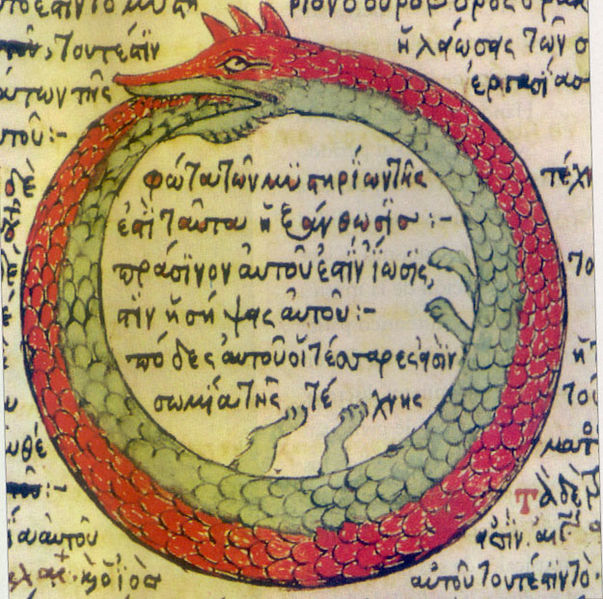


 Seek Truth