
On My Use of Religious Terminology

Originally Written: February 20th 2020

My use of religious terminology is at its core extremely blasphemous, yet I use it in a way which is perceived as authentic for its relevance to situations, when anyone who knows me would immediately recognize it as sarcastic. I do this while simultaneously holding the value of the statement for its metaphoric representation of relevance to the expression which I am looking at conveying. While I seek to be authentic in my communication of appreciation for religious terminology, I also seek to display the flaws of the belief structure through the absurdity of the actuality of the statements. Thus, in blaspheming in such a way, I do it with a dual intent of representing my expression with language I don’t literally believe in, while poking holes at the absurdity of the literal interpretation of such claims to thus be enlightening to the religious believer. This I do consciously, with good intent, although, in many instances, the person I am exclaiming such remarks to doesn’t understand the true nature of such claims, due to their acceptance of the terminology as being socially valid.

While I appreciate every religion for its contributions to the development of morality and cohesion of human civilizations through tradition and a semi beneficial value structure, I simultaneously see the error in any supernatural or faith based claims. While no supernatural claims find a lodging in my mind, I still recognize and appreciate the use of religion as a tool for many people, and for those people I can see the beneficiality. While philosophy is high on my value structure, and unmediated and unrestricted truth seeking is truly my motivation to pursue philosophical and scientific descriptions of reality, I recognize that philosophic interests aren’t universal across humankind. Likewise, most people do not have the time nor will to devote to the development of a moral system or the endeavor of uncovering and elucidating a hierarchical individualized value system, and to them, I can understand the adoption of a religious system which is laid out in a preset, easy to understand, and ultimately semi-beneficial belief system. The moral system produced by religion is sub optimal, but still preferential to the psyche which lacks a conscience motivation system required to be a good person, and to this, I see the use of religion as providing. While metaphysical claims made by Abrahamic religions in the form of describing life after death, or a loving creator / personal god, are undoubtedly false in their description of the reality which we inhabit, they are a necessary motivator for many people to become good people, in the absence of rigorous philosophical inquiry, which is afforded to the few who have the luxury of time and conditions conducive to proper exploration of a logical system built from the ground up devoid of the present plan laid out by religions. The setting up of foundational values through archetypal stories, and the imperative upon acting in accordance with a higher power, which, as an ideal aim as embodied in the ideal of God or the “Savior”, we truly do see beneficial pragmatic utility in striving to live in accordance with such an aim. The point is, while many of us have the capacities to extract the psychological significance, many of us simply don’t have the time or interest to do so, and that is perfectly acceptable. To give up striving to instantiate these psychological ideas societally, isn’t what I’m advocating, I merely wish to acknowledge the pragmatism behind the continued use of religious institutions, given our current level of development.

 Obviously it would be preferred if everyone had the time and interest to root out the metaphysical bullshit which makes false truth-claims and is used as a motivation and intention behind moral acts, in other words, people could have a good, beneficial, wise, virtuous characters for better reasons. These better reasons would be grounded in experientially elucidated comparison, upon the psychological modes of being which lead to meaning pursuance of an individualized nature, and thus wellbeing and reduction of suffering. If the outcome is the same, in terms of action, then we can easily see the use of religion, but through the intention which is presupposed in the action, we necessarily never come to equal actions. As the intention differs, the causal efficacy in terms of beneficiality into the future is thus modified. To do good for the sake of going to heaven, can be replaced be doing good simply for seeing the value and beneficiality of the causal structure in producing beneficial fallout as a result of action. For more information, see “The Importance of Intentionality”.

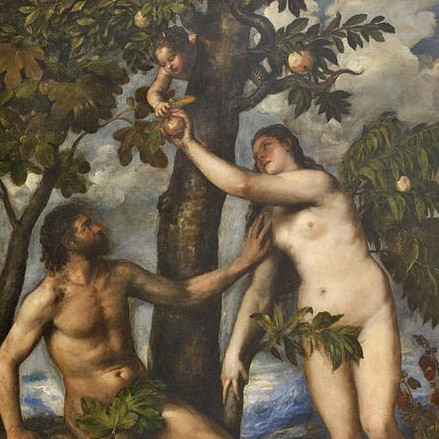
Primitive Symbolic Differentiation

Originally Written: November 9th 2018

The original symbols of good and bad, before language, in primitive humans, developed out of the organism’s ability to decipher what is beneficially useful, and on the contrary, harmful, to it, just like any other evolutionary developed attribute. We can imagine certain symbols which were found in human’s prehistoric pictures / experiences which later on were used as religious symbology, to get an idea of the impact certain symbols could have had in improving our wellbeing once we understood them, leading to higher cognitive ability in the acquisition and understanding of symbols, and eventually to language. Although in their primitive form, these symbols went pre-conceptualized in their abstract utility, their direct perceptional advantage in recognizing, and differentiation, was fleshed out in experience.

A symbol of what is good or bad is useful to the organism in aligning his aim, or in avoidance, both geared towards survival and prosperity. Two examples of symbols which in their practical understanding increased survival, and later became central to religious mythology, are the snake and the apple. A bright red fruit, or a red apple, symbolizing the affirmation of life, sustainability, ripeness, nutriment, prosperity, as that which enables life to persist, obviously is something to be aimed at, as something representing, generally speaking, cross culturally, the good. In regards to “the bad,” this was symbolized as the snake, as that which is dangerous, deadly, life negating, cunning, hard to see, easily mistakeable, as that which is a threat to life, obviously representing the bad, the original symbol of adversity. It is clear to us why the distinction became archetypal in nature, as those which could recognize ripe fruit lived, those that couldn’t, died, and thus the descendants of the lived, lived to carry whatever genetic propensity allowed for the heightened awareness of the attribute. In the same method, those that could identify a snake, and those that couldn’t, had very different fates, thus the recognizeablility of what the symbols represented led to the necessary evolutionary development in reference to both phenomena.  

In pre-symbolic worldly experience, the benefit of recognizing these two means the difference between life and death, and became a societally inherited trait through the reproduction of the individuals who had the greater propensity towards “awareness” and other factors that contributed to identification. As the knowledge was passed down through generations, the symbols become ingrained in their beneficiality, regardless as if the actuality which they represented was decisive in life and death millennia down the line (modern day – we still recognize and have natural tendencies of significance in regards to red, ripeness (female attractiveness) as well as snakes (ropes still scare us)). Obviously these two phenomena aren’t the only factors, but their predominance as meaningful symbols, and their evolutionary implications, are still prevalent among modern man.

Everything that makes sense to us now, had its roots in an evolutionarily developed process.   Thus, the importance in recognizing such phenomenon is the difference between life and death, and natural selection created an unconscious formulation of such things which is able to distinguish these phenomena clearly, and perhaps this unconscious ability manifested itself into the original symbols of such things, which we now interpret as good/evil, implying an unconscious, archetypal, value system manifesting its contents into the symbol.  Symbols such as these are of utmost importance to primitive societies, groups, and individuals, in expression of an inner truth, in passing down knowledge, as being used as a precursor for language, and later in the development of consciousness. In this way symbols of all kinds develop, from external reality, introjected to the unconscious, then expressed externally.

We all understand unconsciously why the Biblical story of Adam and Eve makes sense, regardless of how strange it may sound in conscious formulation, it is due to the strong symbolism which is inherit within it being immediately understood sub-consciously. The knowledge of good and evil, which is the light of awareness, of consciousness itself, becomes metaphorically entwined with the ripe red apple/pomegranate, (also taken perhaps from Greek mythology) as truth. This protected produce of God himself, who represents that which creates, sustains, and is the highest aim of all life and from which in pursuing (the highest ideal of our potentiality) places a restriction upon the apple. In its consummation, it brings humanity to the divine, it brings freewill, awareness, and life, to the determined being and leads them away from the “walled garden” or protected society, into the full nature of truth, autonomy, in short, consciousness and its suffering. It is that forbidden understanding, the unknown, towards which we strive, and it is in our disobeying of the highest ideal, that we suffer the life of mortals. The snake is the anthropomorphized representation of the highest evil, of Satan himself, of betrayal and the one who leads astray, away from the highest good which is represented in the image of God and his word. The snake is death, and that which hinders life from being protected in the walled city, it is that distraction and desire which perverts our course from the highest possible aim, our greatest potentiality, and leads into suffering.

This story not only makes sense for us, but has the tremendous staying power in still affecting believers across the world who feel it represents a deep truth of existence, which it does, literally, and metaphorically.   The story represents phenomena which are of utmost importance to understanding ourselves, and directs us to survival in pursuit of the good and the recognition of evil in order to avoid it or be dealt the punishment. All other symbols, religions, myths, which have staying power in captivating millions, all emerge in this manner, by primitive man introjecting external phenomena, developing them into symbols through evolutionarily ingrained archetypal creative power, subconsciously, and finally in their successful emergence as a good representation of relatable phenomena, apparent in ancient stories and iconography. These creative works help mankind and society in pointing us in the right direction, giving us a framework of understanding toward greater cooperation and survival. Only much later, with much more developed consciousnesses, are we able to examine the very symbols which gave rise to our intellect, and we are able to tease apart the meaning which underlies them, this, in general, is the task of the depth psychologist.

How an Increase in Knowledge Can Produce an Increase in Sorrow

Originally Written: January 26th 2018

Ecclesiastes “He who increases knowledge increases sorrow.” As we learn more about the travesties, malevolence, and evil acts commit across history, the more we come to see the potentiality humans have to cause suffering to others. The more we learn about the suffering which everyone undergoes, that we too experience, the more we potentially can feel disheartened as to the experience of life, and thus result in a sorrowful existence. While knowledge of this sort can cause debilitation, and a negative mode of being for the individual, it doesn’t necessarily have this effect across the board. Many people can spin a different perspective with the increase of knowledge of this sort, and look at the potential for humans to attempt to alleviate it, and if the individual finds that desire within himself, he can view the human condition as essentially compassionate, rather than malevolent, producing the opposite effect, of hope and virtue.

This quote is true in regards to some situations, yet is too broad to cover the set of all experiences, and all individuals. In line with the quote, the more knowledge you have in regards to understanding the effects of our actions, and their implications in the wellbeing of ourselves and others, the more you notice your own deficiency in acting in the optimal method, producing more moral shame than the ignorant moral agent. In times when passions override reason, and we fail to hit the mark, we suffer in relation to how high that mark is, in how well articulated it is, in how much knowledge we have as to a better way of Being. Thus you increase in sorrow from every mistake because you understand it as a mistake, you understand that rationally you knew the better thing to do, yet emotions or competing values over rode the conscious thinking process and you thus acted from a base that isn’t in line with a higher value. An increase in knowledge results in a better understanding of what has and is taking place, and causes the individual to be distraught over their lack of discipline over making more optimal rational decisions, as well as noticing the mistake for what it is and how it was caused, and this nature of humans, is natural, and at times can make one sorrow for how little control our “ego” or consciousness has in overriding the unconscious, or external effects, which are more powerful at times.

On the other hand, in regards to morality, an increase in knowledge can produce a more virtuous agent, and in virtuous actions, comes pride and happiness in accomplishing what we have uncovered as being right or meaningful, at least to us. Does this compensate for the moral shame in developing virtue? Does the happiness outweigh the sorrow? In general, probably not, and Ecclesiastes is right. But this quote doesn’t give us an imperative to not strive for knowledge regardless, and I would argue that the acquisition of knowledge in regards to moral questions and their implications is worth it as the meaning and the results outweighs the individual experience of sorrow, whether or not that sorrow in acquiring it outweighs the pleasure in virtuous action or not.

The increase in knowledge of causality enables the individual to see many things the ignorant would otherwise profit in the short term of not knowing, but in the long term, and in the implications, the knowledgeable gains the upper hand. The foundations and implications of actions and speech in regard to morality can be extrapolated to a further than optimal direction, potentially causing suffering in “overthinking” and can become overwhelming to the degree of causality explored as the potential negative down river effects can cause stress to the moral agent. Here, knowledge of morality, and the nature of suffering and satisfaction, and the causes and experiences related to them, also can become a burden to the individual in this scenario of “increasing in knowledge”. The burden of responsibility in relation to knowledge of the effect of actions, can be debilitating and stagnating the mind that has more knowledge of the subject, and thus his sorrow can be understood as a production of such conflicts.

Certain realizations outside of the realm of morality offer a source of further inquiry into the beneficial or detrimental experience in the knower. Such truth revelations such as in the full complexity of the issue of freewill, and its incompatibility with the actual experience of life, can be a source of great dissatisfaction for him who once thought he contained “freewill” in the libertarian sense. The uncovering of the truth of strict determinism can cause the individual to feel a lack of purpose, or choice, and can be a source of sorrow. On the other hand, it can be relieving, and remove anger, cognitive dissonance, and pride, in cases where it would otherwise be manifest (if viewed correctly).

The relinquishing of illusions of a personal God, or of an afterlife, can be extremely sorrowful to the naïve seeker, and may cause great distress and depression as a result. The meaninglessness of the universe, objectively, can be hard to cope with, and the proper response and compartmentalizing of such truths is no easy matter. Where, after time, integration will prove useful to the individual, and ultimately produce greater heights of wellbeing and potentiality for a moral virtuous life (I believe!) the initial adoption of responsibility and acceptance of non-desirous truths can break the unprepared individual, and everyone may not be endowed with the requisite mental capacities to wrestle with such ideas. While these are potential situations in which an increase in knowledge can cause an increase in sorrow, it is entirely possible for a more positive interpretation, and actual an actual reciprocal effect to take place in him who gains the knowledge. One may feel profound pleasure in uncovering insights into the nature of reality, and may feel themselves better attuned to who they are and the reasons why they do things. The openness to being fallible, and the corrective nature of novel knowledge in improving the individuals understanding, doesn’t always need produce dissonance or distraught, but can prove to springboard the individual to greater heights of wellbeing through a better use of his speech, it can prove to clear up previous dissonance, and to grant clarity to the individual. So an open generalization such as stated in Ecclesiastes is interpretable in respect to certain experiences, and in situational accounts, it is in no way possible to generalize it across the set of all possible acquisitions of knowledge. While certain knowledge in relation to individuals can cause sorrow, it can, in other individuals, provide a useful and beneficial effect. The state of the individual, the type of knowledge, the circumstances for its adoption, the framework in which it is revealed, all are integral factors in determining the beneficiality of knowledge. We would be wise to consciously discriminate in which knowledge we share, and attempt to uncover for ourselves, in addition to being prudent to whom, and in what fashion, and in which circumstances, we receive or give said knowledge. This is truly informed by experiential knowledge, contemplative reasoning, and overall, wisdom.