The “why” in “why do we seek the truth” has to do with a biological desire that has been reinforced by our reward system to value the acquisition of insight into the true nature of things. In the hippocampus we find two systems of importance here, one which seeks to discover the unknown, as a biological imperative (this is why dissonance is such a problem to us) as well as a dopamine release system which is linked to that acquisition, and reinforces pathways that in our past have proven to accomplish that goal. The two are inextricably linked, and at a basic biological level, explains our will to push frontiers and knowledge of the environment. Being that the materialistic underpinnings of both the manifestations listed above are located together, their cybernetic influence upon each other is more closely linked than their relations to other areas of the brain.
This is only the start, and like all other basic biological values, how we spend our time, how we achieve the things that give us pleasure, the method we do so, and what is the end, becomes mediated by our social and cultural milieu, and tweaks from the initial imperative in novel directions by our experiences. This value system, the will or desire to achieve what grants us pleasure, and reduces suffering, as well as what is in line with underlying biological “wants”, is the source from which actions manifest, including actions and subjective psychological processes that encourage us to the pursuit of truth.
While everyone has this “to a degree” the more our experiences inform us to the beneficiality of uncovering truth, in a specific manner, whether scientific or philosophical, the more inclined we are to pursue them. The greater source of pleasure or accomplishment we find in creating a habit of searching, finding, contemplating, and theorizing, the greater possibility we will pursue it more often. Thus, we find the mutual reinforcement between accomplishing new conceptualizations and modes of being, which we consciously attach the definition of “truth” to, and the feeling of its intuition. A deeper analysis of the content of the word “truth” may here begin to break down as we dive deeper into the phenomenological realm. What the word stands for, merely is the expression of what we believe to be actual. But what we believe to be actual, in concepts, in thought, in idea, is merely the expression of our attempt to organize the chaos of factors that make up our orientation within the world, from our DNA instigating a perceptive system, to our embodied Being and its navigation in the external environment. The conceptual level merely scratches the surface of what underlies such statements or consciously held beliefs. What we seek is an optimal mode of Being in the world, for which a consciously held belief can support as an epiphenomenon and a causal agent towards the makeup of our Being. It is merely surface level expression which attempts to label an intuited idea which we may or may not embody. The real truth which we seek is to be found in how we are, in the manner in which we act, in how we are so situated in the world, the attitude we take up, the things our body does. While this can be consciously directed, that conscious direction arises from subconscious content, form the totality of our body, and psyche, in the integrated Being. The “why” in “why we seek the truth” from a philosophical standpoint, can be explained by a deeper investigation into the effect upon our Being that such “seeking” entails, and the “why” behind such a question is even posited runs tangentially to the same answer.
The biological closeness of the neuronal divisions which have been uncovered as exploration of the unknown, as well as the pathway reinforcement system, and the functions inherent, provide the necessary basis to explain the human drive towards exploration of the unknown. The biological purpose of rewarding exploration through chemical intervention, in the form of serotonin and its empirically observed “pleasurable sensation” worked through environmental expansion is for purely primitive human’s evolutionary reasons, from a materialistic perspective. While environmental expansion provided benefits to our ancestors in the utilization of different domains, in expanding territory, in more options and potential which can be uncovered in new areas, the use of exploration and its place in the realm of idealism is now the frontier which is phenomenologically “closest” to us. This means that the drive which once was directed at environmental expansion, has been reallocated according to our current environment, that of the social world, the world of language, ideas, and their cultural transmission – memes. Given that ideas rule the social milieu in which our Being is oriented, given that memes and ideas are the currency which direct our consciousness and its impulses, that is, beyond the instinctual, it is deducible that we may “seek the truth” for merely biologically fitness enhancing purposes even in the realm of ideas.
Those ideas which captivate us and inform our beliefs plays an integral role in shaping the mode of Being from which we act from in the world. While these ideas and their subsequent belief modification may be consciously formulated, the level at which they affect our psyche and our value system is stemming from subconscious alteration. Meaning, we may conscious receive the memetic material from reading, from conceptually piecing together information, from auditory sources, from reflection upon experience, but the content that arises into consciousness which states “I believe something” is integrated based on a predisposition that is wholly subconscious, and, from one perspective, even sub-psyche. Our conscious rationalization of beliefs is merely the expression of an attempt to justify what we have deterministically been led to perceive as the truth. Given that this perceived, intuited, believed, “truth” plays a role in modifying our value system and mode of Being, we can connect its role to the biological “goals” inherent in our DNA.
The connectivity to a subconscious stratum, and our mode of Being, implies a modification of our conscious attention, and our very navigation of the world we find ourselves in. Thus, the seeking of truth is always a perceived fitness enhancing activity for evolutionary reasons. On the basis of what we believe to be “true” our behavior is modified, the way we interact with others is modified, how we spend our time, and what we perceive is all modified. These changes based on our belief system can be better or worse in relation to the replication of our genome, the task which the survival machine which we intuit consciously as “us” is tasked at accomplishing. What we intuit as “true” can have several senses, towards which I expound upon in “Truth Claims and their Corollaries”, but one such method of interpreting the word “truth” is the pragmatic utility of a content upon our subjective experience, or upon what is practically beneficial and useful. This method relies on the empirical data that we can phenomenologically analysis, and it is from this methodology which we will perceive, as it is all we truly have available to us (everything else is merely an abstraction from the empirical groundwork).
We may attempt to consciously hold on to the “belief” that what is true is the objectively verifiable statements, or that which holds logical consistency, what “true” necessarily implies for a biological organism, in the preconscious processes, is what is beneficial and useful to the organism, which, for us, is the DNA’s protection and reproduction. Thus we may consciously state that we don’t believe something to be true merely because we wish it to be, but because it is, but the reason why we believe that truth claim, stems from a subconscious belief in the utility of such a belief. If we believe something to be true due to verifiable evidence, logical conclusions, in consequence of the scientific method and its deductions, the very belief in such a method’s veracity is for pragmatically utilizable reasons. Taken from a phenomenological perspective, we act out what we believe to be truly the most effective at accomplishing a goal. Whether this goal may be looked at from an Individual psychology perspective, as constituting power and dominion over our environment, or whether it be social feeling and an inferiority complex looking to be rectified, or if we look at it as removal of dissatisfaction, or the pursual of satisfaction, the underpinning perspective here is irrelevant. What is necessary for the “seeking of truth” is that it only correlates with Objective Truth in that it is objectively the drive of our subjective experience for a reason that is biological in nature. If we consciously hold the view that it is being done otherwise, the statement itself is arising for fitness enhancing purposes of the individual. Perhaps this idea is popular in the current social milieu, perhaps we attribute reason and logic to its statement, no matter from which experiential factors the statement “seek the truth” and our actual “seeking” and “finding”, finds its conscious rationale to be, its core structure is founded upon the pragmatic utility for the individual.
Thus beliefs which seem wholly contradictory in their expounding are understandable, such as “I am a nihilist”. The belief that everything is meaningless wholly negates the very existence of the Being which finds it significant to think such a thought, or state it to others. It is a statement that is destroyed by logic upon any comparison with “objective truth”. Yet, for the conscious individual who states such a belief of the meaninglessness of all experience, there is an objective truth that the content is consciously believed to be representing the “truth”. How can this be so? How can we explain such a seemingly contradictory phenomena existing? The statement and its corresponding subculture of adherents find it mutually beneficial to their psyche to state their “nihilist” belief. There must be a psychological benefit to the individual who can live with the conscious belief in a world devoid of meaning, otherwise, they would not be alive. If we follow the statement to its logical conclusion, and truly take it as the truth, the individual would find no reason to state the belief, nor reason to believe it, nor reason to breathe, eat, and continue living. The fact that self-purported nihilists exist confirms our deduction that pragmatic truth runs our belief system, whether or not we consciously believe it. There is a significance and a meaning behind any idea, any belief that we may hold, and this significance impacts our Being in such a way that we value the “seeking of truth” both for the pragmatic utility in the mode of being which is supported by the very journey of seeking, and of the pragmatic utility of the discovered “truth”, regardless if such a truth is modified by the utility it has to the individual, regardless of its logical or non-logical justification. Whether that is spurred by social context, environment, indoctrination, survival, or purported philosophical consistency and reason, the underlying factor which all phenomenologically experienced “seeking of truth” contains is the pragmatic utility of the endeavor.
We seek the truth for the same reason we do anything. Because of existence. Because of life. Because of DNA. Because of evolutionarily beneficial prerogatives. Because of our developed neuronal structure. Because of our past experiences. Because of our perceptual system mediated by a value system which informs our Being, and the subsequent orientation we have to our environment. Because of the social milieu we find ourselves in, and its cybernetic influence upon us, and us upon it. Because of the Being which we are. We seek the truth because of its pragmatic utility towards the goals which we have developed from the totality of influences and factors which make up, in the overarching synthesis, the totality of our Being. The principle of sufficient reason guides us to deduce that there is good reason for these goals, and we find explanations for driving factors from many perspectives, across the domains of philosophy, psychology, and biology, yet, experientially, we find them in the content of our subjective experience. For us, this is the most real, and from this, stem all our pursuits and goals. If we ask ourselves, why do we seek the truth? It is because it is the most natural thing for us to do, and we couldn’t do otherwise.
The error with duality, and with certain philosophies, specifically absurdism, is the fundamental claim that humans are somehow distinct and separate from the universe. To distinguish man, and the universe outside man, as two separate groups, conceptually, is useful and descriptive of a real situation, but it doesn’t mean that it accurately reflects a reality outside of our conceptual usage, to which, such distinction does “truly” exist. The trouble comes in making exclusionary claims about either two of the groups without depicting the role the opposite has in its functions. This distinction causes us to have a gap between the two concepts that is larger than it actually is, and is ignorant to the inclusion of man within the bounds of the universe, and the presence of the universe in man’s reality. We are most obviously rudimentary aspects of the universe, neither divine nor lowly, yet part of the whole. To distinguish the universe from ourselves is to leave out an integral part, it’s literally separating advanced biochemistry from reality as if it’s not part of the picture. Its saying that the teachings of physics don’t exist, it’s making a claim which doesn’t match up to established scientific truths and observational data.
Does it matter, to a human, if the outside universe is meaningless, when the human, himself, has found meaning or has the possibility of discovering meaning within the universe? It becomes irrelevant of the universe without him in it, as he surely is in it. Thus the distinction of absurdity in comparing the two is valid if recognizing that certain people are searching without finding, thus it is just a matter of them not looking hard enough, but it is not absurd for anyone who has discovered, or seen manifest in his consciousness, or who merely isn’t ignorant of his will to live, of a meaning within the individual’s life. The nihilist in the room is ignorant, easily cured by knowledge, introspection, abstraction, a leap of faith, or a change of perception. A pointed awareness toward the epiphenomenon of our own biology and will to live gives ground to sufficiently explaining at least one value system inherit within us.
Is it possible to escape the absurd through realizing truly real meaning in the universe? Perhaps it is not the contradiction between the humans seeking meaning and the nature of a meaningless universe that is absurd, perhaps the absurd is in the ignorance of our own selves being part of that very universe, and there being a meaningful path engraved into us biologically, paradoxically, or perhaps not so, created by this universe. Thus, if we are part of the universe, and there is a meaningful path to be taken through the passage of time that means something, perhaps only to humans or sentient beings, and morality truly exists in this sphere, without committing philosophical or physical suicide, we have stumbled onto a 4th solution that lies outside of the question. There isn’t any higher transcendental place to find the answers which we seek as most existentialist claim as they take leaps of faith. Nor is the absurd predicament a true predicament. But the universe itself holds meaning in the very fabric that gave rise to us humans. While we don’t matter to any other aspect of reality, the aspect of reality we do matter to is ourselves – and each other. Any being that can have a better or worse experience finds significant meaning within that experience, things matter to it, insofar as they have an effect on subjective experience.
Could this be the fundamental claim on which absurdism is broken? That the philosopher who compares the universe with the human, fails to recognize that the human, being a part of the universe, is in himself as much the universe itself as is anything else that is real. Thus, claiming the absurd arises when there is a human and there is a world, a world which is irrational and meaningless and a human which is rational, seeking meaning, rests on false promises, if that human has meaning within himself and which his seeking is able to find. This absolves the solutions of necessarily committing philosophical suicide, as nothing transcendental or supernatural is conceded. It is merely within the organization of one’s own consciousness that one discovers that there is meaning, it’s in one’s intentionality of our Being. Meaning, value, purpose, drives us through our desires and anticipations, our anxieties and our aims, it courses through our blood every moment of everyday, it drives us to continue living, and not only merely to survive, but to survive in a way which is optimal for us experientially. Our own subjective experience, our unconscious accumulation, our biological perceptivity, is all mediated with a purpose, it is transfused with meaning, whether we can conceptually admit to it or not. Our interpersonal relationships exist in a mode of being which is directed with meaning, it isn’t for no reason that we act the way we do, moment to moment.
The principle of sufficient reason applies to all phenomena, and that principle applied to our totality of being can reveal to us the value structure we contain, toward which we consciously and environmentally we modify, and pursue life through that modified mode of being as depicted in its total process in “Value System Instantiation”. Setting an aim to pursue, that aim being ours, and us being part of the universe which is “meaningless” (in its entirety, but not in its parts, obviously), gives us the fulfillment and purpose we have been searching for. We find meaning in the product of our actions, in consciousness intentionally directed, moment to moment, in alignment with a value structure (conscious or unconscious) – manifest in one’s relationships, in life, in experience, in subjectivity, which is part of this universe, not outside it nor transcending it, not more important than any other aspect of it, just part of it.
Albert Camus committed the universal danger of intellectual folly in pursuing absurdism with the either voluntary ignorance in the above information, or the omission of such information in his philosophical works. While his framework from absurdism, and the conclusions of rebellion and his answer to the “absurd” conundrum is all coherent and of a rationally unique philosophic spectrum, he commits the sin of omission, or ignorance, in regard to articulating the full picture in which we find ourselves. It is a great danger to any person who is brighter than normal, intellectually gifted, or extensively educated to use the enhanced power of critical thinking, reasoning, and logical coherence down a path with unstable roots, producing a product, a work of abstract conceptual explanation that is through and through coherent and revelatory, yet built on sand rather than bedrock. Thus the transient obsession of the intellect can lead one to profound experiences and insights along a path that veers away from concrete reality, beautifully explaining and rationalizing the journey in a way captivating to the intellect, yet unable to visualize one’s own digression away from truth. As the intellectually powerful yet deceived man continues an abstract journey down metaphysical pathways, explaining and rationalizing aspects of such a revelatory perception, abstracting and logically tying ethics or ontology or psychology into the mix and supporting claims with proofs and valid evidence, he invests more and more of his conscious attention, time and energy on the exposition of such realms, captivating audiences, yet, the great danger presents itself when discovered by a random onlooker. The beautiful construction was built from cards, on a bed of water, and elucidates an entire reality on which we are not part of, which doesn’t match up to the one in which we find ourselves. People have done this with religions, governments, philosophical concepts such as free will, self-hood, the list goes on and on, and the rabbit hole proceeds from false axioms. Perhaps the foundational claims or interests which springboard the philosophy into the genius’s production are based on premises that are falsifiable, perhaps the interest and discoveries prove truly unuseful, unmeaningful, to anyone except the dedicated expositor, perhaps the system is coherent if the laws of physics were different, if reality itself revealed itself through concrete evidence to contain the cornerstones of which the intellectual built off of. Yet reality doesn’t always contain that stone, and thus the exposition becomes a sham, and a convincing sham at that. Thus the danger of the intellectual, that he should lead his life in using his powers to discover nothing of value, nothing of meaning, and to falsely believe so. Thus, one should be grounded and fire a thousand bullets from every angle into any premise in which one desires to proceed from, and the analysis and criticism of one’s values should be in the periodical checklist of the person’s consciousness, to avoid pursuit down such paths, and to greater clarify and point one’s direction.
Camus’ solution to the absurd in accepting a transitory meaning without philosophically forgetting our absurd position in the universe, smiling though accepting a meaningless fate, is thus discredited if the universe is framed differently as I have just shown. It’s not necessarily wrong, it’s just not a complete picture, it is omitting an important distinction, and caveat, to the distinction made between man and the world. Framing the universe as meaningless, is a false method of framing it, as there is meaning in life which is in the universe, which makes the inclination behind the premise lead to false conclusions. Of course the whole is different than the sum of the parts, but if a part has meaning, is made of meaning, is oriented and navigates experience based on meaning, then the whole necessarily contains meaning, albeit it may solely be one part of its totality. If we say, what is the meaning of the universe? For what purpose does the universe exist? The question makes no sense, as the arbitrary category includes literally everything, the only response would be to say it exists for the purpose of Being, so that its contents can exist, the totality exists for the purpose of supporting all existence (God?), as that naturally is what we see the contents of the universe doing, existing. If we make the clearer significant distinction, what is the meaning the universe has for us? For what purpose is our individual existence existing within the totality of existing things, “the universe”? Towards what end ought we pursue within this universe we find ourselves “thrown” into? That question itself is also slightly misleading, as shown above, we already have meaning which is driving us through every moment, we have genetically coded, biologically modified, culturally and environmentally shaped, desires and conscious experience which strive to achieve satisfaction of momentarily dissatisfaction. We can easily tell moment to moment what we want, and this desire stems from an evaluation of who we have the potential to be, or what we could potentially have. It is in this constant pursuit of the future that we uncover what we value, it is in pursuing what we value that we find the meaning the “universe” has for us, we find the fulfillment and the purpose for which we strive to conceptualize in the revealing of our value structures and the pursuit of that which is important to us, that which our care is directed towards. For more information on the topic: (It’s A Wild World, The Answer to the Absurd Conundrum).
Part of the fundamental problem we have as biological beings is the gap between our values and the production of meaningful solutions to the novel situations which we encounter. We know what actions are “good” yet the situations we encounter are difficult to discern as to what constitutes the optimal pathway for us to take. Our general mode of being and manner of operating in the world is dependent upon schemas of action that are responsive (adequately or not) to the multitude of situations we encounter in our environment. These situations elicit the manifestation of a schema through our assimilating the situation to the schema, and given that each situation (each present moment) is novel, we then have to accommodate that assimilated schema to meet up with reality in a manner that works for us. If we can intelligently adapt to novel situations, our schema likewise undergoes a modification that can adequately meet the challenge of the moment. Often times these schemas, which are always significant and hold our developed values in them, aren’t adequate, and for those situations, we have the ability to consciously manifest our values, in accordance with what we know, towards the production of a viable solution. In this manner we move through successive steps, albeit miniscule ones, in the manner Jean Piaget describes as genetic epistemological advancement. It is only when we reach an equilibrium between the assimilating and accommodating functions that our operations are adequately able to intelligently adapt to novel situations. This, as a requisite, is dependent on fleshing out the value structure that makes up the framework of the actions that are schematized.
Arising of the Existential question
Existential inquiry arises in every individual once he reaches the intellectual stage of being able to abstractly contemplate the nature of his own Being. This, for most people, begins at around the age of 12-14, and continues throughout life, constantly resurfacing. With the emergence of the problem of our own Being, and our place in the world, we seek for answers. We can find many of these answers in our values, which dictate those schemas which orient us in the world, and can prove of being better or worse at providing the fulfillment we strive after in life. The more effort, time, structure, discipline, and intellect one commits to the organization of one’s life towards a meaningful path will determine the amount of progress he is able to achieve in pursuit of the things he values, and the wellbeing extracted from such pursuits. Environmental factors, genetic disposition, culture, society, education, character disposition, all are relevant factors which contribute to the individual’s pursuit of meaning, and the amount of progress he is able to make.
Necessity of philosophy in evaluation
As always, we must live first, then philosophize. But in order to maximize our potential, in the directions we desire, we must philosophize, and we all do this, to a lesser or greater degree, whether it’s made explicit and regarded as such or not. Not only do we all philosophize, we can be better or worse at doing so, and the results of our philosophy are fleshed out in the experience of our lives, in the manner we live, in our subjective experience, in our relationships, and in how we tackle the present moments arising. We must seek to orient ourselves around a value system which can lead to the most desirable future, implying and necessitating an articulate defining, organizing, and implementing of actions in alignment with what we believe to be most important. Our time management and effort must be in accordance with the system of significance we place upon the values, rather than allowing ourselves to be carried along by the river of desire without receiving the potential wellbeing available to us through psychological integration and meaning optimization. While many values are inherent, those which we most seek to manifest oftentimes succumb to the temptations of others, unconsciously. The goal here is to philosophically uncover, organize, and optimize our lives towards the pursuance of a more meaningful life.
If Value’s Aren’t Regulated
If our value system goes unregulated, and we remain unaware of its effect on our lives, we run the risk of our lives being hijacked by things which serve to promote societal and biological desires, rather than the individualized desire which fulfills us. The assent to values which are of less importance and significance than those which we consciously can uncover as promoting wellbeing and providing meaning is the error we wish to correct for, for the benefit of our own psyche, and everyone else in our expanding circle of influence.
Given the potentiality of ideological possession, and the ever growing instantiation of ethics corrupting societally provided value structures, and the cultural importance placed upon material gain, our value system is becoming more vulnerable to the effects of powers outside our control, and less effective in providing the meaningful basis for a competent, efficient, creative, and fulfillment providing life. The question we must ask is whether we want our lives to be ruled by tyranny, do we want to be the slaves to our society and to our biology, or do we want to impose our will upon the content of our own lives, and by recognizing and optimizing the content herein, form a life which represents who we truly have the potential to be? Do we want to fulfill the potential we contain at being a competent, moral, beneficial human, or do we want to be swept along on the waves of misfortune produced by external and biological influences?
Conservation of the old
We should seek orientation of that which is available rather than throwing out the old system in its entirety, this problem of shedding off the traditional spiritual underpinnings was stated by Nietzsche as that which led to the nihilism and evil present in the 20th century after the scientific worldview become dominant and, in a causal sense, necessitated the potentiality of the “Death of God”. Novel explanatory conceptualizations of values aren’t impossible, just as novel “creations” aren’t impossible in any other domain, we just have to recognize that as with anything, the new necessarily contains the old, it stems out of it, in evolution and in technology, in morality and in science. The causal link between the datum of experience and potential values we have at our disposal is a link that cannot be sundered. As the value structure necessarily gives rise to what we place an importance on and what we pursue, it is an integral process of the mode of being which underlies all manifestations in our actions and experience.
Bottom Up Understanding of the Value System
One must first identify their value structure as it is built up biologically, in its embodied form, and secondly, in the conscious articulation of how it manifests itself consciously. We have an embodied perceptive system, that is built up from our genetic material upon conception. This perception seeks, from the first moments of an organism’s life, to “digest” and “filter” incoming datum through sensory receptors, which is mediated based upon, in the first case, genetic instruction. The schematic underpinnings that dictate our ability to do so, are encoded with reflexive abilities, and have the “ability” to perceive with the “meaning” of it being valuable to the continuation of the genetic material that instantiated it.
The perceptive ability of our Being is in itself our initial evaluation system, it discerns content in relation to the significance it has to us, and directs our nervous system towards mitigating and responding to stimuli, both external and internal. Two separate mechanisms take place in this initial evaluation of stimuli, on the one hand, our perceptive system is oriented around discerning content in our perceptible environment that has significance for us, which is one manner of saying that everything “naturally” has value to us. If things didn’t have value to us, we wouldn’t focus on them, and content wouldn’t ever be discerned and arise in consciousness. On the other hand, that very perception which selects significant content in our environment for filtration occurs based on our own perceptive systems modification by our value structure.
The system of perception is modified in infanthood, and onward, through its environment, and the causal nature of that which is available to influence us. That which is available to be perceived, is filtered by what the biological system believes would be most optimal to the propagation of the genome, which is the starting point of our values, and generally what they are “subservient” to. Such imperatives hold background significance throughout life. While this is the groundwork of evaluation, in biological imperatives that imply the continuation of the survival machine towards puberty in which the organism can propagate the genetic material, the value and method towards which it achieves inbuilt biological aims is modified by the cultural, environmental, and interpersonal relations of the individual. These effects modify the value structure which modifies perceptions towards that which is useful to react to, and in such reactions, optimize the “wellbeing” or “beneficiality” of response in regard to novel situations. The biological system that is modified through life in filtrating perceptive data, is integrally tied up with our conscious experience, and its contents enter consciousness.
As we biologically intuit datum which sensory receptors “discriminate” as being useful to perceive, so too does our Being intuit which perceptions arise into conscious awareness, based on the same desire and imperatives which run towards the optimality of the organism. The contents of consciousness are in alignment with these desires, as they are modified by the environment and totality of our Being in relation to what the individual comes to understand, and believe, and intuit, or know, is the optimal aim towards which to guide himself. Whether or not it actually is, is irrelevant. What matters is that one’s values, regardless of conscious recognition or not, guide the individual’s moment to moment conscious experience, as well as his bodily reciprocity to the situation one finds oneself in in the moment. We always are operating under this basic low resolution conception of the value system, arising from the bottom up, from perception to consciousness.
Top Down Directing the Value System
Every moment is necessarily supported by an inherent biological value system, and the contents of consciousness as well as our embodied reaction to the moment are products of it. While the bottom up description explains the initial instantiation of our value system, it does little to aide us from where we’re at in top down influence. We ought to be able to give assent to our values consciously, and consciously direct ourselves towards values and aims which are our own authentic expression. What is important to you? What currently is taking up your time, mental space, and what are you currently actively pursuing? The answers to these questions may never have been made conscious, or we might not know exactly where they currently are at.
There is a concrete difference between what one’s actions show to be valuable to the individual, and what one believes to be valuable. Firstly, we wish to analyze what actually composes the individual’s life, and how it compares to what ought to compose the individual’s life. We must take an honest account of our time, and an honest account of our beliefs about what we desire to be doing, who we desire to be, where in our career we desire to be, where in our environment we desire to be, what kind of skills we wish to improve, what knowledge we would like to obtain, what character traits we would like to embody, and what psychological state we would like to have. In answering these questions as to where we currently are, we can find answers to what our unconsciously acted out belief system denotes as being our current value structure. In answering these questions as to where we would like to be, we can define what our consciously formulated value structure actually is. The gap between what is manifesting as an inherent value pursuit, and what we actually value will determine the difficulty in aligning the two. The goal, broadly speaking, is to bring the two into alignment so that our actions and time spent represents what our consciously formulated value structure is. In uncovering what is important to us, we can create a list of things we value, and in their evaluation, to the best of our ability, discover what it is that would provide us meaning.
Purpose of Uncovering Values
We must seek to uncover the values inherent in our deterministic biological nature, and in discovering their potentialities, consciously decide which we wish to embody and to which degree we wish to pursue their manifestation. The “creation” of values is necessarily a pursuit which is only possible with the addition of experience, and in fact, isn’t actually a creation. It is more a development, a modification, of inherent values imposed upon us through genetic and environmental influences. As far as our values as we find them in the moment, none can be created, but they can be altered through conscious direction towards novel experiences (all experiences). The prioritization, embodiment in actualization, and modification of what we value can be consciously directed. The derivation of meaning and importance allocated to the potentiality of value is what is “in our control”. While the values themselves are inherent, their discovery, and the systematic recalibrating of our actions and Being in alignment with them, or to modify them, is something possible to be directed consciously. The expansion of knowledge and experience exposes us to novel situations, of which we always are judging, and placing a value of importance on. This content of experience is the datum from which we have to work with in informing how to hierarchical order our values. We cannot value that which we do not know, or what hasn’t been integrated into our psyche as something holding value. This process ought to be done in a way which is optimal for you, and everyone else, now, and across time. The optimization process must be recalibrated as additional knowledge and insight into circumstantial navigation and our own nature become uncovered to us. As long as the value is in line with what is important to you, consciously, and is an accurate representation of that importance, then we can continue.
What Matters in Uncovering Our Current Value System
We necessarily find more meaning in the pursuit and attainment of the things which we consciously formulate as being of value rather than in the things which we unconsciously carry out in our daily lives (which still contain meaning and value, but they ought to become subservient to the higher goal). The reward system which manifests itself in pleasure and pride can aide the individual in determining if something is meaningful to them. If you gain a specific type of knowledge, create a specific type of art, make progress in a certain direction, and it feels good to do so, if it fills you with a sense of accomplishment, if it moves your psychological state to one of fulfillment, then it is being flagged through the reward system indicators that it is meaningful to you. That being said, every reward system flooding of the subjective experience doesn’t mean that it is a noble or consciously confirmed meaningful act, it merely can be analyzed in order to determine what consciously can be connected to something you value. If you find pleasure in food, sex, and alcohol, and the reward system floods you with a positive emotion which seeks to reinforce those stimuli, you must consciously analyze if they are in line with your value structure, if not, then they are not to be pursued in a goal oriented fashion towards the goal of a meaningful life.
If the activity is retrospectively analyzed as producing a fulfilling mode of being, as well as being in line with the consciously formulated conception of what your value system ought to be, then you can take that as datum towards something which provides meaning, and can be pursued in a goal oriented way. Pleasure and pain in this regard must be analyzed, in short, with discernment, in determining their potential for long term benefit, as well as to their usefulness and potential benefit for you, the people you care about, and the outward circles of influence with which we all are engrossed in (the chain of causality as it applies to relationships between sentient beings). This extrapolation and analysis can be carried out to a larger or shorter extent, but what is necessary before continuing on is that a number of values must be defined, even if it is rudimentary.
Prioritization Of Values
Once we have a list of values, we must hierarchically organize them in order of importance. This organization is predicated based on what we would spend the most time doing, and what would take precedence over the others in terms of effort. While philosophical articulation and elucidation may be high on my list, it always is superseded by people, in terms of family, friendships, coworkers, and any other human who needs help. In this manner, I’ve consciously chosen the value of compassion for people to supersede my most vehement interests. In this way we must organize our value system, in a way that is practical so as to be employable in our actual lives. The establishment of a hierarchy of values is crucial in future planning for how to organize time, and how to maximize the meaning and wellbeing provided to us by pursuing the values (and their distribution across our days/ lives).
Example of Value System Prioritization
The natural inclination toward hedonistic pursuits may result in overindulgence and a large amount of time loss as well as a decline in health. We may consciously and verbally state that we have a desire and find meaning in philosophical knowledge acquisition, in truth seeking and mental exploration, the pursuit of which would better serve to provide meaning in our lives than that sensual drive which could dominate the psyche. The value of power and dominance may fill the opportunity cost of pursuing competency in a skill we value. We find that our current value structure, that which is ingrained in us through society and our biology, doesn’t always serve to provide the meaning and wellbeing which we have the potential of attaining. We pursue what is less meaningful at the peril of our consciously formulated abstract belief system. We still may value the objects of sensual pleasure, and we can allocate appropriate time in their pursual and enjoyment, as well as continue to value ambition in our careers leading to a rise in our place in the dominance hierarchy, but the differentiation of the values, and assigning an appropriate role to them in our lives is here the mission.
Planning Value Pursuance
With the hierarchical organization of our values in place firmly, yet remaining open to further modification, we can then work out the envisioning of what their carrying out would look like. This is a contemplative visualization of what the embodiment, improvement, or attainment of our values ought to look like. With this in mind, we are better equipped to work towards something, and are able to consciously adapt our mode of being so as to be in line with what that visualized image appears to us to be.
Based on our contemplative image of what the embodiment of our values is, we can plan benchmark goals toward their attainment. These can be concrete material or temporal milestones, or abstract urgencies in which we seek to embody. These goals and aspirations we can separate between benchmark placeholders towards the attainment of a meta-goal, or simply as guidelines in which to follow in the progression towards the attainment of more concrete goals. This applies to character traits, virtue embodiment, career trajectory, familial planning, etc.
Habitualizing Values
We can use our ability to consciously direct ourselves to promote the advancement of values, in the form of reinforcing the actions and thoughts, the phenomena which, as manifestations of underlying modes of being, can be used in a reflexive manner to promote the underlying value. The habitualization is necessary to conscious value instantiation and reinforcement, and thus the transmogrification of our value system to that which we consciously assent to. Habitualization to those consciously assented to values has the negative tendency of reducing values which we consciously perceive as less significant, as less time and concentration is allocated to them, as certain things become more prominent in our lives, others become less. Discipline and conscious direction are used, and in turn, also gain from the positive feedback loop of their increased actualization. This adds to the advancement of our ability to consciously direct our experience toward such experiences which are more meaningful. Of course habitualization, whether consciously or not, is often enacted for other aims, and in pursuit of values which we may mistakenly lend our assent to. Experiential wisdom and conscious attentiveness to the process of change in our values and the mode of being which embodies it will serve to inform the individual whether he is on the right path or not.
The Navigation Problem
We ought to have an established image in mind of a future reality with which we look to pursue, which is in line with our hierarchically organized value system while systematically having definite goals in which to pursue towards the embodiment those values. We can then analyze how best to navigate our lives in the direction of the established system. This implies time management, dedication, distraction and entertainment reduction, effort and discipline. Morality comes into question here, and our morals, like everything else we do, will dictate our experience of life and our effect upon the world. Every decision we make can be better or worse at being “good”, if we take for our standard of “bad” the worst possible state of suffering for everyone, as Sam Harris explains in his novel the Moral landscape. In operating from a moral realist meta-ethical perspective, we hold that our actions can move the dial in one of two directions, and since we find value in our subjective experience, and presumably of those we love, those we come into contact with, and in extreme cases, all humans or sentient beings, it is essential that our morals stem from our consciously deduced evaluation system. As for a minor-ethical theory that is optimal to follow, we find that “Wisdom Ethics”, or moral particularism, is the only system that can account for the vast landscape we encounter in novel situations. Moral dread and guilt are our guide here, and our value system ought to be optimized to account for the effects our actions have on others, as it does more than impact their wellbeing, but has rational self-interested implications as well.
Moral Shame and Dread
A sense of moral shame, and moral dread, are the twin pillars in Buddhism of morality, and we can apply the concepts to shame and dread in the face of deviation from what is meaningful, so as to fuel us in the right direction. The negative emotion experienced in deviating from the optimal path we have outlined, denotes a flaw in our discipline and drive towards what is meaningful. This shame can be recalled, and transformed into a reminder of what it feels like to experience such negative self-image, and allows us to dread its reoccurrence in the future. In this way we can systematically forge our trait of discipline to be fueled by the negative reinforcing attribute of suffering when deviation occurs. In addition, the reward mechanism in pursuance of our values can be altered and consciously recognized so as to be inspiration for future discipline reinforcement, of a positive kind.
Structuring Time
How we spend our time, and the quality of that time spent, will be an integral factor towards our individual trajectory towards our goals. We can retrospectively analyze our current time usage, on a day by day, or weekly basis, in order to see which areas need to be modified, and which can altogether be cut out, reduced, or changed, to be in line with our newly established value system. The analysis of the current system and formulation of the ideal system will aide us in disciplining ourselves towards a pragmatic pathway and daily framework in which to pursue our values. While rigid order and structure of such a sort can be overwhelming and stagnating to the individual, as stated by an ancient philosopher, live first, then philosophize, we can find a medium between organizing the chaos, as well as instantiating novel conceptions towards the system we established. The discipline it takes to create a structured day, allows us the freedom to pursue what we value. Far from being rigid and entrapping of the individual, such a structured and analyzed time management plan actually enables the individual to cut out periods of the day in which he was pursuing things which he doesn’t value as highly as others and in turn replace them with things he values more.
Now such definite daily scheduling can be done to varying degrees, and is always open to re-evaluation, and to alteration by the ever spontaneously arising trials which we encounter on a regular basis. The general planning of how best we ought to manage our time gives us an idea of how we should spend the day for it to be optimal, the broadness of categories, and the designation in the day for ulterior pursuits, all can be part of the “plan”. An ulterior mode of pursuing goals and of planning for the journey to meaning can be used in a more practical prioritizing method, rather than on a concrete schedule. For example, a time expenditure modeled can be based on prioritizing interests in the hierarchically organized value system, so that each node gets touched upon at least for a short time in the day. Higher values in the system would take precedence over lower ones, and more time would be spent engaging in them. If I was engaged in progressing a lower value in the system, and some insight or issue or object which needs attention arises which is categorized in to a higher value on my list, then I would sacrifice the time in the lower for the higher.
The use of wisdom and insight into the pragmatic actualization of time management allows us to navigate how, and when, we should sacrifice values for each other, and in the ways in which we can compensate for the rectifying of time loss in a certain pursuant. Our moral system combined with the value system, combined with practical wisdom, experiential data, all are important factors towards the prioritizing of our values and the plan or framework we devise in the planning of the journey to a meaningful life. If a meaningful, fulfilling life, one of psychological wellbeing, pride in accomplishment, and beneficiality of our deeds to our own mode of being as well as to those we value, is something important to you, then the difficulty and time spent in creating an optimal path, the discipline required to stay on track, and the suffering inherent in the sacrifice of lesser values for higher values, will be surely worth it.
Instantiating a Consciously Formulated Value System
We can to a greater or lesser degree forge an abstract conception of what an optimal solution to the embodiment of our values are. The pursuing and embodying our value structure in our daily lives is meaningful in itself. The path is itself fulfilling as we are spending time and effort towards that which we most value. As a caveat, the discovery of values, creation of a list which accurately represents our optimal mode of being, and the organization of time and effort, is a difficult process, but when the groundwork is laid, and the pursuit becomes habitualized, the wellbeing supplied by such a process is worth the strain. What is a better way to live, than the way you consciously decide is the best way to live? Necessary to the continued progression in the direction of your values is the constant recalibration, updating, and optimization of the path as well as the goals.
Preservation of Value
As we spend time in embodying our value system, in instantiating it into our daily lives, in pursuing what is meaningful, we necessarily gain experiential data and feedback from the real world which we can use to modify the entire system. This is a constant process, as we gain experience, we gain in wisdom, as we gain in wisdom, how we navigate our lives, and the structure with which we abstractly create in which to navigate it, all are modified and can be improved. We should be disciplined, yet hold ourselves and our plans as fallible, we must remain determined, yet simultaneously never hold ourselves to be infallible. What we pursue, the method we use to pursue it, the knowledge gained and the application of that knowledge, must be constantly evolving, in order to better serve our wellbeing and better represent our true values. The abstract ideal values we contemplate often don’t serve the pragmatic utility we gauged them to, and the plans we make always will encounter room for optimization. This recalibration process is something the individual unconsciously undergoes as he moves through life, but here, being as we are phenomenologically analyzing our experience and existential condition, the progression and concrete conceptualization of such novel insights and experiential practicality of actions and time management can and, in my opinion (for our pursuit and journey to be optimal) be something we formulate consciously.
Care and Concern in Attention
The amount of time and concentration any content exacts from us is in exact relation to the amount of “care” or “concern” it has to the totality of our Being. Any phenomenal state that arises merely signifies its meaning to us, in some fashion or another, and we ought to manage the causal foundation from which it stems if we wish to alter our experience away from it. This can mean pursuance, integration, removal of dissonance, or reframing. One way or another, all content of experience is open to modification, and if it happens to be aversive to us, we ought to put forth effort towards its integration, and this doesn’t necessarily mean it needs to be carried out.
One manner of promoting our values is in a “negative” revelatory strategy. This requires analysis of those things which fill our consciousness, with which our attention is more prone to be consumed by, give a semblance of meaning, challenge, and desire by their very nature of our directedness towards them. These positive phenomenal states (not optimistically positive, but rather manifesting) provide a clue as to what we value. Whether it be a memory, a skill, a topic, a person, a saying, a thought or an emotion, if it is constantly arising into conscious awareness, and modifying our Being in accordance with it, it is safe to say that it is something we value, whether it is a consciously deduced value or unconsciously embodied. An undesired mental content that produces a conscious concentration despite our desire to remove it from experience, whether it’s a moment or a mode of being, or an archetypal pattern, is content that has “consumed” or “overtaken” the psyche, and it must be something we haven’t adequately overcome. If something is adequately overcome, then it is stored in the unconscious as the conquered bit of chaos which has become ordered. If something produces enough negative subjective experience in us, it is due to the value of that content being high for us. Its integration leads to the baseline of our development that we have moving forward, and while its temporal modification is still inextricably connected to us, our schematization of it allows us to accommodate novel situations to it, and simultaneously to assimilate the schema to those situations. In other words, it becomes part of our pragmatic toolkit.
Benefit of Dealing with Reoccurring Problems
By analysis of what negatively affects us, we not only progress towards the removal of accumulated problems, but we better equip ourselves, psychologically and on a neuroplasticity level, to be better able to deal with challenges that arise in the future. Thus we should seek to optimize our being towards the ability to deal with the totality of problems, through the progression of a fortified character that can do so, and we do this through the individual “problems”. Problems here are any content of subjective experience that we are aversive to, that create dissatisfaction in us, that aren’t consciously desired. Even a deficiency of a conscious desire can be seen as a problem, the rectification of which would be the overcoming either of the desire itself, or of the fulfillment of the desire. The overcoming of the unconquered and the progressing of character enables us to be wiser in our dealings with any problem in the future, and thus is well worth our time in pursuing.
Hardships in Value Pursuance
The silver lining in the case of a meaningful life, necessarily entails hardships, tribulations, unknowns, and their confrontation and conquering. Such potentialities of misfortune or loss should be clearly visualized, even in the extreme case, so that if they arrive, we can be prepared and have an idea of what it would look like to best handle them. This is encapsulated in the Stoic concept of “momento mori” or “remember death”, in which the visualization of the worst, and the ideal way in which to handle such loss is consciously clearly presented to the individual, so that he can embody the virtues and the mode of being he deems most appropriate towards the handling of such challenges while remaining faithful to the developed belief and value systems which give his life meaning. The strength of will to be supportive of family, rather than to be traumatized and a burden in time of a loss of a loved one, or in sickness and in misfortune, provide the individual and those he cares about the best version of oneself so as to aide in the alleviation of suffering. While this may not be a value inherent to everyone, and this is necessarily making a value judgment which, to me, is real and important, yet may not be uncovered as the optimal path by everyone, but as an example this type of visualization enables the individual to embody that image when or if the worst so comes. The visualization of worst case scenarios enables the individual to be the least hindered from deviation of his value system in the face of adversity, as well as provides him the opportunity for character growth despite great tragedy. Our worst fears, the suffering and the undeserving pain which befalls all of us, can be navigated so as to be a positive and beneficial experience in the progression of moral excellence. Rather than view our challenges in pursuance of our goals as a hindrance, which they are, we can simultaneously view them as stepping stones to greater competency in their navigation.
While on this journey the difficulties and tribulations which we previously forethought of may not be the only difficulties to arise, and more often than not, novel distractions and impediments to our wellbeing will constantly prove to be challenges to us in the progression of our being towards the goals which we establish in line with our value system. Seeing as expected or unexpected trials are inevitable in the pursuit of anything difficult, and what is meaningful is never easy, their emergence and handling is of utmost importance to us.
The most difficult situations are opportunities for the greatest victories in our lives. There is no sense of pride, personal growth, and inner peace, without a necessary struggle to overcome difficulty. The opportunity for virtue grows in the face of adversity. When the going gets tough it is the most difficult to do what is correct, to remain virtuous, to sustain from indulgence or resist the urge to escape from reality and what is honorable, for this reason it is in those very situations which we are afforded the greatest opportunity to overcome, and by doing so to advance our wisdom, virtues, and self-image. The pursuit of goals in accordance with the predefined value system, towards those objects of desire which may include but are not limited to skill improvement, character trait growth, psychological wellbeing, career aspirations, relationship development, all are noble and worthy goals to pursue, and in their progression all require necessary hardships.
Once we have a well-defined value system, and goals have been established with a rationalized pathway towards their attainment, we must voluntarily opt to overcome any difficulty that is a necessary prerequisite toward the achievement of the goals, and any other hindrance which diminishes the progression must be dealt with. There is a necessary distinction between the potential hardships which stand as obstacles towards goals one is not inclined to pursue, and those which are directly in the pathway towards the values which one does value. The pursuit of unnecessary difficulty for the sake of difficulty itself, may be useful towards the development of confidence and discipline, and general ability to withstand pain and suffering, but we are not urged by optimality to pursue such tasks. Here I am speaking of only those obstacles which lie directly in the path towards our pre-established values. The unnecessary waste of time and effort to do something difficult in a field which holds no value to the individual, must be tempered by the individual’s intentions and overall insight into the benefit of such pursuit. If an endeavor is not beneficial and useful, yet it is difficult, the endeavor must surely be shunned and not pursued. This isn’t to say that there isn’t potential for personal growth, just that the aim of goal attainment and the difficulty here described are of those which directly hinder one’s progress to their established goals.
In not becoming aversive to sickness, misfortune, and disagreeable situations, we can develop discipline, temperance, and the equanimity to be better equipped at handling problems in the future. It is the meaningful journey of developing morals in alignment with our values that sustains and provides the meaning in which we are looking for in life.
The skills used and gained in merely confronting difficult challenges with good intentions and a firm resolve itself is enough of a reward for opposing them. While we cannot, as a determined being, choose our fate, we can through knowledge acquisition, habit, discipline, and consistent testing, improve the deterministic precursors which manifest action in a way to conquer fate itself in every moment. The voluntary forging by fire method is undertaken by the man who wishes to improve his character while at the same time prove to himself his character is worthy of being respected. The positive subjective experience felt after attempting to overcome a difficult situation in which we are uncomfortable is naturally produced in any situation which is “foreign” to our currently developed mode of being and subsequent experiences. In other words, the confrontation and voluntary decision to attempt to overcome an unknown or challenging situation, produces an inbuilt biological reward. There is something inherent in us which seeks to discover, to explore, to expand our horizon of knowledge and understanding, and it is made into an object of which we can consciously “desire” by the subjective reinforcement of positive emotion in its acquisition. Whenever we learn something new, adapt to a novel situation, become comfortable in an area of which we previously didn’t know how to handle, whenever we travel and discover new places, gain insight into better ways to live, we always are psychologically rewarded by a positive emotion. This can be explained evolutionarily.
Encountering the Unknown
Our emotional system evolved in such a way to promote survivability and reproduction. Ledoux states that “memory is first and foremost a cellular function that facilitates survival by enabling the past to inform present or future cellular function, whether in a single-cell of multicellular organism. The same is true of much of the rest of our psychological life and its manifestations in our conscious minds.” The expansion of memory, and thus the neuronal circuitry which underlies cognitive capacity, is expanded only in the face of novel situations, which gives us good reason to believe that the brain would develop in such a way to promote the experience of overcoming novel, difficult, unknown, situations. The emotional response system signals a positive emotional state in the achievement of such actions, improving the individuals instinctive drive to pursue such interests in the future. The memory of the emotionally positive state produces by the reward system was evolutionary developed to improve the organisms desire to repeat the action, in an operant conditioned way. Currently, we can consciously recognize this ability and, in self-directed conditioned way, seek to consciously direct our behavior with the “reward” of psychological wellbeing in mind as the outcome of pursuit of the unknown.
Richard Dawkins uncovered that the survival circuit (connections between different neuronal areas of the brain) is employed by modern humans, as well as our ancestors, in the promotion of the genes goal. The “method” to which our genetic material uses in its goal of reproduction and survival is that of employing a survival machine (our bodies) to defend, feed, and work towards the goal of the genetic material. Being that we have the subjective experience of consciously directing the survival machine entails that the greater ability we contain to confront novel situations, and overcome them, the greater chance our genes have in their reproduction and survival. For our ancestors, the expansion of knowledge was directed towards the goal in ways such as environmental adaptability, threat recognition, cooperation within groups, etc. The expansion of territory in the uncovering of unknown grounds, enabled the individual to have cognitive access (whether unconsciously habitualized and reactionary, or conscious, depending on which point in development) to more food and water, shelter and habitational resources within his “known” domain, which increases the opportunity of different choices better suited to different situations. This developed improvement in knowledge of the immediate environment, its predators, and in dealing with other individuals of the same species, contributed to a better ability to navigate life so as to increase the odds of the individual surviving and reproducing. This trait in uncovering the unknown, in knowledge acquisition, and the genetic basis for the ability to learn, in general, would naturally be a trait selected for, as those less equipped mentally would necessarily have less success in navigating life towards the age of reproduction, and their genetic material would be less likely to be passed down.
Dr. Jordan Peterson explains the neuroscientific literature on the subject of exploration of the unknown in his Maps of Meaning lectures in a way which also coincides with the experiential notion we gain by pursuing the unknown. He explains that the desire to explore and the optimization of the psyche in accordance with it has been discovered to be located in the hypothalamus, which, not coincidentally, is the home of the dopaminergic system which serves as producing an experientially perceived pleasurable response to survival related activities such as eating and sex. The relatedness between the stimulation of the reward system and the biological urge to explore are inextricably connected in our hypothalamus, and give sufficient ground in explaining the benefit of physical territorial expansion, which in modern life, can be expanded to the novel exploration of the unknown both psychologically and within different fields of knowledge which are connected to our biological value system, which we here seek to make consciously explicit and to consciously direct ourselves in pursuit of. The reward of meaning pursual is thus adequately expressed in the neuroscientific literature in this way. Thus we have a philosophic, evolutionary, and psychological foundation for which to explain why pursuing challenges is not only pleasurable, in their completion, but also to why it arose in us and how it is beneficial to survival for our ancestors.
An important distinction must here be stated, that the evolutionary system that drove our ancestors to develop these cognitive attributes was directed towards survival, but now, in the current zeitgeist, we have access to the same system and its benefits with the additional stipulation that they can be acquired without the direct pursuit of survival related knowledge. People find pleasure in gaining knowledge in the study of ants, or myremecology, which surely is not in any way beneficial to our genes. The areas in which we can employ our ability to explore and confront difficulty are not limited by those which increase reproducibility of the genome. That being said, our conscious goals have likewise evolved into a myriad of different interests and pursuits, and regardless of our current value system, the basis for growth remains, and is rewarded in the same way in which uncovering distant territories, or new food sources, which worked for our ancestors.
Given the evolutionary benefit of “uncovering the unknown”, “learning”, “desire to explore”, and its subsequent physiological change to the brains relational reasoning, and thus “wisdom”, we can likewise carry on the tradition in a novel way. The acquisition of improved mental capacities, and the expansion of knowledge, evolutionarily, would necessarily entail a greater survivability, but for us, in the modern era, it can entail greater psychological wellbeing for him who is seeking growth in any given area of expertise, or character improvement, or overall wellbeing. The application of diligent striving in pursuit of a value which we have personally developed as being “important” is the necessary “meaning” which can provide us with purpose and thus psychological wellbeing as we move through life, and here we have a scientific basis for why this is so. The philosophical school of existentialism has described many methods of which we might find meaning, but here we have a combined production of evolutionary, psychological, and philosophical factors which denote the reason why pursuit of further growth towards an object with which we value, can, and does, produce the meaning with which we can hold as a mitigating factor in the question of existential dread and mitigates the suffering of existence.
Purpose and its Inextricable Link to Difficulty
The fact that such a system exists within us, rewarding us with positive emotion after attempting and specifically achieving difficult tasks, shows that we are built with a source of purpose that is tied into exploration of the unknown, as well as tied to moral duties. This is both biologically, and socially explainable, and is a major reason why virtue ethics, and the continued effort to improve one’s own character and focus on the greatest virtue one might be able to embody in the moment, is so widely accepted and implemented. This is why the stoics make sense to us, and why people choose to embody stoic philosophy in daily life. There is an intrinsic biological reward for consciously carrying down this path, and in viewing the world from a meaningful perspective expressed in the ability to act virtuous in every moment. We gain psychologically the power and embodiment of the wise old man archetype (Carl Jung), as well as reliving an individualized version of the heroes journey (Joseph Campbell). The hero goes out to enforce order upon chaos, to confront difficulty, for the good of the people. He encounters trials and tribulations, he falls down, he stands up and continues. He faces the ultimate source of tribulation, chaos embodied, which in our case is a difficulty which we do not currently known how to handle. In the persistent conscious decision to overcome, and in the victory over the “dragon”, or that which symbolizes a pressing difficult task, the individual receives the treasure, the gold, the fountain of youth, the immortal elixir, the philosophers stone. In our situation, he progresses in the direction of the area which he wishes to pursue, he gains in virtue, expertise, wisdom, or knowledge in a specific area. The hero then returns the boon to the people, he saves the world, he shares his loot with the broader society, and is hailed as a hero. We take the knowledge, the benefit, the gain acquired through difficulty, and are able to manifest the newly developed benefit in our interactions with others, in a way which is beneficial (if the goal is noble). We utilize our psyche to attempt to overcome unknown. In so doing, we organize the chaos in our lives, and we experience subjectively the greater ability to exert our power and influence on the world.
Phenomenological Analysis
The meaning seeking mode of being itself is something which can be elucidated by a phenomenological analysis, as can the mode that attempts to overcome challenges based upon these values. By understanding these modes of being, we can both understand our own nature, as well as the necessity for us to employ them. When analyzed retrospectively using a phenomenological method, the mode of being which is employed in the pursuit of meaning through opposing difficulty is marked by its intentionality, as is every noesis. The noesis here, we will denote as “difficulty opposition mode of being” which is marked by a noema which is abstractly defined as the conscious recognition of difficulty and conscious volition to confront and overcome it. The noetic characteristics here implies directionality tempered by temporality, in so far as the present moment is characterized by the pasts values directed towards future overcoming. Care or concern is uncovered as being directed upon a content which is valuable enough to be consciously assented to in its significance in overcoming. Therefore, in any matter of meaning pursuance, we ought to be embodying the values that authentically represent ourselves in our temporalized care structure.
In encountering difficulty, and embodying the mode of being which is voluntarily inclined towards its overcoming, we experience a negative emotional response in the perception of the object, but the mode of being modifies the object so it is simultaneously something which we strive toward. This noesis is more readily available the more we experience it, and we can more readily experience it through the pursuit of such difficult objectives, the positive feedback loop between the noema and noesis is strengthened. The more difficult situations we encounter, and in reciprocal fashion confront and oppose, the more the noesis is instantiated as a response to future novel unknown or difficult situations. The benefit of this mode of being is clearly seen in the individual’s reinforced psychological state in encountering difficulties in life, a benefit which necessarily entails an increase in wisdom (the ability to navigate life regardless of the situation). The secondary characteristics influenced by such a mode of being would be psychological confidence in confrontation, discipline in maintaining a value system regardless of external factors, and wellbeing produced by the meaning derived through such pursuits.
Existential Benefits of Meaning Pursuance
As we become more competent and efficient at embodying our values our ability to consciously direct our Being towards that mode of being previously described as “difficulty opposition mode of being” becomes more desired and readily available. The conscious recognition of our own carrying out of difficult tasks creates a psychological influence that lends itself to the dopaminergic strengthening of meaningful actions. As we strive on diligently in conscious pursuance of our values, we become the person we had the potential of becoming.
Of course this whole structure of biological imperative, moral imperative, will to overcome, benefit of overcoming suffering and difficulty, the meaning inherit in all these claims that arises from the nature of our being, the nature of the universe, is arising within a universe that ultimately that has no meaning in itself. It is only due to our being humans, due to us arising as beings that have the biological inclination to transform our experience into one in which meaning exists explicitly for us, albeit for the transient lengths of our short lives, that enables us to uncover the meaning which we always contained, and continue to contain as a potentiality. The meaning created in this meaningless framework truly does matter, yet only to us, as the experience of pleasure and pain in sentient beings is the necessary precondition for meaning and morality. The modification of our subjective experience through the pursuit of overcoming difficulty is one that isn’t a zero sum, we have more to gain from it than to lose. The time, effort, diligence, in pursuit of a value which is important to us, fills us with meaning, and entices us to strive on through this life filled with the slangs and arrows of misfortune.
All humans follow a philosophical existentialist doctrine, whether or not they recognizing or fully become conscious of it. It isn’t a necessary precondition to meaning seeking to recognize the absurdity, or meaninglessness of existence. One doesn’t have to be interested in formal philosophy, to follow a philosophically analyzable lifestyle, and the same applies to our pursuit of meaning. I think humans are hardwired to seek meaning, and to follow it, whether it is the will to survive and preserve the organism, or protect one’s family, or pursue success, everyone unknowingly follows a meaningful path that exists in an un-meaningful world. Thus, anyone who hasn’t killed themselves, has essentially followed some source of meaning and purpose whether they consciously know or accept that fact. Even the staunchest nihilist is a hypocrite in this regard, they are still breathing, they find some meaning in being alive, even in the worst case if it solely is the biological imperative, their being, the totality of the individual, has found some meaning in this existence. Solely stating that life has no meaning, and that meaning is un-findable, doesn’t make it true. Ones actions say otherwise. From an objective perspective, life has no meaning, in its particulars or in its totality, but all life has convinced itself, at least at the lowest level, evolved, so that it believes, or acts out the belief, that there is some reason to live. Life keeps on living, regardless of its meaningless place in the continuity of the world. Thus, all life, that is, somehow, miraculously, still alive, has a meaning in reference to itself that is sustaining its life. Whether this is consciously conceptualized, or not, it exists in all life that is not attempting to annihilate itself.
A rock thrown across the yard has no objective purpose to continue moving in that direction it was thrown, and will keep moving till it reaches its destination, it is simply the laws of physics at work, and if the rock was conscious of its own existence, and became aware of the physics moving it across the yard, and the inability for things to be otherwise, whether his thought mattered objectively or not, he could consciously believe that following that path he is on inevitably matters, revolt against the nihilistic tendency of reality, be happy with his situation and find a transitory purpose in moving to that determined location. This understanding, acceptance, consciousness, and transitory meaning I believe to be truer to reality as well as more psychologically beneficial than holding the belief that one has the “power” to move out of the laws of physics governing the situation inevitably. This revolt against meaningless, and the acceptance of a transitory meaning within this world where death is a given, is the solution of absurdism given by Camus.
We are the rock thrown. We can realize that the universe is at work, that we are part of it all, we are just an aspect of the physics of all nature, becoming conscious of ourselves, and while we can see that from an objective, external source, our lives have no meaning, as they are positioned in a meaningless world, we can accept our condition, smile at the absurdity, accept it, and revolt against the meaninglessness by creating or following values we ultimately know to be valueless, outside of ourselves and other life. Life is the criteria for meaning.
Some conclusionary states that a human may find themselves in, in regards to meaning are: 1) consciously finding the meaning inherit in the physics which created our biology which makes up the fundamental levels of our psyche which pushes us to survive, or 2) unconsciously following that meaning, or a meaning, without realizing it, one way or another staying alive or 3) while following that biological, psychologically inherit deterministic meaning, also become conscious of the absurdity, that meaning itself, and then create a further abstract ideology, morality, or system of meaning in addition to that which is naturally within all life, additionally in all human life, etc., 4) be unaware of our place in the universe, unaware of absurdity, yet consciously create a structure of meaning to be fulfilled in the world, or have a psychologically more pleasant experience through various sources such as the adoption of responsibility or pursuing something your psyche/culture/influences has deemed important or meaningful.
Proposition 1) It is possible to believe that every moment in your subjective experience has meaning, every thought you experience, word you say, action you take has meaning. It’s possible to do this because these things all become prior causes with future effects. Thus you are impacting the future. The problem comes when objectively stating that this impact matters at all, is good or bad. This in turn, depends on the perspective, or lack of perspective, taken. When examined from a life-form, proposition 1 matters in its ability to affect the subjective experience of the being, for better or worse, in the present or in the future. Thus, where there is life, there is an importance to one’s action, from the perspective of that life which can be affected. But from the perspective of the universe, or from the inanimate, the nonliving, from reality as a whole, or as a collective of all its constituents, there is no meaning, as there is no reference, no individual, no experience, no consciousness, no suffering and pleasure, no better or worse state, thus no importance, no good or bad in proposition 1 “Answer to the Absurdist Conundrum”. Thus, being that we are life, and being that we want a beneficial experience, and recognizing there is other life, and other people are able to have better or worse experiences, better or worse conscious states, we are able to 1) act out unconsciously a (biologically/socially/culturally reinforced) system of ethics, 2) consciously adopt someone else’s or some organizations, system of thought or ethics, etc. or 3) consciously reason out a reasoned philosophical system of ethics, and develop morality, with a spectrum of integrity and thoroughness, and a range of influences and factors, yet consciously compiled.
Once consciously considered, one may ask how do I most honestly articulate where this morality comes from? I propose, through phenomenological means, or introspection, and the primacy of subjective data given through our experience, including; meditation, mindfulness, contemplation, philosophizing in general, studying other philosophers work, talking to others, wisdom gained from experience, etc. Maybe one asks, what are the basic constituents that must come into being to create morality? I propose that this is best articulated as morality comes into place once we take into account our own situation, of being alive, and our own conscious states (self-interest – in either its rational or irrational forms), and the existence of other life forms in a similar situation. It’s absurd to consider that a nonliving object would take on a moral code or act morally. As for itself, and for everything outside itself, from its perspective, the possibility of better or worse situations is nil. Life itself implies meaning, and the existence of life outside oneself logically produces morality, that is, at least from my perspective, as I believe other life has consciousness and an experience similar to mine, therefore better and worse states, therefore my actions truly matter in that they affect other life form’s experience.
If you reject the claim that any other being has consciousness, an experience, or that that experience can be better or worse in some way or another (solipsism), then you reject morality and our ability of effecting others. A question arose to me in considering this, could morality exist in this type of universe? You cannot deny that your own conscious has better or worse states, “Basic Moral Realism”, and perhaps morality, stripped of external meaning, stripped of belief in other beings’ consciousness, can at its base find morality, good and bad, in how thoughts/speech/actions are proceeding effects that are produced within itself, producing better or worse states. In this way it’s possible to produce a morality only concerned with oneself, placing good and bad value on what is better or worse for yourself, in terms of suffering and wellbeing. This value judgment exists upon the spectrum of what one considers is better for oneself, in one’s hierarchical value structure, it could be; hedonistic pleasure, usefulness, growing towards truth, etc. As philosophical positions and focuses can vary, their ethical systems naturally express the ideas behind each respectively. This says nothing about different philosophies and their overall ranking in a hierarchy which we ourselves create, or, to confuse the subject one last time, says nothing about the meaningless of every philosophy as it relates to a non-living phenomenon, including the universe or reality or time, themselves.
Duties were originally conceived through evolutionary means, as modes of encouraging action which serve to benefit the individual, family, group, or species survival and propagation. As groups and civilizations formed the duties of its individuals became expected as they contributed to the success of the group, and the survival of the family. It is easy to imagine how incentive played a role in forming duties. Both punishment and reward could have been reinforcing of the earliest duties, both socially and naturally. With the advent of language these duties became conceptualized and thus put into the social context, reinforced further through culture, formed as taboos by not conforming, and at the advent of a formal governing system, laws were instantiated to support these norms. Communities in their whole, and in their individuals, either benefited or suffered by the instantiated norms or laws, in relation to the product of which, they became modified in an evolutionary manner. Where it became a net benefit to the society through the adoption of responsibility and the carrying out of one’s duties to family, community and state, the expectation and its action became reinforced. In today’s age many duties have become almost universal as they are found across the globe with a surprising amount of consistency. We have political systems that enforce social contracts, holding the individual responsible for promises, and we have developed cultural and social expectations which judge the individual based on the duties he does or does not responsibly carry out.
As a caveat, deviations do exist as progressive viewpoints have been experimented with in pointed directions, and those areas which are still catching up in the use of reason in advancing primitive, mainly religious, morals. As a generalization, the consistency of the majority and the perennial re-occurrence of specific duties, in the form of laws and consistently valued responsibilities, shows there is a good reason to believe these duties, as well as morals, developed from a common evolutionary rooting, and progressed in a similar direction due to the factors which are common amongst humans. This leads one to believe in the universality of duties and morals as their progression has good reasoning backing it in contrast with the difficult to defend and dishonest appearance of relativism, as expounded upon in “Basic Moral Realism”. We are currently in a place where the duties of the individual are culturally outlined, well known, and carried out by the majority, detailed to correspond to every phase of life, all springing through this collective empowering of the duties of the individual. This isn’t to say that these culturally supported duties aren’t fallible, corruptible, and able to head in directions that are unagreed on by society.
Many are liable to rebel against culturally accepted duties as civilization changes, in a variety of ways and situations. Those duties that have stood the test of time and are still respected today we take for granted, but they all were developed in this manner, that is, stemming from biologically beneficial purposes, to familial benefitting purposes, expanded to the tribal and later the state levels. Culture tweaks as times change, and we are left with our current duties, which reflect in their abstract articulations the same duties in which the human species valued thousands of years ago that led to our survival. Things such as the care for young by the mother through feeding, the gathering and hunting for food and physical protection by the men, now has become things such as providing the financial support of children through education, providing for their survival (food and shelter) through stable employment. The same abstract duties still are unquestionably expected by parents, the differences obviously are the means and forms at which they are manifested.
The autonomy of the single individual, and his (including in progressive countries – her) responsibility to be dependent, relying on themselves to provide for their own care in adulthood has also stood the test of time. In any epoch of human history, a codependent human, or someone who takes and relies on others more than gives or contributes, is a liability, and is never high in the hierarchy. Certain virtues and strength of character have been valued, although all morality must be brought to situational accounts dictated by prudence and wisdom, as outlined in “Precursor to Wisdom Ethics”. Certain individual virtues have been praised for thousands of years such as honesty, reliability, equanimity, compassion, hard work, perseverance, dedication, loyalty, justice, as well as vices rejected, such as deception, rashness, foolishness, laziness, or injustice. The duty of the “good” man to follow the former and the detriment to the “bad” man in not, has been explained and accepted as far back as Aristotle, duties themselves being explicitly expanded upon by Cicero. There’s good reasons for how and why our current duties developed, and good reasons as to why we should follow most of them.
If we are to cope with existing in a meaningless world in a beneficial way, while still acknowledging the experience of our own subjectivity, that is, if we wish to live in a psychologically healthy state (not consumed by unwholesome, unpleasant emotions) as well as a physically healthy state (not suffering in pain, hunger, etc.), we must not forget our duties to the community, each other, the state, of which we are a part of no matter if we desire to be or not. This isn’t saying to be a slave to the masses or the government overlords, rather that there is something crucial being said just in the abstract articulation of common duties, there are lessons to learn and ways to improve, they have become unconscious, and unrecognized as time has habituated us to their normalcy. There is much to be gained in the understanding and exploring of these duties we feel to by implied by our culture, they have been forged by our ancestors, forged by evolution, by millions of years, by the universe itself.
Things are the way they are. The present moment is the universe manifesting itself now. Everything is conditioned, everything is predetermined. Meaning: everything requires certain conditions and circumstances to exist in their current state. Everything came to this current state based on prior causes. Anything that happens in this present moment is an effect with prior causes, it never stands alone, it is never exempt from causation arising from prior conditions. The words or actions we express, follow these same principles. We ought to not allow ourselves to be conditionally pulled along to a causal reaction that is negative, yet, we oftentimes do, despite our good intentions and awareness. A clear understanding of the causality behind valuable phenomena, such as in science, behind meaningful actions and our own subjective experience, through introspection, serves to inform our comprehension of the causal tethers which bind us. While knowledge and understanding of who we are is inextricably linked to causal information, also, our management and navigation of novel experience and arising phenomena within our own conscious gaze can be mitigated and modified by a greater understanding of the determinacy of its arising, and thus can be utilized in a practical method to influence the content of our experience. When some event goes counter to our subjective will in a way that sparks anger, irritability, or in a more general way, an unpleasant feeling, it is wise to remind ourselves of the causal web prior to the event. In a fundamental “universal” way, it is out of anyone’s hands – the event, our reactions, this moment, is all just reality’s expression of the next moment in its unfolding, yet, in a “conventional” or practical sense, the content which affects us and our reaction can be modified to be better suited to a positive experience or in alignment with our value system based on intentional conditioning, or the process of forming habits, proceeding from conscious direction.
We can scientifically test the causal nature of material phenomena, and external events, and can verify its truthfulness through establishing mathematical models of the physical world that accurately predict and describe phenomena as they change. This provides us with a verifiable method in which to base our objective understanding of the world’s causality, and, as far as determinacy has evidential claims, the works of physicist and scientists have been unraveling the laws which constitute the physical world for hundreds of years. While their claims are repeatable, and observable to anyone who looks towards applying them, they still remain fallible in their fundamental conceptions, meaning, they follow the rational and logical principles which constitute “truth claims” but, from a philosophically absolute sense, the rational and logical principles which are presupposed by scientific laws and theory are only those which we have uncovered being the beings which we are, in the space and time in which we find ourselves. Excluding that specific phenomenologically uncovered caveat, we can say with a high degree of certainty, due to the ability to be reproduced and evidential datum, that causality is universal across the world in which we find ourselves. Most people, at this point, tend to agree with these points as to the scientifically formulated nature of deterministic qualities in the world outside of us, it is only in the cross of the same principle towards our inner experience in which people find it difficult to accept.
Being that we are part of the same universe in which science is describing, that we are made of the same matter that constitutes the rest of the observable universe, there is no reason not to naturally extend hard deterministic causality to the experience of our own Being, outside of course, of the subjective experience in which convinces us otherwise. It is only when we lack proper mindfulness that the intuition of freewill manifests itself. Upon proper introspection, in a short time, we can see that such a concept holds no weight as an accurate truth claim. Merely by paying attention to the content of consciousness, within the present moment, we can see that the next thought, the next idea, the next experience of consciousness, is merely arising. If the thought arises, “I will raise my right hand, to prove my free will” and then I raise my right hand, it would be naïve to suppose that this proves the existence of free will, as the question remains, from where did the initial thought arise? Who chose for that thought, and not any other thought, to emerge? Why did we act on the thought, and why didn’t we choose not to? It is because things could not have been otherwise. They had to happen in the way that they did, otherwise, they wouldn’t have, and this is only true because of the causal determinacy that underlies all phenomena. While it appears we are choosing one path or the other, the very inclination and “push” to choose it, is, in all cases, not chosen. “While we can do what we will, we cannot will what we will” as Schopenhauer famously remarked. It is obvious our decisions are, in an absolute sense, out of our control.
If it is our very Being which produces the causal chain that emerges in our conscious experience, and this very Being is preconditioned genetically, and through perceptually integrated phenomena that then arise in subjective experience, how can we possibly claim that the causal nature of the physicists doesn’t apply to our experience? We have evidence as to the chain of influence which flows from external phenomena, to stimuli, to sensory receptors, through the nervous system, to specific areas of the brain, through the organizational structure, then, consciously, we can denote an experience. We have scientific evidence of this. While this only explains sensory phenomena, it doesn’t fully encapsulate the totality of our being, and, being a merely empirical study, it obviously falls short of philosophic coherency necessary in a complete truth claim, but, further evidence, to further phenomena and their relations, only seeks to further justify our understanding in the direction of hard determinism. The more evidence we acquire, the stronger the claim is supported, the more evidence we have to the lack of evidence for any other conceptualization of reality, the more it seems our initial intuition of some kind of “special circumstance” in regards to consciousness is disregardable. The point is, the more scientific data produced by neuroscientists, geneticists, psychological behaviorists, and the more data they conclude in their findings, the more we are able to discern the causality that is inherent to our very Being, in the same manner in which it is inherent in all phenomena that exists, for how couldn’t it be? This same method of repeated verification, and mutually supported experimental evidence is used in any scientific theory, such as gravity, the laws of motion, the mathematic underpinnings of the four forces, they all have repeated verification in scientific testing, and as our experimental quality and quantity grows, the more the data seeks to confirm the hypothesis. We are a far distance from conclusively being able to scientifically pinpoint the causal interrelations between all subjective experience and its precursors, yet, with the constant striving of scientific endeavors, we have become increasingly more informed as to the content of our Being and the environment we interact with, and their relation towards the development of different psychological phenomena, character traits, actions, speech, emotions, and in general, behavior. The more information we have in the different domains, whether it is to our relation to DNA, the relation of our subjectivity to our perceptions and their filtration through hour value systems, the very creation and formulation of our value systems, i.e. the more information we have on our own causal tethers, the better we are able to understand ourselves, and optimize our further experience and the phenomena that influences us towards creating who we wish to be.
Being a witness of reality unfolding, rather than subjectively losing ourselves in the emotional or mental processes that are conditioned by this moment’s environment and the neural memory of prior moments, enables us to mitigate the suffering inherent in life’s consistent desiring, and creates the space for a certain mode of inner peace. This awareness and present moment mindedness creates an acceptance of the mental phenomena unfolding, no matter of which nature they may be, positive or negative. The assent and voluntary withholding of desiring change to that content, being content with the suffering and the pleasure, unwavering in constitution regardless, produces a fortified mind in the face of extremities in either direction. When our brains are producing a biochemical reaction that is experientially felt as negative emotions, anger, sadness, etc., you can still observe reality taking place and find peace in accepting it as it is, albeit, the stronger the emotional reaction the more practice and training in mindfulness will be needed to modify the mode of being. From this place of mindfulness, the natural reacting and speaking, thinking and acting, all still take place, but they come from a place of rational understanding, rather than emotive unconscious reacting. The mind is a tool to be used, not a labyrinth to be lost in.
On a skeptical note, even the understanding of the ultimate blamelessness of others, and their actions being based on factors that they are not “responsible” for in an ultimate rather than conventional use of the word, this state of understanding, even being mindful itself, is still a production of the brain, of the human organism, it is still itself a conditioned state, based on prior causes, existing only due to outside influences (outside of the thing in itself of consciousness.) The major factor is that it is a better state of consciousness then our default mode of operating. What is important is the potentiality to have a consciously directed experience that is modified in such a way to be better than the momentary spontaneous reaction which is presented to us, we contain the potentiality of producing a richer experience of life, and is a skill which forges opportunity of a brighter future.
What is the benefit in the realization of reality’s conditioned and determinate nature? While such conclusions may not be beneficial for everyone, those who seek the truth can find comfort in the discovery of such truths as being immediately experientially validated through careful attention to the present moment, and in an honest analysis of oneself. The beneficiality of such truths is useful in the diminishment of egoistic pride, and in the blamelessness stemming from other’s ignorance in regard to our judged conception of a negative action. The results of such knowledge can lead to the knowledge of the causal determinations arising from the content of which we spend time engaging in, and what we pay attention to. This can be used to the optimization of our experience, in a way which is potentially wisdom enhancing and can produce a better preparedness in regard to navigating novel situations with competency. If we realize which content is a stimulant for the arising of mental phenomena, we can diverge conscious effort in the direction of what is meaningful to us, to the exemplification of the things we uncover as being high in our value structure. Without the attentive realization of the present moment experience which we undergo, the necessary connections between causes and effects and the relation they have in consciousness would go unnoticed. In regards to the truths of determinacy, and our immediate unpleasant reaction to them, it can be said that when evidence is provided that implies a result that is contradictory to what we would like to be true, we can be more or less sure that it is actually true. This realization in practicality opens up a world of opportunities in navigating our subjective experiences of reality, grounded on a firm foundation of truth. Whether the immediate positive emotion is lacking or not in the discovery of such truths, is merely something to be overcome. The removal of ignorance is altogether, in the end, contains a net benefit to most of us, and will prove to be of use in the management of our conscious experience, and our orientation in the world towards what is best for ourselves and those important to us.
Why be mindful and pay attention to the content of consciousness in the moment? Because you gain the experiential knowledge and insight of things which are fundamental to improving individual quality of life, understanding of reality, and conduct, in an increasing quantity of situational encounters. It’s one thing to mentally understand something on a conceptual level, it’s another to experientially know something as true, the benefit of personal experience is a thousand fold that of conceptual, the wisdom gained is immense, and the practical application with practice improves, meaning an improved character, relationships, and influence upon our expanding circle. As to the personal arising of suffering, and its mitigation, and how the dependent chain is interpreted through a Buddhist lens, see the essay “Dependent Origination (Buddhist Conditionality)”.
It’s impossible to understand the whole without understanding the pieces, and while we cannot, in practice, uncover “all the pieces”, we can still verify that the truth claims we do make are firmly established, so as to produce a conceptualization of the whole that is not false. The more firmly established our truth conceptions, the more we are able to vet additional information, and, if it is true, it will coincide in an uncontradictory manner to the pre-established verified truths. Non-self, impermanence, the cause and diminishment of suffering, present moment awareness, determinism, objective morality, all fit together into a picture that corresponds scientifically, philosophically, and psychologically. If you believe in freewill, but at the same time non-self, you will experience cognitive dissonance. If you see the causal connectedness necessitated by the physics of the outside world, but fail to apply it to the physical underpinnings of our consciousness, dissonance will arise. If you believe in determinism, but believe you have a permanent unchanging soul, you will experience cognitive dissonance. If you believe in a traditional Christian God, but believe freewill is an illusion, something is wrong. This is because contradictions don’t exist in reality, the whole truth does not contain falsehood. This part of the inherent logical necessity of truth claims we know to be objectively true (at least recognized as a foundational standpoint to reason and logic). The truths are mutually supportive, and rectify the emergence of each other, that is, if they are true, and one falsehood will unbalance the structure.
The original symbols of good and bad, before language, in primitive humans, developed out of the organism’s ability to decipher what is beneficially useful, and on the contrary, harmful, to it, just like any other evolutionary developed attribute. We can imagine certain symbols which were found in human’s prehistoric pictures / experiences which later on were used as religious symbology, to get an idea of the impact certain symbols could have had in improving our wellbeing once we understood them, leading to higher cognitive ability in the acquisition and understanding of symbols, and eventually to language. Although in their primitive form, these symbols went pre-conceptualized in their abstract utility, their direct perceptional advantage in recognizing, and differentiation, was fleshed out in experience.
A symbol of what is good or bad is useful to the organism in aligning his aim, or in avoidance, both geared towards survival and prosperity. Two examples of symbols which in their practical understanding increased survival, and later became central to religious mythology, are the snake and the apple. A bright red fruit, or a red apple, symbolizing the affirmation of life, sustainability, ripeness, nutriment, prosperity, as that which enables life to persist, obviously is something to be aimed at, as something representing, generally speaking, cross culturally, the good. In regards to “the bad,” this was symbolized as the snake, as that which is dangerous, deadly, life negating, cunning, hard to see, easily mistakeable, as that which is a threat to life, obviously representing the bad, the original symbol of adversity. It is clear to us why the distinction became archetypal in nature, as those which could recognize ripe fruit lived, those that couldn’t, died, and thus the descendants of the lived, lived to carry whatever genetic propensity allowed for the heightened awareness of the attribute. In the same method, those that could identify a snake, and those that couldn’t, had very different fates, thus the recognizeablility of what the symbols represented led to the necessary evolutionary development in reference to both phenomena.
In pre-symbolic worldly experience, the benefit of recognizing these two means the difference between life and death, and became a societally inherited trait through the reproduction of the individuals who had the greater propensity towards “awareness” and other factors that contributed to identification. As the knowledge was passed down through generations, the symbols become ingrained in their beneficiality, regardless as if the actuality which they represented was decisive in life and death millennia down the line (modern day – we still recognize and have natural tendencies of significance in regards to red, ripeness (female attractiveness) as well as snakes (ropes still scare us)). Obviously these two phenomena aren’t the only factors, but their predominance as meaningful symbols, and their evolutionary implications, are still prevalent among modern man.
Everything that makes sense to us now, had its roots in an evolutionarily developed process. Thus, the importance in recognizing such phenomenon is the difference between life and death, and natural selection created an unconscious formulation of such things which is able to distinguish these phenomena clearly, and perhaps this unconscious ability manifested itself into the original symbols of such things, which we now interpret as good/evil, implying an unconscious, archetypal, value system manifesting its contents into the symbol. Symbols such as these are of utmost importance to primitive societies, groups, and individuals, in expression of an inner truth, in passing down knowledge, as being used as a precursor for language, and later in the development of consciousness. In this way symbols of all kinds develop, from external reality, introjected to the unconscious, then expressed externally.
We all understand unconsciously why the Biblical story of Adam and Eve makes sense, regardless of how strange it may sound in conscious formulation, it is due to the strong symbolism which is inherit within it being immediately understood sub-consciously. The knowledge of good and evil, which is the light of awareness, of consciousness itself, becomes metaphorically entwined with the ripe red apple/pomegranate, (also taken perhaps from Greek mythology) as truth. This protected produce of God himself, who represents that which creates, sustains, and is the highest aim of all life and from which in pursuing (the highest ideal of our potentiality) places a restriction upon the apple. In its consummation, it brings humanity to the divine, it brings freewill, awareness, and life, to the determined being and leads them away from the “walled garden” or protected society, into the full nature of truth, autonomy, in short, consciousness and its suffering. It is that forbidden understanding, the unknown, towards which we strive, and it is in our disobeying of the highest ideal, that we suffer the life of mortals. The snake is the anthropomorphized representation of the highest evil, of Satan himself, of betrayal and the one who leads astray, away from the highest good which is represented in the image of God and his word. The snake is death, and that which hinders life from being protected in the walled city, it is that distraction and desire which perverts our course from the highest possible aim, our greatest potentiality, and leads into suffering.
This story not only makes sense for us, but has the tremendous staying power in still affecting believers across the world who feel it represents a deep truth of existence, which it does, literally, and metaphorically. The story represents phenomena which are of utmost importance to understanding ourselves, and directs us to survival in pursuit of the good and the recognition of evil in order to avoid it or be dealt the punishment. All other symbols, religions, myths, which have staying power in captivating millions, all emerge in this manner, by primitive man introjecting external phenomena, developing them into symbols through evolutionarily ingrained archetypal creative power, subconsciously, and finally in their successful emergence as a good representation of relatable phenomena, apparent in ancient stories and iconography. These creative works help mankind and society in pointing us in the right direction, giving us a framework of understanding toward greater cooperation and survival. Only much later, with much more developed consciousnesses, are we able to examine the very symbols which gave rise to our intellect, and we are able to tease apart the meaning which underlies them, this, in general, is the task of the depth psychologist.
Consciousness developed to impose order on the increasingly complex and chaotic mechanisms at work in the human organism, and the chaotic environment in which we are “thrown” into – to improve the usefulness/survivability of the organism. It does this not only through awareness but more importantly through selection/suppression between a matrix of multiple stimuli and the direction of the organism to a calculated decision deemed most beneficial. This is systematically carried out through hierarchical relational reasoning, ordering desires and responsibilities – towards survival mechanisms – and enabling the individual to learn more optimal routes towards these ends. These “selections” are chosen through an environmentally, culturally, socially, deterministic lens, organized hierarchically in beneficiality to the organism (all factors included). Thus, even though consciousnesses may technically be what it “feels like” to be an organism, it really is just being aware of some aspects of the psyche within an organism, solely those aspects that arise from the brain and the vast matrix of external and internal factors into the sphere of conscious awareness (or the ego, or subjectivity, etc), which is of course a very small amount of the total stimuli received by the body’s sense organs, and a small representation of the activity of the brain.
This feeling of what it “feels” like to be a being, or consciousness, includes the thoughts to take a certain action, or the conceptualization of different situations, all which arise from the brain into subjective experience, all which have a deterministic cause preceding manifestation into subjective experience, i.e. consciousness. Also, because a number of thoughts enter consciousness, in reference to possible actions or answers to a particular problem, we feel like our consciousness chooses a solution, like “we” choose a solution, or we feel like we are in control just because a conscious idea ends up being selected and coming to fruition in the external world. In actuality, this is a mechanistic process in which the conscious awareness and selection is a cog in the chain of deterministic factors preceding events that seemingly “come from consciousness” itself, this is the very role of consciousness, it is a tool developed through evolution, just like eyes and ears serve the organism, consciousness developed for the same broad purpose in coalition with the material structure that it is. Consciousness may seem to be making decisions, and it may sometimes be the crucial element which does in fact lead to decisions, but what is unconscious or unrealized by consciousness, is the fact that everything that enters into its sphere is not chosen by it because that is NOT it. The number of external stimuli contacting the sense organs, relaying to the brain, the brain projecting conceptualizations in thoughts, release of hormones, manifestation of feelings, perceptions, as well as conscious instinctual reaction, accumulation of past volitional formations/habits, all funnel into what one delusionaly is coerced by the psyche to thinking are parts of consciousness, choices made by consciousness, by an “I” or individual in the sense of thinking they are choices of the being behind the eyes, the delusional “me” which is itself a manifestation of intrinsic neural pathways producing a delusional belief which appears to be a correct conceptualization, but doesn’t match up with reality except in its usefulness to the preservation of the whole organism.
It doesn’t seem logically necessary that this center for awareness of certain aspects of experience become subjective, and the hard problem of consciousness will always remain in the skeptics’ mind, but if we take what we actually know, and apply it to what we “think we are” we can deduce that it is, in fact, the necessary correlation to being that which it is, which is the higher nervous system located in the brain in the human. Consciousness is the material basis which we have, up to this point, assumed to underlie conscious formations. What matters to us here is the recognition of answers to questions we can ask, of what the nature of consciousness is, and how it manifests itself to us in experience, and of what content is thus arising. What we can effectively do is examine the role it seems to play, and deduce its necessity as an information filter. The bundles of content bodily perceived, whether conceptualized and transmitted to consciousness, or merely experienced in the present as sensory datum perceived through the bodies perceptive abilities, will here be generalized as “information”, meaning, information that represents underlying value structures reflecting what is important to the organism. That which the gaze of consciousness is directed towards to, apart from being culturally, biologically (bodily perceived), and environmentally determined, reflects what is important to the genetic material and thus the survival machine in which it has constructed (the entire organism), whether that content is what is consciously important to us or not is not here the point, it reflects what is important to the totality of the current state of the developed organism. Thus our predominance of sight and visualization in consciousness’ subjective experience is due to the large relevance it has to our survival in identification of our external environment, which we developed a plethora of ways to manipulate towards our genes benefit. Our body perceives content through the value system instantiated first and foremost by the genetic material, which is the initial blueprint for how to filter content, which develops due to the environmental factors that play a role on the organism through their life, further informing the value system – including, what content is bodily perceived and in what way, impacting, if the information is valuable enough, what content rises to conscious awareness, and what content doesn’t (Intro to Phenomenology of Action, Spontaneity and Conscious Directedness). This bottom up system can be influenced reflexively, through conscious direction towards the manifestation of actions and which serve to inform the system in a top-down manner, in short, they inform each other, and are, in actuality, one system.
In analysis of this content of consciousness which arises, we find information which is most crucial to progressing the individual organism’s internal desires are those contents which arise, implying a value structure inherent in us. As to why this content can’t be systematically deduced from the totality, and acted upon without subjective experience, a satisfactory response has yet to be posited, I here will attempt to provide the answer to the conundrum, albeit, it is hard to conceptualize, and I’m aware of the limitations of language, and the fact that language is an integral part of what it is to be what we think we are.
Our relational reasoning powers, and the ability to have the most viable content presented to the organism in the present moment is an evolutionary basis which must produce consciousness in direct proportion to the quantity of mental formations arising in the organism. We have consciousness in degrees to the quantity of content with which an organism’s nervous structure is able to systematically organize. The less psychic ability, the less sensory input, the less ability to rationalize and provide an internal representation of externalities, including our present notion of language in conceptualizations, the degree in which a life form has the physical “underpinnings” (which are, in fact, what we are) to these systems is the degree to which it is conscious, or able to have what is conceptualized as “subjective experience” – this ability to rationalize itself as “subjective experience” may currently be a strictly human ability, and problem, but the same goes for any other material in the natural world. The subjective experience is really just what it feels like to be that part of the organism which is presented as the most presently deduced (by the nervous system) valuable content in relation to the totality of the organism. It isn’t a subjective experience; it is an objective experience of that part of the organism, of that specific aspect of reality, essentially just like any other part of reality, but different in the material basis organization. Just as elements, and compounds, just like cells and multicellular organisms, all differ in their material basis, and thus their roles, and what they are, so too we can differentiate ourselves from reality, and thus the differences we easily can see between ourselves and other “things”. Perhaps it “feels” (please note the usage of this anthropomorphized word as representing the idea of “being”) like something to be any other part of an organism, or to be anything in material existence, just the fact that we (I mean we in the sense of our identity of what it feels like to “be” the organism) happen to be that part of the organism that is the information hierarchy’s representation system, which itself necessitates the “experience” of subjectively “being” the organism. If we were any other part of the organism, it wouldn’t have the tools (language / reason) which are the directly related correlates to the brain and thus the part of the organism which we claim “to be”.
Each thought that arises isn’t chosen by consciousness to arise, rather it is forced into the realm of consciousness by innumerable factors which rightfully escape our scrutiny. One should not identify oneself with this ego, or conscious awareness/conscious directing force, or the illusory conscious control mechanism, yet with the whole psyche, the whole organism, or more realistically with none of it. We should maintain the thought when thinking of agency of being the whole organism acting with all aspects of the psyche/body/universe coming into manifestation, and there being no center, no “I” which directs, just a feeling within, consciousness, of this process happening, just as any other material substratum potentially has this ability to “feel like what it is” it merely doesn’t talk about it, because it is not that part of the material reality which has language, which has neural structure that produces language, amongst other important factors. It is merely because we are that part of the material reality which IS the brain of a highly developed biological organism that we are able to experience and describe what it is like to BE IT.
Rather than ascribing consciousness to all forms of matter, and thus separating the duality between mind and matter, as panpsychists attempt to do, here we are making a distinctly different move. Panpsychists unknowingly ascribe consciousness because that word has been used to conceptualize our version of “Being” in its many forms, and thus generalize it across the spectrum to a matter in degrees. Our employment of the word “consciousness” is quite misleading in this context, as to the method in which we are using it is a great deal different form its conventional usage. What we here are recognizing is that there merely is a bias and a limit to the method of cognition which is available to us through what we are, and the “limit” is something which every effective group of matter and life all contain in relation to our conceptualization of the word consciousness. Consciousness here is a symbolic representation which fits into a pattern which is practical and useful for us to use in our daily lives, as the notion of “self”, “me”, “mine”, also are useful, but in an Absolute Universal Objective sense, they fail at accurately representing reality. Many aspects of philosophy hold this distinction, between practically being “true” in a “metaphorical truth” notion, as being in contradiction to Absolute or Objective Truth. Here the limit of Being which we find ourselves as containing can be compared to the process through which we recognize it. As in particle physics, specifically on the quantum level, we theorize that quantum particles have been known to fit into patterns recognizable to us when we observe them, giving them properties and displaying the effect of an observer onto the wave function, which, enables the separation of observable particles from the mathematical and theoretical wave which they represent. This is due to a limit in our perceptive ability, and includes the limit of perceivability in relation to time. We formulate conceptual frameworks and recognize patterns due to the nature of what we are. In a similar way, we conceptualize and differentiate ourselves into a pattern that we use to describe ourselves, the pattern, and method in which we do so, is limited and determined by the beings which we are. In other words, we shouldn’t ascribe consciousness to all matter, as our notion of consciousness is used as a practical description of the being which we find ourselves to be, rather we should recognize that everything is as it is, and the experience given to us in which propagates the idea of subjectivity is merely something individualized to the type of Being which we find ourselves as, as it seeks to attach a symbolic representation of itself (the description of subjectivity or experience itself is this symbolic representation which is useful, for biological and psychological reasons, as is the intuition of free will or “selfhood”).
Just because you have a perfect abstract knowledge of good and evil doesn’t mean you act from that knowledge. In our individual case we never have this perfect knowledge, but we often do have our conscience and rationality directing us towards a solution to a problem which is in contradiction with competing desires and emotions. Just because we have rationally conceptualized the more optimal path doesn’t mean we will take it, oftentimes we operate not under the intentionality of reason, and more so on the pressures of the moment, most notably due to emotional responses and instant gratification, but, I’ll argue, more subtly on the level of perceived bodily reactions, from which consciousness itself, and rationality, emerge from. To these situations, I designate the classification of “The Spinoza Effect” even though notably similar ideal conceptualizations of the situation has been recorded before his time, I think his conceptualization of it fully exposes the breath of the ideal.
To say that action stemming in contradiction to reason is necessarily bad, and that only action in accordance with reason is optimal, seems a reasonable claim to make, but I believe there is more nuance to be found in relation to our conscious direction, and the choices that “appear” to stem from it. It seems in line with rationality to suppose that certain situations may call for the relinquishing of reason in their optimal resolving, yet, to do so, necessary includes the rational interpretation of instantiating a non-rational approach. Would the action then be rational if it stems from a rational analysis? E.g. If I decide that given my next interaction with someone, I’m going to act spontaneously in the moment, so as to not overthink the best thing to say, or the best way to handle it, if I decide to relinquish logic and reason for spontaneity and emotion, then the decision to do so, is itself rational, yet the action in itself isn’t rational, but it stems from reason in its instantiation. So, in theory, there never could be situation in which conscious forethought antedated an emotional reaction in which the causal determinacy isn’t rational, by definition, yet the action itself, if characterized by emotion, or by lack of reason, in itself, is always emotional.
Conceptualizing a response to a situation that is predicated on emotions, is as much a representation of our Being as a response that is preceded by conscious contemplation attempting to reason out a logical explanation. This is due to depicting the degree to which someone has conscious awareness of situations, and their ability to have conscious forethought preceding their actions. The very quality of a Being of acting spontaneously or through conscious contemplation, in response to different stimuli, is itself a character trait. The discipline in restraint of spontaneity, the reluctance to move instinctual and habit formed responses to conscious cognizing, all tell you something about the Being which is the person in question. Any action that is manifest from an individual, regardless of its content, the situation presented, or the state of mind from which it stems from, will give a relational description that is always accurate in representing the individual. The conceptualization of the perception that enters consciousness in describing a person’s action isn’t the accurate description, as it is mediated by the perception and the developed biological system which filters and accounts for internal values in its representation into a linguistic account of which we are consciously aware, but rather, the action itself is the direct description, in the pre-conceptualized world. This action itself, regardless of its preceding instantiating cause, represents the type of Being which performs it, as much as someone would like to claim “it’s not me” or “if I had time to think, I would have acted differently” are impermissible excuses, as, it is you, and if things were different, of course things would be different, but they’re not, and therefore the action is descriptive.
In respect to the actual instantiation of any “action”, whether the motivation is predetermined by rational and non-contradictory forethought, i.e. conscious direction, or spontaneous embodied reaction, the resultant action is always, in any case, a reflection of internal values. Whether those values which are embodied are reflective of the consciously formulated hierarchy of importance, or not, is dependent on the action itself in comparison with the conscious values. To say that action which is preceded by reason is always reflective of these, also doesn’t follow. It is possible that spontaneous, emotionally driven responses to situations do, in fact, upon reflexive analysis, follow in alignment with our consciously uncovered value system. Any action, whether or not employed by conscious direction using our rational faculty, or motivated by emotion and perceptive embodied reaction, tells us something about ourselves. We are not merely our rational consciousness, nor are we merely our embodied reciprocal system, we are both, and both serve to provide data as to what it is we value, and to the nature of our character in general.
Are they the same thing? Our emotional and spontaneous reactions are built upon a biological system that has compiled “bodily perceived optimal responses” to the effects of situational encounters. These spontaneous reactions are the result of the biological system, built up by genetic information, which has incorporated perceptive datum, modified by the biological structure, in which forms the habitual response to situations and stimuli. Further experience serves to inform the optimality and development of these spontaneous reactions, which always present themselves in the actions our body performs within the present moment. Consciousness and its contents are presented to us, subjectively, under the same preconditions, resting on the formulations of our bodily perceptions in cohesion with the genetic instruction of evaluation and integration into the totality of the organism.
Our consciously developed state of mind and its contents are the active result of situational stimuli in the same manner that an unconsciously directed spontaneous reaction manifests itself. Both systems are created from the groundwork of genetic material, and modified through the perceptive lens that is outlined on the foundational structure. Body and mind are essentially undifferentiated in the method towards their state in the present moment, as the foot is conditioned to flex up or down in the movement of the body as it is “walking”, the mind is conditioned to manifest the content which it is currently manifesting, just as the heart pumps blood and the lungs inhale and exhale, our consciousness is also conditioned and tempered by the pressures of the world for which, like our body, being our body, is in the world.
We still make the fundamental differentiations in regards to parts of a whole, but we must acknowledge that the whole is more than the sum of its parts, and that, being a whole, the parts (only differentiated conceptually) are essentially modified in a manner that contains a continuity and homogeneity. We often make a hard distinction between consciousness and the body, between sensory organs and the subjective experience of them, when, if looked closely enough, there is no fundamental distinction between these parts. Sure it is useful to delineate the roles and physiological underpinnings which give rise to consciousness, but the scientific endeavor of separating, slicing, differentiation, and defining, doesn’t lend itself to an accurate experience to the subjective Being in which we experience the embodiment of the totality of the organism which we perceive to “house” consciousness. The distinction that “I am that which is behind the eyes”, that “we” are this consciousness which directs and controls the body as a ship’s captain steers a boat, is missing the fundamental connection that predetermines and presupposes the very tool in which it is using to suppose such a distinction. Consciousness and subjective experience have qualities in which we can describe as to their arising through physiology, and through the ways in which “stimuli” affects us and how to “deal” with said stimuli in the science of psychology, but both are missing the mark as to what presupposes even these conceptualizations, even before the descriptive element of linguistics arises to describe something, the bodily perceptions in response to the situation which calls for such a description, plays the role of producing the thought through its habitual, “seemingly spontaneous” creation of mental content that has been developed over the lifetime of the individual in his evolved state of Being. The bodily perceptions which internalize the stimuli of the situation perceive in using the “sensory” tools, but these tools are mediated and imposed based upon an internal value system of importance, all of which developed based on the genetic blueprint and subsequent life experience development of the organism, as a whole and his parts, which presuppose the action which is presently appearing within our subjective experience. This subjective experience is no different in essence to the other aspects of the body in their perceiving based on underlying values that have been created throughout the lifetime of the organism. While physiological differences, material composition, and the functionality of parts of the whole of our physical body can be described and are individually quite different from each other, in regards to the Being which we find ourselves, and the subjective experience in which we go through life thinking we are, we must make the necessary connection towards what exactly makes up and is this subjective experience, in which case, I argue, it is merely what the organism intuits as being “who they are” due to the divisive and separational nature of concepts developed using language, but in actuality, it merely is what it is like to Be the Being which you are, that Being which is, currently, markedly differentiated as a human, which developed language, and developed the ability to have a describable experience.
Being that we experience ourselves under a certain conceptualized differentiation than the body, we intuit that the rational faculty is entirely different than the spontaneous capabilities, and that the two are separate by a gulf, the former which is us, the later which is not. While they both describe different situations, one in which conscious thought is allowed to arise, conceptualize, organize, plan, and decide, taking substantially more time, and the other in which the perception of a situation fails to be modified and internalized through the biological system to the point of arises into conscious awareness, and reacts before any “Idea” enters conscious awareness, while these two situations are, in their facticity, different, they both are the representation of the organism to equal degrees. The developed spontaneous reaction can be consciously modified by the conscious direction to repeat certain tasks, conditioning the body in a way that is in line with the thought. On the other hand, the very thought to do such a thing, and in fact, the totality of consciousness itself, is modified and created by the bodily perceptions which are filtered and modified by the nervous system and its genetic coding before being filtered through the internal value system and arising into consciousness. In this way, both systems, being conceptually differentiated, create each other, and in actuality, prior to any conceptual differentiation, necessarily are the same in their cohabitation, their cohesion, and their co-creation. Spontaneity is merely conceived as such in consciousness, and conscious deliberation or rationalization is an instinctively driven response to stimuli in the same manner as a bodily reaction is perceived to be a habituated response, they are, in essence, one and the same.
Here we are using the traditional form of the term “consciousness” in its conventional usage, and wish to expound upon its arising from a strictly evolutionary biological point of view. Conscious awareness exists as an evolutionary byproduct for good reasons, and is not merely arbitrary. It enables an organism to systematically observe what is happening within the present moment, in order to respond in a way most optimal to different situations, in promoting its own survival, for the purpose of heretical transference, and arose like other biological features through natural selection. The distinguishing of various external and internal stimuli floods the brain with relational importance to the wellbeing of the genetic material underlying the biological organisms Being. These many factors, are hierarchically selected for, and we cannot possibly compute and react upon all of them. Only those most in line with our belief structure, which is fundamentally tied to an underlying evaluation system, arise into consciousness. It is this propensity to act on singular goals, rather than upon every stimulus, that necessitates the system for a central operating system, one centralized in the brain, but which is only aware of the contents which are deemed most important by the subcortical connections, in reference to the organism’s suffering and wellbeing. This system where the most important phenomena are represented, is consciousness, and the emergence of phenomena therein, and then our propensity to direct actions based upon the conscious content (and our ability to reason and contemplate within the sphere of consciousness) drives optimal solutions of what to do next.
This process exists within a mechanical system, following a deterministic directed array of stimuli and prior causes on which it is dependent on for its arising, just like all other phenomena in existence. It has a reason for its existence, it has physical properties, and the subjective experience it gives us is determined by the state of the present physiological structure of the brain and nervous system, as well as interoceptive senses (internal), coupled with that of our 5 standard sense organs and their corresponding stimuli (external). We subjectively experience consciousness as a direct response to these two general factors (which contain many other specific parts, most noticeably mental, thought, emotion, etc). The reason why it was necessary for consciousness to be an evolutionary product, rather than the organism existing in the present moment yet unaware, points to the benefit it must have generated in improving survival and providing sufficient future genetic propogation, or else it never would have proliferated. The embodied perception that is filtered through the value system antedates the conscious presentation of stimuli, the bodies perceptive system inputs the data, the value system hierarchically organizes and the resultant most significant (individually judged as to most relevant meaning), dependent on many factors, is presented into conscious awareness, which potentially can be transferred to conceptualized form using language. Humans needed a more abstract processing mechanism to solve more difficult problems, and we developed it. Other animal life, and life in general, and really all matter, I believe, as later pointed out in the essay “What it means to be Conscious” has degrees of consciousness, but in a form which is far from our standard defining of consciousness, which is used in the biological sense in this essay.
Conscious awareness exists as a process determined by external and internal conditions, for the purpose of increasing survivability in analyzing the present moment as a whole, for the continuity of its genome. Its main feature is that it is a module of the organism which is to analyze, edit, and respond to other modules, much like how in DNA there is a mechanism that similarly cuts out parts, duplicates, and changes its structure to be most beneficial to the organism, I believe consciousness has a similar role on a larger scale in the observation of phenomena so that other mechanisms can act towards a unified purpose. This is a wholly deterministic process, which, if we understood more about the brain, we would be able to map onto the brain with increasingly more accurate measures. Yet emergence of this trait gave rise to many other similar behaviors not originally considered by the forces of evolution, which arose out of its selection, such as the psychological subjective idea that this consciousness is ruled by a controller, who dictates its actions, in order to be in the best interest of the organism, which turns out to be beneficial to the survival of the organism, while not reflecting any resemblance of the truth of the situation, or accounting for the individual, and his surrounding societies wellbeing, happiness, or reduction of suffering.
Like the eye was a product of evolution for the benefit it gives to an individual in order to observe its surroundings, to increase fitness and survival, consciousness evolved for the same purpose. Now its functionality can be altered to be used towards different ends than it once had. This change in goal of conscious was, or in usability, is itself a product of prior causes such as evolution, but still holds many of the original groundwork upon which it was constructed upon, such as the lower brain, reptilian brain, and other parts behind the frontal cortex, so the ability of consciousness has grown with time as its physiological underpinnings have grown, and has altered itself through the experience it itself has been aware of. Sort of like a self replicating machine, or the future AI commonly referred to in modern literature, the human species has already carried out similar processes in its own growth thus far. If all before goes unaccepted, with the most doubt and the highest skepticism, it must be an infallible assumption to assume consciousness in its current state was bound to arise in the way it did from the cause effect nature of the universe, and the subjective proof we have of its contents within the present moment, as being a product of a series of prior causes, to deny this would to deny physics and hundreds of years of scientific progress giving to our current understanding of the universe.
The capacity for complex language which allows us to retain a higher magnitude representation of reality influenced this conceptualization of biological “conscious” development that wasn’t originally intended by the ancient underlying structures. Improvement in language has had a huge impact in our expansion of knowledge and perhaps even the future growth of the brain, as well as how we perceive the world, our place in it, and how to optimize that place, lending to not only the original evolutionary benefit, but also to extracurricular endeavors such as fun, beauty, flourishing, inner peace, non anger, psychology, philosophy, science, and almost all aspects of scholarly study. This fundamental change, that of the goal of consciousness, is like any other skilled endeavor we choose to pursue, it entails the possibility of change from purely survival based interests to anything else, which is a first for any species. In addition, it allows another possibility of increased concentration towards academic pursuits in finding the truths of reality, which is a scientifically feasible process of such a biological process, which we can take to understand things much further removed from our immediate survival, to increasingly greater degrees.
My main emphasis is in the training or development of the mind in such a way that optimizes the experience of Being towards the navigation of life, in understand reality farther on the spectrum towards objective truth itself and lastly to improve morality so as to act virtuously in order to improve the well being of other organisms. This type of autodidactic self conditioning is done just like any other training, through repeated practice and exposure to that which you wish to improve, in this case consciousness, or awareness, or the brain, or martial arts, or anything else of value to you. As far as I can see, this practice and training we can do mentally exists as expanding the minds knowledge through secondary sources, critical thinking, and introspection, as well as meditation and observance of the phenomena arising in the present moment, the contemplation and effort given to increasing beneficial states of existence, and how to further cultivate them. I say autodidactic, because the emphasis is here upon the mind’s own desire directed towards improvement in topics of his own choosing, using methods and tools he directs himself to be influenced by. Of course the knowledge comes from experience, and external sources, but the framework from which he learns is selected by himself with an intention of improving character, skills, and virtue. This includes concentrated goal oriented study towards the knowledge we wish to obtain, as well as the implication of continual striving towards purity and moral excellence obtained by virtuous action in every moment of life, with higher degrees of moral shame and dread towards smaller faults, so that our actions reflect the mindset or the memes you wish to spread and implement. The moral aspect of the expansion of the mind is not arbitrary, it is necessary in its expansion. We must develop this aspect due to its ability to harness cultivated intentionality in providing a mode of consciousness that allows more abstract modes of being from which solutions to set of problems, rather than individual problems, becomes optimized. This allows skills and traits such as single-pointed concentration or discipline to be more readily accessible, and not as hindered or fettered by the transgressions against our conscience. We must support the growth of our conscience by defining what it is we value, what is good and bad, what we value, the hierarchical placement of these things, and then we can pursue those with value and are able to continue along on our road to expansion. This topic is explained in depth in the essay “Value System Instantiation, Meaning Pursuance, and Progress through Overcoming Difficulty”. Throwing morality into the mix of aims of improvement in terms of conscious direction isn’t necessarily just an interest of mine, or something I value highly, it is something with an objective benefit to the totality of the individual in an objectively beneficial way in which we each ought to figure out and work to improve. Actions that disregard the conscience are proven in our experience to disrupt consciousness, and in the pursuit of expanding consciousness, disruptance is a hindrance. In this way the content of your consciousness, and the brains ability to effect speech and actions, effects the universe in a way that is beneficial and in line with the highest form currently conceivable of human usefulness. Every moment is a moment to practice, to improve, and to transcend our current biological state towards the next generation in a way which we believe to be best.














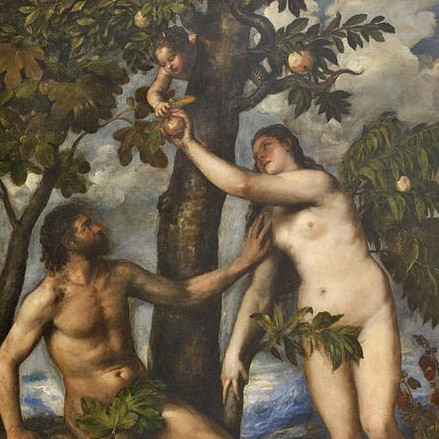






 Seek Truth