On Abortion – Political / Moral / Personal

Originally Written: April 21st 2020

Here I wish to give a conclusive account of my view on abortion. Due to the complexity of the topic a full extrapolation of the reasoning behind my views will not be carried out, but rather a comprehensive look into where I stand in reference to the multifaceted topic. The facets I wish to delineate are those of the political standpoint, the moral standpoint, and the personal standpoint. As a caveat, there are innumerable cases which do not fit the norm, many of which I surely will not mention, and many more with which I am ignorant of existing, as well as their implications. To these we do seek to delegate some explanation, and the handling of such outlier cases must still be covered under the law in the political realm, and under wisdom in the ethical as well as personal realms.

Political Perspective

For the political exposition, we must clearly state what the role of the government is, and how it correlates to the issue of unborn child death (here any stage of development after conception and before formal birth/life outside of mother’s womb or an artificial embryonic life support system, will be denoted as “unborn child”). The government’s chief role is to provide the people for which it governs with the ability to live safely and with the ability to express themselves in a manner which does not physically harm other members of the nation. The people have a say in additional roles of the government, in supporting the people in their pursuit of wellbeing, enabling equality of opportunity, and the ability to have unfettered speech and creative ability so long as it does not physically harm other members. Private property, the social contract, taxes, are all beneficial and, potentially necessary, for the cohesion required for such a system to work optimally, but in reference to the issue at hand, we will be directly responding to the government’s role in protecting its citizens from physical harm. In the face of abortion, here we are discussing the voluntary ending of potential, future, human, experience.

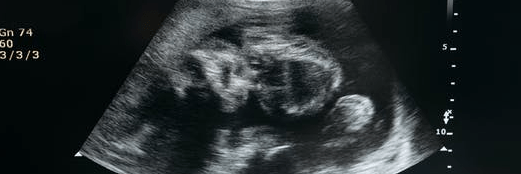
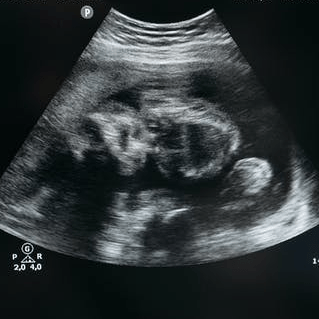
Where there would be no life for an organism not existing after birth, as in the cases where its medically concluded that the child will die before being “born” due to complications or other unfortunate maturation processes, there is neither moral nor legal implications towards the parent’s decision of how to handle the unborn child. The obvious point of contention is in the unborn child’s foreseeable potential to suffer and experience wellbeing, or to be conscious of his/her experience. While this surely is an issue to be extrapolated upon in the moral sphere, the law must hold firm to its role in protecting its citizens, namely, the autonomous individuals which make it up. While the government holds this promise to its citizens, and thus bears the responsibility of providing this system to the members within its nation, I hold that the unborn child does not become a part of the nation until its birth. Only at this point, when it is living outside of the womb, outside of life support, are the government’s laws and regulations applied. If an unborn twin strangles its brother with the umbilical cord, surely the government would not charge it with murder. While people may feel an ethical obligation towards the preservation of future life, say in an 8-month old fetus, I in most cases likewise hold that the parents ought to allow the pregnancy to be carried to term. But the problem with government intervention is the slippery slope which stems from government intervention towards an individual’s autonomy, and their ability to alter, change, or create with their own bodies, without “harming” another individual – we cannot extend our moral intuitions into a domain that doesn’t hold precedent over such matters, or we are guilty of categorization error. While the terminating of a fetus may or may not cause conscious suffering to the unborn child, and thus holds moral implications, the government here has no say in dictating the actions of a mother to the contents within her own body. It is staunchly out of their constitutional realm of power, and is clearly a sign of government overreach into the personal sphere.

I view the unborn child at this point (not yet born) to be the product of the creative act of its parents, the right to which the government must offer the parents full support towards the possibility of opportunity, being as they are members of the contract that binds them to the laws and regulations of the nation. While a child does not choose the country to which it is born, the parent’s do, and hold responsibility over the life of the child as they raise her within the limits of the law, from birth till 18, the child isn’t necessarily selecting the laws which govern her, yet regardless, for issues regarding the safety and cohesion of the nation, must follow the laws overseeing her life, as “given” to the child by her parents (until she has the opportunity to move to a country or residence with whom the laws of the nation suit her will – or not – and face the consequences). The problem is in reference to a death sentence law towards a being which is not under the purview of the law, nor has reached the age of maturity in order to choose the country whose laws she wishes to be a part of. While a child between the ages of 0-18 also doesn’t hold this ability to move into a nation with the laws that she chooses to loom over her head, the parents hold the responsibility of the laws which do apply to the child within this development period. Being that the unborn child is the production of two people, operating outside of the realm of government influence, the unborn child doesn’t become subsumed under his parent’s national laws before birth, she succumbs only to the desire of her creators, who hold the power over her existence, or non-existence, up until birth. Thus there should be no legislative decisions regarding the unborn child, nor towards the parents and their action towards the baby.

I believe this argument holds good for the genetic alteration of a zygote to influence its development as well, through the usage of technologies such as CRISPR to edit the genetic sequencing towards more desirable traits and attributes (resistance to tumor growth, aka cancer, or hierarchical reasoning abilities, aka intellect, etc.). As genetic editing capabilities have surpassed the point where it is possible to alter the genetic source code of a zygote and thus the individual stemming from it, a country has no right to interfere in this creative product, just as they have no domain over the creation of the child, or not, as decided upon by the mother who houses the child. The obvious contention here is between economic viability and further separation of classes as the upper echelons of a society in terms of wealth have the recourses to afford this endeavor, and given the current landscape, such separation of the upper class is deemed “bad”, but regardless of our philosophical position on the topic of class and wealth distribution – this modification also is outside of the governments purview.

The argument will be posed that the unborn child is life, and therefore must be protected by the government whose role it is to protect its people’s lives. Additionally, the argument will be posed that since the fetus can experience pain and suffering, and thus physical harm, it is under the government’s authority as to its responsibility to provide the same equality of opportunity to live in the nation free of harm as rewarded other citizens of the state.  The obvious difficulty here lies in what defines “life”, and I am stating that it isn’t life simply stated, as there are many forms of life which are within a country’s borders that don’t follow laws, but rather a type of life, human life, marked by autonomy, separation from its creators, containing conscious sentience (or once has but has lost autonomy), which, as far as I’m concerned, begins, in its true potentiality after birth. As the skin cells on our noses are surely “living”, they surely do not constitute a being with whom we cannot murder, in addition, the creation of a zygote between the gametes of a father and a mother surely are “living” in the technical sense, but not in the form of a citizen-agent with whom the government’s laws should be required to protect. We do not regard the individual gametes within an individual as individuals themselves with constitutional rights, and therefore charge people with murder anytime their expenditure doesn’t reach consummation, likewise, we cannot solely state the possibility of life which exists in potential form in any fetus or collection of cells within the human body, or at any other point within the unborn child’s development, ought to be under the purview of the government. While gametes contain the potential for life, and are, in themselves, living, we do not offer them protection under the law, and for good reason.

While the comparison to a consummated fetus is a stretch, the difference being substantial, the basic premise still stands. What we consider true potential for autonomy ought not be regarded until the moment of birth, and this, to me, is an opinion which I hold as the standard for justification legislatively. As far as it is it is part of the mother and father, yet residing and growing in the mother, we must consider it as part of the mother, as her other cells, organs, tissues, limbs, surely all are. While the possibility of life surely exists at the point of conception, just as the possibility of life exists in any healthy adult (in their gametes and genetic material), this doesn’t entail government oversight and restriction on the decisions of the individual. There surely is a lack of “selfhood” or experientially intuited autonomy in any form of being prior to being born, the creation is still being created, whether it contains conscious sentience or not. Conscious sentience here is important to the morality and time of abortion, but in the sphere of politics, it holds no sway over law. Here we enter into the moral dilemma.

Moral Perspective

In considering abortion from a moral perspective, all legislative and governmental purview are suspended, and bracketed, as surely existing but currently not applying. The moral question necessarily must be founded upon the wellbeing and suffering of life. Without life, there is no pain and suffering, there is no wellbeing, and there definitely isn’t consciousness of better or worse experiences. Without experience of some form which can undergo some form of better or worse states, there is not a moral question, as actions regarding them do not produce a better or worse subjective experience – pleasure nor pain, wellbeing nor suffering, growth nor decay. Where there are moral questions there are also right and wrong answers, per moral realism, which takes into account the wellbeing and suffering of the individual, and other life forms into their causal connectivity, in the present moment and across time. In this scenario, the potentiality for future experience, much like the potentiality of a murdered adult, is taken into account, in its connectedness and effect on the wellbeing of other sentient beings.

In the case of a mother’s life being at stake in the birth of the child, the mother and father are not morally culpable for the abortion of the unborn child, due to the guarantee of current life ending. The causal implications of someone with emotional ties and relationships is much greater than the amount of potential suffering caused to the unborn child in his abortion – in most cases. There are obvious outliers here, such as in the effect of malevolent psychopaths and the sort – the potential suffering is more directly intuited to be greater in their continued living than in our intuition of the potential their child may have in affecting greater or worse wellbeing / suffering in the world after they exist. Absent of all details and intricate factors of real pragmatic life, and the moral implications that are specific to the causal connectivity of a person’s existence and their continued existence, this is, in the abstract, a moral neutral position (to be determined by the actuality of the situation), to me, where the mother sacrificing herself for the baby, and the mother aborting the baby, stand on equal grounds – all other things considered.

Where a mother may lose her life if she continues with the childbirth, there does exist a moral realist answer to the implications of either choice. But given our lack of omniscience, we must claim that the decision, by the mother, and if she so chooses the fathers opinion to be of value than his plays into the decision as well –  is on morally neutral grounds, it is neither good nor bad – the effect of such action will dictate its pragmatic utility, and the ability to see the opportunity cost would only lead our intuitions to a better or worse assessment in extreme cases. Current life or potential future life here are morally equal in the abstract realm, due to our inability to foresee the possible repercussions of the continued life of either “person”. In extreme cases the moral situation becomes clearer, such as in the authentic philanthropist or the psychopathic authoritarian tyrant. If we were to see the causal connectivity between the extended life of the mother or the potential life of the child, and weigh the improvement of wellbeing and reduction of suffering for themselves and other sentient beings across time, if we could accurately calculate this data, then a morally positive “right” answer could be attained. Seeing that we don’t have this, I posit the neutrality of the situation. The same guidelines hold for a fetus formed through parental abuse, drug induced intercourse, rape, or some other form of unwanted insemination. The results of the potentiality of life and its affects upon the mother and the ability for her to end the life of the unborn child, or not, and suffer henceforth (the child too may suffer such a conception story), are also unknown (as is the circle of influence stemming from either life’s potentiality), but a certain distinction is made here, between the continued life of two organisms.

While all beings will surely suffer in life, I reject full-heartedly the notion of anti-natalism, while acknowledging its philosophical position, I hold that the potentiality for healthy, conscious, human life, is something to be pursued and not something from which to shirk from in its institution to a world of suffering. I think the situations which call for a mother to abort, or not, and their continued life, are under individual moral standards, applying in degrees of “rightness” or “wrongness” in reference to each individual case. This is surely an opinionated standpoint, and while it may be vague in its abstract form, it is decisive in its individual manifestation – which represents the implicit complexity of every situation. As in the previous case, if all factors were calculable, we would have a correct moral answer to every situation, regardless of extremity – seeing as we do not, there is no simple general moral standpoint from which to view and judge any given situation. Therefore, we put the matter of abortion upon a moral spectrum, based upon the wisdom of the one perceiving, judging, or attempting to make such a decision. Better or worse case scenarios and their respective moral heights are to be regarded on an individual level, with an aim to the improvement of wellbeing. That being said, the wisdom to weigh the potential life and one’s own life, or when viewing another two lives, to weigh the morality of the decision made, is surely dependent upon the viewer’s ability to cognitively assess the situation, but where the potential for life is concerned, the judgmental scale always tips morally towards the advancement of life, regardless of the different situations which led to the conception of the baby.

While different scenarios fall upon a spectrum, the choice to abort a healthy unborn child, abstractly an in a “standard” situation (between two dedicated lovers, separated parents, or only the mother or father’s decision or choice to have a baby or raise a child once learned the mother is pregnant) falls entirely upon the “bad” end of the spectrum, to different degrees, depending on differing factors. In other words, I believe it to be morally good, right, or correct to preserve the life of a child, to differing degrees, depending on the circumstances and factors at play in the individual scenario. Likewise, I consider it morally wrong, bad, incorrect, to abort the life of an unborn child, also, to differing degrees based on the details of each distinctive situation. While I think it is morally “bad” to take plan B and thus end the potentiality for life, it is surely a moral “wrong” that can be forgiven, much like I hold that dietary veganism is morally superior to a carnivore diet, I hold the continued abstaining from veganism to be a moral “wrong” which warrants minute criticism, and thus minute judgment, or very small influence on the moral evaluation of another person or yourself. On the other end, the birthing of a baby born with severe cognitive issues, whose birth either kills the mother, or whose life leads to incalculable suffering, would still tell a morally “good” story in regards to the action of giving birth of life, and the sacrifice therein, yet I would not call it a wise choice, and apart from the action itself, must be considered abhorrent.

Virtue ethics now makes its essential contribution into our evaluation. The act itself of attempting to preserve life, without prior knowledge of harm to either party, and is founded upon virtuous intentions towards the proper upbringing of a child, warrants an act that is morally “right” or “good”. Yet, from a consequentialist perspective, we must calculate based on the repercussions of such an action. To me, the wise choice, given any situation, including that of abortion, is the prudent ability to decipher from which perspective to attempt to tackle the situation, from which standpoint to navigate. Do we attempt to act from the character we deem as virtuous, and if that values the continuance of life in the successive generation, act to fulfill what we value? Do we look towards a cost benefit analysis of future moral implications to ourselves, our circle of influence, and the potential world the child may engage with – and make a pragmatic assessment and assertion of optimality based on this rational factor analysis?  Judgment of either method of interpretation is to take place under the meta-ethical framework of moral realism as dictated above.  In this way the eye of wisdom is called upon in distinguishing the correct response to moral questions, and must be exercised with care, and separated from the actual inherent virtue of the act.

The totality of future suffering and wellbeing must be considered across the spectrum of sentience in order to calculate whether decisions should be made or not. Whether the act itself is good or bad holds little importance here in comparison to what the wise decision may be. To abort a potentiality unhealthy child, or one which is generally unwanted, accidental, due to malevolence, or other extreme factors, should be legally up to the parents, but if the parents are of age to deliver a healthy baby, with our current systems in place to take care of them I believe it to be “morally wrong” to take the potential life, or not become responsible for our actions through the proper revelation of our values in bringing up the child to maturity. I view it as our sacred duty and responsibility to pass down the knowledge we have acquired in successfully navigating life to the proceeding generation, as our forefathers have done for us – at least in the situations where it is the wisest choice to be made.

I still reserve the right for parents to abort the child in the germinal, embryonic, or fetal developmental phases as they see fit, for any reason. I can’t justify it morally upon the “right” or “virtuous” spectrum based within the virtue ethicist framework of the act itself, stripped away from circumstances. In the context of circumstantial factors, the moral playing field becomes considerably muddied, without sufficient foresight in predicting the future outcome, we must rely on experience, scientific data as it relates to the individual factors, and overall wisdom in discerning the optimality of carrying to term or abortion. The wisdom spectrum supersedes the practicality of an action, in all cases, and an honest interpretation of the factors at hand enables the philosopher to clearly view whether the “act” of abortion truly passes the wellbeing / suffering test, whether it is intuited as being pragmatically true as beneficial and useful in the decision to abort or not. That being said, any moral act does lie in degrees depending on circumstance along the spectrum of moral answers, from the most optimal and beneficial, to the most abhorrent.

Personal Perspective

Personally I will never choose to abort a healthy child, insofar as I have a say in the matter, and in the situation where the mother places the burden of choice upon me, at least at this point in my life. An unhealthy child, or one under other circumstances than what would be, in short, “optimal” as regards its potential conscious experience (sickness or other mental deficiencies), surely would call for an exercise in wisdom and communication with the mother in the choice. But, currently, along as the child and his mother are healthy, whether I’m in the requisite financial situation towards raising the child personally or not, I will opt towards the preservation, creation, and continuance of life, whether it be under my care or not, with, of course, the mother’s approval. While this is a personal stance, I would never seek to extend it to any other individual’s circumstances, nor seek to impose my standards which I apply strictly to the scenario of “my current life” in a legislative manner.


Agent Based Morality, Consequentialism, and Wisdom Ethics

Originally Written: January 31st 2020

Instrumental to the formation of morality is the admission that the concept of morality is resting upon the axiom that we are, by being moral, attempting to move from the most possible suffering for everyone, to a place anywhere with less suffering. To say that this state of the universe isn’t “bad, or that distancing from this isn’t “good”, implies that your definition of the concept of morality is radically different then how it is commonly understood, and that you necessarily don’t understand the inbuilt biological drive towards states of wellbeing which every life form desires. This desire for wellbeing and avoidance of suffering constitutes the state of order which life attempts to organize itself into, ever since the first organic molecules fell into a state of order that allowed their replication at a level that was sustainable enough to be replicable across time. As evolution played its role in selecting for the genes, and its biological machines which carried them, it tended towards this principle, not in anthropomorphic terms (wellbeing and suffering), but towards a being that contained genetic fecundity, longevity, and copying-fidelity. The experience that an organism undergoes in relation to such aims, and the reaction to the environment and situations which necessarily determine the success or failure of these genes, are either right or wrong, good or bad, in relation to this, in human terms, as we experience this pendulum between things which aide and which admonish our biological fitness, the experience eliciting such awareness gives rise to the corresponding broad states of which we consider to fall into the suffering or wellbeing, pleasure or non-pleasure, mental states which characterize the situation consciously. In addition to the presence of such present moment conditions of “wellbeing” or “suffering”, we must characterize morality and acting from a philosophically moral system as consideration of not only the individual, but radiating outward from him to include all sentient beings, all life. Generally speaking, this conceptualization is a meta-ethical framework from which we will assume moving forward, specifically, that of Moral Realism, which is not only decided upon based on philosophical rigor, but based on biological and phenomenological evidence we have into the nature of things. We necessarily don’t find ourselves in a moral relativist position, at least not in the domain of considering wellbeing and suffering, which is necessarily all we are talking about when we speak of morality, especially when we take these words in their broadest sense, as that which is most optimal, and least optimal, for the life in question. For more on the meta-ethical principle of Objective Realism, see the essay “Basic Moral Realism”.

The broadest view of morality, and its implications, takes into accounts all beings in this manner, and their subjective experience of life. This experience of life is constituted by their state of being, which, generally speaking, can include a state of more or less suffering in the present moment. Morality must include the suffering undergone by the individual within the present moment, as well as his continued suffering through time, as well as the relational impact he has upon others across the span of time. When considering morality, we take as our foundational maxim that what is “bad” is characterized by the thought experiment in which we imagine the most possible suffering for everyone, without a silver lining. Movement away from this place, in degrees, we define as good. We find morality to be directed not only at the individual, but across all sentient beings, the degree of sentience and experience of suffering being relational to the importance within our system. We find that when we act towards one person, we necessarily take into account the trickle-down effect, and consider the chain of causality leading from such actions, not only in their immediate implications, but across time.

While there have been innumerable attempts to locate the state of mind that best is able to produce this effect, we can all agree that movement away from the most possible suffering for everyone is truly a moral good. Taking this as our starting place, there has been many attempts to articulate which method would be most useful and beneficial in employing a strategy that proposes to do this, in the practical sense of discerning action and moral worth. To name two of the chief contestants in this race, virtue ethics, and utilitarianism, we find very different methodologies in the application of their strategies, yet not always different outcomes.  

As the most popular form of agent-driven morality, virtue ethics is a strategy of morality where we are focused on the content of our own being, of our character, and what is directly emanating from ourselves. We are focused on acting in such a way that displays virtue, to us. In looking for what is virtuous, Aristotle states, we can find the trait in between two opposing extremes. If we look to honesty, we find it in between secrecy and talkativeness. If we look for courage, we find it between cowardice and rashness. If we are to take this virtue ethics approach, our goal is to embody these virtues to the greatest extent we can, to make them a part of our character, through our manifestation of them in thought, speech, and actions. The virtues being morally beneficial, the effect of us focusing on acting in such a way to be “courageous” or “honest” can create (if done well) beneficial effects upon other people, which isn’t the intention of this philosophical system. The outcome is necessary a given, that it would be optimal, if we act in accordance with virtue. While compassion may be a virtue to us, in taking a virtue ethicist approach, we are not focusing upon the effect of our actions, as we are logically concluding that the effects will be beneficial, rather, we are focusing upon the content of our character being pure, upon the manifestation of virtue, which is the “good” to a virtue ethicist. The consequence or impact of such virtue upon others, as stoics emphasized to a large degree as stated in “On Stoicism”, is out of our control. What is in our control, and what we should focus on, according to virtue ethicists, is the content of our actions, and their accordance with our consciously derived virtues. In the trolley cart problem, the virtue ethicists doesn’t switch the lever, as the act of voluntarily taking the life of someone, albeit one instead of five, necessarily is an evil in which he would not partake in, let fate run its course without the moral agent as an individual being involved. Now, on the other hand, if we take virtue as being those character traits that are beneficial in allowing us to act morally, in reference to the universal maxim underlying morality, we find that the implication of certain virtues at certain times would be most beneficial to the overarching progression away from suffering.

As the most popular form of consequentialism, a utilitarian may produce similar effects upon the lives of others as some virtue ethicists, through their mutually shared unconscious consideration of the above maxim, but how they get there, is always at odds with one another. A utilitarian considers in any situation, or reciprocal interaction, what the effect of his action would be, rather than the action being in accordance with virtue. A utilitarian seeks to maximize the welfare of the largest amount of people, over the largest amount of time, in the most beneficial way possible. How we come to that conclusion, or how we act, our conduct, as it attributes to that goal, is not important (from a strictly hard utilitarian position). Whether we must break the virtue ethicists moral code in the pursuit of the greater good is entirely unimportant to the utilitarian, what is important is the effect of the actions. This approach uses the mental faculty humans are imbued with, that of the ability to consciously entertain multiple scenarios stemming off as the hypothetical effect of our actions, and in our ability to use relational reasoning to decipher which of these outcomes is beneficial to the most amount of people. In the trolley cart problem, the utilitarian views the lives of five more than of one, regardless of his direct involvement in the murder of one, and chooses to flip the switch. The pathway that is consciously thought of as leading to the most usefulness, or beneficially, towards the largest amount of people, over the largest amount of time, is the path embarked upon. This, according to utilitarians, in theory, produces the most moral action we can take as it contributes most to the universal maxim with which morality rests upon.

To say that one or the other is answer, universally, in any situation, leaves out important aspects of reality which should not be ignored. I propose, that the solution lies in their transcendence. Once we can gain knowledge into the benficiality of both systems, both for ourselves, and for others, both in the short term, and long term, both in the effects of our actions on our own character, and its iteration across time, we essentially come to a place of cognitive dissonance. This state of dissonance is located in the consciousness of the philosopher which is able to simultaneously hold the value and see the beneficially of both systems of ethics, yet sees also their mutual incompatibility.

Ignorance on another subject is of importance to our practicality in embodying either system philosophically. That is of the real scientific effect of our actions upon others, or the right answer to moral questions, as describe by the meta-ethical framework of moral realism. If we were able to consider all content, all pathways, all data and relatable factors of experience, both going into a situation, and upon the effects, concretely, using a deterministic framework, we would be able to scientifically calculate which pathway would be most progressive in moving away from the maximum universal suffering, and be able to see how different pathways lie upon a spectrum of “good” and “bad” in their relation to the most optimal path of movement away from the “bad” of the moral maxim. This is how we can derive the “ought” of moral action, from the “is” of Hiedeggerian factical reality. In regards to the trolley problem, the moral realist, theoretically, would calculate the exact degree of beneficiality of saving the lives of the one as opposed to the five, and the implications of the survival of such people upon the wellbeing of all sentient beings, and from this data, choose which is most optimal. We could, given the relevant data (all data), discern the most optimal action to produce the most optimal effect. The problem lies in the practicality of moral realism, that we are wholly ignorant of this data and its conclusions, thus the meta-ethical framework has a practical impossibility in its application, albeit, in extreme cases, we can intuit more or less what the data would show quite easily. The problem is, we infrequently find ourselves contending with extreme cases, and when we do, almost all the conventional ethical frameworks point towards the same conclusion. We more often than not find ourselves in a more intermediary moral dilemma, where the answer is difficult to discern, and oftentimes two competing desires, and difficult to compute effects of action, are in play in regards to the situation.

Thus we have three general systems of morality, held in the consciousness of a single being, creating a mode of consciousness that not only has the dissonance of seeing the beneficiality of virtue ethics, but also seeing the beneficiality of utilitarianism, while holding the knowledge of his ignorance of the desired pathway produced by moral realism, or the “most right” answer to a moral question. We come into a sort of existential dilemma in regards to a philosophical system of morality. The individual thus contains three antitheses, and must look to his logical ability to prioritize the practical aspects of such systems, to move them from purely abstract idealism, in their existence solely within his mind, into their implication in his daily life. This is necessarily only able to be accomplished by a Hegelian dialectical move, to a transcendent mode of morality which contains the truth of the three philosophies within its conceptualization, in order for the individual to remove his dissonance, and confusion, in regards to the optimal solution. To solely philosophize under these conditions would necessary produce stagnation, due to our ultimate ignorance of the complete causal chain in relation to the effects of an action. What we seek, and what we need to work from, is a mode of being which is readily able to act. But where the dialectic takes a true thesis in its competition against a secondly truly found antithesis, here we must use a trialectic system to encapsulate a third thesis.

This conceptualization must be more than theoretically sound, and more than logically coherent, it must be practical and the individual must be able to not only use it to see its validity in daily life, but also to be able to act from it in determining answers to moral questions. It must contain a “why” as well as a “how” to conceptualize a moral position. This necessarily requires that his conception of what is the best moral system to act from is directly relational to his knowledge and experience thus far in life, as one cannot consciously act from information on which his Being is ignorant of (unconsciously of course he can, but here we are looking for a conscious conceptualization which is useful). This reliance on knowledge of causation and effects, and the experience needed to gain such knowledge in its practicality, necessarily leads the individual to accept the best possible form of action, and philosophy in which to inform such action, be reliant upon wisdom. Here I am going to put forth the conceptualization of wisdom ethics, a general abstract of it is found in “Precursor to Wisdom Ethics”. Here we will look at how it is able to be used by the individual to concretely understand his actions in a given situation, as well as consciously project himself into future situations to act in accordance with our universal maxim of morality, that is, moving away from the greatest possible suffering for everyone.

Using a system of wisdom ethics, the individual contains the knowledge of prior philosophical systems, and puts them under an umbrella value, which supersedes them all, in a gradient fashion towards higher heights of moral accountability. This wisdom ethics umbrella works under moral realism, yet supersedes specific schools of thought that outline practical solutions, it is, in fact, a mediator between the two, it is the mode of being which can discern between the higher framework of moral realism, and the lower forms of practical implication of moral judgments and actions. Whereas we can use a phenomenological examination of the individual’s life, which coincides with the historicity of the developing moral theories, to show that in both cases the order moves from the system of acknowledgement from agent based ethics, to consequentialist based ethics, both transcended by wisdom ethics, operating in its perceived attempt at embodying the individual intuition of moral realism. This movement, hypothetically, takes place in a step ladder fashion in relation to time, as experience increases, to be measured by the increments of time, so does his position and data set towards moral answers. The individual may hypothetically stumble upon virtue ethics, accept its usefulness, then utilitarianism, accept its usefulness and see the flaws of virtue ethics (for example the contradiction between opposing virtues), then stumble upon moral realism, accept its usefulness and see the flaws of utilitarianism (for example that of actions which are morally unbeneficial to the character of the individual in their sacrifice for the greater good). From the position of realizing the moral meta framework, we see its impracticality in discerning decisions in our everyday “natural” mode of being, the philosopher, or moral contemplative, necessarily reaches a state of confusion as to what exactly to act from and with, consciously. While our manifestation of action is necessarily deterministic, and our embodied perception and value system stem from meaningful significations “Value System Instantiation”, the conscious articulation of something from which to consciously direct ourselves “Intro to Phenomenology of Action, Spontaneity and Conscious Directedness” becomes the object of inquiry to the philosopher at this stage.

While in the historical development of philosophical systems they moved, to a greater or lesser degree, in this fashion, I am not stating that every individual’s adherence and knowledge of the systems moved in a parallel fashion throughout his experience of life, this is just a hypothetical movement, that ends with the individual containing knowledge of all three. What we find in the developing of our knowledge to include differing moral theories is that they all are located within the arrow of time, within our lifetimes. It is a gradual movement towards greater demolition of ignorance, and towards greater knowledge, encapsulating more content and information. As our theoretical knowledge progresses to include more content, so does the knowledge of the experience of the implication of such principles within our lives further contribute to our picture of what is “good” and “bad”, what is the best thing to do in a given situation. Where we find these systems to be roughly incremental in their development, as time goes on, knowledge goes on, the admission of the beneficiality of wisdom ethics shows its true colors.

Wisdom ethics is a place of morality which necessarily stands upon the shoulders of its forbearers, of past experience, previously gained knowledge, and moves, potentially, infinitely upwards in its application. The individual recognizes the true nature of his psychological state, and of the true nature of its manifestation into his actions. What we do is simply an expression of who we are. Whether it be of a nature of concealment, or false representation of ourselves or not, the content we express whether in speech, action, or thought, all is a reflection of the mode of being which we currently find ourselves in. The individual who has thus far progressed, realizes this, and realizes, based on his experience, the uncertainty as to the effect of his actions, yet as he moves through life is better able to accurately predict, (using unconscious probability based upon prior experience), what the best course of action is, and to this he credits the system which produces his actions to wisdom. This system is dependent upon the determinacy of brain organization in its bottom-up integration to consciousness, and then to the top-down control, or direction, within which our conscious content imposes upon the embodied system. The bottom up procedure relies on memory, mental schema in relation to concepts language has organized reality into, the development of which is wholly determined on past experience, stemming from genetic perceptibility, towards accumulated environmental modifications (cultural, familial, experiential). The top down utilization of the content which enters consciousness, and is directed by consciousness, depends on this information, yet plays a role in being part of the causal chain which leads to greater adherence between the lower and higher systems. The top down function can be improved by greater articulation of mental schema, and a more accurate representation of phenomena through language in their representative nature of phenomena. This “truth seeking”, is beneficial to the top down integration, and can be further utilized through understanding the contents of consciousness, understanding one’s Being, through mindfulness, or conscious awareness of the present moment, the only true moment available to consciousness.

Ultimate Wisdom, in relation to morality, is that of acting in accordance with moral realism, in producing the greatest movement away from the universal maxim of suffering, but the individual knows he doesn’t contain the totality of such knowledge, and so Ultimate Wisdom (the best answer to a moral question), is something unattainable by anyone. The factors and conditions as well as knowledge of the mental states and futures which actions produce amounts to a precise knowledge of, unfortunately, everything, something we must accept as falling well outside the limits of our mental capacity. This state of “godhood” or “enlightenment” or “divine inspiration” is what religions claim to have achieved in their patriarchs, yet which the individual in his understanding of wisdom ethics, knows to be impossible in human form. What is not impossible, and what we find borne out in reality, in which evidence abounds to elicit, is the degree of wisdom possible in an individual in relation to the state of “Ultimate Wisdom”. This degree of closeness to such a hypothetical rightness, is something we aim to advance in relation to.

The adherence to wisdom ethics entails the diligent striving towards the state of “Ultimate Wisdom”, or of the height of moral realism, through the implication of acquired virtue in the pursuit of the greatest good for all. It is a synthesis of all three aforementioned systems of morality, that is progressive in its ability to be better informed by a higher resolution image of psychology, science, philosophy, real-world experience, and causality. Through advancement in understanding the effects of causes in their implications within the real world, our data set moves towards providing more favorable decisions and behavior in regards to their results both on our own character and that of others. As we progress through the infinite degrees of wisdom ethics, we find the use of time in better ways, towards better goals. The use of time for the conscious pursuit of improved character, towards the greater understanding of physiological and psychological systems, towards the growth of experience in real world application of our virtues, towards the analysis of the effect of our actions and how they are related to the improvement of alleviating suffering in others and ourselves and others across time, is all pursued, in a way that values certain life and decisions more than others as its effect upon this movement is better understood. As we improve our character we become better able to spontaneously act upon those unconsciously habituated and improved character traits in a way that is most beneficial to others. As we improve our knowledge and conscious ability to direct our actions, we become able to employ the rational faculty towards increasingly better solutions to real world problems. As we increase in wisdom, we are able to distinguish, both consciously and unconsciously, which situations require the spontaneous reaction from virtue and the conscious action which considers the effect of our action. In regards to the trolley car problem, a wisdom ethicist is basing his decision based upon his current state of being, informed by the information of the situation regarding the web of causality tied to the lives proceeding into the future stemming from the six people in question. His experience, memories, and developed moral system, gives him a foundation in which to rationally estimate the beneficiality of the one or the five continuing to live, and how they match up to his conception of Ultimate Wisdom. As he doesn’t have all the information, he works with the information he has on the people, their age, background, jobs, whatever information is present to him, he judges them upon “On Judging”, and this judgment is the same he uses in regards to his actions across any interaction with any being. Thus he chooses to push the lever or not, depending upon an informed calculation taking into account any information he has acquired on the lives in question. If all six people appear to be of the exact same age, with no information given on their background, he will take the utilitarian option. In the same manner, the wise man judges every situation, every interaction, every person, in every way possible, in order to produce an optimal interaction that proves to be beneficial and useful. Outside of the trolley car problem, he judges on race, religion, and gender, where such aspects of a person’s being are causally related to the content of the situation in which he finds himself in, and refrains from doing so where they are unrelated to the situation. With the increase of wisdom, we are better able to see the potential actions available, and the potentialities increase as wisdom increases, as well as we are better able to formulate the effects of such actions, and better able to see clearly which path would be optimal (given our fallible conscious state of not having “Ultimate Wisdom”).

The mode of consciousness which I am describing sees the use of benefiting character growth in agent based moral decisions, and sees the use of consequentialist theories such as utilitarianism, the mode sees the good intention behind them, but holds their use to the standards imposed by moral realism. But what it does that neither does, is admit to be itself a system of continual improvement as time goes on, which not only is a philosophically held conceptualization of morality, but the actual state of things in which we find ourselves in. Most of us are within this state of wisdom improvement unconsciously, the biological system is naturally seeking for better ways to understand the world, and to improve its actions upon it in a way that is beneficial for our selfish genes. The goal for the philosopher, in all accounts, is to consciously describe this process, and his awareness of it, and the methods in which to improve it. We ought to move into direct perception towards this process consciously, to erode any dissonance in regards to the most “thought out” moral answer, and conclude that the embodied system which we are, in our totality, holds the intuition towards the greatest answer, for us, in this present moment, that we can act upon. Whether this entails further research, is better served by spontaneity, or requires “Conscious Employment of the Unconscious”, we ought to attempt an authentic manifestation of the call to conscience (Heidegger) which is dependent on our alignment with the totality of our Being as we so far can articulate it. In acting in accordance with our conscience, that has been so developed to intuit the best mode in which to inhabit to navigate novel situations, we are acting using the best system we have, yet this time, consciously.

Religions seek to point out an optimal path from deductions from mythology, dogma, and superstition, and these deduces conclusions they use in describing our place in the universe, they also elicit a system of morality, which falls upon this spectrum of better or worse as it relates to the universal maxim. While these systems can produce a movement in the good direction, and often provide a stable foundation across time to a more or less beneficial morality in its adherence, it is within the criticism and acceptance of fallibility that ultimately leads to any moral agent’s progressive growth and transcendence to greater accuracy in regards to moral good and truth-finding. Many people do not have the desire to work outside the bounds of a religion, or to question its claims, or to have the time and intellectual ability to make progress in a system that lies outside of conventional, or already demonstrated methodologies, and this is okay. Where they do not seek the truth, where they do not seek novel, unique, original, individuated conceptions of reality and the setting up of a value structure independent of previously formed systems, the philosopher steps in and finds his niche in the pursuit and expression of such aims. The philosopher seeks answers to questions not previously asked, and finds truths undiscovered. If he is a good communicator these truths are conveyed to others memetically, and they live on in the minds of the people, impacting them and their moral systems, their way of life, for better or worse. The goal of a philosopher is to articulate phenomenological findings which help lead the person to consciously improve his morality. In doing so, a philosopher is inclined to give better representations of reality, or to strive to find better conceptual representations of phenomena, to inform his conclusions on ways of living, or philosophies of life, which are better ways, or paths, for individuals to carry down. To seek out and find these new insights into the nature of reality, and to find information and experience which enables the movement of the owner of such knowledge to live a life of increased well-being, or to produce an effect that leads to the distancing from the maxim of suffering, is the ultimate claim to fame of every philosopher, and should be the end goal of modern philosophers. He who is able to increase in wisdom, to heights not yet achieved, and share such knowledge with the people who do not have the means to acquire it for himself, is the responsibility of the philosopher. Whether this information is directly conveyed in his writings, or in his actions, the effect of such seeking and of his findings, if he is truly right and “foursquare beyond reproach”, is beneficial to the continued progress of humanity towards a more enlightened state of wellbeing. It is the role of the philosopher to discover these pathways, and to articulate them to the people. He must discover the hidden treasure, through the metaphorical hero’s journey, and return it to the people for their benefit.

This continually improving system of wisdom ethics, as expounded upon by philosophers and religious leaders, and great people throughout history is the foundation for which we have to work with in our current day and age. The information and insights gleaned by countless seekers and their actions is the foundation which we have to work with, and the information which we should utilize in order to ultimately transcend, in our continuing of the tradition of philosophical inquiry towards greater wisdom. Once we reach the realization of the impact which wisdom has upon our actions, both consciously contained and unconsciously accumulated, we realize the importance of its training and consciously directed improvement. This is done through a conscious analysis of our current value structure, and restructuring, continuously, as new information is absorbed. We must then act on the aspects near the top of our hierarchical value system in order to improve in the areas that we find important to the contribution of improved wisdom. “Value System Instantiation”. Whether this be the extension of knowledge in a given field, or an expansion of acquired experience in different areas of life, where we all are and what we all most need, is unique to each of us. The more we direct our consciousness in pursuit of such a goal, the more we progress, the more we explore and train, the more we learn and become. The more accurate our conception of reality, the more experience we have, in the right domains (conducive areas to understanding morality) the better we become in deciphering which action is optimal given the situation.

As to what this training and manifestation of wisdom, in its accumulation and its displayal, actually looks like, it varies from wise inquirer to wise inquirer. As it is an accumulation of all an individual’s psychic content, physical experience, and acquired knowledge, it is hard to pinpoint a universal system. The easiest grouping system I have found for organizing aspects of wisdom accumulation and improvement is to be found in the Buddha’s eightfold path, the content of which and improvement of which, I have gone into great detail in “Basic Dharma Explanation”, but whose structure can be individualized across all individuals as they see fit, and doesn’t need to match up with mine or with the Buddha’s. This entails the eightfold path, in its application and conceptualization in our own lives. It is the pursuit and carrying down a path, of eight categories, which are easy to remember, and the content of which is extremely expansive as our knowledge grows. These categories are; right view (understanding of reality), right thought (intention), right speech, right action, right livelihood, right effort, right mindfulness, and right concentration. It appears to me, that progress in any one of these eight categories (what each one means is continuously refined by the individual and thus valued differently accordingly) produces an increase in wisdom.   

The main take away is that we shouldn’t view morality as a static, concrete set of imperatives to adhere to, but rather as a dynamic, evolving, and improving process. Every situation we run into is unique, given the continually changing and impermanent state of the universe which we find ourselves thrown into, and our morality should reflect that. The ability to cope with this continual change, both in our own psyche, our own character, as well as in the external world, and its situations, is the task given to wisdom, to find the best optimal solution given the present moment which is always novel and unique. History never repeats itself, but aspects of history appear to follow similar patterns, which we can learn from and use in a probabilistic way to better inform our present decisions. This is the natural way in which our brain operates, through the use of pattern recognition, and hierarchical reasoning, and mental representations using concepts, and this system is best directed by a consciousness which is ever becoming aware of its content, ever seeking to expound its horizons, ever pursuing an inner expansion in pursuit of Ultimate Wisdom to inform his morality.

It’s A Wild World, The Answer to the Absurd Conundrum

Originally Written: Feb 11th 2019

Since I was young I have been saying “it’s a crazy world” in that the unexpected, the irrational, the unknown, always seems find a way of manifesting itself when we least expect it. A couple years ago I re(discovered) the song “wild world” by Cat Steven’s, which deeply resonated with me, and expressed a similar sentiment to that phrase which I had repeated over the course of my life. It seems like in times when reality appears to contradict itself, when what I never thought to be true, suddenly appears to actually be true, in times of revelation, and understanding, in rational conceptualization, insight of the nature of the world, in discoveries such as determinism, the lack of a soul, the lack of inherit meaning in the world, with insight into the vastness of the universe, and the minuteness of finite human life, of the unimportance within us, yet the ability to change so much; I state that it’s a crazy world, expressing my amazement with the irrational, seemingly contradictory, aspects of the true nature of things. I realized just now this was an intimation of the philosophical term, the absurd, and the feeling, and thought, that accompanied such circumstances that merit the utterance or thought of, “it’s a crazy world”, is what Camus called the feeling of the absurd.

The Absurd is a description of the situation that arises between a human and the universe, it requires both, it is, in its essence, reality, yet it is in recognizing realities strange dualistic nature, its absurd qualities, the conflict between characteristics of the world, and characteristics which humans possess, that constitutes “the absurd”. For example, the universe is meaningless, purposeless, just a determinate web of cause and effect, with no intrinsic objective morality, nor any meaning or purpose. Yet humans run around their whole lives searching for meaning, or believing in a meaning which doesn’t exist outside of their belief in it. This is the absurd. The search for meaning where it doesn’t exist is absurd. It is contradictory, irrational, yet, it really exists, and we all are engulfed in it. If you were to learn of a man who is spending his entire life counting the grains on the beach, and he is content doing so and finds profound beauty in the act, and feels it is meaningful, your response would be that it is absurd. This is, in effect, what all of us do every day. We feel as if our actions first are produced by us (freewill), second as if they are meaningful and matter, yet, in the grand scheme of things, both these conceptions are starkly not true. Even when someone has this insight, they continue doing the same things, living in the same manner, due to the habitual and various other factors involved. This is truly the absurd.

When faced with the absurd, philosophers such as Camus and Kierkegaard both devised strategies, to how one should deal with the absurd, once it is realized, and contemplated. One is suicide, an attempt to negate the absurd reality, to end what doesn’t matter anyway. To escape the pointless suffering of human existence. Of course, this solution isn’t any way in which to live, it’s clearly a way only to die, yet it is a way to react to the realization, but from the perspective of the universe, it merely is another effect, with a cause. It is neither good or bad, just an event. Camus points out it actually makes the whole situation more absurd.

The second solution purported is the general existentialist point of view, which Kierkegaard urged us towards, to create your own meaning, or to act on faith in following an arbitrarily man made meaning, believe in an idea, a moral, a transcendental reality, supernatural phenomena, god, religion, etc. Create your own morality, philosophical structure, in something which is outside, above, or more encompassing than the absurd, thus creating meaning, and a path to follow. Once you have found or created the meaning, you no longer believe the universe is meaningless, you have past that, you have taken a leap of faith, a leap beyond the originally noted fact of the unimportance of our actions from the universal standpoint. This is what Camus calls philosophical suicide, as opposed to the first option, physical suicide. In essence, by supposing something that transcends the absurd you are removing your awareness of the absurd, as if what is rational and true to this reality isn’t important if there is a higher reality. This view replaces a recognition of the absurd, with the belief that what one has created (the meaning) is the true reality, which it can be, for you, subjectively, but never objectively, and that is the aspect which most existentialists fail to realize. This option is only valid if you wish to sacrifice reason, logic, and a valid, untheoretical, un faith based, understanding of reality, for something which makes you feel better, solving existential dread, solving the problem of the finitude of human life, solving death, solving the search for meaning we all experience. It is the easy way out.  It is the belief in God at the sacrifice of reason. It is, in a way, a rational leap of faith, in that the leaping will make you better, whether the landing place is real or imaginary, your life will be happier, and the suffering of the realization of the absurd is suppressed by the higher ideal.

The third solution is Camus’ choice, the acceptance of the absurd, yet the continued searching for truth and meaning within its structure. It is the rational understanding of the absurdity of existence, coupled with the human ability and perseverance to discover meaning and truth, to continue on without laying yourself sacrifice to what you “wish to be true”, accepting what you know to be true, and moving onward.  People say this means rejecting morality, but it is possible to strive onwards while upholding a temporary morality which best fits reality as to your current understanding dictates, without believing it to be infallible, permanent, or all pervading.

I think there is room for expansion in this final solution, in that we can discovery that there is a meaningful, best way to live, science can help show us this, the road that leads to the best human life, this is what objective moralist regard as the movement away from the worst possible misery for everyone, i.e. moral realism. (Basic Moral Realism) Any step away from that would be morally correct, if we accept the axiom that the worst suffering for everyone is itself something that is true in the context of morality. From the absurd perspective, this axiom is valid only within the individuals, human conception of morality, which itself doesn’t hold ground on a universal scale. Since we’re recognizing reality, and the absurdity of it, the coupling of these ideas necessarily entails the conceptual understanding, and for success, acceptance, of the fact the universe is purposeless through and through. But, since we are human, and are alive, we must recognize morality, since we fall under its sway in our actual experience, yet we cannot escape the broader domain of the universes “point of view”. So it is possible to recognize absurdity, the absence of morality, and meaning in the universe from a perspective that is anything but life itself.

Since we are human, we are life, not philosophical abstraction, we must operate under the purview of some morality whether known or unknown. Something within us forms a conscience whether we like it or not, this is actually, part of the absurd itself. Our conscience dictates our conceptions of right and wrong and is alterable due to influence. Even if we conceptually fall into the sway of a philosophical doctrine such as nihilism, within the absurd framework, this holds only as a conceptual framework. It is a word game that never represents a human life, as one can think there is no right and wrong, good and bad, you can’t escape determinism, and each moment will prove to any observer what you (as a living organism) believes to be right or wrong, based on your action. There is an inbuilt biological value system within any life system, whether known or unknown to the organism, we know this because we choose to focus and pursue certain things, and not others. We contain, as part of our being, a perceptual filtration system, which is strained through the developed (both genetically and learned) value system, which, produces our conscious experience “Universal Existentialism“. We pay attention to certain things, spend time with certain people, participate in certain activities. This is a product of evolution, culture, genetics, environment, an amalgam of all life experiences leading up to the present moment, including consciousness itself. The conscious awareness of suicidal tendencies is somewhat of an issue philosophically in how it fits into this picture, but it does have a rational deterministic path towards its fruition, no matter how irrational and contradictory to inert value systems it appears to be. This is obviously quite absurd.

All things considered, where life is, morality is always there, as morality contains human action, and humans always act, every moment, where humans are acting, there is an experience, this experience can be better or worse, subjectively. If there can be better or worse subjective experiences, better or worse methods of navigating life to produce an optimal mode of Being to the individual, than there necessarily are better or worse methods towards that aim. Within this bracketing of human life, in this way, we can determine meaningful solutions. Outside of the bracket, these meaningful actions, pursuits, and their accomplishment or not, merely are null in meaning. This is the absurd contradiction we must face and work within. In this way we all have a philosophy, including a morality, including a world view, including beliefs, this is all real, and unavoidable in any life, while outside of subjective experience, from an objective point of view, there is no meaning or purpose to this process, it merely is. I think recognizing the absurd necessarily requires a divorce from this type of subjective purpose perspective and the acceptance of the consequences of an objective answer to purpose, but it is absurd to think it’s possible for a conscious entity to lose that subjective perspective entirely. It truly is absurd that it exists at all. The solution, from my perspective, which, obviously isn’t universal, is in rebelling against the contradiction we find ourselves in, and in pursuing meaning in our bracketed universe regardless of the overarching evaluation. For a critique of Camus’ perspective see – “Critique of Absurdism“.

Whether the universe cares or not, (which it doesn’t!), we care, our Being is defined by the care in which we use to navigate our experience. We like positive states of consciousness, produced by what we value, or find meaningful, this doesn’t mean it actually has meaning, or that we’re fooling ourselves, but in pursuing these things, with a recognition of the absurd, we are rebelling against nature, rebelling against reality and choosing our own way, despite it, yet, within it. This is the option I believe we ought to choose, because any other pathway, would either result in a terrible experience, psychological suffering, or in some form of deception, rather its deceiving ourselves into thinking something is true that isn’t, existentialism, or in believing that nothing, not even from our own perspective, has any meaningful significance, nihilism (it does, to us). While this method appears as the only option left for the truth valuing and life affirming individual, it still must be recognized in its ultimate fallibility, it is the best option which currently makes sense; my morality, understanding, intelligence, reason, beliefs, knowledge, wisdom, are all subject to change, it is my mission, my arbitrary meaning, in a meaningless universe, to improve them, because, I will not sacrifice the greatest aspects of which make me human; reason, mindfulness, the present moment, under another human’s supernatural ideas. I won’t sacrifice the highest form of life currently known, human life, the human brain, in believing in an imaginary reality outside or after the one I’m embedded in. I won’t sacrifice my search for truth for an untruth and a pleasant life, I’ll push the capabilities of this brain to develop in a way which I deem to be good, which is itself arbitrary, and knowingly so, but it is personally the only road I see left after the others have burned away. It is the only path standing, the path to truth, wisdom, knowledge, understanding, virtue, within a meaningless universe. The whole endeavor of my life may be meaningless, but it means something to me, and it means something to my family and those who know me. For them, for all humans, we make this endeavor, to aim for the stars while staying grounded. 

Basic Moral Realism

Originally Written: September 28th 2018

Is it possible for humans to have multiple philosophical structures or methods which are morally equal? From a moral relativist point of view, this is valid, but in actuality we are given a different situation, if we can look closer at what such claims imply. Sam Harris presented an objective method to which we can hypothetically determine better or worse methods, actions, and structures in the moral sphere, based on what is being used to determine what ought to be, in other words, we can scientifically determine, if given the requisite measuring tools and causal prediction datum, the conclusion of better or worse answers to moral questions. This method relies upon the acceptance of a moral axiom that the worst possible suffering for all sentient life is what would be considered an Absolute “Bad” in moral terms, and any movement away from this would be “good”. Suffering that is necessary to learning or developing, or suffering with a silver lining, or “tough love”, isn’t ruled out in this framework, and also, in its long term benefit, can still be accounted for. Pure pleasure or bliss isn’t measured as the extreme end of “Good”, but rather what is meaningful, beneficial, and useful, in totality, including some pain and suffering and hard lessons, may all be included under the title of “wellbeing”, to greater or less degrees. What is moral therefore isn’t simply what is nice, or hedonistic pleasures, but is much more nuanced in its implications.

 Given our experience, we can have better or worse states of mind, modes of being, and conscious experiences. We can be better equipped to navigate life, and less equipped. We can face difficulty, to degrees, and we can experience wellbeing, to different degrees. These degrees and modes of being are preconditioned by circumstance, knowledge, and actions, which effectively modify our experience. Due to the experience of life being modifiable by actions, and due to the differing degrees of wellbeing which are produced in correspondence to action, or knowledge, or in general, differing factors, there necessarily implies better or worse preconditions in relation to the effect of actions in their manifestation.

As there are better or worse ways to orient yourself in the world, and therefore in terms of action, and frameworks for action, (value systems, philosophies, psychological tools) we will always produce a hierarchy in useful beneficiality. In analyzing the results of factors on the conscious states of those affected, we can easily intuit better or worse actions, modes of being from which actions stem, and preconditions in their relation to the effects caused, and deem one better or worse than the other, in direct relation. In the rare case that two different methods, moral systems, or actions, produce the apparent same consequence, take the same amount of time, effort, energy, competence, all factors equal, yet the result was acquired in different ways, I think it is still possible for one method to be morally superior to the other, in terms of its impact on all conscious creatures, in the method employed in achieving the same end goal, meaning, technically, a different end result. One method may provide an understanding more useful to the individual than the other knowledge upon creating the end consequence, in that, in the intentionality, the effect that stretches beyond the immediate action and its effect, may be more or less beneficial to the individual and his expanding circle of influence. While a mere action stemming from different modes of being may be the same, the modification on the subsequent mode of being of the individual, and its later effect in manifesting further action, can be better or worse in relation to the modification of the original intention of the “same action”.

I think the method as well as consequence should always be measured and taken into consideration. We may not currently be able to calculate the hierarchy correctly, due to the difficulty in a complete analysis of repercussions and preconditions, but I believe it is certainly true that there are better and worse ways to produce the same results as we can easily intuit from the change in conscious experience that results from different sources of intentionality. Due to the causal factors emanating from an action, we can never test a system in the present moment against another, as any individual system, in its fullness and facticity, can never truly be created, but this doesn’t mean that we can’t intuit using reason and subjective experience to formulate an extrapolation of causal effects to make definite claims on the extreme ends of the moral spectrum as to their effect upon the wellbeing of sentient beings. Even in situations where the moral outcome appears to be the same, it never can, in practice, in reality, outside of thought experiments and labs, actually be, because the method used to achieve it changes the universe, it is by definition a method, a movement of something, a change in something, and changes produce better or worse outcomes, always. We can never recreate an action, because the time is always changing, as the moment changes, the action inevitably will not be the same. Time, place, people, situation, all matter.

Any talk of universalizing action or moral imperatives is extremely shallow and definitely isn’t accounting for the nuances between different times and situations, but just because this is the case, doesn’t imply that a moral relativist perspective holds its ground, it more points to the fallibility in measuring differences between potential actions, and the inaccuracy in determining optimal solutions to moral problems. We can judge and predict future outcomes based on experiential data from the past in a way that is informed and wise. As it is true that we can’t prove gravity will exist in the future, yet from past verification we can assume the probability of its efficacy extrapolated into the future will be high, high enough to act as if it was truly a fact. In the same way, moral conclusions based on past experience, which are, in this case, objective datum, can be extrapolated to their probability of being effective at producing similar results of wellbeing and reduction in suffering into the future, in similar situations as recorded experience, and thus treat the imperatives or experiential knowledge as if it we’re real in the sense of, worth acting upon for the desired future results.

Moral realism is plausible if you accept that morality is the business of moving away from the most possible misery for everyone towards something better. This creates a spectrum where moral statements, if carried out, move us more or less far from that place, thus producing better and worse solutions to moral problems, validating the claim that there are right or wrong answers to moral claims. Accepting this premise for morality is akin to accepting other axioms in other fields. Such as, that truth and evidence matter to science, health is good for medicine, that burning the whole world down would be a terrible plan for an economist, etc. For moral philosophy, a good bedrock is the positiveness of moving away from the most possible misery for every sentient being. While this conceptualization of an objective and non – relativistic moral system appears to be valid in optimizing how we view experience and moral decisions, that is, based on wellbeing and suffering, this structure itself may be fallible in that there may be a better way of conceptualizing the moral landscape, or other views on morality could possible by more effective than this method.

The Self, Non Self, Illusion of Free Will, Objectivity of Morality

Originally Written: February 3rd 2018

If there is a soul/self then these are its properties – it is the accumulation of every aspect of human experience, it is that which has the possibility of being aware of some of the brain/bodies thoughts, speech, actions, feelings, perceptions, sensations, but the awareness is constantly changing, and every aspect of what is within its focus in the present moment is not in its control, and it never has controlled anything directly of “it’s own volition”. It’s the product of evolution, genetics, upbringing, society, influences and drives, molded through neural plasticity and eons of evolutionary construction, it’s the expression of the current state of neural circuitry affected by millions of factors expressing itself in what we intuit as being subjective experience, all of this acting upon the laws of the natural universe, cause and effect, and none of it is spooky, magical, or was chosen by any independent entity. It is an accumulation of nature molding stardust over millions of years, constantly changing matter until it develops enough to be able to produce what we experience as conscious human experience.

We all act in ways which proceed from a desire to do so. Every moment we are pursuing our will, whether it be unconscious or conscious. This will springs from our beliefs, not only conscious beliefs, but the things which we have adapted through our perceptions to be better or worse course of actions, this is dependent on our experiential knowledge, prior reasoning, genetic and other biological connections which deem what is better are worse for the organism, and his genes. In a word, we do not control these desires. Since we do not control these desires, we do not control the acts which stem from them. We do what we desire to do but we do not choose what we desire. We cannot alter a belief or a desire without evidence or some type of temporal or experiential stimuli. Since we cannot change our desire (albeit – it can be changed in the ways above described), and everything we do, every experience we have stems from this desire, we have no free will, and there is no permanent, or controlling “self” that exists, other than the illusion that we control our acts, which, if the premises above are accepted, is a mere fallacy of belief. Due to the goal of human’s desire to maximize pleasure, or wellbeing, or welfare, of its own genetic material and thus its survival machine, there inevitably exists better or worse methods of doing this. To move in the direction of ultimate suffering, not only for the individual in his own conscious experience, but to those in his expanded circle towards all sentient beings, would be to make a wrong decision. This wrongness is predicated on the standard of life which we perceive to be “better” for sentient life, in the sense of moving it away from that most possible suffering for everyone, which, if we are speaking of morality, is the standard and axiomatic fundamental truth which we must make, otherwise we are no longer talking about morality. As a side note- morality has to have life as its precursor, as the experience of pleasure and pain is what determines the rightness or wrongness of an action, to degrees, in reference to novel circumstances. The answers that are more “right” are more in line with that goal of fulfilling desire in a way that produces less suffering, and more pleasure, for the individual and his expanded circle of influence. In this way we can use the subjective basis of biological life’s ability to experience pleasure and pain, wellbeing and suffering, to make objective claims about the rightness or wrongness (perhaps wrongfully conceived as “good” and “bad”) of actions. Basically, from an objective standpoint, we acknowledge that the experience of life can be better or worse for all sentient beings, depending upon the amount of wellbeing and suffering they experience. Therefore, the answers to circumstantial actions, speech, thought, any form of being, is to be framed in morality in its relation to this objective ability to experience pain and pleasure, and its benefit, or rightness, or goodness, is determined in relation to other options effect upon sentient being’s wellbeing.