

Critique of Social Justice and Critical Theory

Originally Written: August 31st 2020

Popularization of social justice in recent times has had profound effects upon the totality of culture and society across the world. Its intentions are pure, and it in itself is something to be championed. The problem is that many of these advocates for liberal change are focusing on both problems and solutions which seem to escape justification by a critical eye in the domain of “truly” representing our situation. Many ideas and methodologies are falling short of meaningful change, and pragmatic utility in the long term.

Here I wish to delineate and articulate explanations of several major categories in the movement towards social justice, and those areas of popular culture that are being advocated as effective that I happen to disagree with for philosophical reasons. I will attempt to critique the areas I believe deserve an honest exposure of their flaws, and how I believe they can be optimized or disregarded – in the name of pragmatic utility, morality, and “truth” in reflecting an optimal navigation of the political and social landscape going forward.

Liberalism in itself is the progressive change within a society towards novel manners of living, towards new rules, towards rectifying outdated regulations, and in optimizing the government – by proxy its people – by altering its customs, standards, and regulations to be in alignment with the “new” values of the people which deserve representation. While all of the critiqued content herein appears to be on the liberal side of the political spectrum, I am in no way degrading the necessity of the liberal party in its useful and beneficial role in progressing the government, pointing out conserved aspects of our social systems which no longer represent the beliefs of the people, and in the general process of “change”. Here I only critique those elements of change I believe to be not founded on rationality, philosophical rigor, and proper moral consideration. I want to look into why these disagreeable (to me) ideas are propagated, based on the personality types of many of their constituents, and why they come to the conclusions they do. In many cases that appear malevolent to a large portion of society, it is often merely due to ignorance in the “perpetrators”. I by no means wish to attribute ill-will on behalf of any advocate of these ideas, I merely wish to expand upon a more nuanced view of their tactics, their “problems, and their “solutions. The issues most disagreed upon are those that are simultaneously the most complex, and it is this complexity that necessitates ignorance – both in the expression and description of problems, is source, and solutions.

SOCIAL JUSTICE WARRIOR PERSONALITY TYPE ANALYSIS

It seems to be a reoccurring trend that many people who identify and embody the modern social justice movement are of a certain personality type which favors an application of critical theory. Many of these individuals are of higher class upbringing and have experiences which are characterized by less externally derived suffering than what the average working class citizen undergoes. Given this societal position, they are quick to recognize the disparity, and posit solutions with perceived moral benefit to those “worse off”, those who experience more environmental suffering. Many of those who identify as social justice warriors that hail from a “higher class upbringing” received more parental attention and individual catering in their upbringing than those they wish to see alleviated from suffering based on social position, and they often have a substantial edge in terms of educational opportunity. This educating, attention, and external economic stability in relation to members of lower classes provides a unique perspective upon the modern social system and its flaws, and has both its ups and downs. The problem which is often neglected, is that they lack the experiential wisdom of someone who has actually been raised within the lower economic classes.

Ignorance of any individual to the experience of any other individual necessitates misunderstandings, especially in regards to the optimal solution for the others benefit. Extrapolated to group identity, and class solution, the complexity grows substantially, and the disparity between perceived optimal solutions and actual pragmatic solutions likewise grows. This makes the perception of those outside of the system which is claimed to need aide often lacking of the knowledge of the actual root of problems, and includes a deficiency in perspective in terms of what pragmatic benefit can actually be provided towards improvement. Good intentions often pave the way to hell, and those who attempt to pave the road for people with whom they have never walked, often pave that hell bent road unknowingly.

People who find themselves identifying with the modern SJW movement often aim at altruistic goals and attempt to better the lot of humankind, especially for the more historically oppressed groups. While almost everyone holds these goals and are in agreement that we ought to raise the tide for everyone, many of the loudest voices of the self-identified SJW group members advocate for methods of doing so which has become disagreeable to many, and there are several flaws in their appropriating of the philosophical method of critical theory. Many who receive the most societal infiltration are doing so through applying critical theory in their attempt to alleviate the suffering of those who are less fortunate than themselves, and they posit massive societal problems for certain groups of people, at the hands of other groups of people, and the media spreads the message of outrage and injustice across the nation. While these proclamations sometimes are rational, just, and morally justified, often times they fail in proper application of critical theory to identify problems without taking into consideration the opportunity benefit the cause of them produces.

These ideas are propagating shortsighted, narrowly defined, and altogether unscientifically grounded solutions to problems that themselves may or may not exist. Often times these critical theory derivations provide the wrong pragmatic solutions to problems rightly uncovered, and in more cases then not, the simplification does a great disservice to reality, and fails to recognize the complexity of situations.

Naivety seems to be the marker of the ideas most pervasively spread by some social justice warriors recently, and this naivety has costly repercussions, not only for society as a whole, but also for those exact groups which they are attempting at helping. While fighting for social justice isn’t intrinsically problematic, on the contrary, it is quite an admirable task, the newest popularizing of its tactics is marked by ignorance of the historicity of systems and institutions, as well as the benefits they accrue to us. It is one thing to fight for social justice and bring forth a progressing of the cultural milieu to be more inclusive, it is another thing to label a population, act, law, regulation, institution, or movement as supporting the oppression of disadvantaged populations when in effect the solutions commit more damage than utility.

Given the “privileged” lifestyle of some of the SJW type advocates, in comparison to the “oppressed” proletariat, they swing far left into liberal socialism to provide monetary relief to lift the tide of the impoverished, they extrapolate individual injustices to apply to the entire system; they publicly denounce the government, education system, police forces, and society at large for being guilty of the crimes of individuals. The group is taken as the unit of measurement, both for the activist’s self-image, and in the projected image of the group, characterizing its members by the worst in the group, and using that as a basis for rhetoric arguing towards either the destruction or reformation of the institution. This is a fallacy of category error, the group must not be mischaracterized by an individual and simultaneously optimized to discover and correct for individual problems. While individual problems must be addressed, and opportunities for their re-education, and growth to being a productive citizen ought to be provided, the generalizing of their actions across a group of people, and the application of restrictive measures across that group, is unjust to those individuals who do not partake in whatever injustice the individual members have proliferated. This can be seen in the recent cases of police brutality and the attempt to criminalize the entire group of police, or in the conversations about reparations being levied against all white individuals, for the crimes of individuals who no longer exist. The primary object of importance in any society, government, or institution is necessarily the individual, and it must be optimized as such. While the bottom up system must be our priority, we cannot, as many social justice advocates frequently – yet correctly – state, ignore the top down influence. Both systems are cybernetically influenced by the manifestation of each other in the present moment, constantly recalibrating and updating, much as consciousness and governments do.

In the area of good intentions, the SJW type are ahead of the pack, yet in terms of naivety and solutions, many of the loudest voices within this movement are lagging behind. The societal division caused by their either correct or incorrect awareness of injustice appears to be causing more harm to the nation than benefit, making us wonder, is abstaining from asking the question a wiser choice? Or is it merely the way in which the message is received producing the division and lack of cohesive unity which we require to adequately solve the problem? Is the effect on the social milieu worth all the claims of injustice, does every claim of social inequity ought to be taken seriously? Or are the systems which propagate such injustice already being optimized, and is there a better way to do it?

This is probably giving too much credit, for I’m assuming the issues in hand by the few justice warriors with legitimate criticisms applies to the totality of those under the heading, which is far from being true. While there is a spectrum of differentiation between every individual in any group, thus far I’ve been focused on those individuals in the group with specific claims, but, there is a much larger group of members within the self-appointed SJW identification tag that have claims that themselves appear to be of criticism for racism, sexism, injustice, and oppression, but are merely based on either wrong data, wrong interpretation of data, and wrong interpretation of the causality of data, such as we see in the wage gap between men and women. Any singular attribution of causality, especially in such complex issues, we can be sure of as being incorrect, as the factors which influence human behavior, over spans of time, are innumerable in scope, and their analysis can be taken on from a multitude of different perspectives, and explained through many frameworks.

CRITICAL THEORY

If applied properly, critical theory can reveal areas of improvement. If you take society as a whole, or any subgroup, whether it’s an institution, government, corporation, or even ideology, and set out with the task of looking for moral shortcomings, whether it be in power inconsistencies, oppression, racism, whatever, and find there to be something, you can take that finding and apply it outside of the critical examination, to apply to the consequences of changing the organization of the “group”. The problem is, if you find this disparity, contradiction, or oppression, yet fail to compare it to the benefit of the whole, or fail to accurately determine its underpinnings, or causal connections, that’s where you get into trouble by attempting to find a solution to a problem that isn’t itself a problem, or a problem that is outweighed by the “positive” sides of the “group”, yet failing to take those into consideration.

Critical theory applied to the aviation industry may find that the seats aren’t designed for overweight people, and that can be seen as oppressive to them. Should the airplane designers take this into consideration? An ideologically possessed person might say that the white male privilege in affording to have the time, trainers, diet, enables more of the “wealthy” or “oppressive” population to be skinny, thus influencing the design of the airplane. I would say there are a lot of partial truths here, but the airplane industry isn’t actually doing anything with negative intentions towards “overweight” people, it may just be economically more feasible, with the given supply and demand, to make airplane seats that way. It just happens to be an unfortunate consequence of capitalism. Can they decide to lose money to be more accommodating? Sure, capitalism allows it. Do I think they should? No, but that’s due to my own belief in the value of exercise and personal health to be incentive rather than allowing reservations for those who voluntarily decide not to. If you look at just the criticism, which is uncovered through critical theory, but don’t apply the correct reasoning, comparison to the benefits, or consideration of a long term value system, and instead come up with a solution that follows an incorrect conceptualization of the “problem” – there obviously will be negative effects.

While alleviating problems to the impoverished, underrepresented, less educated, and those with less opportunities always sounds good, the means by which critical theorists attempt to do so are often not beneficial, and don’t take into consideration the full complexity of the situation. Factors such as those who benefit from the institutions, the economic tide-raising, the trickle-down effect from those who benefit to those who appear not to benefit, all are neglected in examining a system only for its shortcomings. Potential reduction in wellbeing by governmental intervention in these cases can be applied to those on the receiving end as well, as many are apt to instinctively point out.

Racism as the sole cause of criminality in the black conviction rate, sexism as the sole cause of the wage gap, corruption as the sole cause for the 1% being wealthier than the 99%, are all single factor claims that we ought to reevaluate. Where these claims are backed by “good” intentions, they make the mistake of simplicity, generalization, and naivety, and the claims they have, as viewed by an audience who is less educated on the subject than necessary to accurately depict its causality, is swayed by their off base interpretations and attributions of rationale. A simplistic interpretation claiming to be the source of all troubles, has its mass appeal, for obvious reasons. This in turn affects the public milieu towards advocacy of the systemic issues based on causal terms which are obviously not the whole story, sometimes beneficial and crucial to the story, yet, many times, irrelevant to the perceived issue at hand, and even on occasion the issue at hand isn’t even an issue.

Racism in cops is part of the story of conviction rates of minorities, part of. The benefit of the rich in educational opportunities is real, but not unjust. Sexism doesn’t optimally account for the wage gap, but rather a difference in interest can better be attributed to a biological interpretation.

Critical theory is great, but must be applied wisely. Critical thinking, experience, and philosophical consistency in alignment with scientific data is the answer to correctly account for issues in society, political philosophy, cybernetics, and morality, all of which are necessary for optimal politicking. Every issue that faces the world in such a vastly interconnected society is extremely complex to grasp as the factors contributing, and their contributions, are difficult to discern and difficult to evaluate as to their weight in attribution to the outcome. The situation gets even more complicated in discerning an optimal solution, or a system’s alteration and optimizing, and we ought to all work together, in an interdisciplinary way, to find solutions and progress as a society, nation, and world.

The biggest issue with critical theory is it fails to see the useful and beneficial aspects of society, in short, it is in its essential nature to be ignorant of the totality of factors, contributions, and effects of a system. It loses sight of the broad and beneficial for the narrow and destructive. I get that its aimed at what is a problem for society, with an interest to rectify it, but in making that assessment you have to take into account the positive side as well, there’s an opportunity cost in focusing only on the negative and that which is able to be criticized, while it surely is important and valid. If you presuppose injustice or immorality in an institution, domain, or society at large, and have intentions of rectifying it, it appears you are doing something morally justified – and you’re likely to find some downside in every institution. The problem is with the presupposition and if it is improperly formulated the whole enterprise ends up with rational ends that follow from irrational premises. When this happens the solution no longer is beneficial, useful, or moral when taken out of the framework the critical theory is being applied to.

Critical theory promotes looking for problems with discrimination and power imbalance of all kinds, which may not be uncovered without scrutiny. If not done naively, and by someone overcome by ideological possession, it can be beneficial. A beneficial solution that follows from its findings is in direct relation to the person who wields it, just like firearms. It is merely a tool, that, since its conceptualization and elucidation has not been in alignment with its goals of reducing discrimination and injustice in society at large. That being said, it can be useful, and it has its place, the problem is with the incorrect application, and willingness to apply it where it doesn’t belong. Where there’s smoke there’s usually fire, and we call firefighters to help the situation, but it could be the case that it’s not smoke, nor is there a fire, it’s just a guy with a vape who isn’t getting cancer from his previous addiction to cigarettes, the firefighters time is wasted, resources are wasted, and the people who were so concerned with the smoke were worried, and worried everyone else around them based on a false assumption.                 

REDISTRIBUTION / DIVERSITY

A movement which harms the majority for the benefit of the minority in the short term, isn’t morally justified solely for doing so, even if historically it was necessary and justified in the long term benefit to the totality of society. In those areas where it has been a necessity, we were pragmatically justified in doing so, such as the detriment to the majority of landowners in the abolition of slavery, or the detriment to the power of most male’s government contribution to society with women’s rights. But to apply this maxim across the board, in modern society, is a fallibilistic tendency, the higher class in any hierarchy isn’t always wrong, they aren’t always culpable of injustice, and individual scenarios must be delineated from the totality of implication of this maxim. Imposing detrimental effects to those higher up any hierarchy for the benefit of those at the bottom is in no way universally applicable, especially where virtues such as competency, effort, and time spent in that hierarchy have been historical requisites to ascension. We find advocate groups promoting the idea of racial and gender representation in politics, colleges, and corporations, which previously have been afforded to those most qualified by competency. In areas such as aviation or the medical field ideas have been posited to the end of equality of outcome, imposing quotas upon the race or gender of the employee hired for the position. In areas of life and death, in areas of the most moral responsibility, we ought to want the most competent person for the job, whether that’s a surgeon, pilot, governor, or teacher, regardless of race and gender. The opportunity cost for the nation, the education system, and economy, all will be negative if these quotas succeed in opting to select for anything other than competency.

To claim moral justification solely upon the grounds of providing a benefit to the minority, such as proposed in many policies advocating for equality of outcome, is a problem that appears to be morally beneficial as those at the bottom have been purported as being “victims” or “oppressed” (which for some individuals is actually the case), but neglects many aspects of the society that hold value as well. We ought to be taking into account the wellbeing of the majority in addition to the minority, and the virtue which has previously been required for ascension. To shortcut the character traits of competence, of personal sacrifice, and educational development required for a place within a hierarchy, such as in the job market, in college acceptance, and in political power, is to shortcut what is most optimal to be developed to be effective within these systems. Since effectiveness is paramount to the education of young, for medical procedures, for governing of a nation, we ought to be more restrictive in explicitly selecting for competency than less. The question of heritage, skin color, or sexual orientation ought to have no place in these domains, given our current position of relative equality of opportunity in the barrier to competency within them.

The subjective experience of the “rich”, the “privileged”, and the “fortunate” still holds moral consideration, regardless of their place in the hierarchy in comparison to others. While minor sacrifices in the lifestyle of the upper class are expected for the benefit of the lower, and claimed as being morally justified, ought those individuals be disregarded in respect to their subjective experience being negatively modified “for the good of others”? Where is the social justice for the rich and privileged, for those who sacrifice, who dedicate time, effort, and subjective wellbeing for ascension? Are those who succeed by the sweat on their brow and bloodshed in persistence not to be taken into consideration? Ought they to be punished for their success through hard work and dedication? Are they merely the source to be utilized for the alleviation of those less accomplished, or do they too deserve social justice? To be successful and raise your children in a good environment isn’t a crime, in fact, it’s a gift not deserved, a grace of sorts, and to attribute that success and benefit to corruption, extortion, and enslavement of the masses is to fall into a conspiratorial mindset, that ought not be generalized across the entire class. While these means to the ends of upper class lifestyle do in fact exist, their prevalence and the generalizing of them to all successful families is off base by a long shot.

There ought to be a way to provide alleviation to the underprivileged, oppressed, and unfortunate, by means that is agreed upon by those who desire to sacrifice, give, and aide them. While not everyone has the same opportunity, and this ought to be rectified, those who do have relatively similar opportunity, and capitalize upon it in a way which is afforded to others yet not traversed, should not be punished for doing so, they ought to be championed, and their stories ought to be used as inspiration for others to rise in a similar manner. The common solution posited by many is merely to tax, regulate, and “redistribute” finances from these upper tier performers to be siphoned to the less accomplished. While there are groups that deserve a better opportunity, and have suffered misfortune, such as the disabled, abused, or victims of violence, it ought to be universally considered that their alleviation is on the hands of all of society (including their own), and not disproportionally to those who do not opt into their alleviation. Local communities that are voluntarily assented to ought to be means enough towards their aide, and improper, disproportionate, allocation of funds from involuntary philanthropists ought not be our go to solution. There is a limit to the degree at which we can siphon off resources from the fortunate to the unfortunate before we make those fortunate into an unfortunate position.

INTERSECTIONALITY

The complexity of group divisions in any intersectional analysis makes the distinction between classes along any domain difficult to delineate, and competency, effort, background, education, and other areas of which “privilege” can be attributed, are altogether innumerable in their relation to any individual. Correct identification of different groups from which to allocate funds for welfare programs therefore becomes next to impossible, as the factors which contribute to any individual’s intersectional analysis are extensive, and anyone is likely to fall into an “unprivileged” grouping along some metric of analysis, regardless of their other characteristics. There is more than merely the financial class that distinguishes the fortunate, we all fall upon a spectrum of benefit and detriment in our developed constitution.

At what point to do we distinguish someone as fortunate or otherwise? At what degree of racial profiling do we delegate someone to a class of “unprivileged”? Race, family situation, upbringing, environmental factors, are all as complex individually as are factors attributed to one’s financial situation. These things are in no way “black or white”, pun intended, or easy to define outside of the individual level. The inadequacy of definitions such as “richness”, “coloredness”, “privilege”, even in the domain of sexuality, are quite contentious and difficult to pin down. Where do we draw the line in any form of discriminating differences so as to classify different groups? What combination of groupings is to be selected for against others? Given the limitlessness of potential groupings based on any irrelevant factor, we find the correct defining and characterizing of classes of people to be wholly inaccurate in depicting anything of real substance. Intersectionality runs infinitely deep, and hasn’t been properly delineated with a formal definition, nor do I believe it ever can be. As is now hopefully commonly known, there are more differences within any racial grouping than between them. To make arbitrary labelled groups the emphasis of selection, to make the group identity the order of importance in a society necessitates the degradation of the individual, and doesn’t accurately represent any individual within that grouping. The level of the individual must be that which is taken into primary consideration, it is the only domain in which accuracy can in any beneficial manner be depicted.

The overlap or absence of qualifying factors which constitute per the intersectional analysis of what makes someone “unfortunate or unprivileged” hasn’t been adequately extrapolated upon, and at what point do we make class qualifiers important in the face of racial or gender classifications? The blurring of the lines between degrees of “misfortune” and “less privileged” are currently delegated upon social perception. Currently we are basing our perception of privilege upon mere appearance, in a perfect world many of these liberal idealists would be calculable by a “privilege” system according to individual characteristics. Being that this ability to calculate intersectional evaluability in terms of societal ability, and opportunity, is impossible, how can we possibly delegate laws, quotas, or societal movements based upon it?

OPTIMIZATION

To merely delegate the equality of classes or groups to governmental control, is to impose authoritarian control upon many who earned their position through embodied virtue. It isn’t merely upon those who are corrupt, and cheated their way into financial success, its purported across the board. Governmental solutions often stem from these higher financial brackets, which, while themselves in the minority, many individually are legally required to aide in ways that are contrary to their will. Those who vote towards higher taxes of the rich, who themselves fall into that bracket, ought to be the only contributing, as it is their voluntary will. To extrapolate the involuntary will of many who do not agree with the distribution method, or its end recipients, ought to only be required to use their funds as necessitated by the state or local governments in which they reside and have more of a say in effecting change, not for things they do not assent to. The democratic process ought to defend for injustice in this regard, but given the minority position of those in the higher ranks of hierarchies, they often are underrepresented in regards to their wellbeing. This is obviously quite controversial, and counter to the common narrative, as those at the top of the hierarchies often wield the most power, influence, and means to wellbeing. I am not negating this by any means, I merely am stating that in a democratic system that holds the potential to do what it was devised as doing, that is, being run for the people, it has the potential of authoritarian redistribution for the majority of the population at the expense of others. This isn’t controversial, and it often is beneficial in a utilitarian sense, I merely want it to be recognized at the same time that we must not shrink from consideration of those on the end from which we are taking. They are human beings from which our moral consideration holds ground, and their wellbeing, despite their position, is not negligible. In their negligence the system actually holds the potential of oppressing the rich and powerful, as paradoxical as that sounds.

In the master-slave dialectic the slave in the final analysis gains conscious development through independence that isn’t afforded to the master who is dependent upon the slave for his wellbeing, so ought the members in higher standing in any hierarchy be disregarded for the advancement of those at the bottom – when they provide the means for their actualization and ascension? In extreme times of war, or in past ages of racial and gender inequality in the eyes of the law, this surely was necessary. Now that the law is impartial, and the problem is merely cultural, group orientated, and class orientated, yet not hindered by the law, we ought to strive for individual decision making of the rich, rather than compulsion by the government. This means reducing the slide into further socializing the economy, and promoting a laisse faire economy. This doesn’t mean that a pool based socialist system can’t still run in parallel to pure capitalism, merely that it ought to be opt in, as insurance is. If people are given the decision to opt into socialist programs in regards to any domain of financial redistribution, they gain the benefit of potentially being aided, as well as providing aide that the system dictates to those in need – based on their own values. In this way, we can satisfy both ends of the financial political divide, maintain freedom and democracy, and provide support for those in need and wish to help, without validating the right to economic and personal freedom our nation is supposed to stand for.

Mere hand outs and governmental aide for those who are of less fortunate standing may actually increase their dependence rather than empower them towards a rise in any hierarchy for which they are interested in having the opportunity to ascend. The same goes for quotas based on race or gender. To regard any monetary aide as universally beneficial, is surely to miss a nuanced argument about its detriment. Is it better to give food to those who are hungry or to teach them how to provide for it themselves? Is it better to give a solution to one’s problems, or aide them in discovering the solution for themselves? Is it better to move someone up the hierarchy by your own hand, or to provide them with the opportunity and education that they can engage in to earn that spot themselves? In allowing people to fail, and having real life social and economic repercussions for doing so, there is a form of tough love that is eliminated by the safety net.

While a type of safety net that supplies basic needs for all citizens is beneficial, a safety net that allows people to abuse the system while just contributors work hard to make ends meets is surely an injustice to those who are working from the bottom of the economic system to better themselves. By crying outrage and attempting to burn the system down, many social justice advocates in the modern era blind themselves to the benefits the system has accrued to the majority of people, and rather than looking to spread those benefits to those who don’t have the opportunity, they seek to overcompensate those outside of the walled garden for their endured oppression, at the detriment of those within, which, is the majority of people.

MORALITY

Everyone deserves moral consideration, as we all have moral worth. In many schools of thought, all life has moral worth, or at least that which has a subjective experience that can be better or worse. Given that all humans, despite their race, sex, age, financial class, share this propensity for better or worse subjective experience, they all must be considered when we’re talking about systems which have implications that can alter this subjective experience. Therefore, the domain of inquiry which holds the greatest moral responsibility – politics – (as it has the most widespread effect amongst the greatest number of people) holds the greatest power to effect the subjective experience of people. The complexity of issues, and their moral consideration needs an extension. As we’ve included environment consideration, non-human species consideration, racial, sexual, and gender consideration, we’ve simultaneously been recently inclined to regard as morally less important those who have previously been afforded higher consideration.

The raising of tides within the standard of a class that in its entirety has been historically regarded as higher in the social hierarchy, such as that of straight white males, is now regarded by many to be hold less morally considered weight as an entire group. Individuals within this broad group hold the same variance as any other group, many individuals within it are impoverished, have been given unfortunate familial situations, and face the same challenges by the same systems that effect other intersectional groups. Mental capacity, competency, financial situation, opportunities afforded, are varied within any group, within any race, and to discriminate against an entire group based upon the historical position of some individuals with the same skin color, and to extrapolate that privilege and negative character resemblance across the group, is by definition racist. To characterize individuals upon the color of their skin, at their detriment, is social injustice, and needs to be rectified, as any racial consideration ought to be placed upon equal footing.

As we’ve worked to undue the wrongs our forefathers committed in racial inequity, we ought not reinstate their methods against any racial, gender, or sexual intersectional group, ever again. We ought not work to repair certain intersection groupings at the detriment of others, if those groups are predicated upon race, sexual orientation, or gender, but rather we must maintain equality across all domains in regards to opportunity, and recognize the variance across humankind, not merely in these specific groups, but across areas that actually matter. “Social justice” ought to be primarily for those who are actually oppressed, such as victims of totalitarian corruption, like those in Venezuela, North Korea, or China. It ought to be for those individuals within our societies which have been impoverished based on family upbringing, educational opportunity, physical disability, regardless of their skin color, gender, or other trivial characteristics. Any individual which has been unjustly (properly discerned) served by a system ought to be campaigned for, and the system ought to take into consideration the whole of society, rather than a narrow scope of it. My main point is that the complexity of society as a whole, its shortcomings, its progress, its many factors, is quite larger than the succinct narratives which have been used as a description of a whole. This complexity needs to be addressed, if we are to realistically improve the system which is complex.

CONCLUSION

Many areas of moral consideration escape the public eye, and many ideas of a disagreeable nature exist upon rational grounds which may provide benefit to systems. It is the job of any philosopher to expose these nuanced views, to propose counter points to common narratives, and critically examine even the use of critical theory. In a meta sense, we have the ability to apply critical theory towards the institutions and segment of society that primarily adhere to belief in the overarching utility of critical theory as being the optimal philosophical method of “improving” society, and in so doing, reveal the flaws within that group itself. Taking that group as the sample size, apply critical theory, I wonder what there is to be found in the power that group holds, and its benefit or detriment to society at large, given its large influence, and the effect that shouting fire has upon those near and far.

On Abortion – Political / Moral / Personal

Originally Written: April 21st 2020

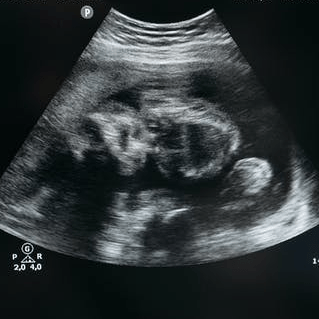
Here I wish to give a conclusive account of my view on abortion. Due to the complexity of the topic a full extrapolation of the reasoning behind my views will not be carried out, but rather a comprehensive look into where I stand in reference to the multifaceted topic. The facets I wish to delineate are those of the political standpoint, the moral standpoint, and the personal standpoint. As a caveat, there are innumerable cases which do not fit the norm, many of which I surely will not mention, and many more with which I am ignorant of existing, as well as their implications. To these we do seek to delegate some explanation, and the handling of such outlier cases must still be covered under the law in the political realm, and under wisdom in the ethical as well as personal realms.

Political Perspective

For the political exposition, we must clearly state what the role of the government is, and how it correlates to the issue of unborn child death (here any stage of development after conception and before formal birth/life outside of mother’s womb or an artificial embryonic life support system, will be denoted as “unborn child”). The government’s chief role is to provide the people for which it governs with the ability to live safely and with the ability to express themselves in a manner which does not physically harm other members of the nation. The people have a say in additional roles of the government, in supporting the people in their pursuit of wellbeing, enabling equality of opportunity, and the ability to have unfettered speech and creative ability so long as it does not physically harm other members. Private property, the social contract, taxes, are all beneficial and, potentially necessary, for the cohesion required for such a system to work optimally, but in reference to the issue at hand, we will be directly responding to the government’s role in protecting its citizens from physical harm. In the face of abortion, here we are discussing the voluntary ending of potential, future, human, experience.

Where there would be no life for an organism not existing after birth, as in the cases where its medically concluded that the child will die before being “born” due to complications or other unfortunate maturation processes, there is neither moral nor legal implications towards the parent’s decision of how to handle the unborn child. The obvious point of contention is in the unborn child’s foreseeable potential to suffer and experience wellbeing, or to be conscious of his/her experience. While this surely is an issue to be extrapolated upon in the moral sphere, the law must hold firm to its role in protecting its citizens, namely, the autonomous individuals which make it up. While the government holds this promise to its citizens, and thus bears the responsibility of providing this system to the members within its nation, I hold that the unborn child does not become a part of the nation until its birth. Only at this point, when it is living outside of the womb, outside of life support, are the government’s laws and regulations applied. If an unborn twin strangles its brother with the umbilical cord, surely the government would not charge it with murder. While people may feel an ethical obligation towards the preservation of future life, say in an 8-month old fetus, I in most cases likewise hold that the parents ought to allow the pregnancy to be carried to term. But the problem with government intervention is the slippery slope which stems from government intervention towards an individual’s autonomy, and their ability to alter, change, or create with their own bodies, without “harming” another individual – we cannot extend our moral intuitions into a domain that doesn’t hold precedent over such matters, or we are guilty of categorization error. While the terminating of a fetus may or may not cause conscious suffering to the unborn child, and thus holds moral implications, the government here has no say in dictating the actions of a mother to the contents within her own body. It is staunchly out of their constitutional realm of power, and is clearly a sign of government overreach into the personal sphere.

I view the unborn child at this point (not yet born) to be the product of the creative act of its parents, the right to which the government must offer the parents full support towards the possibility of opportunity, being as they are members of the contract that binds them to the laws and regulations of the nation. While a child does not choose the country to which it is born, the parent’s do, and hold responsibility over the life of the child as they raise her within the limits of the law, from birth till 18, the child isn’t necessarily selecting the laws which govern her, yet regardless, for issues regarding the safety and cohesion of the nation, must follow the laws overseeing her life, as “given” to the child by her parents (until she has the opportunity to move to a country or residence with whom the laws of the nation suit her will – or not – and face the consequences). The problem is in reference to a death sentence law towards a being which is not under the purview of the law, nor has reached the age of maturity in order to choose the country whose laws she wishes to be a part of. While a child between the ages of 0-18 also doesn’t hold this ability to move into a nation with the laws that she chooses to loom over her head, the parents hold the responsibility of the laws which do apply to the child within this development period. Being that the unborn child is the production of two people, operating outside of the realm of government influence, the unborn child doesn’t become subsumed under his parent’s national laws before birth, she succumbs only to the desire of her creators, who hold the power over her existence, or non-existence, up until birth. Thus there should be no legislative decisions regarding the unborn child, nor towards the parents and their action towards the baby.

I believe this argument holds good for the genetic alteration of a zygote to influence its development as well, through the usage of technologies such as CRISPR to edit the genetic sequencing towards more desirable traits and attributes (resistance to tumor growth, aka cancer, or hierarchical reasoning abilities, aka intellect, etc.). As genetic editing capabilities have surpassed the point where it is possible to alter the genetic source code of a zygote and thus the individual stemming from it, a country has no right to interfere in this creative product, just as they have no domain over the creation of the child, or not, as decided upon by the mother who houses the child. The obvious contention here is between economic viability and further separation of classes as the upper echelons of a society in terms of wealth have the recourses to afford this endeavor, and given the current landscape, such separation of the upper class is deemed “bad”, but regardless of our philosophical position on the topic of class and wealth distribution – this modification also is outside of the governments purview.

The argument will be posed that the unborn child is life, and therefore must be protected by the government whose role it is to protect its people’s lives. Additionally, the argument will be posed that since the fetus can experience pain and suffering, and thus physical harm, it is under the government’s authority as to its responsibility to provide the same equality of opportunity to live in the nation free of harm as rewarded other citizens of the state.  The obvious difficulty here lies in what defines “life”, and I am stating that it isn’t life simply stated, as there are many forms of life which are within a country’s borders that don’t follow laws, but rather a type of life, human life, marked by autonomy, separation from its creators, containing conscious sentience (or once has but has lost autonomy), which, as far as I’m concerned, begins, in its true potentiality after birth. As the skin cells on our noses are surely “living”, they surely do not constitute a being with whom we cannot murder, in addition, the creation of a zygote between the gametes of a father and a mother surely are “living” in the technical sense, but not in the form of a citizen-agent with whom the government’s laws should be required to protect. We do not regard the individual gametes within an individual as individuals themselves with constitutional rights, and therefore charge people with murder anytime their expenditure doesn’t reach consummation, likewise, we cannot solely state the possibility of life which exists in potential form in any fetus or collection of cells within the human body, or at any other point within the unborn child’s development, ought to be under the purview of the government. While gametes contain the potential for life, and are, in themselves, living, we do not offer them protection under the law, and for good reason.

While the comparison to a consummated fetus is a stretch, the difference being substantial, the basic premise still stands. What we consider true potential for autonomy ought not be regarded until the moment of birth, and this, to me, is an opinion which I hold as the standard for justification legislatively. As far as it is it is part of the mother and father, yet residing and growing in the mother, we must consider it as part of the mother, as her other cells, organs, tissues, limbs, surely all are. While the possibility of life surely exists at the point of conception, just as the possibility of life exists in any healthy adult (in their gametes and genetic material), this doesn’t entail government oversight and restriction on the decisions of the individual. There surely is a lack of “selfhood” or experientially intuited autonomy in any form of being prior to being born, the creation is still being created, whether it contains conscious sentience or not. Conscious sentience here is important to the morality and time of abortion, but in the sphere of politics, it holds no sway over law. Here we enter into the moral dilemma.

Moral Perspective

In considering abortion from a moral perspective, all legislative and governmental purview are suspended, and bracketed, as surely existing but currently not applying. The moral question necessarily must be founded upon the wellbeing and suffering of life. Without life, there is no pain and suffering, there is no wellbeing, and there definitely isn’t consciousness of better or worse experiences. Without experience of some form which can undergo some form of better or worse states, there is not a moral question, as actions regarding them do not produce a better or worse subjective experience – pleasure nor pain, wellbeing nor suffering, growth nor decay. Where there are moral questions there are also right and wrong answers, per moral realism, which takes into account the wellbeing and suffering of the individual, and other life forms into their causal connectivity, in the present moment and across time. In this scenario, the potentiality for future experience, much like the potentiality of a murdered adult, is taken into account, in its connectedness and effect on the wellbeing of other sentient beings.

In the case of a mother’s life being at stake in the birth of the child, the mother and father are not morally culpable for the abortion of the unborn child, due to the guarantee of current life ending. The causal implications of someone with emotional ties and relationships is much greater than the amount of potential suffering caused to the unborn child in his abortion – in most cases. There are obvious outliers here, such as in the effect of malevolent psychopaths and the sort – the potential suffering is more directly intuited to be greater in their continued living than in our intuition of the potential their child may have in affecting greater or worse wellbeing / suffering in the world after they exist. Absent of all details and intricate factors of real pragmatic life, and the moral implications that are specific to the causal connectivity of a person’s existence and their continued existence, this is, in the abstract, a moral neutral position (to be determined by the actuality of the situation), to me, where the mother sacrificing herself for the baby, and the mother aborting the baby, stand on equal grounds – all other things considered.

Where a mother may lose her life if she continues with the childbirth, there does exist a moral realist answer to the implications of either choice. But given our lack of omniscience, we must claim that the decision, by the mother, and if she so chooses the fathers opinion to be of value than his plays into the decision as well –  is on morally neutral grounds, it is neither good nor bad – the effect of such action will dictate its pragmatic utility, and the ability to see the opportunity cost would only lead our intuitions to a better or worse assessment in extreme cases. Current life or potential future life here are morally equal in the abstract realm, due to our inability to foresee the possible repercussions of the continued life of either “person”. In extreme cases the moral situation becomes clearer, such as in the authentic philanthropist or the psychopathic authoritarian tyrant. If we were to see the causal connectivity between the extended life of the mother or the potential life of the child, and weigh the improvement of wellbeing and reduction of suffering for themselves and other sentient beings across time, if we could accurately calculate this data, then a morally positive “right” answer could be attained. Seeing that we don’t have this, I posit the neutrality of the situation. The same guidelines hold for a fetus formed through parental abuse, drug induced intercourse, rape, or some other form of unwanted insemination. The results of the potentiality of life and its affects upon the mother and the ability for her to end the life of the unborn child, or not, and suffer henceforth (the child too may suffer such a conception story), are also unknown (as is the circle of influence stemming from either life’s potentiality), but a certain distinction is made here, between the continued life of two organisms.

While all beings will surely suffer in life, I reject full-heartedly the notion of anti-natalism, while acknowledging its philosophical position, I hold that the potentiality for healthy, conscious, human life, is something to be pursued and not something from which to shirk from in its institution to a world of suffering. I think the situations which call for a mother to abort, or not, and their continued life, are under individual moral standards, applying in degrees of “rightness” or “wrongness” in reference to each individual case. This is surely an opinionated standpoint, and while it may be vague in its abstract form, it is decisive in its individual manifestation – which represents the implicit complexity of every situation. As in the previous case, if all factors were calculable, we would have a correct moral answer to every situation, regardless of extremity – seeing as we do not, there is no simple general moral standpoint from which to view and judge any given situation. Therefore, we put the matter of abortion upon a moral spectrum, based upon the wisdom of the one perceiving, judging, or attempting to make such a decision. Better or worse case scenarios and their respective moral heights are to be regarded on an individual level, with an aim to the improvement of wellbeing. That being said, the wisdom to weigh the potential life and one’s own life, or when viewing another two lives, to weigh the morality of the decision made, is surely dependent upon the viewer’s ability to cognitively assess the situation, but where the potential for life is concerned, the judgmental scale always tips morally towards the advancement of life, regardless of the different situations which led to the conception of the baby.

While different scenarios fall upon a spectrum, the choice to abort a healthy unborn child, abstractly an in a “standard” situation (between two dedicated lovers, separated parents, or only the mother or father’s decision or choice to have a baby or raise a child once learned the mother is pregnant) falls entirely upon the “bad” end of the spectrum, to different degrees, depending on differing factors. In other words, I believe it to be morally good, right, or correct to preserve the life of a child, to differing degrees, depending on the circumstances and factors at play in the individual scenario. Likewise, I consider it morally wrong, bad, incorrect, to abort the life of an unborn child, also, to differing degrees based on the details of each distinctive situation. While I think it is morally “bad” to take plan B and thus end the potentiality for life, it is surely a moral “wrong” that can be forgiven, much like I hold that dietary veganism is morally superior to a carnivore diet, I hold the continued abstaining from veganism to be a moral “wrong” which warrants minute criticism, and thus minute judgment, or very small influence on the moral evaluation of another person or yourself. On the other end, the birthing of a baby born with severe cognitive issues, whose birth either kills the mother, or whose life leads to incalculable suffering, would still tell a morally “good” story in regards to the action of giving birth of life, and the sacrifice therein, yet I would not call it a wise choice, and apart from the action itself, must be considered abhorrent.

Virtue ethics now makes its essential contribution into our evaluation. The act itself of attempting to preserve life, without prior knowledge of harm to either party, and is founded upon virtuous intentions towards the proper upbringing of a child, warrants an act that is morally “right” or “good”. Yet, from a consequentialist perspective, we must calculate based on the repercussions of such an action. To me, the wise choice, given any situation, including that of abortion, is the prudent ability to decipher from which perspective to attempt to tackle the situation, from which standpoint to navigate. Do we attempt to act from the character we deem as virtuous, and if that values the continuance of life in the successive generation, act to fulfill what we value? Do we look towards a cost benefit analysis of future moral implications to ourselves, our circle of influence, and the potential world the child may engage with – and make a pragmatic assessment and assertion of optimality based on this rational factor analysis?  Judgment of either method of interpretation is to take place under the meta-ethical framework of moral realism as dictated above.  In this way the eye of wisdom is called upon in distinguishing the correct response to moral questions, and must be exercised with care, and separated from the actual inherent virtue of the act.

The totality of future suffering and wellbeing must be considered across the spectrum of sentience in order to calculate whether decisions should be made or not. Whether the act itself is good or bad holds little importance here in comparison to what the wise decision may be. To abort a potentiality unhealthy child, or one which is generally unwanted, accidental, due to malevolence, or other extreme factors, should be legally up to the parents, but if the parents are of age to deliver a healthy baby, with our current systems in place to take care of them I believe it to be “morally wrong” to take the potential life, or not become responsible for our actions through the proper revelation of our values in bringing up the child to maturity. I view it as our sacred duty and responsibility to pass down the knowledge we have acquired in successfully navigating life to the proceeding generation, as our forefathers have done for us – at least in the situations where it is the wisest choice to be made.

I still reserve the right for parents to abort the child in the germinal, embryonic, or fetal developmental phases as they see fit, for any reason. I can’t justify it morally upon the “right” or “virtuous” spectrum based within the virtue ethicist framework of the act itself, stripped away from circumstances. In the context of circumstantial factors, the moral playing field becomes considerably muddied, without sufficient foresight in predicting the future outcome, we must rely on experience, scientific data as it relates to the individual factors, and overall wisdom in discerning the optimality of carrying to term or abortion. The wisdom spectrum supersedes the practicality of an action, in all cases, and an honest interpretation of the factors at hand enables the philosopher to clearly view whether the “act” of abortion truly passes the wellbeing / suffering test, whether it is intuited as being pragmatically true as beneficial and useful in the decision to abort or not. That being said, any moral act does lie in degrees depending on circumstance along the spectrum of moral answers, from the most optimal and beneficial, to the most abhorrent.

Personal Perspective

Personally I will never choose to abort a healthy child, insofar as I have a say in the matter, and in the situation where the mother places the burden of choice upon me, at least at this point in my life. An unhealthy child, or one under other circumstances than what would be, in short, “optimal” as regards its potential conscious experience (sickness or other mental deficiencies), surely would call for an exercise in wisdom and communication with the mother in the choice. But, currently, along as the child and his mother are healthy, whether I’m in the requisite financial situation towards raising the child personally or not, I will opt towards the preservation, creation, and continuance of life, whether it be under my care or not, with, of course, the mother’s approval. While this is a personal stance, I would never seek to extend it to any other individual’s circumstances, nor seek to impose my standards which I apply strictly to the scenario of “my current life” in a legislative manner.

Agent Based Morality, Consequentialism, and Wisdom Ethics

Originally Written: January 31st 2020

Instrumental to the formation of morality is the admission that the concept of morality is resting upon the axiom that we are, by being moral, attempting to move from the most possible suffering for everyone, to a place anywhere with less suffering. To say that this state of the universe isn’t “bad, or that distancing from this isn’t “good”, implies that your definition of the concept of morality is radically different then how it is commonly understood, and that you necessarily don’t understand the inbuilt biological drive towards states of wellbeing which every life form desires. This desire for wellbeing and avoidance of suffering constitutes the state of order which life attempts to organize itself into, ever since the first organic molecules fell into a state of order that allowed their replication at a level that was sustainable enough to be replicable across time. As evolution played its role in selecting for the genes, and its biological machines which carried them, it tended towards this principle, not in anthropomorphic terms (wellbeing and suffering), but towards a being that contained genetic fecundity, longevity, and copying-fidelity. The experience that an organism undergoes in relation to such aims, and the reaction to the environment and situations which necessarily determine the success or failure of these genes, are either right or wrong, good or bad, in relation to this, in human terms, as we experience this pendulum between things which aide and which admonish our biological fitness, the experience eliciting such awareness gives rise to the corresponding broad states of which we consider to fall into the suffering or wellbeing, pleasure or non-pleasure, mental states which characterize the situation consciously. In addition to the presence of such present moment conditions of “wellbeing” or “suffering”, we must characterize morality and acting from a philosophically moral system as consideration of not only the individual, but radiating outward from him to include all sentient beings, all life. Generally speaking, this conceptualization is a meta-ethical framework from which we will assume moving forward, specifically, that of Moral Realism, which is not only decided upon based on philosophical rigor, but based on biological and phenomenological evidence we have into the nature of things. We necessarily don’t find ourselves in a moral relativist position, at least not in the domain of considering wellbeing and suffering, which is necessarily all we are talking about when we speak of morality, especially when we take these words in their broadest sense, as that which is most optimal, and least optimal, for the life in question. For more on the meta-ethical principle of Objective Realism, see the essay “Basic Moral Realism”.

The broadest view of morality, and its implications, takes into accounts all beings in this manner, and their subjective experience of life. This experience of life is constituted by their state of being, which, generally speaking, can include a state of more or less suffering in the present moment. Morality must include the suffering undergone by the individual within the present moment, as well as his continued suffering through time, as well as the relational impact he has upon others across the span of time. When considering morality, we take as our foundational maxim that what is “bad” is characterized by the thought experiment in which we imagine the most possible suffering for everyone, without a silver lining. Movement away from this place, in degrees, we define as good. We find morality to be directed not only at the individual, but across all sentient beings, the degree of sentience and experience of suffering being relational to the importance within our system. We find that when we act towards one person, we necessarily take into account the trickle-down effect, and consider the chain of causality leading from such actions, not only in their immediate implications, but across time.

While there have been innumerable attempts to locate the state of mind that best is able to produce this effect, we can all agree that movement away from the most possible suffering for everyone is truly a moral good. Taking this as our starting place, there has been many attempts to articulate which method would be most useful and beneficial in employing a strategy that proposes to do this, in the practical sense of discerning action and moral worth. To name two of the chief contestants in this race, virtue ethics, and utilitarianism, we find very different methodologies in the application of their strategies, yet not always different outcomes.  

As the most popular form of agent-driven morality, virtue ethics is a strategy of morality where we are focused on the content of our own being, of our character, and what is directly emanating from ourselves. We are focused on acting in such a way that displays virtue, to us. In looking for what is virtuous, Aristotle states, we can find the trait in between two opposing extremes. If we look to honesty, we find it in between secrecy and talkativeness. If we look for courage, we find it between cowardice and rashness. If we are to take this virtue ethics approach, our goal is to embody these virtues to the greatest extent we can, to make them a part of our character, through our manifestation of them in thought, speech, and actions. The virtues being morally beneficial, the effect of us focusing on acting in such a way to be “courageous” or “honest” can create (if done well) beneficial effects upon other people, which isn’t the intention of this philosophical system. The outcome is necessary a given, that it would be optimal, if we act in accordance with virtue. While compassion may be a virtue to us, in taking a virtue ethicist approach, we are not focusing upon the effect of our actions, as we are logically concluding that the effects will be beneficial, rather, we are focusing upon the content of our character being pure, upon the manifestation of virtue, which is the “good” to a virtue ethicist. The consequence or impact of such virtue upon others, as stoics emphasized to a large degree as stated in “On Stoicism”, is out of our control. What is in our control, and what we should focus on, according to virtue ethicists, is the content of our actions, and their accordance with our consciously derived virtues. In the trolley cart problem, the virtue ethicists doesn’t switch the lever, as the act of voluntarily taking the life of someone, albeit one instead of five, necessarily is an evil in which he would not partake in, let fate run its course without the moral agent as an individual being involved. Now, on the other hand, if we take virtue as being those character traits that are beneficial in allowing us to act morally, in reference to the universal maxim underlying morality, we find that the implication of certain virtues at certain times would be most beneficial to the overarching progression away from suffering.

As the most popular form of consequentialism, a utilitarian may produce similar effects upon the lives of others as some virtue ethicists, through their mutually shared unconscious consideration of the above maxim, but how they get there, is always at odds with one another. A utilitarian considers in any situation, or reciprocal interaction, what the effect of his action would be, rather than the action being in accordance with virtue. A utilitarian seeks to maximize the welfare of the largest amount of people, over the largest amount of time, in the most beneficial way possible. How we come to that conclusion, or how we act, our conduct, as it attributes to that goal, is not important (from a strictly hard utilitarian position). Whether we must break the virtue ethicists moral code in the pursuit of the greater good is entirely unimportant to the utilitarian, what is important is the effect of the actions. This approach uses the mental faculty humans are imbued with, that of the ability to consciously entertain multiple scenarios stemming off as the hypothetical effect of our actions, and in our ability to use relational reasoning to decipher which of these outcomes is beneficial to the most amount of people. In the trolley cart problem, the utilitarian views the lives of five more than of one, regardless of his direct involvement in the murder of one, and chooses to flip the switch. The pathway that is consciously thought of as leading to the most usefulness, or beneficially, towards the largest amount of people, over the largest amount of time, is the path embarked upon. This, according to utilitarians, in theory, produces the most moral action we can take as it contributes most to the universal maxim with which morality rests upon.

To say that one or the other is answer, universally, in any situation, leaves out important aspects of reality which should not be ignored. I propose, that the solution lies in their transcendence. Once we can gain knowledge into the benficiality of both systems, both for ourselves, and for others, both in the short term, and long term, both in the effects of our actions on our own character, and its iteration across time, we essentially come to a place of cognitive dissonance. This state of dissonance is located in the consciousness of the philosopher which is able to simultaneously hold the value and see the beneficially of both systems of ethics, yet sees also their mutual incompatibility.

Ignorance on another subject is of importance to our practicality in embodying either system philosophically. That is of the real scientific effect of our actions upon others, or the right answer to moral questions, as describe by the meta-ethical framework of moral realism. If we were able to consider all content, all pathways, all data and relatable factors of experience, both going into a situation, and upon the effects, concretely, using a deterministic framework, we would be able to scientifically calculate which pathway would be most progressive in moving away from the maximum universal suffering, and be able to see how different pathways lie upon a spectrum of “good” and “bad” in their relation to the most optimal path of movement away from the “bad” of the moral maxim. This is how we can derive the “ought” of moral action, from the “is” of Hiedeggerian factical reality. In regards to the trolley problem, the moral realist, theoretically, would calculate the exact degree of beneficiality of saving the lives of the one as opposed to the five, and the implications of the survival of such people upon the wellbeing of all sentient beings, and from this data, choose which is most optimal. We could, given the relevant data (all data), discern the most optimal action to produce the most optimal effect. The problem lies in the practicality of moral realism, that we are wholly ignorant of this data and its conclusions, thus the meta-ethical framework has a practical impossibility in its application, albeit, in extreme cases, we can intuit more or less what the data would show quite easily. The problem is, we infrequently find ourselves contending with extreme cases, and when we do, almost all the conventional ethical frameworks point towards the same conclusion. We more often than not find ourselves in a more intermediary moral dilemma, where the answer is difficult to discern, and oftentimes two competing desires, and difficult to compute effects of action, are in play in regards to the situation.

Thus we have three general systems of morality, held in the consciousness of a single being, creating a mode of consciousness that not only has the dissonance of seeing the beneficiality of virtue ethics, but also seeing the beneficiality of utilitarianism, while holding the knowledge of his ignorance of the desired pathway produced by moral realism, or the “most right” answer to a moral question. We come into a sort of existential dilemma in regards to a philosophical system of morality. The individual thus contains three antitheses, and must look to his logical ability to prioritize the practical aspects of such systems, to move them from purely abstract idealism, in their existence solely within his mind, into their implication in his daily life. This is necessarily only able to be accomplished by a Hegelian dialectical move, to a transcendent mode of morality which contains the truth of the three philosophies within its conceptualization, in order for the individual to remove his dissonance, and confusion, in regards to the optimal solution. To solely philosophize under these conditions would necessary produce stagnation, due to our ultimate ignorance of the complete causal chain in relation to the effects of an action. What we seek, and what we need to work from, is a mode of being which is readily able to act. But where the dialectic takes a true thesis in its competition against a secondly truly found antithesis, here we must use a trialectic system to encapsulate a third thesis.

This conceptualization must be more than theoretically sound, and more than logically coherent, it must be practical and the individual must be able to not only use it to see its validity in daily life, but also to be able to act from it in determining answers to moral questions. It must contain a “why” as well as a “how” to conceptualize a moral position. This necessarily requires that his conception of what is the best moral system to act from is directly relational to his knowledge and experience thus far in life, as one cannot consciously act from information on which his Being is ignorant of (unconsciously of course he can, but here we are looking for a conscious conceptualization which is useful). This reliance on knowledge of causation and effects, and the experience needed to gain such knowledge in its practicality, necessarily leads the individual to accept the best possible form of action, and philosophy in which to inform such action, be reliant upon wisdom. Here I am going to put forth the conceptualization of wisdom ethics, a general abstract of it is found in “Precursor to Wisdom Ethics”. Here we will look at how it is able to be used by the individual to concretely understand his actions in a given situation, as well as consciously project himself into future situations to act in accordance with our universal maxim of morality, that is, moving away from the greatest possible suffering for everyone.

Using a system of wisdom ethics, the individual contains the knowledge of prior philosophical systems, and puts them under an umbrella value, which supersedes them all, in a gradient fashion towards higher heights of moral accountability. This wisdom ethics umbrella works under moral realism, yet supersedes specific schools of thought that outline practical solutions, it is, in fact, a mediator between the two, it is the mode of being which can discern between the higher framework of moral realism, and the lower forms of practical implication of moral judgments and actions. Whereas we can use a phenomenological examination of the individual’s life, which coincides with the historicity of the developing moral theories, to show that in both cases the order moves from the system of acknowledgement from agent based ethics, to consequentialist based ethics, both transcended by wisdom ethics, operating in its perceived attempt at embodying the individual intuition of moral realism. This movement, hypothetically, takes place in a step ladder fashion in relation to time, as experience increases, to be measured by the increments of time, so does his position and data set towards moral answers. The individual may hypothetically stumble upon virtue ethics, accept its usefulness, then utilitarianism, accept its usefulness and see the flaws of virtue ethics (for example the contradiction between opposing virtues), then stumble upon moral realism, accept its usefulness and see the flaws of utilitarianism (for example that of actions which are morally unbeneficial to the character of the individual in their sacrifice for the greater good). From the position of realizing the moral meta framework, we see its impracticality in discerning decisions in our everyday “natural” mode of being, the philosopher, or moral contemplative, necessarily reaches a state of confusion as to what exactly to act from and with, consciously. While our manifestation of action is necessarily deterministic, and our embodied perception and value system stem from meaningful significations “Value System Instantiation”, the conscious articulation of something from which to consciously direct ourselves “Intro to Phenomenology of Action, Spontaneity and Conscious Directedness” becomes the object of inquiry to the philosopher at this stage.

While in the historical development of philosophical systems they moved, to a greater or lesser degree, in this fashion, I am not stating that every individual’s adherence and knowledge of the systems moved in a parallel fashion throughout his experience of life, this is just a hypothetical movement, that ends with the individual containing knowledge of all three. What we find in the developing of our knowledge to include differing moral theories is that they all are located within the arrow of time, within our lifetimes. It is a gradual movement towards greater demolition of ignorance, and towards greater knowledge, encapsulating more content and information. As our theoretical knowledge progresses to include more content, so does the knowledge of the experience of the implication of such principles within our lives further contribute to our picture of what is “good” and “bad”, what is the best thing to do in a given situation. Where we find these systems to be roughly incremental in their development, as time goes on, knowledge goes on, the admission of the beneficiality of wisdom ethics shows its true colors.

Wisdom ethics is a place of morality which necessarily stands upon the shoulders of its forbearers, of past experience, previously gained knowledge, and moves, potentially, infinitely upwards in its application. The individual recognizes the true nature of his psychological state, and of the true nature of its manifestation into his actions. What we do is simply an expression of who we are. Whether it be of a nature of concealment, or false representation of ourselves or not, the content we express whether in speech, action, or thought, all is a reflection of the mode of being which we currently find ourselves in. The individual who has thus far progressed, realizes this, and realizes, based on his experience, the uncertainty as to the effect of his actions, yet as he moves through life is better able to accurately predict, (using unconscious probability based upon prior experience), what the best course of action is, and to this he credits the system which produces his actions to wisdom. This system is dependent upon the determinacy of brain organization in its bottom-up integration to consciousness, and then to the top-down control, or direction, within which our conscious content imposes upon the embodied system. The bottom up procedure relies on memory, mental schema in relation to concepts language has organized reality into, the development of which is wholly determined on past experience, stemming from genetic perceptibility, towards accumulated environmental modifications (cultural, familial, experiential). The top down utilization of the content which enters consciousness, and is directed by consciousness, depends on this information, yet plays a role in being part of the causal chain which leads to greater adherence between the lower and higher systems. The top down function can be improved by greater articulation of mental schema, and a more accurate representation of phenomena through language in their representative nature of phenomena. This “truth seeking”, is beneficial to the top down integration, and can be further utilized through understanding the contents of consciousness, understanding one’s Being, through mindfulness, or conscious awareness of the present moment, the only true moment available to consciousness.

Ultimate Wisdom, in relation to morality, is that of acting in accordance with moral realism, in producing the greatest movement away from the universal maxim of suffering, but the individual knows he doesn’t contain the totality of such knowledge, and so Ultimate Wisdom (the best answer to a moral question), is something unattainable by anyone. The factors and conditions as well as knowledge of the mental states and futures which actions produce amounts to a precise knowledge of, unfortunately, everything, something we must accept as falling well outside the limits of our mental capacity. This state of “godhood” or “enlightenment” or “divine inspiration” is what religions claim to have achieved in their patriarchs, yet which the individual in his understanding of wisdom ethics, knows to be impossible in human form. What is not impossible, and what we find borne out in reality, in which evidence abounds to elicit, is the degree of wisdom possible in an individual in relation to the state of “Ultimate Wisdom”. This degree of closeness to such a hypothetical rightness, is something we aim to advance in relation to.

The adherence to wisdom ethics entails the diligent striving towards the state of “Ultimate Wisdom”, or of the height of moral realism, through the implication of acquired virtue in the pursuit of the greatest good for all. It is a synthesis of all three aforementioned systems of morality, that is progressive in its ability to be better informed by a higher resolution image of psychology, science, philosophy, real-world experience, and causality. Through advancement in understanding the effects of causes in their implications within the real world, our data set moves towards providing more favorable decisions and behavior in regards to their results both on our own character and that of others. As we progress through the infinite degrees of wisdom ethics, we find the use of time in better ways, towards better goals. The use of time for the conscious pursuit of improved character, towards the greater understanding of physiological and psychological systems, towards the growth of experience in real world application of our virtues, towards the analysis of the effect of our actions and how they are related to the improvement of alleviating suffering in others and ourselves and others across time, is all pursued, in a way that values certain life and decisions more than others as its effect upon this movement is better understood. As we improve our character we become better able to spontaneously act upon those unconsciously habituated and improved character traits in a way that is most beneficial to others. As we improve our knowledge and conscious ability to direct our actions, we become able to employ the rational faculty towards increasingly better solutions to real world problems. As we increase in wisdom, we are able to distinguish, both consciously and unconsciously, which situations require the spontaneous reaction from virtue and the conscious action which considers the effect of our action. In regards to the trolley car problem, a wisdom ethicist is basing his decision based upon his current state of being, informed by the information of the situation regarding the web of causality tied to the lives proceeding into the future stemming from the six people in question. His experience, memories, and developed moral system, gives him a foundation in which to rationally estimate the beneficiality of the one or the five continuing to live, and how they match up to his conception of Ultimate Wisdom. As he doesn’t have all the information, he works with the information he has on the people, their age, background, jobs, whatever information is present to him, he judges them upon “On Judging”, and this judgment is the same he uses in regards to his actions across any interaction with any being. Thus he chooses to push the lever or not, depending upon an informed calculation taking into account any information he has acquired on the lives in question. If all six people appear to be of the exact same age, with no information given on their background, he will take the utilitarian option. In the same manner, the wise man judges every situation, every interaction, every person, in every way possible, in order to produce an optimal interaction that proves to be beneficial and useful. Outside of the trolley car problem, he judges on race, religion, and gender, where such aspects of a person’s being are causally related to the content of the situation in which he finds himself in, and refrains from doing so where they are unrelated to the situation. With the increase of wisdom, we are better able to see the potential actions available, and the potentialities increase as wisdom increases, as well as we are better able to formulate the effects of such actions, and better able to see clearly which path would be optimal (given our fallible conscious state of not having “Ultimate Wisdom”).

The mode of consciousness which I am describing sees the use of benefiting character growth in agent based moral decisions, and sees the use of consequentialist theories such as utilitarianism, the mode sees the good intention behind them, but holds their use to the standards imposed by moral realism. But what it does that neither does, is admit to be itself a system of continual improvement as time goes on, which not only is a philosophically held conceptualization of morality, but the actual state of things in which we find ourselves in. Most of us are within this state of wisdom improvement unconsciously, the biological system is naturally seeking for better ways to understand the world, and to improve its actions upon it in a way that is beneficial for our selfish genes. The goal for the philosopher, in all accounts, is to consciously describe this process, and his awareness of it, and the methods in which to improve it. We ought to move into direct perception towards this process consciously, to erode any dissonance in regards to the most “thought out” moral answer, and conclude that the embodied system which we are, in our totality, holds the intuition towards the greatest answer, for us, in this present moment, that we can act upon. Whether this entails further research, is better served by spontaneity, or requires “Conscious Employment of the Unconscious”, we ought to attempt an authentic manifestation of the call to conscience (Heidegger) which is dependent on our alignment with the totality of our Being as we so far can articulate it. In acting in accordance with our conscience, that has been so developed to intuit the best mode in which to inhabit to navigate novel situations, we are acting using the best system we have, yet this time, consciously.

Religions seek to point out an optimal path from deductions from mythology, dogma, and superstition, and these deduces conclusions they use in describing our place in the universe, they also elicit a system of morality, which falls upon this spectrum of better or worse as it relates to the universal maxim. While these systems can produce a movement in the good direction, and often provide a stable foundation across time to a more or less beneficial morality in its adherence, it is within the criticism and acceptance of fallibility that ultimately leads to any moral agent’s progressive growth and transcendence to greater accuracy in regards to moral good and truth-finding. Many people do not have the desire to work outside the bounds of a religion, or to question its claims, or to have the time and intellectual ability to make progress in a system that lies outside of conventional, or already demonstrated methodologies, and this is okay. Where they do not seek the truth, where they do not seek novel, unique, original, individuated conceptions of reality and the setting up of a value structure independent of previously formed systems, the philosopher steps in and finds his niche in the pursuit and expression of such aims. The philosopher seeks answers to questions not previously asked, and finds truths undiscovered. If he is a good communicator these truths are conveyed to others memetically, and they live on in the minds of the people, impacting them and their moral systems, their way of life, for better or worse. The goal of a philosopher is to articulate phenomenological findings which help lead the person to consciously improve his morality. In doing so, a philosopher is inclined to give better representations of reality, or to strive to find better conceptual representations of phenomena, to inform his conclusions on ways of living, or philosophies of life, which are better ways, or paths, for individuals to carry down. To seek out and find these new insights into the nature of reality, and to find information and experience which enables the movement of the owner of such knowledge to live a life of increased well-being, or to produce an effect that leads to the distancing from the maxim of suffering, is the ultimate claim to fame of every philosopher, and should be the end goal of modern philosophers. He who is able to increase in wisdom, to heights not yet achieved, and share such knowledge with the people who do not have the means to acquire it for himself, is the responsibility of the philosopher. Whether this information is directly conveyed in his writings, or in his actions, the effect of such seeking and of his findings, if he is truly right and “foursquare beyond reproach”, is beneficial to the continued progress of humanity towards a more enlightened state of wellbeing. It is the role of the philosopher to discover these pathways, and to articulate them to the people. He must discover the hidden treasure, through the metaphorical hero’s journey, and return it to the people for their benefit.

This continually improving system of wisdom ethics, as expounded upon by philosophers and religious leaders, and great people throughout history is the foundation for which we have to work with in our current day and age. The information and insights gleaned by countless seekers and their actions is the foundation which we have to work with, and the information which we should utilize in order to ultimately transcend, in our continuing of the tradition of philosophical inquiry towards greater wisdom. Once we reach the realization of the impact which wisdom has upon our actions, both consciously contained and unconsciously accumulated, we realize the importance of its training and consciously directed improvement. This is done through a conscious analysis of our current value structure, and restructuring, continuously, as new information is absorbed. We must then act on the aspects near the top of our hierarchical value system in order to improve in the areas that we find important to the contribution of improved wisdom. “Value System Instantiation”. Whether this be the extension of knowledge in a given field, or an expansion of acquired experience in different areas of life, where we all are and what we all most need, is unique to each of us. The more we direct our consciousness in pursuit of such a goal, the more we progress, the more we explore and train, the more we learn and become. The more accurate our conception of reality, the more experience we have, in the right domains (conducive areas to understanding morality) the better we become in deciphering which action is optimal given the situation.

As to what this training and manifestation of wisdom, in its accumulation and its displayal, actually looks like, it varies from wise inquirer to wise inquirer. As it is an accumulation of all an individual’s psychic content, physical experience, and acquired knowledge, it is hard to pinpoint a universal system. The easiest grouping system I have found for organizing aspects of wisdom accumulation and improvement is to be found in the Buddha’s eightfold path, the content of which and improvement of which, I have gone into great detail in “Basic Dharma Explanation”, but whose structure can be individualized across all individuals as they see fit, and doesn’t need to match up with mine or with the Buddha’s. This entails the eightfold path, in its application and conceptualization in our own lives. It is the pursuit and carrying down a path, of eight categories, which are easy to remember, and the content of which is extremely expansive as our knowledge grows. These categories are; right view (understanding of reality), right thought (intention), right speech, right action, right livelihood, right effort, right mindfulness, and right concentration. It appears to me, that progress in any one of these eight categories (what each one means is continuously refined by the individual and thus valued differently accordingly) produces an increase in wisdom.   

The main take away is that we shouldn’t view morality as a static, concrete set of imperatives to adhere to, but rather as a dynamic, evolving, and improving process. Every situation we run into is unique, given the continually changing and impermanent state of the universe which we find ourselves thrown into, and our morality should reflect that. The ability to cope with this continual change, both in our own psyche, our own character, as well as in the external world, and its situations, is the task given to wisdom, to find the best optimal solution given the present moment which is always novel and unique. History never repeats itself, but aspects of history appear to follow similar patterns, which we can learn from and use in a probabilistic way to better inform our present decisions. This is the natural way in which our brain operates, through the use of pattern recognition, and hierarchical reasoning, and mental representations using concepts, and this system is best directed by a consciousness which is ever becoming aware of its content, ever seeking to expound its horizons, ever pursuing an inner expansion in pursuit of Ultimate Wisdom to inform his morality.

On Sharing Our Beliefs

Originally Written: January 28th 2020

On the subject of disclosing a simplistic conceptualization of our basic alignments, we should not do so out of ignorance, inexperience or lack of analysis, but only once we have worked hard to develop the structure that underlies them. What’s the issue with disclosing a simplistic view of one’s beliefs? If it is an accurate representation of one’s inner states, and one has spent ample time in considering the reasoning behind why they believe the idea to be valid, at least in reference to consciously held inner belief, then it would be useful in the transmission of one’s nature to others.

In conversations we often find ourselves frustrated by people pointing to information which they lack an in-depth knowledge of, or making truth claims upon subjects with which they have minimal knowledge, especially when we ourselves happen to hold a greater degree of expertise and competency in the conversed domains. As we recognize this in the manifestations of other’s beliefs in conversations, we must safeguard against falling into similar areas in our own conceptualizations and in the content with which we too make truth-claims on. While we may do this unconsciously over trivial matters, we must seek to train our minds to better articulate a truthful representation of our knowledge. If we have little experience in a subject, but still have an opinion on a matter, we can disclose both in a way to articulate that we believe something to be so but with minimal confidence due to inexperience.  When questioned, the person spouting off erroneous beliefs betrays his true nature, sort of like mask wearing, emitting a representation of himself that is less than descriptive.

Once we have put in the work to develop a hierarchy of values, and a system of philosophical understanding that is coherent and through and through non-contradictory (logical), then I see no harm in reporting the spark note version of such claims. If this is done with the intention to properly represent oneself, or to inform the other, rather than espouse an egoic defense or further antagonism, or make a truth claim where it is quite uncertain, then the lack of complexity is something we can forgo in the short term. If the other party is further interested in the simplistic claim (we should never generalize), then expansion on the subject into its complexity would be warranted.

The frequency of directed introspection, the more we learn in regards to better being able to articulate our own Being, the more we live, and experience, the more insightful we become into the nature of the content of our consciousness. That being said, consistent pursuit of philosophical understanding is often hindered by its repetitive nature, if it is consistent and never “left alone” for a substantial period of time. What happens is the same schema and content will be consistently recirculated, that of whichever path we are looking to explore. Breaks from this pursuit, interest in different fields, attempting to acquire different knowledge in different subject, experiencing different content within our day to day lives, actually proves to provide us with new insight into the same issues we were pursuing once we return our attention to them. Aside from learning in this fashion, the mere escaping from the loop of relatable memes and schema that make up our conceptual understanding, allows for our brains to develop new representations once we return to the subject, opening up the playing field for new insight.

But on the other hand, the more we can expand upon the intricacies of our thought the more we open ourselves up to accurate comprehension by the receiver, as well as to a more thorough representation of our ideas, for the benefit of our own cognitive abilities (through more elaborate conceptualization, profundity), as well as for the benefit in clarity of the subject matter.

On Duty

Originally Written: February 13th 2019

Duties were originally conceived through evolutionary means, as modes of encouraging action which serve to benefit the individual, family, group, or species survival and propagation. As groups and civilizations formed the duties of its individuals became expected as they contributed to the success of the group, and the survival of the family. It is easy to imagine how incentive played a role in forming duties. Both punishment and reward could have been reinforcing of the earliest duties, both socially and naturally. With the advent of language these duties became conceptualized and thus put into the social context, reinforced further through culture, formed as taboos by not conforming, and at the advent of a formal governing system, laws were instantiated to support these norms. Communities in their whole, and in their individuals, either benefited or suffered by the instantiated norms or laws, in relation to the product of which, they became modified in an evolutionary manner. Where it became a net benefit to the society through the adoption of responsibility and the carrying out of one’s duties to family, community and state, the expectation and its action became reinforced. In today’s age many duties have become almost universal as they are found across the globe with a surprising amount of consistency. We have political systems that enforce social contracts, holding the individual responsible for promises, and we have developed cultural and social expectations which judge the individual based on the duties he does or does not responsibly carry out.

As a caveat, deviations do exist as progressive viewpoints have been experimented with in pointed directions, and those areas which are still catching up in the use of reason in advancing primitive, mainly religious, morals. As a generalization, the consistency of the majority and the perennial re-occurrence of specific duties, in the form of laws and consistently valued responsibilities, shows there is a good reason to believe these duties, as well as morals, developed from a common evolutionary rooting, and progressed in a similar direction due to the factors which are common amongst humans. This leads one to believe in the universality of duties and morals as their progression has good reasoning backing it in contrast with the difficult to defend and dishonest appearance of relativism, as expounded upon in “Basic Moral Realism”. We are currently in a place where the duties of the individual are culturally outlined, well known, and carried out by the majority, detailed to correspond to every phase of life, all springing through this collective empowering of the duties of the individual. This isn’t to say that these culturally supported duties aren’t fallible, corruptible, and able to head in directions that are unagreed on by society.

Many are liable to rebel against culturally accepted duties as civilization changes, in a variety of ways and situations. Those duties that have stood the test of time and are still respected today we take for granted, but they all were developed in this manner, that is, stemming from biologically beneficial purposes, to familial benefitting purposes, expanded to the tribal and later the state levels. Culture tweaks as times change, and we are left with our current duties, which reflect in their abstract articulations the same duties in which the human species valued thousands of years ago that led to our survival. Things such as the care for young by the mother through feeding, the gathering and hunting for food and physical protection by the men, now has become things such as providing the financial support of children through education, providing for their survival (food and shelter) through stable employment. The same abstract duties still are unquestionably expected by parents, the differences obviously are the means and forms at which they are manifested.

The autonomy of the single individual, and his (including in progressive countries – her) responsibility to be dependent, relying on themselves to provide for their own care in adulthood has also stood the test of time. In any epoch of human history, a codependent human, or someone who takes and relies on others more than gives or contributes, is a liability, and is never high in the hierarchy. Certain virtues and strength of character have been valued, although all morality must be brought to situational accounts dictated by prudence and wisdom, as outlined in “Precursor to Wisdom Ethics”. Certain individual virtues have been praised for thousands of years such as honesty, reliability, equanimity, compassion, hard work, perseverance, dedication, loyalty, justice, as well as vices rejected, such as deception, rashness, foolishness, laziness, or injustice. The duty of the “good” man to follow the former and the detriment to the “bad” man in not, has been explained and accepted as far back as Aristotle, duties themselves being explicitly expanded upon by Cicero. There’s good reasons for how and why our current duties developed, and good reasons as to why we should follow most of them.

If we are to cope with existing in a meaningless world in a beneficial way, while still acknowledging the experience of our own subjectivity, that is, if we wish to live in a psychologically healthy state (not consumed by unwholesome, unpleasant emotions) as well as a physically healthy state (not suffering in pain, hunger, etc.), we must not forget our duties to the community, each other, the state, of which we are a part of no matter if we desire to be or not. This isn’t saying to be a slave to the masses or the government overlords, rather that there is something crucial being said just in the abstract articulation of common duties, there are lessons to learn and ways to improve, they have become unconscious, and unrecognized as time has habituated us to their normalcy. There is much to be gained in the understanding and exploring of these duties we feel to by implied by our culture, they have been forged by our ancestors, forged by evolution, by millions of years, by the universe itself.

Precursor to Wisdom Ethics

Originally Written: November 6th 2018

Wisdom is a value, a virtue, to be attained by increasing exposure to a wider range of conscious states, experiences, situations, cultures, positions, professions, and knowledge, over time. Experience directed upon analyzation of one’s own experience, and in contemplation of causality, whether leading up to retrospective actions and situations, or extrapolated into the future, aids in the development of optimizing the mode of Being which is able to produce actions in alignment with what would be most optimal, for the individual, and his expanding circle of influence. While wisdom can increase in any individual, it is modified to a more comprehensive optimizing of situational reciprocity due to genetic factors, personality traits, and intelligence. All things considered equal, we will continue in an abstract and generalized way, although acquisition and implementation will be modified by the before stated factors.

Through persevering voluntarily into the unknown, in exploring what is most remote from your own experience, you most expand your wisdom. The wider range of experiences one is able to experience, explore, and analyze, with an eye towards the best way of handling and climbing the hierarchy intrinsic to said realm of experience, enables us to become more competent over that aspect of reality, increasing wisdom. It isn’t merely experience directed in arbitrary directions, but rather those areas which rationally are conducive to one’s uncovered value structure, in what is significantly meaningful. Whether the areas of significant meaning are those that are pleasurable, and conducive to one’s nature, or they are areas that incite fear, or anxiety, the optimal directedness towards both and in deciphering which paths ought to be carried down, for further competency in a skill, or toward a greater improvement in virtue and character traits, is the role of wisdom itself to learn how to navigate.  Knowing better modes of Being in relation to circumstances, better articulation and modification of speech depending on the audience, in intentioned thinking that is in alignment with one’s aims, as they apply to different situations, is the hallmark of the wise man over the fool, and improving in these domains should be of utmost importance to any human. Due to the applicability of wisdom to better or worse optimize our subjective experience regardless of the situation, in handling the set of all problems, in general, it ought to be our highest value. In properly orienting ourselves towards our aims, integrating our psyche, and providing a meaningful life, the domain of wisdom covers all experience, and its improvement is of utmost importance to the set of not only all problems, but all experience.

The tricky part of wisdom is not only developing competence in a range of different aspects or states of mind, but in knowing which aspects, activities, experiences, are worth spending the time developing competence within. Thus, wisdom has an exponentially beneficial result for the individual, as we gain more experience in an array of different functions, we are able to better determine which aspects of life are most important to invest our time into developing, and as we know which aspects of life are most important to develop in, we can increase our competency and concentrate on the areas which are of highest importance. There is a positive feedback loop in this development, which is why we all should aim at increasing our wisdom, in trying new things, in exploring the unexplored, and constantly be scrutinizing our experiences to learn from mistakes and to correct ourselves. For a more comprehensive look at the optimality of developing a system of ethics based upon “wisdom ethics” and its differentiation and utility over that of utilitarianism and virtue ethics, see the essay “Utilitarianism, Virtue Ethics, and Wisdom Ethics”.

Basic Moral Realism

Originally Written: September 28th 2018

Is it possible for humans to have multiple philosophical structures or methods which are morally equal? From a moral relativist point of view, this is valid, but in actuality we are given a different situation, if we can look closer at what such claims imply. Sam Harris presented an objective method to which we can hypothetically determine better or worse methods, actions, and structures in the moral sphere, based on what is being used to determine what ought to be, in other words, we can scientifically determine, if given the requisite measuring tools and causal prediction datum, the conclusion of better or worse answers to moral questions. This method relies upon the acceptance of a moral axiom that the worst possible suffering for all sentient life is what would be considered an Absolute “Bad” in moral terms, and any movement away from this would be “good”. Suffering that is necessary to learning or developing, or suffering with a silver lining, or “tough love”, isn’t ruled out in this framework, and also, in its long term benefit, can still be accounted for. Pure pleasure or bliss isn’t measured as the extreme end of “Good”, but rather what is meaningful, beneficial, and useful, in totality, including some pain and suffering and hard lessons, may all be included under the title of “wellbeing”, to greater or less degrees. What is moral therefore isn’t simply what is nice, or hedonistic pleasures, but is much more nuanced in its implications.

 Given our experience, we can have better or worse states of mind, modes of being, and conscious experiences. We can be better equipped to navigate life, and less equipped. We can face difficulty, to degrees, and we can experience wellbeing, to different degrees. These degrees and modes of being are preconditioned by circumstance, knowledge, and actions, which effectively modify our experience. Due to the experience of life being modifiable by actions, and due to the differing degrees of wellbeing which are produced in correspondence to action, or knowledge, or in general, differing factors, there necessarily implies better or worse preconditions in relation to the effect of actions in their manifestation.

As there are better or worse ways to orient yourself in the world, and therefore in terms of action, and frameworks for action, (value systems, philosophies, psychological tools) we will always produce a hierarchy in useful beneficiality. In analyzing the results of factors on the conscious states of those affected, we can easily intuit better or worse actions, modes of being from which actions stem, and preconditions in their relation to the effects caused, and deem one better or worse than the other, in direct relation. In the rare case that two different methods, moral systems, or actions, produce the apparent same consequence, take the same amount of time, effort, energy, competence, all factors equal, yet the result was acquired in different ways, I think it is still possible for one method to be morally superior to the other, in terms of its impact on all conscious creatures, in the method employed in achieving the same end goal, meaning, technically, a different end result. One method may provide an understanding more useful to the individual than the other knowledge upon creating the end consequence, in that, in the intentionality, the effect that stretches beyond the immediate action and its effect, may be more or less beneficial to the individual and his expanding circle of influence. While a mere action stemming from different modes of being may be the same, the modification on the subsequent mode of being of the individual, and its later effect in manifesting further action, can be better or worse in relation to the modification of the original intention of the “same action”.

I think the method as well as consequence should always be measured and taken into consideration. We may not currently be able to calculate the hierarchy correctly, due to the difficulty in a complete analysis of repercussions and preconditions, but I believe it is certainly true that there are better and worse ways to produce the same results as we can easily intuit from the change in conscious experience that results from different sources of intentionality. Due to the causal factors emanating from an action, we can never test a system in the present moment against another, as any individual system, in its fullness and facticity, can never truly be created, but this doesn’t mean that we can’t intuit using reason and subjective experience to formulate an extrapolation of causal effects to make definite claims on the extreme ends of the moral spectrum as to their effect upon the wellbeing of sentient beings. Even in situations where the moral outcome appears to be the same, it never can, in practice, in reality, outside of thought experiments and labs, actually be, because the method used to achieve it changes the universe, it is by definition a method, a movement of something, a change in something, and changes produce better or worse outcomes, always. We can never recreate an action, because the time is always changing, as the moment changes, the action inevitably will not be the same. Time, place, people, situation, all matter.

Any talk of universalizing action or moral imperatives is extremely shallow and definitely isn’t accounting for the nuances between different times and situations, but just because this is the case, doesn’t imply that a moral relativist perspective holds its ground, it more points to the fallibility in measuring differences between potential actions, and the inaccuracy in determining optimal solutions to moral problems. We can judge and predict future outcomes based on experiential data from the past in a way that is informed and wise. As it is true that we can’t prove gravity will exist in the future, yet from past verification we can assume the probability of its efficacy extrapolated into the future will be high, high enough to act as if it was truly a fact. In the same way, moral conclusions based on past experience, which are, in this case, objective datum, can be extrapolated to their probability of being effective at producing similar results of wellbeing and reduction in suffering into the future, in similar situations as recorded experience, and thus treat the imperatives or experiential knowledge as if it we’re real in the sense of, worth acting upon for the desired future results.

Moral realism is plausible if you accept that morality is the business of moving away from the most possible misery for everyone towards something better. This creates a spectrum where moral statements, if carried out, move us more or less far from that place, thus producing better and worse solutions to moral problems, validating the claim that there are right or wrong answers to moral claims. Accepting this premise for morality is akin to accepting other axioms in other fields. Such as, that truth and evidence matter to science, health is good for medicine, that burning the whole world down would be a terrible plan for an economist, etc. For moral philosophy, a good bedrock is the positiveness of moving away from the most possible misery for every sentient being. While this conceptualization of an objective and non – relativistic moral system appears to be valid in optimizing how we view experience and moral decisions, that is, based on wellbeing and suffering, this structure itself may be fallible in that there may be a better way of conceptualizing the moral landscape, or other views on morality could possible by more effective than this method.

On Drug Use and Legalization

Originally Written: May 20th 2018

People must fulfill their sensual desires, so they can realize they do not provide lasting happiness, and desire instead an inner peace not dependent on externals, or possibly even abandon craving and attachment, and desiring altogether. Once realized that even the most profound stimulating consciousness altering substances doesn’t produce enlightenment, and that there is still something lacking, only then will one seek the truth to be found within this present moment.

All drugs should be legal, out of the government’s hands, and up to the individual. There are good, and bad reasons to do drugs. For medicinal purposes, life saving reasons, is the best reason. Next would be for scientific research purposes, in discovering ways to improve the welfare of living beings, as well as understanding reality, consciousness, and in general, the scientific understanding of the brain and cognitive structures / psychology. Next would be for personal spiritual growth, experiencing different states of consciousness, expanding perspective, to learn about the mind, and better it. Next for social fun, enjoyment, a good time, so to say. Next, to escape from reality, escape from the normal state of consciousness, which is one of suffering. And the worst reason to be doing or trying drugs is to fit in with the masses, to be cool, or like someone else, for popularity, social pressure, or for status contrary to one’s own beliefs. So there is a range of intentions when doing drugs which can be used as a reference in whether you are doing them for the right reasons, the first three I would say it would be positive, and the rest negative, thus I would encourage drug use if someone had honest intentions of the first reasons, and discourage it for the other reasons, based on its potential benefit to the individual and others.

This is a hierarchy of what is a good reason to a bad reason, relating to individual welfare, societal wellbeing, insight, wisdom, and inner peace. As always, the moral realist perspective holds, in that there are right and wrong answers to moral questions, based upon the axiom that morality necessarily entails the suffering and satisfaction of life, and the movement away from complete utter suffering for all beings across time would constitute the “good”. Thus, here we refer to the use of drugs being “right” when the net wellbeing of the situation is optimal to the progression of the individuals who indulge. This isn’t necessarily a utilitarian account of pleasure, as I believe suffering, as a rule, will always outweigh the pleasure, but rather, it is in looking for a morally neutral, or in a better case, a wellbeing optimal position, in which the use will instantiate.

 In general, if someone wishes to try a new substance, they should do extensive research and be prepared mentally and physically for the experience, as well as be aware of the potential risk and negative side effects, or else they have the potential of paying the price of ignorance later on. If the experience ends up being a net positive, then more power to the individual, if they can avoid attachment, addiction, or injustice to others, the possibility of which the doer must be aware of beforehand in order to combat the actualization of these effects, and if under their sway, the responsibility rests on the government to imprison them for wrongdoing, and on the universe to choose to help them out of addiction or never escape it, a possibility which is important to be known prior to indulgence. If the individuals experience turns out to be negative, or leads to addiction or injustice, the individual will suffer the consequences, his family and society will too, which is the greatest argument against legalization of most drugs, yet must be the price we pay for freedom and liberty.

The possibility of the benefit of positive attributes such as knowledge, wisdom, understanding, and free exploration of one’s own consciousness can potentially outweigh the negatives in certain situations. It’s worth noting that even a negative experience on drugs can teach you how your consciousness can be changed, and the silver lining may outweigh the present dissatisfaction with the experience. Of course trauma, and a lifelong causal influence of misery or addiction, is something one must keep in the forefront of their mind as a possibility when consuming any type of mind altering substance. Wisdom will be necessary to avoid pitfalls, and improve the quality of one’s experiences. The majority of people are currently using drugs for purposes low in the above hierarchy, yet, for government to take away the possibility, albeit of the small minority who are interested in an honest, virtuous inquiry into the most important aspect of all life, consciousness, is a crime in itself. The ignorant, unintelligent, unwise, unvirtuous people will undergo the misuse and abuse of drugs and pay for it in suffering, but this is the price a nation must pay for its freedom to explore the unexplored, and seek the truth. 

There also exists a hierarchy for the most beneficial drugs for the purpose of spiritual insight, and medical treatment. I think if drugs like meth/crack/heroine were legal, and the public is properly informed on their effects, neural toxicity, chance of death, moral defilement, etc., then most people would never try them, and those that do, do it fully understanding what they are getting themselves into, and if they break the law on drugs, if morals change to commit crimes, then they will face familial/societal/federal punishments for their acts, whether it came from ignorance, delusion, or enlightened thought, the law of the land will still hold (the question on the current law of the land and its atrocities is another conversation).  Complete legalization of drugs would also reduce gang activity, street violence, improve the quality and price of substances, reduce criminal acts that are secondary to its acquirement and the underground business, lessen danger in the unknown content of drugs coming from currently unlicensed, anonymous sources, in which the drug could be spiked, impure, and the possibility of robbery and violence in acquiring it also gets significantly removed as the business moves from thugs in alleyways to licensed businesses with FDA tested quality. 

The Self, Non Self, Illusion of Free Will, Objectivity of Morality

Originally Written: February 3rd 2018

If there is a soul/self then these are its properties – it is the accumulation of every aspect of human experience, it is that which has the possibility of being aware of some of the brain/bodies thoughts, speech, actions, feelings, perceptions, sensations, but the awareness is constantly changing, and every aspect of what is within its focus in the present moment is not in its control, and it never has controlled anything directly of “it’s own volition”. It’s the product of evolution, genetics, upbringing, society, influences and drives, molded through neural plasticity and eons of evolutionary construction, it’s the expression of the current state of neural circuitry affected by millions of factors expressing itself in what we intuit as being subjective experience, all of this acting upon the laws of the natural universe, cause and effect, and none of it is spooky, magical, or was chosen by any independent entity. It is an accumulation of nature molding stardust over millions of years, constantly changing matter until it develops enough to be able to produce what we experience as conscious human experience.

We all act in ways which proceed from a desire to do so. Every moment we are pursuing our will, whether it be unconscious or conscious. This will springs from our beliefs, not only conscious beliefs, but the things which we have adapted through our perceptions to be better or worse course of actions, this is dependent on our experiential knowledge, prior reasoning, genetic and other biological connections which deem what is better are worse for the organism, and his genes. In a word, we do not control these desires. Since we do not control these desires, we do not control the acts which stem from them. We do what we desire to do but we do not choose what we desire. We cannot alter a belief or a desire without evidence or some type of temporal or experiential stimuli. Since we cannot change our desire (albeit – it can be changed in the ways above described), and everything we do, every experience we have stems from this desire, we have no free will, and there is no permanent, or controlling “self” that exists, other than the illusion that we control our acts, which, if the premises above are accepted, is a mere fallacy of belief. Due to the goal of human’s desire to maximize pleasure, or wellbeing, or welfare, of its own genetic material and thus its survival machine, there inevitably exists better or worse methods of doing this. To move in the direction of ultimate suffering, not only for the individual in his own conscious experience, but to those in his expanded circle towards all sentient beings, would be to make a wrong decision. This wrongness is predicated on the standard of life which we perceive to be “better” for sentient life, in the sense of moving it away from that most possible suffering for everyone, which, if we are speaking of morality, is the standard and axiomatic fundamental truth which we must make, otherwise we are no longer talking about morality. As a side note- morality has to have life as its precursor, as the experience of pleasure and pain is what determines the rightness or wrongness of an action, to degrees, in reference to novel circumstances. The answers that are more “right” are more in line with that goal of fulfilling desire in a way that produces less suffering, and more pleasure, for the individual and his expanded circle of influence. In this way we can use the subjective basis of biological life’s ability to experience pleasure and pain, wellbeing and suffering, to make objective claims about the rightness or wrongness (perhaps wrongfully conceived as “good” and “bad”) of actions. Basically, from an objective standpoint, we acknowledge that the experience of life can be better or worse for all sentient beings, depending upon the amount of wellbeing and suffering they experience. Therefore, the answers to circumstantial actions, speech, thought, any form of being, is to be framed in morality in its relation to this objective ability to experience pain and pleasure, and its benefit, or rightness, or goodness, is determined in relation to other options effect upon sentient being’s wellbeing.

The Importance of Intentionality and the Decline of the Beneficiality of Religious Morality

Originally Written: Jan 5th 2018

Although our modern societies have arisen from Judeo-Christian, eastern religion, and ancient philosophical influences, it is still entirely possible for an individual to abstain from dogmatic belief structures and moral systems, in order to discover the truths of such systems in his own experience, with evidence driven from experience. This doesn’t necessarily mean that he will discover values that are separate from those instantiated on society by our religious foundation, but it means that one can have evidence and good reason to hold such values with a lack of a faith-based moral system. Rather than looking to scripture, to religious organizations, or to traditional family values, one can, in an entirely secular way, seek to develop one’s morals and beliefs in a way that aligns with reality, and be just as useful or more useful than the system expounded by our forefathers. In many cases this means stepping on the heads of those who came before us, in order to reach new heights, but simultaneously I think we should look for the causal connectivity of value systems into how and why they are beneficial to us, based on our own self-introspection and experiences.

For the majority of people who do not endeavor to spend their lives contemplating a moral code, and discovering truth for themselves and how best to live, religion is useful in informing them of a moral system, which, in most cases, is more beneficial than a lack of a structured one. This means there is some functionality of religion and it has a use that is beneficial to most people, but it is not necessary, nor the most beneficial, and by no means infallible, in producing a good person who has a good grasp on reality. The use of reason is sufficient enough to discover the benefits that many religions claim to be exclusive to their supernatural beliefs. For example, most religions claim their followers to be on a level higher than all other religions, and certainly nonbelievers, in their understanding of reality and morality, and for those who do not follow their supernatural claims, to be destined for hell or not able to understand basic truths of life, and they make this distinction solely based upon stating that you are not a member of their ranks. This is simply not true, anyone, no matter their race, religion, political view, or gender, any functionally conscious human is able to discover any real existing truth about the world through sufficient reason, and dependent on causes that are not exclusive to those who believe in any supernatural occurrence. I would claim the opposite. While one person may perform an act of charity because it is dogmatically passed down as being pleasing to God, and another may perform the same act because they have systematically explored how it would increase the wellbeing of another, the two acts are surely not on the same footing, from my point of view. Intentionality truly matters in these cases.

If you perform an action with the intent of eternal life in heaven, your action pales in comparison to the person who does it based on an understanding of alleviating suffering in the experience of another person. The sameness in the action distorts the causal web that leads from such actions. It initially appears that if the same action proceeds from different intentions, it truly doesn’t matter how we get the goal as long as the goal is equal. This is a fallacy and short sighted. There are implications that range into the future beyond solely the same action. The individual who does it for God, does not grow in virtue and habitual good-will that the secular individual does, thus producing a less capable person to perform beneficial deeds in the future. Not only does the rationale which connects us to our actions influence ourselves in a way that can be more or less beneficial to our own wellbeing and thus further development, it also has an effect upon our expanded circle of influence, i.e. in those we have a connection to in some way or another. To him who discovers the evidence of psychological wellbeing based upon doing the right thing in a philosophically sound method which aims to be moral through the alleviation of suffering and increase of wellbeing, he gains confidence in the methodology and further evidence towards the claim that such actions are indeed beneficial and useful. His conviction and his ability to share such knowledge, for other people to improve themselves and carry out meaningful actions using a similar methodology, also improves, with a causal implication of being more beneficial to the lives of other people through their implementation of similar intentionality. The God fearing individual who performs the action, does not gain in his conviction, nor in his ability to influence others in a positive way through the same action, the proof that his action is or is not pleasing to God, and the framework from which it stems from, that of dogmatically imposed “this is the moral law”, is not confirmed or denied in his experience, it is merely carried out. The reason why the action was performed, is not strengthened by the data of the result of the action, and this further limits the range of beneficial effect the individual may have in affecting his expanded circle of influence. The individual who does something merely because it is right, and is honest in his ego driven benefit, as we all truly act from desire, proves to reinforce itself through the proven result of the action, in aiding the other person, in providing wellbeing for the agent, and in following the philosophically sound moral system of moral realism, proving that there are right and wrong answers to moral questions, not based upon the dictation of a higher power, but based upon experience and evidence. To continue acting in a way which stems from convictions that aren’t based upon a rationale that is valid, might be the method for those who have less time to contemplate, or are less intellectually gifted to continue doing beneficial actions, but isn’t optimal towards the growth of the individual, nor is it optimal in influencing further generations to do the same. While religious language, stories, and laws, surely have been beneficial and useful to people for thousands of years, the influence of a better scientific and philosophical methodology is becoming prevalent, and religion is waning in its position of being the most optimal framework from which to act on. How can I make such a claim, it seems opinionated right? Well if we all accept that wellbeing is good, and suffering is bad, and that there are better and worse ways to achieve wellbeing and reduce suffering, than we must accept that the methodology which produces actions in accordance with these goals, more so than other methods, surely is the right methodology in which to follow.

That being said, we all lie upon a spectrum of intellectual ability, and environmental circumstances, which limit or support our ability and time available to develop a moral system. While we are in differing places as to the practicality of developing and working towards a philosophical system that is in accordance with our self-uncovered value system, I believe those that are capable of such inquiry, ought to pursue it, with the admission that many people are not in the right place in life in order to shed off their supernatural beliefs. This is okay! It is not a moral imperative that everyone ought to shed their religious beliefs for a philosophical / scientific worldview. We must admit that given the certain circumstances many people find themselves in, whether it by physically, mentally, or circumstantially, that for many people it is actually more optimal for their wellbeing for them to not shed religious systems. Moral Philosophers must not be arrogant in their claims that it would be better for everyone to pursue this kind of inquiry and development, and must remain truthful to the practical nature of human existence, that for many people the optimal course of development does not lie upon changing their worldview, but merely optimizing other situational factors in contributing to their wellbeing.  

Regardless of the millions of factors that make up who we are, most people are able to logically come to the reasons behind good morality on their own, without religion, whether they choose to do so or not. Someone is morally superior due to their actions, their speech, and their intentions, in the effect they have upon the lives of sentient being’s experience. To say that any religion, philosopher, or individual has a monopoly on the truth, on wisdom, and outside of their confines it is not achievable, is surely a fallacy. No matter which perspective we look at the world from, no matter which system we have underlying our actions, every individual lies upon a spectrum of moral value, and the quantification of morality and the peaks it is capable to achieve are not owned or restricted to any one group. No matter the course we lie on, differing degrees of understanding in our truth claims is available, different heights and improvement to our moral decisions are possible, and we all can grow to become the potential person that we ought to strive to be. We can all become better, and in relation to everyone else, we all ought to encourage the growth in both truth-seeking and moral action. A rising tide surely lifts all boats, and to demoralize and sink other boats, is not the method we ought to impose. We ought to attempt to raise ourselves, encourage others to do the same, and seek optimal solutions to novel problems as they so arise, and in doing so improve the quality of life for everyone within our influence, which turns out to be a lot larger number than originally intuitable! Schisms between sects, religious feuds, philosophical battles, all shouldn’t be eradicated, but should be predicated on good-will for others involved, and carried out with an open mind and the intention of learning something from those we disagree with. As we move from thesis, to antithesis, we necessarily transcend our current knowledge in the integration of both in to a larger worldview. As we strive to heights of knowledge, as we seek correct answers to moral situations, we become better prepared for the slangs and arrows of misfortune, and we are better able to aide other people in their journey to improve their own wellbeing and reduce suffering. Evidence for truth is conversant, explainable, and evident in the lives of those who have grasped it, and cannot be shrugged off to a nonbeliever as being something they simply couldn’t understand due to their religious position. Religion is useful in providing people a key to becoming a good person that would have taken a large effort to gain independently, but it is less valuable than discovering that morality for yourself, without faith, based on your experience and rationality. Yes, our current values and way of thinking has ancient roots in religious doctrine and its thinkers and expounders, but it is not the only cause of our current state, and to give it any more credit than solely being an influence among others would be categorically untrue. Even biology and evolution has played a part in the development of compassion and cooperation, key tenets of good morality. It’s evident that those who did not cooperate with groups, or aide others, eventual died without their genes being spread, and those that did lived in larger numbers and populated more, so even the deep evolutionary drive to good morality has been proven by evolutionary biologists as being a factor long before any human made religion was invented and gained ground in affecting society. As the meme of God has been the most popular unit of cultural heredity, I believe it is time for the meme of moral realism to make its head-space, as I believe it to be more valuable unit towards the beneficiality of all the members of our species. The God meme has done its role in getting us to this point, more or less, and for those with “little dust on their eyes” it is well past the time when we should look for alternative, more useful, more beneficial systems towards that aide us in the uncovering of the true nature of reality, and aide us in our moral decisions.