

When something is no longer useful, it ceases being used. When something becomes known as being more useful, it necessarily will replace the outdated version for those who contain that knowledge. The trickle-down effect of stolen intellectual property extends into the realm of ideas, and the beneficiality and believability of belief structures becomes itself reinvigorated by more novel conceptualizations which pose a higher probability of being truthful, beneficial, or useful. Unfortunately, people still continue to adhere to ancient dogma, in spite of modern evidence to the contrary, as the value of believing in supernatural, and outdated claims – as far as psychological wellbeing is concerned – is perceived as more beneficial than the alternative by its adherents. In these cases, the belief is supported by the utility, and the internal logic within the religious system, as in between its beliefs, outweighs the potential shift which would require multiple belief changes to create a worldview free of dissonance, based not on the perceived usefulness but on the practical truthfulness.
This applies to social constructions as well as technology. Language, a human social constructions, constantly changes as old words become dated and no longer useful, and new ones becomes more useful. Ancient religions die out because they no longer are believable and lose the utility they once had (Greek mythology). A large number of former adherents to the world’s supernatural based belief structures, from the modern religions, aren’t merely becoming pagans, or converting to other religious systems, but are actively losing the belief in the things they once had, due to the overwhelming evidence which overturns the central tenants of such religious, and the ability for people to believe in a religious worldview, despite its usefulness, is becoming more and more difficult to do as scientific rationale is becoming more widespread. The integration of rational, logical, and experimentally verified knowledge naturally creates a problem for religions, as their truth-claims do not align with the modern understanding of verifiable phenomena, nor do they contain the required proof and logical cohesion between truth claims to which we have evidence to the contrary for.
It is the socially constructed beliefs, opinions, philosophies, religions, and ideas that are not grounded in evidence based claims that are more susceptible to being changed, disregarded, or replaced by more accurate ideologies once the social constructions lose its value in usefulness, through it no longer being believable by the advent of scientific knowledge, which, with the loss of belief, (often against our will) also necessarily makes it not useful. Scientific materialism in the modern age is one of the driving causes to all metaphysical beliefs founded on supernatural claims to come under scrutiny as more rational explanations are swaying the minds of the people and thus losing their beneficial use in society, for which they were originally created.
Nietzsche is often associated with being a nihilist, but his position is much sincerer, he warns us against the potentiality of slipping into nihilism as supernatural belief structures begin to crumble under modern knowledge. Many Nietzscheans misinterpret his writings by their unwarranted pride in “killing God”, in their lack of nuanced version of will to power, in the over stimulation of the ego at the exception of the higher parts of the psyche. They disregard others, undermine the beliefs of others, and unwisely handle the opinions and beliefs of others. This gives Nietzsche, and his genius, a bad reputation, through his unvirtuous adherents who are merely misinterpreting the notions which he sought to warn us against. The death of God isn’t championed by Nietzsche, he doesn’t think it is a good thing, he thinks the implications will be a lot more complicated than we initially intuited, and we need to fortify ourselves against the potential evil that would fill the void where ancient belief once stood. This evil, in the absence of traditional religious values, reared its head most prominently in Soviet Russia, in Communist China, and Communist Cambodia. As the people disregarded the traditional values that developed over thousands of years and provided a moral basis and cohesive structure for which to turn, they turned their heads to Nationalism, and were swayed by propaganda in the form of ideological possession by men who capitalized on the weakness which ensued the Death of God. This ideological takeover of the masses is a problem which we still are dealing with, as people still promote the Marxist ideal utopia, which, founded on seemingly good intentions, we have already seen the results of it imposed in experimental capacity and concluded in the mass genocide of millions of people.
The fortification of a value and moral system grounded upon secular beliefs, in Objective morality based upon wellbeing and Suffering, rather than commandment and ancient texts interpreting the will of God, will be our saving grace. Rational moral improvement, based on a foundation that is experientially verifiable, and philosophically coherent, enables people to have rational grounds from which to practice good-will, to avoid ideological possession, and to safeguard our societies against those who wish to capitalize on the psychological weakness which follows from a progressively nihilistic worldview.
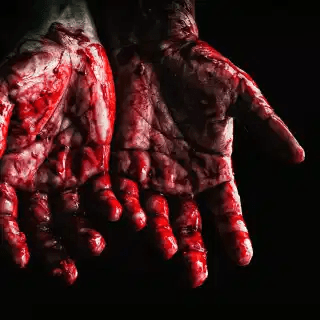
With the absence of an objective purpose, from which we have derived meaning from for thousands of years, our societies simply do not know how to psychologically cope. Existentialists have undertaken this task, in their attempts to rectify human psychological wellbeing with the instantiation of a new purpose, but their influence has fallen mostly on deaf ears. The value of philosophy in the modern age is itself underappreciated and mostly unutilized, as pharmacological solutions to psychological suffering places a band aid on our open wounds. “God is dead, and we have killed him. How shall we comfort ourselves, the murderers of all murderers? What was holiest and mightiest of all that the world has yet owned has bled to death under our knives: who will wipe this blood off us?” To me the question isn’t of who, as I believe it is our own responsibility to wipe the blood of ourselves, the question is how? How do we clean up our lives, trash the clothes now covered in blood, and forge new ones out of the scraps that remain? We ought to pursue evermore diligently this question now that what is most at stake is the quality of our experience devoid of a “higher power”, which is quite overwhelming to most, and I argue, we do this through secular meaning and purpose.
We must accept the truth of absurdism, that we find ourselves seeking meaning in an altogether meaningless world, and are overwhelmed by the absurd contradiction that arises in that recognition. We accept the truth of the matter, yet choose to rebel against the meaninglessness of existence through the creative pursuit of individual values. The development of a resilient, brave, altogether virtuous character, the seeking of truth despite the costs, the uncovering of a value system not based on dogma, but based on individual interests and importance. There are sources of meaning from which we can uncover that drive us regardless of our beliefs, and we truly have better reason than “God” in which to pursue morality, such as wellbeing and reduction of suffering, and we truly have available to us a more meaningful system, not based on dogmatic truth claims that are spoken as infallible supernatural wish-fulfillments, such as heaven, but rather meaning grounded on the value and importance of content within this life. While this is easier said than done, as noted by Nietzsche, and as fleshed out by the horrors of the twentieth century, it still remains a potentiality. While many people slip into nihilistic despair, and lack a purpose and thus additional psychological suffering arises in the minds of the once devout minds, the people lose hope and virtue sees a decline.
Where I see the actuality of weakness, of virtue being disregarded, of psychological suffering increasing while physical and technological growth ensues, I also see the hope for us to look inwardly, find meaning and continue living and improving ethically. While the blood has surely stained us and the shame and confusion of performing such a heinous act surely takes its toll, the responsibility we have to ourselves to rectify the situation, the responsibility we have towards the improvement of our own experience, is placed on our shoulders. We must become Atlas, and Atlas must never shrug! As Nietzsche said, “Better no god, better to produce destiny on one’s own account, better to be a fool, better to be God oneself!” While many believe that the continuance of their evidence lacking and science disproving beliefs give them comfort and security in which their absence would fail to supply, they may be right, but for him who is courageous and brave he can find the strength to carry through valiantly a life based on rationality, on meaning which comes from his own wellbeing, and the wellbeing of others he cares about. Albert Camus gives us the ultimate rationale which we must adopt to face this Brave New World in which Huxley warned us and is coming to fruition, “The struggle towards the heights is enough to fill a man’s heart. One must imagine Sisyphus happy.” It is that pursual of meaning in a meaningless situation which we must rectify through acceptance of the conditionality and determinacy of the truth of our predicament, and through the struggle towards the heights, find the psychological wellbeing that we naturally thirst for.
 Seek Truth