Our biases or culturally and epoch based opinions we consider normal, may not have always been normal. Look at what you think is normal, as being strange, and see things from a different perspective. Do you have sufficient evidence and rationally coherent beliefs? Are your beliefs compatible with each other? Where do contradictions lie, and how can you justify yourself? There is a dependent origination for everything, a cause to every effect, things exist based on prior causes, and your conscious state is interwoven into the web of causality. If you can be a cause, you can influence the future, be the cause that produces the future which you wish to manifest. Others may show you reasons and truths, but consciously justifying it is your job, and your actions, and in general, your Being, create a ripple effect of causality, which can potentially modify the world in a useful and beneficial way, or the contrary, optimizing this modification towards wellbeing and truth is our individual responsibility. In making sure we manifest the values which we have developed as being important, there are better and worse ways to do so, and we should diligently strive to uncover what these ways are, and through experience, learn what does and doesn’t fall in line with our beliefs.
Look at why you do anything, where you learned it, even with language and thoughts, it all comes from somewhere, this is where practice in mindfulness helps you realize what is automated or cultivated and what you control. You can control what influences affect you, thus you consciously control the causes that will produce an effect from you in the future. This is the importance in discerning the right influences which enter into our experiences, teachers, friends, even something subtle such as music can affect you, so choose your influences to reflect your beliefs or they may lead you to be someone you don’t want to be. The danger is in allowing content contrary to our values to affect us, and in its re-occurrence, rubbing off on our character and beliefs and becoming habituated. Once contrary values become instantiated in our Being, and they become normalized, you won’t realize where you went wrong, or that you went wrong at all.
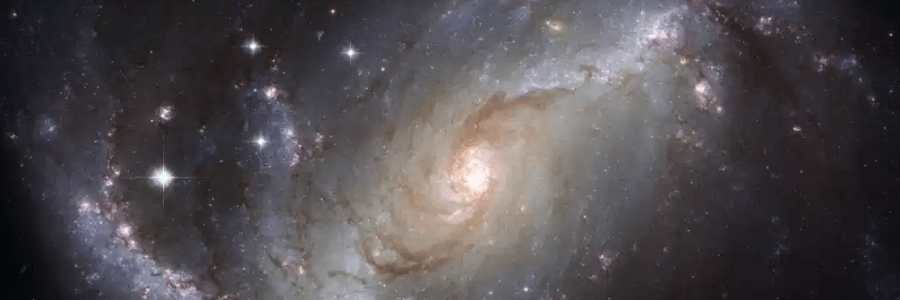
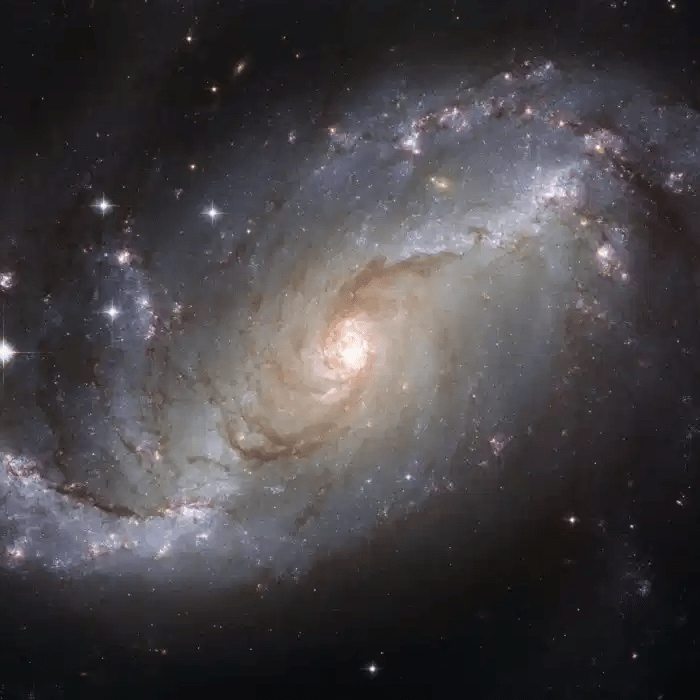
We cannot see the entire universe. Only what is within the visible horizon. We see galaxies far away, moving away from us, a red shift in the visible light, indicating they are moving farther away. So if we see a Galaxy 4.5 billion light years away, we really see it was 4.5 billion years ago because that’s where it was when it emitted the light we’re seeing, meaning we were closer to it 4.5 billion light years ago, but since that time the universe expanded, making it much farther away than what we currently see. Meaning, the light it is currently giving off, in our present, potentially could never reach us, depending on the rate of expansion, as we’re moving too far away as the universe expands. This is scientifically proven, that we only can see as far as light could travel to us. So anything outside this range, we will never be able to see. What if our part of the universe is expanding, but there are other parts of the universe so far away that they didn’t start from the same big bang that we think to be the whole universe, and that the big bang theory only applies to our portion (our visible universe) of the universe.
We intuit the Big Bang Theory based on the expansion of the visible universe, and conclude, based on the red shift of light, that it all originated in one point in space. But, the necessary limitation to this theory, is we make the assumption that the entire universe, even that outside of our visual field, also originated from this point. It is entirely possible, that our corner of the universe, that is visible and able to be mathematically deduced to the theory of the Big Bang, is not the entire universe. It is possible, that there are areas so far outside our range, that if we could gather data on, could point to a different origination, or possibly to eternity.
We can’t record data on parts of the universe that we can’t possibly come in contact with. What if these unrecorded parts of the universe point to a different beginning than the Big Bang, which only accounts to our visible universe based on the data we have of. We would never be able to approve or disprove this theory, because there never could possibly be evidence of galaxies that are so far away, our expanding portion of the universe makes them expand away from us faster than the speed of light, it only could be proven if a Galaxy previously not within our visible portion, that couldn’t previous be seen, was now seen moving into our visible universe from some unknown outside space. Could it be possible that there are parts of the universe that were, are, and will be, never visible to us? Even at our intuited Big Bang, they were so far away that even light couldn’t travel far enough to reach us, and after the Big Bang, they just got farther away?
Divine supernatural elements, even when derived using a logical and rational scientific method, are still theories, and you shouldn’t believe them to be infallibly true, because they aren’t. Our human desire to grasp the origin of this world, or the universe, prompted many metaphysical religious beliefs in order to answer something inherently unknown. This is the same thing science does in justifying the big bang or string theory, etc. Don’t believe in these theories, nor suppose they are not true, without sufficient evidence and rational non-contradictory proofs, and even then, I argue, we must maintain that they are veiled of their true nature through the biological filter in which we intuit them. We ought to withhold judgments upon things we do not know to be true, and admit deficiency in accuracy when making claims. It is completely honest, objectively, to state that you believe something to be true, and it is completely dishonest, to state that it is absolutely true.
I may passionately believe certain things are right or wrong, good or bad, or in this sense, true or false, yet I also believe that they are not the limit of what I could potentially know, in other words, the beliefs are held due to my subjective experience, but the belief in something more accurate yet unknown as a possibility is still simultaneously held as a constant. This is the groundwork fallibilism, of a state of mind which is open to experience, never finding a permanent answer, only a workable temporary one. Our state of being, whether we like it or not, is constantly in a process of becoming updated, refined, or changed, as new evidence and novel experiences provide insight into a better conceptualization in alignment with reality. The mode of being fallible, consciously, opens us up to this process, and does not hinder it from working in beneficial and useful ways, but on the contrary, encourages it. The personality trait openness defines the mode of Being which is characterized be an inability to maintain rigid, formal, concrete, idealistic views of the world, and rather seeks to uncover novel articulations, and novel experiences. In refraining from a concrete framework, and attempting to navigate one’s state of being away from absolute certainty, we become open to novel, sometimes abstract, sometimes difficult to accept, articulations and beliefs that would otherwise be repudiated from their conception.
The universe is mostly empty space, as far as material things (not atomically or energy wise), it is filled with stars and galaxies made up of certain elements we have discovered. To be a human, on this planet, a rational conscious animal, on a giant rock, and currently living in the present, is such an improbably situation to find oneself in, especially in today’s day and age in comparison to any previous epoch. In a universe filled with inorganic non conscious materials, here I am, aware of a piece of it, among other humans like me. It’s absurd the miraculous nature of life, even existing in the universe, not to mention human life, able to consciously observe itself existing. We are all existing here, surviving, as such a small part of the entire universe. This gives me a sense of wonder and makes me think, why be agitated and filled with unwholesome desire, greed, lust hate, or ill will? It’s a miracle to be alive, why spend it unhappily, causing others to experience suffering? For what? To fulfill a desire ingrained into us by evolution, while ignoring our capabilities to rise above these sensual desires, these petty wants? Evolution has equipped us with the ability to not act in response to every stimulus, but to choose what we do, and don’t. The implications on our experience are clear, we can have better or worse experiences, and can influence other’s experience, so, if we care at all about suffering and wellbeing, which we do (admittedly or not), we ought to work away from the former and towards the later.
There is an extremely small amount of time I have to be aware of this universe, to experience it, to understand it. I will try to spend my time in the present moment, where everything truly exists outside the bounds of illusion and ignorance. I will attempt to not get lost in the evolutionary animal nature that fights against me, in a man-made illusion, living for the sake of money, reputation, or fame. I would prefer to experience this life to the greatest extent that I can, in the best way possible, and help others to do the same, over constantly running after an unguaranteed happiness through fame, power, riches or momentary sensual pleasures, that ultimately will be lost. You can spend a lifetime seeking these things, and either never achieve them, or achieve them and realize that inner peace and reality existed in the present moment the whole time.
Life is precious, and amazing, and we have it, for a short amount of time, and it goes quickly. Live this life fully, the right way, or be filled with regrets and miss the only chance you will ever have to experience something real. A sense of wonder, gratefulness, amazement, in this life, human life in general, in this universe, and this present moment. Love is the greatest feeling on Earth, and our ability to experience it, and to manifest it in our actions, justifies any suffering we may undergo. Understanding the truth, and the reality which we find ourselves thrown into, enables this astonishing perspective of how beautiful everything in existence is. Over the period of recorded human history, many have put in the effort towards the great task of understanding, and conceptualizing reality, in finding the truth. This includes philosophers, religious contemplatives, scientists, in short; thinkers. They have come up with explanations, perspectives, views, proofs, and ideas, of which someone who hasn’t put in the great effort and critical thinking could ever come up with. I devote my life to following in this tradition, to being a seeker, to seek the truth. These writings are part of what I found.
Feelings, consciousness, matter, thought, in short, Being, and Reality, are all empty. They are all impermanent and do not exist independently. They all depend on something else, they have a cause, and therefore the thing itself is always in constant change. Being in constant change, doesn’t make it not real, or not existing, but makes it empty of a permanent nature. Our current linguistics make this hard to recognize, as we classify things and perceive them as being stable and permanent, they “are” the name we give them, while this is appropriate conventionally, in an ultimate sense it is actually the antithesis to the truth.
This “emptiness” is devoid of any label you can put on it, since a word doesn’t accurately describe as it is in the moment, it’s an illusion we use to refer to it. All material things you put a name to, such as a chair, don’t describe it as it is in itself, just as a mental connotation, a conceptualization that forms as a way to represent the item and distinguish identities for practical purposes. When viewed down to a microscopic level, the chair itself is more empty than having an actual solid molecular existence. This is true, but just an example, that the reality we are viewing using words isn’t one that accurately describes it conclusively, only to a degree of the preciseness and articulation of our speech. Based on any phenomenons subjection to continual change, the object, as a permanent entity, doesn’t “Ultimately exist” in a concrete manner, in reference we are more accurately depicting its true nature through the connotation of emptiness, or not as we think it is. What we think something is, is necessarily contained in a perceived image, or conceptualized thought formation, and is based on the filtration of our neural and conceptual system in its formulation, it is merely a representation, in a way that is practical to our usage, of defining or envisioning the phenomenon. Its existence within this moment is dependent on the infinite number of factors that are at play within the universe at any given time, the “object” is conditioned in this way, always, every “object” is only in its current state due to other conditions being present. It is not something itself, it is codependent. This goes for all phenomena, not only is anything material that exists empty of an inherent nature, impermanent, subject to change, dependent on conditions, but the mental phenomena we experience in consciousness contains the same characteristics. This is the nature of sunyata, or emptiness. Emptiness sums up all these factors in reference to any phenomena we can point out, in a manner depicting the “ultimate truth” rather than “conventional truth”.
Understanding emptiness empowers us to not be attached, or cling, or hold as important, things in the material realm, or people, or anything that is taken in through the senses, due to it all being impermanent, subject to change, and having a cause and cessation. Such as, if I’m feeling angry now, and I think “I am angry” both the “I” and the “angry” are constantly changing, empty of anything concrete, thus convincing yourself of such a conception as being concrete, you will hold on to the negative emotion and draw it out for a longer length of time than you would if you were to see it as it is, merely a mental formation that is subject to change, empty of any permanent nature. As soon as you attach a concrete identity to a phenomenon, and fail to see it as impermanent and empty, you become entangled in the illusion that it is something with a concrete nature. The correct way to view this would be acknowledging that the emotion is taking place, and be the viewer of the emotion on your body, recognizing it as something impermanent that will change, and something that has a cause, and an end or cessation.
In this context the ego is a mental formulation of a way to describe who we are, such as a story of our past or the person we think we are. The true “self”, or the space in which our consciousness is revealed to us (contains all our experience) is not explainable, it is the one who can view the ego. Understanding emptiness allows us to pull away from our ego, to not need to project power over others or to “show off”. The ego is that which seeks to define who we are using a narrative that we ourselves view as appealing, or descriptive, in a manner that limits the scope of its true nature, and is driven by the desire to be respected or admired by others. The “true self”, or the conceptualization of the Being that encapsulated the totality of our experience, is not explainable, “we” as in, not a permanent being, but in a conventional sense, are just the viewer of the content of consciousness as it arises in the world. None of these things composing of our false self are permanent, they all change, and one day will die, or cease to be. Therefore, the false self and the true self are two different things. This false self has never truly existed, and never will, that is, in actuality, its existence is that of an illusion we create, it is in our belief that this false self matches up to reality that we err. The “true self” in this context, is merely the recognition that what we are is devoid of a permanent, unchanging nature, it is merely the recognition of emptiness as being the defining characteristic of the core of any state of Being which encapsulates “our” experience. It can never just be, it is impermanent and changing. The true conceptualization of ourselves, in this manner, needs to negate this ego, this false self, as being empty, as being without any true essence, and not worth holding onto, similar to an emotion. It is something we can watch, and it is something that our we can choose not to act upon, like anger. Removing the false self whenever it emerges, or attempts to manifest itself in instantiating thought, speech, or action, is part of the process of realization the fundamental characteristics of who we truly are. The removal, albeit, never permanent removal but merely temporary, or something which is subsumed by Correct View in its removal, necessitates the emergence of not only a higher state of understanding ourselves, but opens a doorway to a better experience of wellbeing.
The state of being characterized by insight into the empty nature of all phenomena, is coupled with the realization of non-self, and, once it is in reference to this “mode of Being” that many mystics attempted as defining as encompassing paradise, or heaven, or Nirvana, as an internal state of mind, that we all have, lying beneath the illusion of the ego. According to this view, we all are “enlightened”, or we all have the potentiality for peace within, that can be instantiated through Correct View in regards to the fundamental attributes of existence. This peace lies beneath the delusional view that our biological system has good reason for creating, for practical purposes, as a natural means to understand the world. Seeing not only the conventional sense of reality, but the ultimate nature in its fundamental characteristics, as relayed by concepts such as sunyata, or emptiness, allows you to see two sides to the same coin in reference to the reality which we face every day. The practical application of language towards our everyday life, is useful for navigating in the world, and the ultimate truth available through direct insight, is useful to our internal understanding of the actual nature of reality which produces this conventional reality.
The will of the individual is always the same unchanging desire throughout life, but how you achieve what you will, and what you are willing, can always be changed and redirected. For example, my will yearns after the feeling of happiness, or freedom from pain, and also wants to acquire the most accurate view of truth about the world, my will is directed at knowledge and wisdom to make the best decisions in every situation, it seeks physical pleasure, and mental stimulation. I think everyone shares this basic nature, but how it affects our lives, and how we act on it, and in which manner or towards which aim or within which activity, is all something that is differentiated.
This will, will never change, we won’t ever be free from desire, from want, it drives us every moment of the day. We can take steps and work to change what it is we do with it, what it is directed at, and we should try to do this consciously in a way that aligns with our values. We should work to expand our mind, and focus our attention on the things that truly matter to us, instead of being carried away by biological and culturally ingrained urges. We should work to understand our subconscious, and the physical system which includes our brain, which produces our conscious awareness, but at the same time, we should use our ability to reason and contemplate in affecting how we act.
Here we can realize that the bottom up system, our physical nature, produces our conscious thought, but also there exists the top down system, where this consciousness in turn will affect the action of the system. We must understand both, and utilize the ability to reason. We must integrate both aspects into our understanding of who we are, as they both are significant and working in every moment. We will eventually get to the deterministic nature of every phenomenon we experience, but what is important here is that what we think, will also determine what kind of experiences we are having, and the proper wisdom and influences and knowledge will be useful in understanding and implementing the conscious system which we potentially have in our grasps within every moment of our lives.
For any given extension of space relative to any other extension of Space, there are four dimensions intuitable at play, and possibly more, according to different theories in theoretical physics. Everything, including a human, occupies a specific position within the three space dimensions (x,y,z coordinated); as in people can’t be standing in the same spot, only one set of particles (strings, wave function manifestations) can occupy a given x,y,z coordinate location relative to a given time. What if we all occupy different time dimensions as well, just like we all occupy different space dimensions? What if what my “present” is, is a unique dimension only I am contained in? It seems as if there is evidence for this, and a logical coherence with the laws of physics as thus far understood, and it is potentially more than just a hypothetical state of affairs. Why do we all assume we are in the same position within the time dimension?
If we are the only ones occupying our current position in the spatial dimensions, why do people commonly assume we all are in the same time dimension as well? It makes more sense for us to have a unique time dimension. My “present” might contain the past or future for a different individual consciousness. If time is relative in the sense that for the individual, or bubble of space, (this theory isn’t applicable to only people or consciousnesses, but to any set amount of matter, or space, or particle, etc.) the time flows slower or faster depending on mass and speed of the bubble in movement, and every person, every piece of matter, is moving at different speeds, and affected by different masses (these are extremely small differences for humans but over time, and over larger distances, compounded and differentiated). We must not forget that the entire span our lives these speeds and masses vary according to the individual, or set of space which we are contemplating, thus compounding, speeding, slowing, in effect also the 2nd law of thermodynamics applies here, we are all increasing entropy within our own space, at different rates (of time and energy use), increasing randomness and entropy of the entire system, but differentiated depending on the space in question.
We end up with our current experience of the present moment, which is compounded by the entire “past” that is relative to us, what the universe compounded up till our birth, and what we and our “space” compounded up to the present moment, making a very unique situation for us, different from any other “space”, “individual” or “consciousness”. Isn’t it right to say that we all are occupying a different time? Whether it is a small or large difference isn’t the necessary point here. Over billions of years, the particles / molecules / atoms / strings, etc., all move and are affected in a unique way, namely by mass and speed as Einstein postulated, and is detailed by the space time physics we have on hand, thus eventually constituting our (individual) current “present moment” as experienced phenomenologically as my “now”. Being our awareness of our consciousness, wouldn’t we all be located in a different now? To make this more clearly stated, my now, my present moment, what I am aware of in this current moment, isn’t the same present moment for any other consciousness experiencing their respective presents. This is setting aside the obvious lag between what sensory / mental data enters consciousness producing our conception of the “present”. Set aside that it takes light a few nanoseconds to reach our eyes, then a few milliseconds to be processed to the brain and presented to our consciousness – the exact speed of this process is itself unique to the individual (another point in favor of the theory, that itself stands alone in proving different time dimensions for each consciousness)– entailing that our now is really a view and experience of the past. Set all this aside.
What we are currently experiencing as the present, all factors including, cannot contain another consciousness experiencing the same present. As a thought experiment, imagine an identical twin, who lived the exact same life as you, a clone. In your present moment, you imagine that the processing of the brain of the clone is exactly the same speed, he has been acted upon by all the same physics throughout his life, and is currently conscious of the exact same present moment. Now imagine any other consciousness or piece of matter in the universe. They have not been acted upon by the same factors, they do not share the same physical system giving rise to consciousness, their brain is not the same, their speed, or amount moved, both as an individual and even on a minute microscopic level, (the amount of vibration or agitation in energy constituting each string / particle / combination of, expounding from the microscopic to the macroscopic) does not exactly match ours. Thus, everyone, and everything is in a different time dimension.
What is my now is my now alone, what my consciousness is currently experiencing as the present moment is not the same present moment for any other consciousness. This is assuming that we are not in a solipsistic universe, which would be a whole other unfalsifiable claim which I’m not assuming for logical probability reasons, in this theory there truly is other consciousnesses (I believe to be true), there are other people experiencing what it is like to be who they are in the present moment, the only thing is, their present moment is either in the past or in the future relative to ours, and vice versa. Thus we are alone in our present. It is possible that this more than just unfalsifiable, as we don’t have reason to believe that the usual common sense view is more likely, due to the scientific basis upon the fundamental physics of space time and its fluctuation based on mass and speed. If we didn’t have this evidence, then the theory would merely be unfalsifiable, a possibility, but the findings of Einstein provide a mathematical basis for the claim, more than just a philosophical justification.
Aristotle set out in his Nicomachean Ethics to define the optimal means and the ends of human life. In doing this he posited a fourfold system of categorization in regards to the “causes”, which can be applied to understand any object, or phenomena. The first is the material cause, or what the object is made of, i.e. the matter that composes a phenomenon. The second is the efficient cause, or what conditions the phenomena to arises or what predeterminations cause the phenomena to come into being. The third is the formal cause, or the identity of the phenomena, what distinguishes it, what are its characteristics, what makes it recognizable, its form or shape as it exists in the current state which is under scrutiny. The fourth cause, and the most important for the task which Aristotle lays out in this book on ethics, is the final cause, or for what purpose the object exists for, what is the reason for its existence, towards what end is it used, or ought to be used.
If we take the phenomena as being Dasien, or a human being, we can apply this structure in order to determine that fourth cause, the one with practical implications, and for with which we can clarify meaning and a path in pursuit of that meaning, implying morality and a philosophy as a way of life. The material cause of a human is his flesh and bones, his cellular structure, his musculature, in short, those components which are the material components of an organism. The efficient cause is the parental gametes, the reproductive cells of his biological parents – of course the genealogy can be traced back further, but as the descriptive element of the initially preceding cause which formed the human, we point to the reproductive cells which constituted his initial formulation. The formal cause is the shape or form of the human in which he is perceived, his bilateral, symmetrical appearance, the four limbs, the appearance of a human that we can recognize visually.
The fourth cause, the reason for which humans live, is less scientific and appears to be more subjectively determined. Many people claim to live for the sake of purposes which are far ranging, and many admit to not being able to determine what their “purpose” actually is. We can pose this question, and answer it from many different perspectives. From a biological standpoint, the cause of a human is to be the survival machine which propagates his genetic material into the future through surviving long enough to reproduce successfully in a way which preserves parts of his genome. From a religious standpoint, people can determine their purpose through sacred texts, spiritual insights, the worship and alignment with a higher power(s), and living in pursuance of the religiously formulated ideals. From an existentialist point of view, people’s purpose is to “create” or “discover” a consciously formulated meaning. Nihilists incorrectly assume that there “is no meaning, neither to be discovered or created”, that it merely doesn’t exist. While people may state various forms of meaning for which they are pursuing, the fact remains that people’s actions truly reveal their beliefs. Aristotle pointed to common pursuits which dominate humans lives, such as wealth, fame, and sensual pleasure. All in all, we can see an underlying factor to which all human life is striving for, Aristotle called it Eudemonia, which is commonly translated as “happiness”, but more accurately is akin to “wellbeing” or “human flourishing”. He claimed that for all the other factors for which people strive after, they do so for the sake of this flourishing. While his definition of happiness is quite different from our commonly intuited meaning that the word implies, I conceptualize the ends for which we strive as being the reduction of suffering, or unsatisfactoriness, and the increase in wellbeing, i.e. to have a more pleasant subjective experience. All our aims and strivings in life are born from this unsatisfactory nature, as the Buddhist first Noble Truth states: “Life is unsatisfactoriness”. The biological imperative of desire and unsatisfactory nature to be a constant, drives us to pursue things towards their alleviation, for biologically beneficial reasons, so this isn’t necessarily a “bad” thing, it is actually a somewhat useful thing, in its essential foundation, yet it can be hijacked towards leading people to not so optimal activities and pursuits as the domain of knowledge and action, and the things that influence us, expands to include activities and mind altering substances, which are not conducive to the wellbeing, or happiness, which we all inherently seek. It here must be noted that Aristotle’s conceptualization of Eudemonia wasn’t short sighted, he didn’t merely mean the happiness or flourishing of instant gratification, or momentary peace, such as is afforded to us through Epicureanism in pursuit of temporary friendships or sensual pleasure, but rather that lasting and enduring resultant of activity which isn’t focused on the present, but afforded into the future, a life-long lasting flourishing and growth that we can take pride in, the resultant of volitional activity.
The common drives of egotistical advancement, in areas such as wealth or fame, are pursued with an underlying desire for achieving happiness, so they are merely means to an end. The same can be said for philosophical systems such as existentialism, absurdism, religious or secular ideological structures. Thus, we have our end towards which humans are striving, that thing which is not pursued for the sake of another thing, but is the end for which all other pursuits are pursued for; happiness, flourishing, wellbeing, reduction of suffering. Now that we have a concrete end to human life, Aristotle poses what is the optimal path towards attaining a life that is in accordance with it. He claims that such a path must be self-sufficient, or relying on ourselves, as pursuits that are wholly out of our control, or in which we lay at the mercy of the external world; other people, material, or sensual inputs, are transient and unreliable, and altogether out of our control. This excludes from our search towards an optimal means to attaining happiness things such as reputation, wealth and sensual pleasure, for which most people commonly act under the guise as a means to the discovered end of Eudemonia, as they are liable to change due to external factors, and are not sufficiently pursued on an individual level in a way that is conclusively final in being the end and a mean simultaneously, and as being an exact derivative of our own creation. While these aims are pursued as a method to happiness, they are not pursued for their own sake, which is what Aristotle was explicitly looking for, that which can be pursued which in itself is desirable for the sake of itself.
Aristotle proposed that the concept of being virtuous, and in virtue itself, was the means and the ends towards which we will most optimally achieve Eudemonia. He developed the justification, and expounded the concept of virtue as being that means which is also an end in itself, which we ought to pursue as it is the optimal means of achieving Eudemonia, and in so claiming, the birth of the philosophical system of Morality known as Virtue Ethics is born. Aristotle claimed that we must not merely contemplate what it means to be virtuous, which we must surely due so that we can manifest it, but we must voluntarily embody the virtues in action, it must be an active exercise of voluntary manifestation of the virtues, not merely an understanding or rumination as to their content. As to what the virtues are, what they are constituted by, how we ought to display them, Aristotle had much to say, what it mostly boils down to, in my conceptualization, is the pursuit of manifesting the character traits that one has deemed to be “virtuous”, and from this action, one necessarily produces the most reliable form of Eudemonia, one that is depended not on any external source, but rather on the internal will and volition.
In my opinion, prudence, or wisdom, which is considered a virtue, is the all-encompassing source from which we determine what virtue takes precedence, as well as is used in determining when and how we should pursue Virtue Ethics itself. As to what this consists of, I mention in my essay “Wisdom Ethics”, in which I propose that the enterprise of Virtue Ethics necessarily falls under a broader categorization focused on the different utilities of selecting different moral frames of mind, and it is allocated as a sub category to a meta system of ethical consideration. Aristotle posits that virtue ethics is a type of morality that doesn’t weigh the outcome of moral actions, but rather focuses on the character traits which underlie the manifestation of action. He claimed, that through being a courageous, just, temperate, and wise person, and through the manifestation of these virtues and their development as character traits, one could naturally produce results which are of a morally “good” nature, and provide the moral agent with a life most readily consisting of a state of Eudemonia. The extent to which we are able to develop conceptual and experiential knowledge as to the virtues, determines the degree to which we can manifest them. The morally good he claimed stems from the manifestation of these virtues, in their implementation within the present moment, and he noted its potential application to any situation in life. Virtue Ethics provides a self-sufficient cause of happiness, and the degree to which our character and our actions are in alignment with the defined virtue determines the moral judgment of the person or action. He doesn’t consider the weight of the outcome of actions as that which is more pertinent, but rather, the action itself and its alignment with virtue takes precedence.
In defining the individual virtues Aristotle uses a method of the “Golden Mean”, in which the virtue is found in between two extremities, which is comparable to the Buddhist doctrine of the “Middle Path”. In between sensual overindulgence, and self mortification, we find discipline, we find the middle, optimal path. In Aristotle’s outlining, we find examples such as courage laying in between rashness and cowardice, generosity as the mean between stinginess and extravagance, and honesty in between secrecy and talkativeness. We can see how experiential knowledge, in the form of wisdom, plays a role in determining whether we hit the mark or not, as the virtues each respectively lie upon a spectrum in any given category, and the correct embodiment of the virtues in between the extremities, in an optimal manner, is determined by our ability to recognize it as such, which takes experience, introspection, and intelligent contemplation to determine. It is difficult to recognize when being honest is optimal, when we should rather be compassionate, how much should be revealed, when and to whom. This is where the general structure of Wisdom Ethics comes into play.
All in all, Aristotle’s system of determining being virtuous as the optimal mode of morality in which we should embody as a means to the end of happiness, is an interesting philosophical ideal, and is extremely useful in developing character traits which we should hope to embody. Is it the end all to morality, is it the best system to embody? I would say, as far as I can see, no, that other schools of ethics such as utilitarianism, and in general contemplating the effects of actions in contrast to solely the action themselves, is useful and important in a proper morality, as described in the essay “Utilitarianism, Virtue Ethics, and Wisdom Ethics”. It is beneficial and useful to the individual to attempt to develop virtuous attributes through the voluntary use of them, but, it takes wisdom to know when this system is favorable to others, and when other systems may be more beneficial, both to the individual and his expanding circle of influence.
People often don’t consciously retain information they don’t value, consciously or unconsciously. In the face of a lack of curiosity, or desire to improve, change takes place merely subconsciously, and in the areas in which we do desire to see change, or improve in knowledge, we enable ourselves to be more readily able to do so. This is part of the problem with students retention of information in the formal education system. While content is presented, a reason to value such content is often missing, the desire to learn becomes diminished, and only the desire to pass the class remains, in which short term memorization replaces active contemplation with an interest into experiential and theoretical knowledge of the topic. Although a person may pass a class and graduate, they don’t retain the information if they didn’t want to learn it in the first place, and this is the problem formal education has. If you take a class you are interested in, which contains information you deem as useful or beneficial, you will learn the subject on a more profound level, as it is your will which desires to spend time developing knowledge in the subject, rather than your will being focused on passing a test and not on the content itself.
With an autodidact approach to learning, you effectively save yourself from the strenuous process of memorization for scoring purposes, and solely become the willing participant directed toward what you value, thus maximizing the ratio between learned content, valuable content, and knowledge retention. The important aspect is knowledge retained in this fashion, through actively selecting the sources and content which you wish to incorporate into your knowledge base, is selected in accordance with your experiential values, and stems from your individual value system, making that content tailored to you as an individual.
Choosing what to influence you, choosing what experiences you need to grow, such as through fear, curiosity, or rational judgment of success through attainment, through authors, books, what speakers, what information to enter your brain, to study, on your own, you are choosing what you actually want to learn, and in this way you retain the information you wish to learn, and not just arbitrary information, but significant information. This method of learning on your own causes the content you to be exposed to, to fall in line with your own personal virtues. In attempting to learn on your own through your own directed sources rather than someone else’s, you are held responsible and you can live even from mistakes in judgment on which content or experiences you choose. You bear the responsibility more profoundly for the success or failure of your endeavors, in either case you grow more significantly than being spoon fed another’s plan.
This isn’t to say that nothing beneficial is gained through the developed formal education system, I’m more pointing to the benefits of pursuing one’s own course additionally or in place of the formal system. Now you can see the downside, an expert in a subject such as a professor is supposed to choose the best content with his personal experience to teach the class, and in this way his teaching may be more beneficial, but to have requirements in formal schooling of certain credits you need to move on to your field you wish to study, is useless as it wastes your time in being exposed to knowledge you don’t wish to learn, and therefore won’t learn. An autodidactic approach refines wisdom in the pursuant through his experience in selecting optimal sources from which to draw upon, but the opportunity cost consists in the time lost pursuing things which a wise and competent expert in a field may have already weeded out as an ineffective source, or incorrectly formulated source, from which his competency could have been an aide to you in your journey to knowledge.
While both the formal education system, and an autodidactive education system, have their ups and downs, it really boils down to prudence in utilizing which source fits best for you, at certain times of life. It may be optimal to have an early formal education system, to be exposed to a broad selection of topics, from which you can derive your own individual value system from. Once exposed to a variety of topics, and gained the potentiality of branching into broad domains of knowledge, it may then be optimal to pursue the things you have uncovered as being more interesting, beneficial and useful to yourself, on your own accord. The balance between the two, and the utilization of recourse, the wisdom to know when and in what stages of life, all should be considered as to our individual progression. What must be acknowledge is that education ought not end in formal schooling, but I believe, we must continue to grow, and push ourselves, no matter our station in life, if we wish to grow closer to the potential Being which we strive to embody. This necessarily entails an altogether fallibilistic, autodidactic approach, whether this is the only source of education, or merely secondary, remains in the hands of the individual, but its instantiation and our ability to use it wisely can aide us in growing in knowledge and competency throughout life, regardless of the financial or temporal restrictions we may have.









 Seek Truth