
On Abortion – Political / Moral / Personal

Originally Written: April 21st 2020

Here I wish to give a conclusive account of my view on abortion. Due to the complexity of the topic a full extrapolation of the reasoning behind my views will not be carried out, but rather a comprehensive look into where I stand in reference to the multifaceted topic. The facets I wish to delineate are those of the political standpoint, the moral standpoint, and the personal standpoint. As a caveat, there are innumerable cases which do not fit the norm, many of which I surely will not mention, and many more with which I am ignorant of existing, as well as their implications. To these we do seek to delegate some explanation, and the handling of such outlier cases must still be covered under the law in the political realm, and under wisdom in the ethical as well as personal realms.

Political Perspective

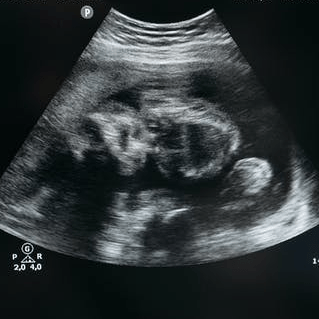
For the political exposition, we must clearly state what the role of the government is, and how it correlates to the issue of unborn child death (here any stage of development after conception and before formal birth/life outside of mother’s womb or an artificial embryonic life support system, will be denoted as “unborn child”). The government’s chief role is to provide the people for which it governs with the ability to live safely and with the ability to express themselves in a manner which does not physically harm other members of the nation. The people have a say in additional roles of the government, in supporting the people in their pursuit of wellbeing, enabling equality of opportunity, and the ability to have unfettered speech and creative ability so long as it does not physically harm other members. Private property, the social contract, taxes, are all beneficial and, potentially necessary, for the cohesion required for such a system to work optimally, but in reference to the issue at hand, we will be directly responding to the government’s role in protecting its citizens from physical harm. In the face of abortion, here we are discussing the voluntary ending of potential, future, human, experience.

Where there would be no life for an organism not existing after birth, as in the cases where its medically concluded that the child will die before being “born” due to complications or other unfortunate maturation processes, there is neither moral nor legal implications towards the parent’s decision of how to handle the unborn child. The obvious point of contention is in the unborn child’s foreseeable potential to suffer and experience wellbeing, or to be conscious of his/her experience. While this surely is an issue to be extrapolated upon in the moral sphere, the law must hold firm to its role in protecting its citizens, namely, the autonomous individuals which make it up. While the government holds this promise to its citizens, and thus bears the responsibility of providing this system to the members within its nation, I hold that the unborn child does not become a part of the nation until its birth. Only at this point, when it is living outside of the womb, outside of life support, are the government’s laws and regulations applied. If an unborn twin strangles its brother with the umbilical cord, surely the government would not charge it with murder. While people may feel an ethical obligation towards the preservation of future life, say in an 8-month old fetus, I in most cases likewise hold that the parents ought to allow the pregnancy to be carried to term. But the problem with government intervention is the slippery slope which stems from government intervention towards an individual’s autonomy, and their ability to alter, change, or create with their own bodies, without “harming” another individual – we cannot extend our moral intuitions into a domain that doesn’t hold precedent over such matters, or we are guilty of categorization error. While the terminating of a fetus may or may not cause conscious suffering to the unborn child, and thus holds moral implications, the government here has no say in dictating the actions of a mother to the contents within her own body. It is staunchly out of their constitutional realm of power, and is clearly a sign of government overreach into the personal sphere.

I view the unborn child at this point (not yet born) to be the product of the creative act of its parents, the right to which the government must offer the parents full support towards the possibility of opportunity, being as they are members of the contract that binds them to the laws and regulations of the nation. While a child does not choose the country to which it is born, the parent’s do, and hold responsibility over the life of the child as they raise her within the limits of the law, from birth till 18, the child isn’t necessarily selecting the laws which govern her, yet regardless, for issues regarding the safety and cohesion of the nation, must follow the laws overseeing her life, as “given” to the child by her parents (until she has the opportunity to move to a country or residence with whom the laws of the nation suit her will – or not – and face the consequences). The problem is in reference to a death sentence law towards a being which is not under the purview of the law, nor has reached the age of maturity in order to choose the country whose laws she wishes to be a part of. While a child between the ages of 0-18 also doesn’t hold this ability to move into a nation with the laws that she chooses to loom over her head, the parents hold the responsibility of the laws which do apply to the child within this development period. Being that the unborn child is the production of two people, operating outside of the realm of government influence, the unborn child doesn’t become subsumed under his parent’s national laws before birth, she succumbs only to the desire of her creators, who hold the power over her existence, or non-existence, up until birth. Thus there should be no legislative decisions regarding the unborn child, nor towards the parents and their action towards the baby.

I believe this argument holds good for the genetic alteration of a zygote to influence its development as well, through the usage of technologies such as CRISPR to edit the genetic sequencing towards more desirable traits and attributes (resistance to tumor growth, aka cancer, or hierarchical reasoning abilities, aka intellect, etc.). As genetic editing capabilities have surpassed the point where it is possible to alter the genetic source code of a zygote and thus the individual stemming from it, a country has no right to interfere in this creative product, just as they have no domain over the creation of the child, or not, as decided upon by the mother who houses the child. The obvious contention here is between economic viability and further separation of classes as the upper echelons of a society in terms of wealth have the recourses to afford this endeavor, and given the current landscape, such separation of the upper class is deemed “bad”, but regardless of our philosophical position on the topic of class and wealth distribution – this modification also is outside of the governments purview.

The argument will be posed that the unborn child is life, and therefore must be protected by the government whose role it is to protect its people’s lives. Additionally, the argument will be posed that since the fetus can experience pain and suffering, and thus physical harm, it is under the government’s authority as to its responsibility to provide the same equality of opportunity to live in the nation free of harm as rewarded other citizens of the state.  The obvious difficulty here lies in what defines “life”, and I am stating that it isn’t life simply stated, as there are many forms of life which are within a country’s borders that don’t follow laws, but rather a type of life, human life, marked by autonomy, separation from its creators, containing conscious sentience (or once has but has lost autonomy), which, as far as I’m concerned, begins, in its true potentiality after birth. As the skin cells on our noses are surely “living”, they surely do not constitute a being with whom we cannot murder, in addition, the creation of a zygote between the gametes of a father and a mother surely are “living” in the technical sense, but not in the form of a citizen-agent with whom the government’s laws should be required to protect. We do not regard the individual gametes within an individual as individuals themselves with constitutional rights, and therefore charge people with murder anytime their expenditure doesn’t reach consummation, likewise, we cannot solely state the possibility of life which exists in potential form in any fetus or collection of cells within the human body, or at any other point within the unborn child’s development, ought to be under the purview of the government. While gametes contain the potential for life, and are, in themselves, living, we do not offer them protection under the law, and for good reason.

While the comparison to a consummated fetus is a stretch, the difference being substantial, the basic premise still stands. What we consider true potential for autonomy ought not be regarded until the moment of birth, and this, to me, is an opinion which I hold as the standard for justification legislatively. As far as it is it is part of the mother and father, yet residing and growing in the mother, we must consider it as part of the mother, as her other cells, organs, tissues, limbs, surely all are. While the possibility of life surely exists at the point of conception, just as the possibility of life exists in any healthy adult (in their gametes and genetic material), this doesn’t entail government oversight and restriction on the decisions of the individual. There surely is a lack of “selfhood” or experientially intuited autonomy in any form of being prior to being born, the creation is still being created, whether it contains conscious sentience or not. Conscious sentience here is important to the morality and time of abortion, but in the sphere of politics, it holds no sway over law. Here we enter into the moral dilemma.

Moral Perspective

In considering abortion from a moral perspective, all legislative and governmental purview are suspended, and bracketed, as surely existing but currently not applying. The moral question necessarily must be founded upon the wellbeing and suffering of life. Without life, there is no pain and suffering, there is no wellbeing, and there definitely isn’t consciousness of better or worse experiences. Without experience of some form which can undergo some form of better or worse states, there is not a moral question, as actions regarding them do not produce a better or worse subjective experience – pleasure nor pain, wellbeing nor suffering, growth nor decay. Where there are moral questions there are also right and wrong answers, per moral realism, which takes into account the wellbeing and suffering of the individual, and other life forms into their causal connectivity, in the present moment and across time. In this scenario, the potentiality for future experience, much like the potentiality of a murdered adult, is taken into account, in its connectedness and effect on the wellbeing of other sentient beings.

In the case of a mother’s life being at stake in the birth of the child, the mother and father are not morally culpable for the abortion of the unborn child, due to the guarantee of current life ending. The causal implications of someone with emotional ties and relationships is much greater than the amount of potential suffering caused to the unborn child in his abortion – in most cases. There are obvious outliers here, such as in the effect of malevolent psychopaths and the sort – the potential suffering is more directly intuited to be greater in their continued living than in our intuition of the potential their child may have in affecting greater or worse wellbeing / suffering in the world after they exist. Absent of all details and intricate factors of real pragmatic life, and the moral implications that are specific to the causal connectivity of a person’s existence and their continued existence, this is, in the abstract, a moral neutral position (to be determined by the actuality of the situation), to me, where the mother sacrificing herself for the baby, and the mother aborting the baby, stand on equal grounds – all other things considered.

Where a mother may lose her life if she continues with the childbirth, there does exist a moral realist answer to the implications of either choice. But given our lack of omniscience, we must claim that the decision, by the mother, and if she so chooses the fathers opinion to be of value than his plays into the decision as well –  is on morally neutral grounds, it is neither good nor bad – the effect of such action will dictate its pragmatic utility, and the ability to see the opportunity cost would only lead our intuitions to a better or worse assessment in extreme cases. Current life or potential future life here are morally equal in the abstract realm, due to our inability to foresee the possible repercussions of the continued life of either “person”. In extreme cases the moral situation becomes clearer, such as in the authentic philanthropist or the psychopathic authoritarian tyrant. If we were to see the causal connectivity between the extended life of the mother or the potential life of the child, and weigh the improvement of wellbeing and reduction of suffering for themselves and other sentient beings across time, if we could accurately calculate this data, then a morally positive “right” answer could be attained. Seeing that we don’t have this, I posit the neutrality of the situation. The same guidelines hold for a fetus formed through parental abuse, drug induced intercourse, rape, or some other form of unwanted insemination. The results of the potentiality of life and its affects upon the mother and the ability for her to end the life of the unborn child, or not, and suffer henceforth (the child too may suffer such a conception story), are also unknown (as is the circle of influence stemming from either life’s potentiality), but a certain distinction is made here, between the continued life of two organisms.

While all beings will surely suffer in life, I reject full-heartedly the notion of anti-natalism, while acknowledging its philosophical position, I hold that the potentiality for healthy, conscious, human life, is something to be pursued and not something from which to shirk from in its institution to a world of suffering. I think the situations which call for a mother to abort, or not, and their continued life, are under individual moral standards, applying in degrees of “rightness” or “wrongness” in reference to each individual case. This is surely an opinionated standpoint, and while it may be vague in its abstract form, it is decisive in its individual manifestation – which represents the implicit complexity of every situation. As in the previous case, if all factors were calculable, we would have a correct moral answer to every situation, regardless of extremity – seeing as we do not, there is no simple general moral standpoint from which to view and judge any given situation. Therefore, we put the matter of abortion upon a moral spectrum, based upon the wisdom of the one perceiving, judging, or attempting to make such a decision. Better or worse case scenarios and their respective moral heights are to be regarded on an individual level, with an aim to the improvement of wellbeing. That being said, the wisdom to weigh the potential life and one’s own life, or when viewing another two lives, to weigh the morality of the decision made, is surely dependent upon the viewer’s ability to cognitively assess the situation, but where the potential for life is concerned, the judgmental scale always tips morally towards the advancement of life, regardless of the different situations which led to the conception of the baby.

While different scenarios fall upon a spectrum, the choice to abort a healthy unborn child, abstractly an in a “standard” situation (between two dedicated lovers, separated parents, or only the mother or father’s decision or choice to have a baby or raise a child once learned the mother is pregnant) falls entirely upon the “bad” end of the spectrum, to different degrees, depending on differing factors. In other words, I believe it to be morally good, right, or correct to preserve the life of a child, to differing degrees, depending on the circumstances and factors at play in the individual scenario. Likewise, I consider it morally wrong, bad, incorrect, to abort the life of an unborn child, also, to differing degrees based on the details of each distinctive situation. While I think it is morally “bad” to take plan B and thus end the potentiality for life, it is surely a moral “wrong” that can be forgiven, much like I hold that dietary veganism is morally superior to a carnivore diet, I hold the continued abstaining from veganism to be a moral “wrong” which warrants minute criticism, and thus minute judgment, or very small influence on the moral evaluation of another person or yourself. On the other end, the birthing of a baby born with severe cognitive issues, whose birth either kills the mother, or whose life leads to incalculable suffering, would still tell a morally “good” story in regards to the action of giving birth of life, and the sacrifice therein, yet I would not call it a wise choice, and apart from the action itself, must be considered abhorrent.

Virtue ethics now makes its essential contribution into our evaluation. The act itself of attempting to preserve life, without prior knowledge of harm to either party, and is founded upon virtuous intentions towards the proper upbringing of a child, warrants an act that is morally “right” or “good”. Yet, from a consequentialist perspective, we must calculate based on the repercussions of such an action. To me, the wise choice, given any situation, including that of abortion, is the prudent ability to decipher from which perspective to attempt to tackle the situation, from which standpoint to navigate. Do we attempt to act from the character we deem as virtuous, and if that values the continuance of life in the successive generation, act to fulfill what we value? Do we look towards a cost benefit analysis of future moral implications to ourselves, our circle of influence, and the potential world the child may engage with – and make a pragmatic assessment and assertion of optimality based on this rational factor analysis?  Judgment of either method of interpretation is to take place under the meta-ethical framework of moral realism as dictated above.  In this way the eye of wisdom is called upon in distinguishing the correct response to moral questions, and must be exercised with care, and separated from the actual inherent virtue of the act.

The totality of future suffering and wellbeing must be considered across the spectrum of sentience in order to calculate whether decisions should be made or not. Whether the act itself is good or bad holds little importance here in comparison to what the wise decision may be. To abort a potentiality unhealthy child, or one which is generally unwanted, accidental, due to malevolence, or other extreme factors, should be legally up to the parents, but if the parents are of age to deliver a healthy baby, with our current systems in place to take care of them I believe it to be “morally wrong” to take the potential life, or not become responsible for our actions through the proper revelation of our values in bringing up the child to maturity. I view it as our sacred duty and responsibility to pass down the knowledge we have acquired in successfully navigating life to the proceeding generation, as our forefathers have done for us – at least in the situations where it is the wisest choice to be made.

I still reserve the right for parents to abort the child in the germinal, embryonic, or fetal developmental phases as they see fit, for any reason. I can’t justify it morally upon the “right” or “virtuous” spectrum based within the virtue ethicist framework of the act itself, stripped away from circumstances. In the context of circumstantial factors, the moral playing field becomes considerably muddied, without sufficient foresight in predicting the future outcome, we must rely on experience, scientific data as it relates to the individual factors, and overall wisdom in discerning the optimality of carrying to term or abortion. The wisdom spectrum supersedes the practicality of an action, in all cases, and an honest interpretation of the factors at hand enables the philosopher to clearly view whether the “act” of abortion truly passes the wellbeing / suffering test, whether it is intuited as being pragmatically true as beneficial and useful in the decision to abort or not. That being said, any moral act does lie in degrees depending on circumstance along the spectrum of moral answers, from the most optimal and beneficial, to the most abhorrent.

Personal Perspective

Personally I will never choose to abort a healthy child, insofar as I have a say in the matter, and in the situation where the mother places the burden of choice upon me, at least at this point in my life. An unhealthy child, or one under other circumstances than what would be, in short, “optimal” as regards its potential conscious experience (sickness or other mental deficiencies), surely would call for an exercise in wisdom and communication with the mother in the choice. But, currently, along as the child and his mother are healthy, whether I’m in the requisite financial situation towards raising the child personally or not, I will opt towards the preservation, creation, and continuance of life, whether it be under my care or not, with, of course, the mother’s approval. While this is a personal stance, I would never seek to extend it to any other individual’s circumstances, nor seek to impose my standards which I apply strictly to the scenario of “my current life” in a legislative manner.


Political Theory – Hegelian Dialectic and Personal Responsibility

Originally Written: January 25th 2020

When it comes to politics we ought not be so inclined to automatically choosing sides or adhering to dogmatic ideologies, as every issue holds contradictory yet mutually justifiable pathways to “solutions” in their intricate complexity. It is this complexity that allows complicated issues to rise to the forefront of political agendas, complexity in terms of the nature of the issues that face a country, of the different problems which arise in relation to the constituents of a nation, and the differing opinions in how to manage them. We ought to look at all political disagreements individually, and the optimal negotiation between opposing viewpoints is always to be found through using a Hegelian dialectical method. By this process we take a perspective, solution, or idea the conservative right has, with a corresponding yet contradictory view the liberal left has. Optical political solutions lie in something that transcends both of them in a new strategy, yet includes a consideration of both under its umbrella, and this is the job of our political system to actualize – as our country is almost completely divided in half. The American government relies on the temperament of the individuals that make up both parties, and forward progress relies on the preservation of values of the majority subgroups (liberal/conservative). Government is working optimally when both sides are mutually empowered to cohesively form a country that works in the best manner we can conceive of for the majority of people. We ought not cater to one side, or one aspect of the nation, but to find an optimal pathway forward that is pragmatically beneficial and “expressive” of the ideas of the majority of people. In an optimal world, everyone would be happy, and our glasses aren’t so rosy as to not see the naivety in the actuality of this idea, but nonetheless, optimal solutions are to be found in the balance and negotiation between ideological proclivities, that gets to the core of both generally dividable temperamental and belief structures in terms of people’s political inclinations.

Once we find a transcendent idea that is tempered by stability and “conservatism”, and simultaneous by change and “liberalism”, eventually you will find another corresponding yet contradictory truth that propagates the best of both worlds opposed to that idea. The forward progress of a Hegelian dialectical movement never reaches a maximum expression, but always can improve itself. We transcend both conceptions in a greater – and vaster – conception, articulation, or expression in concrete law form of something which is agreeable to the values of the people from which the law, regulation, or decision ultimately rests on for approval (at least in its democratic instantiation). This is how we advance consciously to find ever more effective and truthful resolutions to problems, and also the way consciousness can improve itself given more information without slipping into the dissonance caused by two contradicting beliefs.

There are obvious ways in which both the left and the right go to extremes, and there are good reasons why they both stretch in these ways. We need both sides, the right to maintain the state when it is in a modality that is pragmatically beneficial to the people and the country as a whole, used to maintain stability when and where the country needs to remain stable, and the left to implement change, innovation, improvement, when and where it is found to be beneficial. We need the order and the chaos, in equal balance to both temper each other, check each other, and work together for the benefit of a nation with individuals containing significant differences.

What we see recently is that both sides aren’t acknowledging the benefit of the other side, what they are doing is alienating themselves, and causing polarization not only between the two groups, but between people in their daily lives that associate with either political party. This disagreeable nature based solely on political leaning, widespread distrust, and the attribution of malice is permeating beyond the governing class into the majority of people’s daily lives. Widespread division is affecting the culture of the nation – diving us based on abstract ideals, most of which is ill informed and rooted in closed mindedness. Individuals are alienating themselves from other individuals on the microscopic level as the macroscopic political groups diverge more and more – which is being sped up and given a platform to do so by our ever increasing social media presence and technological advancement.

Due to personal conditioning to label ourselves on either side of the divide, the temperamental differences that so incline people to opposing viewpoints in the political sphere, and our biological inclination to side with those who share similar values, it is easy for us to intuit others as being the enemy given that they are “dangerous” to our way of life, or how we believe the world “should” be. Politics necessarily has the greatest impact on the most amount of people’s lives, and given these points, and the changes politics has the potential of affecting in our daily lives, these matters necessarily produce emotional and experiential division when another’s beliefs on the matter is in opposition to ours. The added complexity of a perceived moral or conscience driven proclamation of the benefit of our side, only makes the emotional tie to a group identity more powerful. The idea of a herd mentality, or of belonging to a “group” modifies the members that adhere to the identity – no matter what the identity might be. These identification categories have the tendency to divide rather than unite, towards which strong leadership can alleviate. Effective leadership can point to explaining what to one temperament may be hard to see as justifiable in the other sides perspective, and in showing people the benefit of social cohesion despite contrarian viewpoints. Strong leaders can lead people of different backgrounds and inclinations to not despise each other for their differences, but see their intentions as not based on malevolence, or on a desire to destroy another’s way as life, but as being one in the same as ours – to have a better country that is more conducive to our individual/familial/societal benefit – which everyone, despite their political leanings – shares.

As far as individual political issues, we need our greatest minds to act out of a spirit of cooperation, with an intention of goodwill for the countries people, as well as the world’s people, in reference to a time span not only in the present, but across time, not only for the individual, but his family and ever increasing group membership (to the macroscopic world). This is why Aristotle referred to politics as the height of morality and philosophy, as it is a specific domain that has the deepest and most pervasive influence into the lives of the most amount of people. This immense responsibility and complexity is why Plato advocated a philosopher king, what I think we need is a philosophical council which tempers a philosopher head of state, but we’re a far stretch from socially getting on board with such an idea.

We ought not attribute “malice” or “populace slavery” by the government or ruling groups of power, nor do I believe we ought to give headspace to any other conspiracy that paints a similar picture, whether they are true or not is out of most of our ability to concretely conclude upon. The ideas propagated by the media and the worlds governing bodies come from a much more naturally explainable place, yet are increasingly complex due to the number of individuals involved (everyone). The issues we face are much more complex than to be attributed to off the cuff conspiracy theories, regardless of the failure of the media to push unbiased accounts of the political news. It all boils down to individuals attempting to spread their individual interpretations, based on their inherent biases and perspectives. When this happens in a manner we perceive as unbeneficial to us or the country or the species in general – it often is due to a lack of expertise or articulation in politicians, or a mistake in deducing the proper manner of navigating the political landscape. That being said, we cannot escape the all too human effects of selfishness, power, and personal benefit that corrupt politicians and simultaneously corrupt the system – and this fact of human nature gives us reason to criticize seemingly irrational decisions by our countries leaders – which is the role of the people to properly discern. This doesn’t mean blanket criticism and complete distrust of anyone in power, nor does it mean that our institutions can’t or don’t self-correct for a majority of these occurrences.

The products of our political parties and media influence can be found in the trickle-down effect leading to our country’s individuals holding false beliefs, contrarian viewpoints, distrust towards one another and much of the time producing viewpoints that are misinformed. We ought to punish those systems and individuals that are exposed of perpetrating misinformation and hold accountable those that don’t give a transparent viewpoint of the workings of the government to the people – insofar as that revelation isn’t damaging to the country. This doesn’t only refer to the governmental institution, but also the educational and religious institutions. This is a matter of degrees, and difficult to discern, but a line of false representation and misinformation still exists nonetheless – and we ought to hold responsible those who don’t properly inform us in a manner that is revealed to not be “well-intentioned”, as in when the opportunity cost of doing so is greater than not.

The effect from on high is only accepted if it is given popular credence by a sufficiently large segment of the population – such effects would never be held in high esteem nor influence others if they weren’t themselves held as valuable to a substantial subset of people. Our politicians are naturally an expression of the spirit of the age, and are affected from the bottom up in their statements, laws enacted, and decisions made, just as much as those decisions made are simultaneously influential on those that they are in reference to, or towards those that pay attention to them.

What is often seen is a criticism of a president or highly stationed politician, or an institution in its totality, as being the cause of the aversive thought, value, decision, or state of society, and we tend to see the people that are in the corresponding political party as “victims” of the mind virus that comes from the top down. The perspective here that is in an opposing vein, yet holds true, is that it isn’t merely the citizen that can enact a sort of “idol” worship in their perspective of the politician, but the politician too enacts an “idol” worship in the necessity of catering to the populace or their constituents in the things they say and do – and we have ourselves to “blame” or hold accountable for that perception and influence the politicians take of/from us that gets expressed in their political activities. In order to get ahead the politician must be agreeable to a large portion of society otherwise their endeavors (albeit selfish intentioned or malevolent, or otherwise) would not be able to succeed. There is a necessary relation between the citizens and their politicians, and in this democratic age, especially in America, despite flaws in the election process, and the corruption that allows manipulative individuals to “get ahead” in their political aspirations, there remains a distinct necessity for the politician to cater to the desires and values of the people – or else their progress will be significantly hindered.

Where we find it easy to blame a politician, a political party, or their constituents for believing in that party’s values and conclusions in important issues – we find it more difficult to accept that those on high are only able to propagate such ideas in their adhering to something which resonates with a substantial portion of the population. The blame, the responsibility, the power, that influences aversive ideas, laws, or public statements of politicians that gets them elected, or decides a law, stems from the values of the people that continue to allow the politician to operate, that vote for him, that publicly and socially defend him and agree with his ideas. But it isn’t necessarily the people agreeing with the politician’s view, as the relationship has been shown to be cybernetic, it is the politicians ability to articulate ideas in a way a that is itself agreeable to these people in their own belief and value systems. There’s a necessary rhetoric to the avocation of any idea, and that rhetoric can and will be morally judged for better or worse. In the end, we’re all to blame for the production of such politicians and the manner they act. We’re all to blame for believing them, or believing in them, we’re all responsible and our own human nature is the culprit for being part of the social system which creates the individual in power. If a politician’s ideas weren’t agreeable to a threshold limit of the population they wouldn’t develop to be the person they are and would be selected against– either by their peers, their constituents, or their enemies, especially in the age of strict polarization.

Politicians must cater to their party’s beliefs or be selected against, whether that entails explicit honesty, specific ideas, a certain temperament, or rhetoric that is convincing. The responsibility still lies in our acceptance and propagation of the desirability that attracts us to one side of a political disagreement, an ideology, a politician, or a political party. This accounts for manipulation and corruption, false promises and expectation. Regardless of these phenomena the official or his party has to at least appear to be propagating what the masses believe to judge as “good”, as what they perceive as “bad” won’t be supported, and the politician or political party, or ruling legislative process wouldn’t reach actualization (and if it did, and was sufficiently disagreeable, there would be substantial kickback and even revolution).

It is only from this perspective that we are able to enact meaningful change at the root of the “problems” or “aversive” content apparent to us in politics. It isn’t merely poor leadership and selfish inclinations of politicians that constitute the root of the problems, it is the adherence to certain values in a large part of the country that grows the politicians from their bed of values – and if we want to change the upper most manifestation stemming from this belief garden, we must necessarily focus on the socially and culturally accepted values from which they stem. The problems and the solutions, the values and the judgments, all are to be attributed to ourselves, we the people, and thus it is the societal spirit of the age, the zeitgeist, where we ought to direct our praise and blame, our attempts to cause political change – not merely the superficial layer that is expressed in the party’s leadership. We must point the finger towards ourselves, the effect we have on people in our lives, and in general, our own influence upon the political and social spectrum – as the manner we individuals conduct ourselves dictates the bedrock from which the political milieu is comprised of.

Many people simply attribute to the “other side” or people that hold different beliefs, malice or ill-will in their expression of what they believe to be “good” or “right” as it threatens our system of beliefs. It is wise to apply Hanlon’s razor in these circumstances – rather than inferring harmful motives or judgment – and chalk it up to ignorance. Ignorance is something we all should seek to rid ourselves of in our comparison of our beliefs and their aligning to reality, in aligning what we think would be beneficial to what truly would be, especially on issues of such vital importance, and it often is the culprit for many decisions we infer are due to a lust for power, “evil”, or inconsiderate actions. Correcting for it within ourselves entails recognition of the unknown, such as a contrary viewpoints justification, and actively seeking more information on why it is appealing, why a large number of people believe it to be an optimal solution, and seeking to view not only the best evidence and arguments against our position, but the most supporting evidence for a contrarian position. Often times others merely don’t see our point of view, and we are just as apt to not see theirs in situations which are marked by anger or frustration by sheer natural disagreeableness. On a basic level, politics is such a huge system being affected by all the people in a nation, and simultaneously serving all the people in a nation – we therefore must take it upon ourselves to attempt to be trustworthy, respectable, and diligent in defining and actualizing values that we deem to be of crucial importance – as the bottom up factors not merely matter but are the most readily available areas we have the ability to affect meaningfully change.

One problem that exists in politics is the number of people qualified for leadership, and the societies recognition of personal responsibility of the problems we are so quick to criticize. This appears to be an issue in both the quantity of people that have the potential for competent leadership, and those that actually do take on the personal responsibility of enacting change in themselves before criticizing the system. We have systems in place that are supposed to filter out exceptional leaders across all governing fields in order to select the most competent in different areas, so those people can work together to cause a top down system that is most beneficial to the people. This bottom up advancement, top down control, should work, theoretically, yet it is not optimal in its promotion of the bottom up individuals, producing less than optimal command in the top down implementation. Frankly, this system can be improved, popularity and ego surely play a role, but nothing should overshadow competency in this filtration – something that is lacking in our search for diversity, our value of emotional rhetoric, popularity, or agreeableness to our group’s judgment.

Fortunately, regardless of the flaws, the average citizen in any developed western country lives a relatively good life, or at least its government has created a space in which the possibility to do so is open (to greater or lesser degrees of course, depending on the person’s situation and even more so on their perspective). I generally think despite the worlds political troubles, despite the average citizen’s polarization, ignorance, and aversion to contributing real beneficial change to themselves that extends to our government, that our system is doing okay. I really think things are going, that is, relatively good, compared to any point in human history, and just the fact that people are realizing the flaws of the system points to the fact that were on the right track as a group to greater improvement.

On Drug Use and Legalization

Originally Written: May 20th 2018

People must fulfill their sensual desires, so they can realize they do not provide lasting happiness, and desire instead an inner peace not dependent on externals, or possibly even abandon craving and attachment, and desiring altogether. Once realized that even the most profound stimulating consciousness altering substances doesn’t produce enlightenment, and that there is still something lacking, only then will one seek the truth to be found within this present moment.

All drugs should be legal, out of the government’s hands, and up to the individual. There are good, and bad reasons to do drugs. For medicinal purposes, life saving reasons, is the best reason. Next would be for scientific research purposes, in discovering ways to improve the welfare of living beings, as well as understanding reality, consciousness, and in general, the scientific understanding of the brain and cognitive structures / psychology. Next would be for personal spiritual growth, experiencing different states of consciousness, expanding perspective, to learn about the mind, and better it. Next for social fun, enjoyment, a good time, so to say. Next, to escape from reality, escape from the normal state of consciousness, which is one of suffering. And the worst reason to be doing or trying drugs is to fit in with the masses, to be cool, or like someone else, for popularity, social pressure, or for status contrary to one’s own beliefs. So there is a range of intentions when doing drugs which can be used as a reference in whether you are doing them for the right reasons, the first three I would say it would be positive, and the rest negative, thus I would encourage drug use if someone had honest intentions of the first reasons, and discourage it for the other reasons, based on its potential benefit to the individual and others.

This is a hierarchy of what is a good reason to a bad reason, relating to individual welfare, societal wellbeing, insight, wisdom, and inner peace. As always, the moral realist perspective holds, in that there are right and wrong answers to moral questions, based upon the axiom that morality necessarily entails the suffering and satisfaction of life, and the movement away from complete utter suffering for all beings across time would constitute the “good”. Thus, here we refer to the use of drugs being “right” when the net wellbeing of the situation is optimal to the progression of the individuals who indulge. This isn’t necessarily a utilitarian account of pleasure, as I believe suffering, as a rule, will always outweigh the pleasure, but rather, it is in looking for a morally neutral, or in a better case, a wellbeing optimal position, in which the use will instantiate.

 In general, if someone wishes to try a new substance, they should do extensive research and be prepared mentally and physically for the experience, as well as be aware of the potential risk and negative side effects, or else they have the potential of paying the price of ignorance later on. If the experience ends up being a net positive, then more power to the individual, if they can avoid attachment, addiction, or injustice to others, the possibility of which the doer must be aware of beforehand in order to combat the actualization of these effects, and if under their sway, the responsibility rests on the government to imprison them for wrongdoing, and on the universe to choose to help them out of addiction or never escape it, a possibility which is important to be known prior to indulgence. If the individuals experience turns out to be negative, or leads to addiction or injustice, the individual will suffer the consequences, his family and society will too, which is the greatest argument against legalization of most drugs, yet must be the price we pay for freedom and liberty.

The possibility of the benefit of positive attributes such as knowledge, wisdom, understanding, and free exploration of one’s own consciousness can potentially outweigh the negatives in certain situations. It’s worth noting that even a negative experience on drugs can teach you how your consciousness can be changed, and the silver lining may outweigh the present dissatisfaction with the experience. Of course trauma, and a lifelong causal influence of misery or addiction, is something one must keep in the forefront of their mind as a possibility when consuming any type of mind altering substance. Wisdom will be necessary to avoid pitfalls, and improve the quality of one’s experiences. The majority of people are currently using drugs for purposes low in the above hierarchy, yet, for government to take away the possibility, albeit of the small minority who are interested in an honest, virtuous inquiry into the most important aspect of all life, consciousness, is a crime in itself. The ignorant, unintelligent, unwise, unvirtuous people will undergo the misuse and abuse of drugs and pay for it in suffering, but this is the price a nation must pay for its freedom to explore the unexplored, and seek the truth. 

There also exists a hierarchy for the most beneficial drugs for the purpose of spiritual insight, and medical treatment. I think if drugs like meth/crack/heroine were legal, and the public is properly informed on their effects, neural toxicity, chance of death, moral defilement, etc., then most people would never try them, and those that do, do it fully understanding what they are getting themselves into, and if they break the law on drugs, if morals change to commit crimes, then they will face familial/societal/federal punishments for their acts, whether it came from ignorance, delusion, or enlightened thought, the law of the land will still hold (the question on the current law of the land and its atrocities is another conversation).  Complete legalization of drugs would also reduce gang activity, street violence, improve the quality and price of substances, reduce criminal acts that are secondary to its acquirement and the underground business, lessen danger in the unknown content of drugs coming from currently unlicensed, anonymous sources, in which the drug could be spiked, impure, and the possibility of robbery and violence in acquiring it also gets significantly removed as the business moves from thugs in alleyways to licensed businesses with FDA tested quality.